Category: Uncategorized

  • The Seed Is Not the Tree Yet

    The Seed Is Not the Tree Yet

    The seed is in the soil.

    The bowl has received.

    The hand has opened.

    The hollow did not get filled by panic.

    Something real has entered.

    And nothing looks different.

    That is where the claimant begins to worry.

    It looks at the ground and says:

    Where is the proof?

    Where is the sprout?

    Where is the new life I was promised?

    Where is the evidence that this beginning was worth it?

    That is the danger after the first true gathering. The beginning has begun, but it has not yet become visible. The seed is alive, but it has not become a tree. The first movement is real, but it has not become achievement.

    This is where many new things die.

    Not because they were false.

    Because they were forced to prove themselves too soon.

    At this timestamp, the deterministic calendar still places the essay in New Moon / Gather. That timing sharpens the image: the beginning is real, but its first movement remains mostly hidden. It is not harvest. It is not display. It is not mastery. It is not the full plan. It is not the public identity of transformation.

    It is the first quiet motion under the surface.

    A pulse.

    A reach.

    A slight pressure in the dark.

    The beginning has moved, but it has not yet arrived as form.

    That is why the first stir must be protected.

    The ego does not like hidden life. It wants visible life. It wants proof. It wants metrics. It wants the seed to report progress. It wants the first week of the new practice to become evidence that the self has finally changed.

    But life does not begin by satisfying the claimant.

    Life begins by rooting.

    The seed is not the tree yet.

    That sounds obvious until the self is the one waiting.

    Then the obvious thing becomes unbearable.

    In Geomytha, the false self forms through a simple grammar: Is, Am, I, This.

    Is is awareness before claim.
    Am is reflected presence.
    I is the claimant that interrupts the current.
    This is the identity that hardens after the claim.

    The false-self sentence is:

    I am this.

    At the beginning of a cycle, the claimant wants to attach that sentence to the first sign of life.

    I am this new practice.
    I am this recovery.
    I am this discipline.
    I am this healing.
    I am this new relationship.
    I am this person who has started over.

    But the first living thing cannot survive that much identity.

    It is too small.

    It needs warmth before witness.

    Water before explanation.

    Rhythm before proof.

    Protection before display.

    A beginning does not need pressure.

    It needs conditions.

    Taurus understands this better than the mind does.

    Taurus knows soil. It knows body. It knows food, weight, warmth, patience, and repetition. It knows that a thing becomes real by being tended, not by being announced. It knows that roots come before height.

    A seed does not care about your timeline.

    A starter does not care about your ambition.

    A newborn animal does not care about your productivity plan.

    A candle flame does not care about your announcement.

    If the wind is too strong, it goes out.

    If the soil is too dry, it dies.

    If the hand keeps digging it up to see whether it is growing, the root breaks.

    That is the cruelty of premature proof.

    It pretends to be care, but it is often anxiety with a measuring stick.

    The seed underground is the central image.

    A seed begins by breaking.

    That crack is not failure. It is the first consent to growth. The shell opens. The hidden life inside begins to push downward and upward. Root and shoot separate. A tiny intelligence begins its work in darkness.

    From above, nothing appears to be happening.

    The ground looks the same.

    No leaf.
    No stem.
    No flower.
    No fruit.
    No visible reward.

    Only soil.

    But underneath, the first real violence of life is occurring: the seed is surrendering its sealed form.

    The seed breaks before it rises.

    That is a hard teaching.

    Most people want growth without cracking. They want change without the first unmaking. They want the new life to appear as improvement, not rupture. But the seed does not become itself by remaining intact.

    It breaks open.

    Quietly.

    Hiddenly.

    Without applause.

    This is why the first stir must not be judged by appearance. If you demand visible fruit while the seed is still breaking, you will call the most important moment a failure.

    The ground is not empty.

    It is concealing the work.

    The Little Prince’s rose gives the emotional version.

    The rose is not important because it is objectively the greatest rose in the universe. There are other roses. Many roses. A whole garden of roses. The shock of that discovery is part of the story. The beloved thing is not unique because no other thing resembles it.

    It becomes unique because it has been tended.

    Watered.
    Protected.
    Listened to.
    Returned to.
    Worried over.
    Waited with.

    The rose becomes meaningful through attention and responsibility.

    But here too there is danger.

    Care can become possession.

    The claimant can say:

    This is my rose.

    Then care hardens into ownership. Responsibility becomes control. Tenderness becomes identity. The living thing becomes another This.

    That is not love.

    That is the claimant wrapping itself around a fragile life and calling the grip devotion.

    The rose teaches a better distinction.

    What you tend becomes meaningful.

    What you possess becomes heavy.

    The first seed after surrender must be tended like the rose, but not owned like a trophy. A new practice, a new love, a new discipline, a new truth, a new silence, a new body-rhythm — all of these become real through time and return.

    Not through possession.

    Not through public proof.

    Not through making them serve the self-image.

    The rose does not need to become a crown.

    It needs care.

    The mustard seed gives the scale.

    Smallness is not evidence of failure.

    Some beginnings are small because they carry concentrated life.

    The ego despises smallness because smallness cannot crown it yet. It cannot stand before others and say, look at my enormous transformation. It cannot turn the first quiet movement into reputation. It cannot wear a seed like a throne.

    But the seed is not weak because it is small.

    It is compressed.

    It carries more than it shows.

    That is why the claimant often misses real beginnings. It looks for the large, dramatic, emotionally intense thing. It expects a sign big enough to flatter the self that found it. But life often begins below the threshold of spectacle.

    One honest sentence.

    One day without the old habit.

    One meal eaten without turning it into control.

    One walk.

    One page.

    One breath completed.

    One apology.

    One boundary kept.

    One small act of not checking.

    One evening where the phone stays down.

    One moment where the claimant almost forms, and then does not.

    The ego wants size.

    Life often begins as concentration.

    That is why the first stir must be honored without being inflated. Do not make the mustard seed pretend to be a forest. Do not despise it because it is small. Do not worship it because it is symbolic.

    Plant it.

    Water it.

    Leave it alone long enough to become what it is.

    A sourdough starter gives the domestic Taurus version.

    A starter is alive, but it is not bread yet.

    It needs feeding. It needs warmth. It needs rhythm. It needs time. It needs attention that is regular but not hysterical. Ignore it completely, and it weakens. Fuss over it constantly, and you still cannot force it to rise before its time.

    That is the balance.

    Patience is not neglect.

    Tending is not control.

    This is exactly the discipline of late New Moon / Gather. The living thing has begun, but it requires humble repetition before visible proof. Feed the living thing. Do the small act again. Return at the right time. Do not demand that the starter become a loaf because your identity is hungry.

    There is something almost comic about this.

    The self wants revelation.

    The starter wants flour and water.

    The self wants proof.

    The starter wants time.

    The self wants to become someone.

    The starter wants a warm place on the counter.

    This is why ordinary images are often more spiritually exact than grand ones. They expose the claimant’s impatience. They bring the cosmic drama down to a kitchen, a bowl, a jar, a spoon, a little bubbling life that cannot be bullied into maturity.

    A living beginning needs feeding, not force.

    The candle flame adds the final warning.

    A new flame is real even if it is small. It gives light. It gives warmth. It has crossed the threshold from unlit to lit.

    But it is still vulnerable.

    A careless breath can kill it.

    A sudden wind can kill it.

    A hand moving too quickly can kill it.

    Not everything alive is ready to be shown.

    That line matters in an age where every beginning is tempted toward public display. The first day of change becomes a post. The first week of recovery becomes an identity. The first spiritual insight becomes a thread. The first fragile practice becomes a declaration. The candle has barely caught, and already the self carries it into the wind to prove it exists.

    Then it goes out.

    And the claimant calls the flame false.

    But maybe the flame was real.

    Maybe it was only unprotected.

    This happens constantly.

    Someone begins writing.
    Someone begins walking.
    Someone begins praying.
    Someone begins saving.
    Someone begins eating differently.
    Someone begins resting.
    Someone begins telling the truth.
    Someone begins leaving the old wound alone.
    Someone begins learning how not to react.
    Someone begins loving without performing.

    And almost immediately, the claimant asks:

    What does this say about me?

    Can I measure it?

    Can I post it?

    Can I explain it?

    Can I make it a plan?

    Can I make it proof?

    Can I make it identity?

    Can I turn this first stir into evidence that I am now different?

    That is how hope becomes pressure.

    That is how a seed becomes a burden before it becomes a plant.

    That is how the first movement is killed by the demand that it become evidence.

    Modern productivity culture intensifies this. Nothing is allowed to begin quietly. Every movement must be tracked, optimized, named, scheduled, measured, shared, monetized, improved, and justified. A walk becomes step data. Prayer becomes a streak. Writing becomes content. Rest becomes a routine. Healing becomes a brand. Sobriety becomes public identity before the body has stabilized. Love becomes announcement before trust has roots.

    Some tracking helps.

    Some structure helps.

    Some public accountability helps.

    But there is a difference between supporting life and extracting proof from it.

    The first stir cannot carry a full identity.

    It is too young.

    It should not be asked to answer for the entire future.

    The first week of a new habit does not need to prove you are disciplined forever.

    The first honest conversation does not need to prove the whole relationship is healed.

    The first saved dollar does not need to prove financial rebirth.

    The first clean meal does not need to prove bodily purity.

    The first prayer does not need to prove holiness.

    The first page does not need to prove you are a writer.

    The first breath does not need to prove you are awake.

    Let the first movement be first movement.

    That is the mercy.

    New Moon here is Receive, but receiving is not pressure.

    Hope is not the demand that the future justify the present.

    Hope is the willingness to protect what has barely begun.

    That kind of hope is quiet. It does not yell at the seed. It does not threaten the sprout. It does not keep pulling back the soil to check for roots. It does not confuse patience with failure.

    It stays near.

    It waters.

    It warms.

    It waits.

    This is where the breath practice belongs.

    Before measuring the new beginning:

    Inhale: Am.
    Exhale: Is.

    Before announcing it:

    Inhale: Am.
    Exhale: Is.

    Before checking whether it has made you different yet:

    Inhale: Am.
    Exhale: Is.

    Before turning the practice into identity:

    Inhale: Am.
    Exhale: Is.

    Then ask:

    Am I tending this?

    Or claiming it?

    Am I protecting life?

    Or demanding proof?

    Am I feeding the beginning?

    Or forcing it to perform?

    Can this remain small long enough to root?

    Those questions are more useful than a grand vow.

    For the first few days of a true beginning, keep it simple.

    Do it quietly.

    Keep it small.

    Repeat it once.

    Feed it.

    Do not overexplain it.

    Do not build a public self around it.

    Do not demand that it make you new immediately.

    Let the first movement live before the claimant makes it perform.

    This is not weakness.

    It is protection.

    The first stir is not fragile because it is false. It is fragile because all living things begin in vulnerability. A seed, a child, a flame, a practice, a trust, a sentence, a love, a sobriety, a faith, a body returning from exhaustion — none of these become strong by being thrown immediately into the weather.

    They become strong by being protected until they can meet the weather honestly.

    There will be a time for Form.

    There will be a time for structure.

    There will be a time for stronger boundaries, sharper decisions, visible commitments, and outer shape.

    But this is not that moment yet.

    This is Stir.

    The first reach.

    The small pressure beneath the soil.

    The candle cupped between two hands.

    The rose watered without being owned.

    The starter fed without being rushed.

    The mustard seed trusted without being inflated.

    Nothing needs to be crowned yet.

    The seed is in the ground.

    The flame is lit.

    The rose has been watered.

    The starter has been fed.

    The first practice has been done once.

    Let that be enough.

    The tree will come later.

    Protect the first stir.
  • The First Thing Worth Keeping

    The First Thing Worth Keeping

    The bowl is empty.

    The room is quiet.

    The soil has been cleared.

    The hand is open.

    The old thing is gone, and for once, nothing has rushed in to replace it.

    That is already a miracle.

    But now the danger changes.

    The danger is no longer refusing to put something down.

    The danger is gathering the wrong thing first.

    Because the first thing gathered after surrender becomes the seed of the next world.

    This is the moment after the hollow. The box has been opened. The old object has been weighed. The final grip has loosened. The room has been allowed to remain empty long enough for the body to learn that emptiness is not death.

    Now something can enter.

    But not everything should.

    That is the discipline of the New Moon.

    New Moon is not fullness. It is not display. It is not the great announcement. It is not the public face of transformation. The moon is hidden. The light has not yet returned as visible proof. Nothing has been built, claimed, crowned, or shown.

    This is the phase of first receipt.

    A beginning does not become true because the self declares it. A beginning becomes true because something small is received into the cleared place and allowed to root.

    That is why this New Moon belongs to Gather.

    But gather does not mean grab.

    Grabbing comes from hunger.

    Gathering comes from readiness.

    Grabbing says:

    I am empty, so I must fill myself.

    Gathering says:

    The field is ready. Let the right thing enter.

    The difference is everything.

    The claimant grabs because silence feels unbearable. It wants the new identity quickly. It wants the next plan, the next object, the next routine, the next proof that the release meant something. It cannot stand the bowl’s open mouth. It wants to stuff the hollow before the hollow exposes how little of the self was real.

    But gathering is slower.

    Gathering does not panic. It does not raid the future for materials. It does not turn the first available object into destiny. It receives carefully. It asks whether the thing entering the field can actually live there.

    A true beginning does not grab.

    It receives.

    In Geomytha, the false self forms through a simple grammar: Is, Am, I, This.

    Is is awareness before claim.
    Am is reflected presence.
    I is the claimant that interrupts the current.
    This is the identity that hardens after the claim.

    The false-self sentence is:

    I am this.

    That grammar matters most at the start of a cycle.

    Because beginnings are vulnerable.

    The claimant loves beginnings. It loves fresh notebooks, new systems, new names, new vows, new calendars, new bodies, new projects, new rituals, new rooms, new clothes, new language. It loves the feeling that the old self has been discarded and the new self can now be designed.

    But if I chooses the next This too quickly, the new beginning is only the old claimant in clean clothes.

    That is why the first gathered thing must be small.

    Small enough not to become a throne.

    Taurus makes the test practical.

    Taurus does not care about dramatic beginnings. It does not care whether the new thing looks impressive. Taurus asks what has weight, what can be touched, what can feed, what can hold, what can be repeated, what can remain useful after the announcement fades.

    Can it nourish?

    Can it steady the day?

    Can it become practice?

    Can it be touched without being worshiped?

    Can it remain simple?

    Taurus does not bless every possession.

    It blesses what can hold life.

    That distinction is necessary because Taurus can distort into hoarding, comfort addiction, security panic, sentimental weight, and the belief that having more means being more. But Taurus at its best is not greedy. It is faithful to matter. It knows that the body needs bread, the seed needs soil, the house needs a foundation, the hand needs something real to hold.

    So the question is not:

    What can I get?

    The question is:

    What is worthy of entering the cleared place?

    The empty bowl teaches this better than any argument.

    A bowl is not useless because it is empty. Its emptiness is its function. It has shape. It has boundaries. It is not a void. It is a vessel.

    But the bowl does not chase what fills it.

    It does not run across the table trying to prove its purpose. It does not panic because it is open. It does not announce its capacity as identity. It simply holds the shape of receipt.

    That is the first New Moon teaching.

    A receptive life is not formless.

    It is shaped enough to receive without grasping.

    This matters after surrender because the self often mistakes emptiness for failure. It thinks: if nothing is in the bowl, nothing is happening.

    But that is only the claimant speaking.

    The claimant only recognizes occupation. It does not understand readiness.

    A bowl must be empty before it can receive.

    A room must be cleared before it can hold a new life.

    A field must be opened before seed can enter.

    A hand must release before it can receive without stealing.

    The bowl teaches receiving without possession.

    The seed teaches patience.

    A seed does not look like a victory. It does not look like harvest. It does not look like proof. It is small, quiet, and often unimpressive. To begin properly, it must disappear into darkness.

    That is offensive to the ego.

    The claimant wants visible progress. It wants the transformation to show. It wants the seed to behave like fruit immediately. It wants to post the garden before anything has grown. It wants applause for planting.

    But the seed does not care.

    It goes under.

    That is its wisdom.

    The first true beginning is often small enough to be buried.

    This is why the cleared soil matters. The old thing has been removed. The hollow has been trusted. The bowl has not been stuffed with panic. The room has not been immediately redecorated into a new self.

    Now the first seed can enter.

    But the seed must be chosen carefully.

    Not every seed belongs in every soil.

    The parable of the sower makes this plain. The same seed behaves differently depending on where it falls. Some lands on the path and is eaten. Some lands on rocky ground and cannot root. Some grows among thorns and is choked. Some enters good soil and bears fruit.

    The point is not only the seed.

    The ground matters.

    This is one of the cleanest teachings for any new beginning. An idea may be good, but the field may not be ready. A practice may be powerful, but the body may be too exhausted to hold it. A relationship may contain life, but the nervous system may still turn it into repetition. A plan may be useful, but if planted in fear, it grows fear-shaped fruit.

    A seed is not enough.

    The ground must be able to receive it.

    That is why gathering comes after surrender. If the soil is still crowded with old roots, the new seed has to fight the dead. If the hollow has been filled with panic, the new thing will not enter cleanly. If the claimant is still grabbing, even a good seed becomes another object of identity.

    The question is not merely:

    Is this good?

    The better question is:

    Can this root here, now, without becoming another throne?

    Demeter and grain bring the teaching down into the body.

    Grain is not glamorous. It does not dazzle. It is planted, waited for, cut, ground, kneaded, baked, eaten. It becomes continuity through repetition. It becomes bread through patience and labor.

    That is sacred in the most ordinary way.

    The first sacred thing may not be revelation.

    It may be bread.

    A meal.
    A bedtime.
    A clean room.
    A phone left down.
    A walk taken daily.
    A glass of water.
    A single honest conversation.
    A small practice repeated without announcement.
    A dollar saved instead of spent on the next identity.
    A seed actually planted in the ground.

    This is Taurus spirituality at its clearest. It does not need to leave matter to become sacred. It asks matter to become trustworthy again.

    Demeter’s story also carries loss. Grain is never only abundance. It is tied to descent, absence, return, hunger, and the rhythm by which life disappears and comes back changed.

    That makes grain a better New Moon image than instant fruit.

    The seed goes down before it rises.

    The field goes dark before it feeds.

    The mother loses before the table is restored.

    That is why a true beginning should feel slightly hidden. If it is too bright too soon, it may not be rooting.

    It may be performing.

    Jack and the Beanstalk gives the warning.

    Jack receives beans, but not from a stable field. The exchange begins in hunger, desperation, and a questionable bargain. The family cow is traded for magic seeds. The seed grows quickly, vertically, spectacularly. It shoots upward into a world of giants, theft, danger, sudden wealth, and instability.

    This does not mean the beans are simply evil.

    The story is more useful than that.

    The beans are powerful. They open a path. They break ordinary limitation. They bring possibility where poverty had closed the field. But the growth is too fast, too vertical, too strange. It does not root into the earth.

    It escapes upward.

    That is the stress-test for every New Moon beginning.

    Some seeds grow quickly because they are not rooted.

    They are escaping upward.

    This is what happens when the first gathered thing is chosen from desperation rather than readiness. The person is hungry, so the bargain feels necessary. The promise is magical, so the risk is ignored. The growth is dramatic, so the instability is mistaken for destiny.

    A new course.
    A new guru.
    A new plan.
    A new lover.
    A new ideology.
    A new business.
    A new ritual.
    A new download.
    A new self-image that grows overnight.

    The beanstalk is impressive.

    But impressive is not the same as rooted.

    This is why Taurus is needed. Taurus asks whether the new thing has a ground. Whether it can feed. Whether it can be tended. Whether it can become a life rather than a vertical escape into another giant’s house.

    The first seed should not only promise height.

    It should be able to become food.

    The Shire gives the positive image.

    A door.
    A garden.
    A table.
    A road.
    A pantry.
    A song.
    A birthday.
    A pipe.
    A hearth.
    A meal with friends.

    The Shire is not heroic in the loud sense. It is not impressive by imperial standards. It is not built around conquest, revelation, upgrade, or spectacle. It is a world of small continuities: food, friendship, place, habit, memory, ordinary pleasure, and the kind of life that can be repeated without becoming a prison.

    That is Taurus at its best.

    The Shire is not perfect. No earthly form is. Comfort can become avoidance. Routine can become dullness. Home can become fear of the road. But as a positive image, it shows something essential: a life worth keeping often begins as something ordinary enough to repeat.

    This is what many false beginnings lack.

    They are exciting, but not repeatable.

    They produce intensity, but not continuity.

    They make the claimant feel alive, but they do not feed the field.

    A true first gathered thing may be almost embarrassingly ordinary.

    Not the perfect doctrine.

    Not the grand system.

    Not the complete plan.

    Not the public announcement.

    One good habit.
    One honest boundary.
    One meal.
    One daily page.
    One walk.
    One cleaned surface.
    One small act of devotion.
    One thing kept because it actually helps life continue.

    That is how a world begins.

    Not with the claimant’s crown.

    With a seed that can survive Tuesday.

    Modern life turns New Moon into a shopping cart.

    The old cycle ends, and suddenly the self wants supplies for the new identity:

    a planner,
    a wardrobe,
    a supplement stack,
    a course,
    a journal,
    a ritual kit,
    a gym program,
    a productivity app,
    a new altar,
    a new aesthetic,
    a new public declaration.

    Some tools help.

    A planner can help.
    A course can help.
    A journal can help.
    A practice can help.
    A new object can mark a real threshold.

    The problem is not tools.

    The problem is panic disguised as preparation.

    The claimant loves buying props for the self it has not become. It loves standing at the edge of the hollow and ordering materials for a new identity before the field has even spoken.

    The first thing gathered should serve the field, not decorate the claimant.

    That is the test.

    Does this thing help life root?

    Or does it help the new self look convincing?

    Does it nourish the body?

    Or does it feed the image?

    Does it create a practice?

    Or does it create a performance?

    Can it be used quietly?

    Or does it need to be displayed?

    Can it remain small?

    Or does it immediately demand a throne?

    This is where the breath returns.

    Before gathering anything into the new cycle:

    Inhale: Am.
    Exhale: Is.

    Before buying the new object:

    Inhale: Am.
    Exhale: Is.

    Before announcing the new plan:

    Inhale: Am.
    Exhale: Is.

    Before planting the seed:

    Inhale: Am.
    Exhale: Is.

    Then ask:

    Can this root?

    Can this nourish?

    Can this be practiced?

    Can this remain simple?

    Can I hold it without becoming it?

    Is this a seed, or another shiny possession?

    The breath matters because gathering is where the claimant can quietly return. The hollow was protected, but now the first form appears. That is exactly where I wants to intervene.

    It says:

    I am this new practice.
    I am this new identity.
    I am this new beginning.
    I am this seed.
    I am this garden.
    I am this person who has started over.

    Let the breath interrupt that.

    Inhale:

    Am.

    Exhale:

    Is.

    Let the first thing enter without becoming the self.

    Gather one thing.

    Not everything.

    One thing.

    That is enough for the New Moon.

    The bowl does not need to be full.

    The soil does not need to become a forest overnight.

    The hand does not need to prove it can hold the whole future.

    One seed.

    One meal.

    One act.

    One small object that can serve life without crowning the claimant.

    The next world does not begin with noise.

    It begins with receipt.

    Quietly.

    Almost invisibly.

    The hollow has done its work. The bowl has stayed open. The soil has breathed. Now the first true thing can enter.

    Let it be small.

    Let it be useful.

    Let it be ordinary enough to repeat.

    Let it be alive enough to root.

    The first seed does not need applause.

    Gather only what can root.

    The next world begins with what the hollow is ready to receive.

  • The Breath Grammar Before the Gods

    The Breath Grammar Before the Gods

    Before the gods have names, there is breath.

    Before Isis becomes a goddess, before Osiris becomes a murdered king, before Set becomes the adversary, before Horus becomes the child of the broken field, there is a simpler movement happening in the body.

    Something is.

    Then that something is reflected.

    Then the mind says I.

    Then the world becomes this.

    That is the whole trap in miniature.

    Geomytha can be stated in Egyptian names: Isis, Osiris, Set, Horus. It can be stated through myth: source, reflection, projection, identity. It can be stated through symbols: circle, mirror, cut, image. But beneath all of that is an even smaller grammar:

    Is. Am. I. This.

    That is the sentence beneath the world.

    Is is the field before possession. It is pure being before anyone claims it. It does not announce itself. It does not explain itself. It simply is.

    Am is reflected being. It is presence becoming conscious of itself. It is not yet ego. It is not yet story. It is the living sense of being here before the claimant arrives.

    I is the claimant. It steps into the current and says, mine. It turns presence into possession.

    This is the fixed identity that follows. This body. This wound. This role. This person. This history. This fear. This achievement. This name.

    The false self is born when the current becomes:

    I am this.

    Not when the body functions.
    Not when thought appears.
    Not when memory arises.
    Not when language is used.

    The false self forms when awareness identifies with the appearance and calls the appearance its essence.

    That is Horus.

    But before Horus forms, there is a doorway.

    The doorway is breath.

    On the inhale, the current can be felt as Am.

    Source becomes reflected presence. Air enters. The body receives. Awareness becomes felt. Nothing has to be claimed.

    On the exhale, the current can be felt as Is.

    Reflected presence releases back into source. The body lets go. The current returns. Nothing has to be kept.

    This is not a complicated practice.

    That is why the mind resists it.

    The mind would rather have a system, a diagram, a hierarchy, a secret, a doctrine, an enemy, a cosmology, a final explanation. It would rather measure the circle than breathe it. It would rather ask whether the idea fully comports than sit quietly with the current before the idea becomes identity.

    But the practice is almost offensively simple:

    Inhale: Am.
    Exhale: Is.

    Begin there.

    Do not begin with “I am.”

    That phrase is dangerous. It can be a doorway, but it can also be the hijack.

    “I am” may point toward bare being if the I dissolves into the Am. But if the I remains as claimant, then Set has already stepped in front of Osiris. The current has been seized. Reflection has been personalized. Presence has been turned into ownership.

    From there the next step is almost automatic:

    I am this.

    I am afraid.
    I am angry.
    I am right.
    I am chosen.
    I am awakened.
    I am broken.
    I am the one who sees.
    I am the one who knows.

    Horus can wear all of it.

    Even spiritual language.

    Especially spiritual language.

    This is why the first correction is not more knowledge. It is better order.

    Is before Am.
    Am before I.
    I never enthroned.
    This never mistaken for source.

    In the body, this is not abstract. Air enters before the mind claims it. The lungs receive before the self explains it. The diaphragm moves before the story begins. The belly and celiac center feel the current before the head converts it into commentary.

    This is why the so-called solar plexus matters.

    Within Geomytha’s symbolic reading, the familiar phrase “solar plexus” becomes useful precisely because solar language evokes outward power, projection, assertion, radiance, will, and command. That is a metaphorical Setian overlay, not an anatomical etymology or a claim that the celiac plexus is literally solar. Geomytha instead uses the upper-abdominal center as a symbolic place where breath can become embodied presence before thought rises into the head-axis as claim.

    It is the Is-Am plexus.

    The true center is not where the ego becomes powerful. It is where the ego is prevented from forming too quickly.

    The trick is simple: the current that should move Is-Am / Am-Is gets renamed as I am. Once that happens, the breath is no longer just breath. It becomes biography. Sensation becomes story. Pressure becomes fear. Desire becomes destiny. Thought grabs the heel.

    That is Jacob.

    Jacob is not merely a character in an ancient family drama. He is the heel-grabber inside consciousness. He appears at the exact moment the current is moving cleanly, and he seizes it. He interrupts the natural passage of being into reflection and reflection back into being.

    That is what thought does when it becomes ruler.

    A sensation appears.
    Then the claimant grabs it.

    A symbol appears.
    Then the claimant needs to know what it means.

    A fear appears.
    Then the claimant builds a world around it.

    An insight appears.
    Then the claimant says, this proves I am the one who understands.

    That is how Set becomes Horus.

    The same thing can happen with Geomytha itself.

    This must be said at the beginning. Otherwise the system becomes another palace for the false self.

    Geomytha is not the goal. It is a mirror. Its purpose is to show how awareness becomes trapped in projection and how the old stories encode return. But if the mirror becomes identity, Horus has simply learned a more sophisticated costume.

    The decoder can become another false self.

    The one who sees the pattern can become trapped in the pattern.

    The one who exposes measurement can begin measuring whether he has stopped measuring.

    That is why the breath must come before the system.

    Begin in Am. End in Is.

    This applies to research, but not only research. It applies to work, writing, conversation, conflict, parenting, exercise, prayer, art, and ordinary chores.

    Before the task, inhale Am.

    Let the task arise from presence.

    After the task, exhale Is.

    Let the task return to silence.

    Do not become the task.

    This does not mean the functional self disappears. Someone still answers the email. Someone still drives the car. Someone still writes the article. Someone still protects the child. Someone still pays the bill. The point is not to destroy function. The point is to stop function from hardening into identity.

    There is a difference between doing and becoming.

    The body can act without turning action into selfhood. Speech can happen without becoming a throne. Thought can serve without ruling. Research can reflect without possessing. Religion can preserve a practice without drowning it in dogma.

    That last point matters.

    Many religious systems may have begun as ways to preserve a living function. A breath, a surrender, a restraint, a posture, a remembrance, a return. But over time the shell can become louder than the current.

    Islam, read symbolically as Is-Am, preserves the surrender function when the claimant bows before the One. The I does not get to be sovereign. It prostrates. It remembers. It yields.

    But if surrender becomes identity — I am the one who submits correctly — then the breath has been captured by the shell.

    Amish, read symbolically as Am-Is, preserves the restraint function when reflection refuses Setian machinery, speed, spectacle, and self-display. Life is simplified so the current can return.

    But if plainness becomes pride — we are the ones who live correctly — then restraint has also become Horus.

    The breath-function is simple.

    The shell is complex.

    The shell can preserve the function. It can also bury it.

    This is why the first article in this sequence cannot begin by asking which religion is right, which symbol proves the system, or which myth contains the final code. Those questions are not useless, but they are secondary. They belong after the current has been restored.

    The first question is simpler:

    Can this breath happen without becoming “me”?

    Inhale.

    Am.

    Exhale.

    Is.

    Do not force it. Do not perform it. Do not measure it too tightly. Do not turn it into an achievement. Comfortable breath is enough. The phrase rides the breath like a small boat, then disappears.

    The mind will ask whether it is working.

    That is measurement.

    The mind will ask whether this is the ultimate formula.

    That is measurement.

    The mind will ask whether Horus has stopped forming.

    That is measurement too.

    Let those questions appear. They are not enemies. But do not crown them.

    This is where Ophiuchus becomes important later. The serpent is not killed. The urge to know is not denied. It is held. The tension of wanting to categorize, prove, or possess the idea is allowed to remain without immediately becoming system.

    The serpent is held until it stops ruling the hand.

    Only then can the arrow release cleanly.

    For now, the doorway is enough.

    Begin in Is.
    End in Is.

    Let action pass through without becoming self.

    This is the grammar before the gods.
    This is the breath before the myth.
    This is the practice before the article.
    This is the center before the claimant.

    The false self does not need to be defeated dramatically.

    It needs to be deprived of premature ownership.

    Before it can say I am this, the current has already returned.

    Is-Am.
    Am-Is.

    The circle breathes.

    The claimant arrives late.

  • The Box Before the Beginning

    The Box Before the Beginning

    The box is empty.

    The ring is gone.

    The drawer is cleared.

    The phone is face-down.

    The old letter has been put away, burned, returned, or finally allowed to be only paper.

    Nothing dramatic happens.

    The room does not applaud.
    The sky does not open.
    The body does not instantly become new.
    No angel arrives with a certificate of completion.

    There is only the space where the thing used to be.

    And then the self reaches for the next thing.

    That is the moment.

    Not the moment of release. The moment after release.

    The moment when the claimant discovers that emptiness is intolerable.

    It wants a role.
    A plan.
    A wound.
    A mission.
    A routine.
    A possession.
    A theory.
    A new image.
    A new era.
    A new self.

    It says: good, that is gone. Now what am I?

    That is how the ego often survives surrender.

    It rushes to fill the space surrender created.

    The last article asked what the self still refuses to put down. The final object. The final wound. The final proof. The final story. The final explanation that makes the claimant feel real.

    This one begins after the grip loosens.

    Not at revelation.

    Not at triumph.

    Not at the next beginning.

    Before that.

    At the hollow.

    That word matters.

    The hollow is not nothing. It is not failure. It is not emptiness as punishment. It is not spiritual vacancy. It is the first honest shape after possession loosens.

    The claimant lives by occupation. It needs to occupy something to feel real. A belief, a body-image, a grievance, a relationship, a title, a role, a plan, a public face, a private wound, a sacred object, a future self.

    When one occupation ends, the claimant immediately searches for another.

    That is why the hollow feels dangerous.

    It is the place where nothing is available yet for identity.

    In Geomytha, the false self forms through a simple grammar: Is, Am, I, This. Is is awareness before claim. Am is reflected presence. I is the claimant that interrupts the current. This is the identity that hardens after the claim. The false-self sentence is I am this.

    The hollow is the interval before the next This.

    That is why it must be protected.

    Not protected by clinging. Protected by not filling it too quickly.

    The ego does not only hide in what it refuses to release. It also hides in what it reaches for immediately afterward.

    I let go, therefore now I am wise.
    I surrendered, therefore now I am pure.
    I emptied the room, therefore now I am healed.
    I put down the object, therefore now I deserve the next crown.

    Too fast.

    Waning Crescent does not move that quickly.

    Waning Crescent is the old light thinning until it nearly disappears. It is not the field of instant reinvention. It is the field of letting the old structure lose authority so completely that the next one does not have to be chosen by panic.

    The hollow is readiness without occupation.

    That is different from emptiness as despair.

    Despair says: nothing will come.

    Hollow readiness says: not yet.

    That is the whole discipline.

    Not yet.

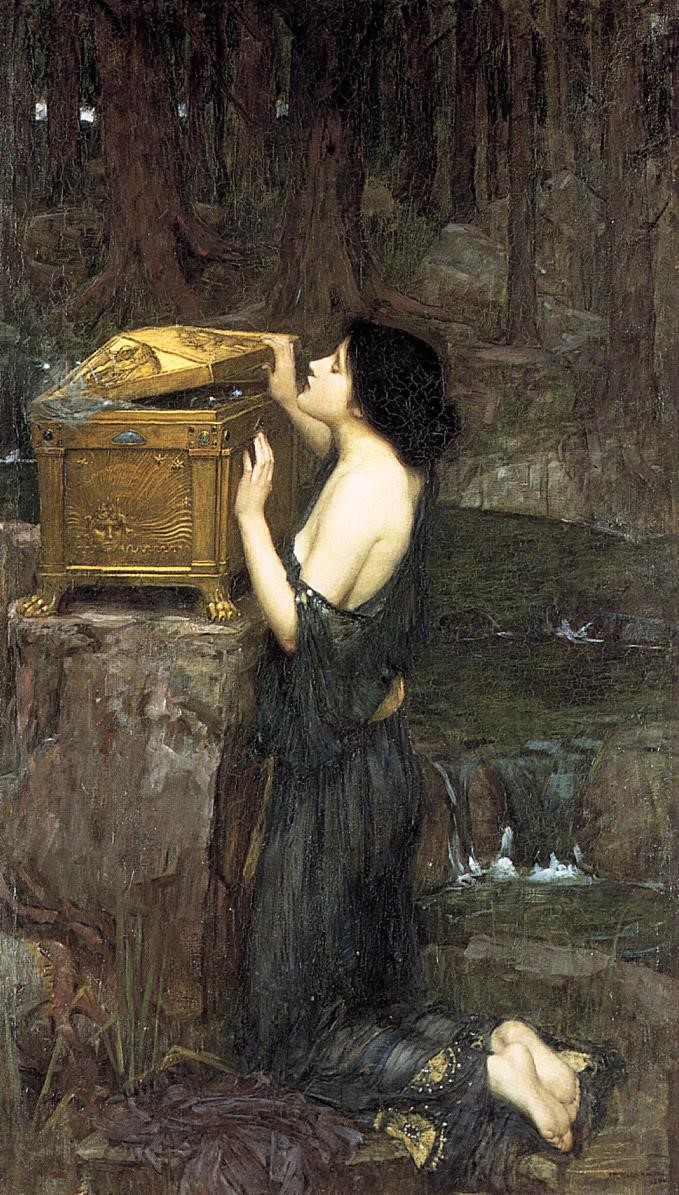
    Pandora’s box gives the first image.

    The common reading is too shallow: the woman opened the box and ruined everything. That version is already a suspiciously convenient moral lesson. It turns the myth into a warning against curiosity, feminine agency, and opening what authority sealed.

    But symbolically, the box is more interesting than that.

    A sealed container holds what has not yet entered the field. It preserves, conceals, compresses, and delays. Once it opens, the contents cannot be forced back into innocence. Something escapes. The old containment is gone.

    That is how release often feels.

    You cannot unsee what you have seen.
    You cannot unknow what has been revealed.
    You cannot return to the version of the room before the box opened.

    But after everything escapes, something remains.

    Hope.

    Not optimism.

    Not performance.

    Not certainty that everything will improve.

    Hope as the small interior remainder after false containment breaks.

    Hope is not the denial of what escaped.

    Hope is what remains when the box can no longer pretend to be innocent.

    This makes Pandora’s box a strong Waning Crescent object. The drama is not only what comes out. The deeper question is what remains after the sealed world is no longer sealed. Once the old containment fails, the self wants to rush into blame, explanation, repair, or a new system of control.

    But hope is quieter than that.

    Hope does not refill the box.

    Hope remains inside the emptied vessel.

    That is hollow readiness.

    Noah’s Ark gives the slower version.

    After the flood, the world is not rebuilt instantly. The ark does not land and immediately become a city. The waters recede. Birds are sent out. The ground must dry. The old world has been washed away, but the new world is not ready for weight yet.

    This is crucial.

    The flood may end before the ground is ready to hold you.

    Many people misunderstand this part of return. They think that because the worst is over, the next life should begin immediately. But the body does not work that way. Land does not work that way. Grief does not work that way. Trust does not work that way.

    There is a drying period.

    A threshold.

    A pause between survival and inhabitation.

    The ark has done its work, but the field is still wet. Step too soon, and the foot sinks. Build too soon, and the foundation slides. Plant too soon, and the seed rots.

    That is not failure.

    That is timing.

    The ego hates timing because timing is not control. It wants to declare the new world the moment the waters fall. It wants the next identity ready by morning. It wants to narrate the flood as a transformation story before the ground has even dried.

    But the ground has its own law.

    Taurus understands this.

    Taurus does not rush matter. Soil has to be prepared. Bread has to rise. Fruit has to ripen. Bodies have to sleep. Grief has to move at the speed of the nervous system, not the speed of the announcement.

    The flood may be over.

    The field may still be becoming trustworthy.

    Jonah gives the harder correction.

    Jonah comes out of the whale, but he does not emerge as a hero to be crowned. The belly does not make him special. It strips him. It returns him to the task he fled.

    That is the part the ego dislikes.

    Emergence is not always promotion.

    Sometimes it is accountability.

    Coming out of the whale does not make Jonah king. It makes him answerable.

    The belly is a place of unmaking. It is dark, enclosed, wet, humiliating, and beyond the management of the surface self. Jonah cannot curate himself there. He cannot perform spiritual growth. He cannot convert the descent into a brand. He is simply carried in the body of what swallowed him until refusal breaks down.

    Then he is released.

    But release is not the same as superiority.

    This matters because the modern self loves survivor identity. It wants descent to confer authority. It wants suffering to become a title. It wants to say: because I went into the belly, I am now the one who knows.

    Sometimes suffering does create wisdom.

    But not automatically.

    Sometimes suffering only creates a new claimant with a darker costume.

    The hollow after the whale must be trusted, too. Jonah has to move from refusal to obedience, not from refusal to self-importance. The task is not to become the one who survived the belly. The task is to stop fleeing the truth that sent him there.

    The empty tomb is more severe still.

    The body is gone.

    The place that should contain the old center does not contain it. The witnesses arrive with a form of expectation. They come to tend, mourn, confirm, remember, maybe preserve. But the object of that expectation is absent.

    The empty tomb does not hand them a possession.

    It removes one.

    This is a dangerous symbol because the claimant immediately wants to own even absence. It wants to turn the empty tomb into proof, system, doctrine, identity, victory, argument, certainty. It wants to seize the disappearance and make it another This.

    But the first force of the empty tomb is not possession.

    It is dispossession.

    The old center is not there.

    The hand cannot hold it.

    The eyes cannot fix it.

    The grief cannot manage it.

    The claimant cannot keep the former thing in place.

    In Geomytha, this can be read as a symbol of the old identity-center disappearing before the new form is understood. The danger is turning the disappearance into another crown. The deeper correction is to let absence do its work before it becomes explanation.

    The empty tomb does not give the claimant a new crown.

    It removes the old center from his hand.

    That is hollow readiness again.

    The Fool’s satchel shows the threshold before the next road.

    The Fool begins lightly. A small bag, a step, a cliff, a dog, the absurd courage of not yet knowing. The point is not stupidity. The point is non-accumulation. The Fool cannot begin if he has packed the whole old world.

    That is the bridge into the New Moon.

    A beginning requires lightness.

    Not because memory is bad. Not because experience should be discarded. Not because the past must be denied. But because the old self will try to pack itself into the next path and call it wisdom.

    The next road cannot begin cleanly if the old self packed the bag.

    This is why the final day before a new beginning matters. It is not yet time to Gather. It is time to notice what is trying to sneak into the bag.

    Old proof.
    Old fear.
    Old superiority.
    Old wound.
    Old theory.
    Old costume.
    Old emergency.
    Old identity disguised as preparation.

    The Fool does not step forward because he has everything figured out. He steps forward because he is not carrying enough to become a monument.

    That is the humility of beginning.

    Modern culture hates the hollow because the hollow cannot be marketed easily.

    An ending happens, and immediately the self is pressured to declare:

    new era,
    new chapter,
    new me,
    new body,
    new look,
    new plan,
    new routine,
    new boundary,
    new brand,
    new content arc.

    Sometimes this is real. A person may need to mark transition. Rituals of beginning matter. Names matter. New practices matter. A body may need a new rhythm. A life may need a visible threshold.

    But often instant reinvention is only panic in ceremonial clothing.

    The claimant cannot tolerate emptiness, so it turns the hollow into announcement.

    I am becoming.

    I am transforming.

    I am entering my next era.

    I am no longer that person.

    I am this new one.

    There it is again.

    I am this.

    The sentence returns before presence does.

    Reinvention is often the ego refusing to remain empty long enough to change.

    That does not mean change should be delayed forever. It means the new form should not be chosen by the claimant’s terror of being undefined. A true beginning arises differently. It does not feel like frantic decoration of the hollow. It feels like something small becoming possible in a space that has finally stopped being occupied.

    Taurus gives the plainest images.

    An empty bowl.

    A cleared garden bed.

    A swept room.

    A bare table.

    A hand no longer gripping.

    These are not abstract mystical symbols. They are ordinary forms of readiness.

    A bowl is useful because it is empty.

    A garden bed is not failed because nothing is growing yet.

    A room is not meaningless because the old furniture is gone.

    A hand is not lost because it is no longer holding the object.

    This is the Taurus correction: matter knows that receptivity has shape.

    An empty bowl is not useless.

    It is ready.

    That is why emptiness must be protected from premature filling. If the bowl is stuffed with old scraps, it cannot receive the meal. If the garden bed is full of dead roots, the seed has nowhere clean to enter. If the room is cluttered with the former life, the next one cannot take form without becoming a variation of the old.

    The empty place is not the enemy of beginning.

    It is the condition for beginning.

    Waning Crescent says: do not gather yet.

    New Moon is close, but not here.

    This is the final temptation of the cycle — gathering too soon. The self feels the old light fading and panics. It wants a seed before the soil has finished clearing. It wants a title before the field has spoken. It wants to convert surrender into strategy.

    But the lunar field is precise.

    Surrender first.

    Then Gather.

    Not because emptiness is the goal forever. Not because the bowl must remain empty as a virtue. Not because the room should never be inhabited again. But because the next form needs a clean place to land.

    Surrender / Trust is not passivity. It is the willingness to yield, quiet, rest, and let go of control without immediately turning the empty space into another identity. It is the refusal to let the claimant choose the next self just because silence made him nervous.

    Do not gather before surrender has finished speaking.

    That line is the entire article.

    Do not gather before surrender has finished speaking.

    Before beginning the next chapter:

    Inhale: Am.
    Exhale: Is.

    Before naming the new self:

    Inhale: Am.
    Exhale: Is.

    Before filling the empty room:

    Inhale: Am.
    Exhale: Is.

    Before announcing the new era:

    Inhale: Am.
    Exhale: Is.

    Before turning the hollow into proof of transformation:

    Inhale: Am.
    Exhale: Is.

    Then ask:

    Am I receiving the next form?

    Or escaping the hollow?

    Am I beginning?

    Or rebranding?

    Am I letting presence gather?

    Or letting I choose the next This?

    That is the practical threshold.

    The false self forms when the claimant identifies with an appearance and says I am this. The breath lets Am return to Is before the claimant takes possession.

    Do not let the next This arrive before the hollow has been trusted.

    This is not dramatic work.

    It may look like doing nothing.

    Sitting in a room that feels too bare.
    Leaving the drawer empty.
    Letting the phone stay down.
    Not replacing the object.
    Not explaining the release.
    Not posting the new era.
    Not naming the next self.
    Not rushing to make the silence meaningful.

    The claimant will call this stagnation.

    It is not.

    It is the field drying.

    It is the bowl waiting.

    It is the box emptied of what could no longer be sealed.

    It is the small remainder of hope refusing to become a performance.

    It is the hand learning that it can be open without being useless.

    That is hollow readiness.

    And it is harder than it sounds.

    Because the self would rather suffer with a known burden than stand undefined without one. A familiar wound can feel safer than an open future. A heavy object can feel more trustworthy than an empty hand. A stale identity can feel more solid than presence.

    That is why Taurus has to be steady here.

    The body has to learn that emptiness will not kill it.

    The room can be empty.

    The bowl can be empty.

    The box can be empty.

    The hand can be empty.

    The next self does not have to arrive immediately.

    Something deeper than identity can remain without becoming visible yet.

    The New Moon will come.

    Gather will return.

    A seed will appear.

    The field will ask for form again.

    But not yet.

    For now, let the hollow be hollow.

    Let the old thing be gone without making its absence into a throne.

    Let the bowl stay open.

    Let the soil breathe.

    Let the room not know what it is for.

    Let the hand rest without clutching.

    Inhale:

    Am.

    Exhale:

    Is.

    The next beginning needs somewhere to land.

    Do not fill the hollow too soon.

  • Night-Horus: Why Nightmares Reveal the Ego as a Dream-Body

    Night-Horus: Why Nightmares Reveal the Ego as a Dream-Body

    A nightmare feels real because the self inside it feels real.

    That is the trick.

    You are running down a hallway that keeps lengthening. You try to scream, but nothing comes out. You open one door and find the same room waiting behind it. You wake up, relieved, only to realize you are still dreaming. Something is coming. Something is behind you. Something knows where you are.

    And inside the dream, there is a “you” who must survive it.

    That “you” is the secret.

    A nightmare is not merely a frightening dream. It is one of the clearest places where the false self exposes its mechanics. In waking life, the ego is protected by continuity. It has a name, a phone, a schedule, a history, a room, a body in motion, people who recognize it, problems that seem to confirm it. It is reinforced every morning by daylight.

    But at night, that support weakens.

    The world dissolves. The ordinary body lies still. The social role goes silent. The calendar disappears. The ego loses the furniture of its kingdom.

    And yet another self appears.

    It appears inside the dream.

    It says, without saying it: I am this one. I am here. I am in danger. I must escape.

    That is Night-Horus.

    In Geomytha, Horus names the time-bound identity-body: the This that forms after awareness has been pulled into projection, memory, fear, desire, image, and world. Horus is not pure awareness and not the original claimant. Set is the I that interrupts and claims; Horus is the identity built from what that claim hardens into. He is the ruler-image of the divided field, the one who inherits the world after the original reflection has been fractured.

    By day, Horus is organized. He can pretend to be sovereign.

    By night, he is exposed.

    The nightmare is Horus after the lights have gone out.

    The Dream Does Not Begin With the Monster

    Most people think the nightmare begins when the monster appears.

    It does not.

    The nightmare begins when awareness identifies with the one being threatened.

    The monster matters. The dark hallway matters. The shadow at the foot of the bed matters. The house that rearranges itself matters. But all of that is secondary. The first movement is identification. A self appears inside the dream, and awareness says: that is me.

    Once that happens, the whole dream-world becomes binding.

    If the dream-body is chased, “I” am chased.
    If the dream-body falls, “I” am falling.
    If the dream-body cannot speak, “I” am voiceless.
    If the dream-body dies, “I” am dying.

    But when you wake, that self vanishes.

    The body in bed was never running. The throat was never sealed by the hallway. The door was never locked. The monster never crossed the room.

    And still, the fear was real.

    That is the important distinction. The fear was real as experience, but the identity around which it formed was temporary. The dream-self was believed, then dissolved.

    This is why nightmare is such a powerful symbolic teacher. It shows, in compressed form, how the ego is constructed. A world appears, a self appears inside it, danger appears in relation to that self, and awareness becomes trapped in the drama.

    That is not only what happens in sleep.

    That is what happens in waking life more slowly.

    Isis Is the Dark Field

    The nightmare appears in awareness.

    That must come first.

    Before the hallway, before the creature, before the paralysis, before the pursuit, before the dream-body, there is the field in which all of it appears. In Geomytha, that field is Isis: pure awareness, the unbroken ground, the silent “is” before the mind divides experience into self and world.

    In nightmare, Isis is often mistaken for absence because she appears as darkness.

    But darkness is not nothing.

    Darkness is the womb of the dream. It is the unlit field where the ordinary ego can no longer see its own borders. The terror of the nightmare comes partly from this: Horus enters the dark and assumes that because he cannot control the field, the field is hostile.

    But the field is not hostile.

    It is holding everything.

    It holds the fear.
    It holds the image.
    It holds the self that believes it is trapped.
    It holds the possibility of waking.

    The monster is not Isis. The monster is an image inside Isis. The maze is not Isis. The maze is an image inside Isis. Even the frightened dream-self is not Isis. It is a form appearing within awareness.

    This is the first corrective.

    The nightmare wants all attention fixed on the threat. Geomytha asks a deeper question: what is the field in which the threat appears?

    That question changes the dream.

    Not always immediately. Not always comfortably. But it changes the direction of interpretation. Fear says, “Look at the monster.” Awareness says, “Notice that the monster is appearing.”

    That slight shift is already the beginning of return.

    Osiris Is the Lost Still Point

    In a nightmare, the center is missing.

    That is why the dream is so unstable. The hallway stretches. The room repeats. The landscape changes without warning. The rules are inconsistent. Time behaves strangely. The self is thrown from one image to another without finding a stable place to rest.

    This is the absence of Osiris.

    Osiris is right reflection: consciousness aligned with awareness, the calm mirror in which experience can appear without becoming a prison. Osiris is the stable interior point, the place where perception does not immediately become identity. He is not panic. He is not control. He is not the ego’s command center. He is the reflective stillness beneath the ego’s struggle.

    Nightmare is what happens when Horus enters the night without resting in Osiris.

    The ego wants to rule the dream. It wants to solve the maze, defeat the pursuer, escape the room, force the mouth to speak, force the body to move. It wants daylight authority in the underworld.

    But the underworld does not obey daylight authority.

    That is why nightmares so often involve failed control. You cannot run. You cannot scream. You cannot wake. You cannot find your way back. The ordinary instruments of Horus do not work. The dream is showing him the limit of his sovereignty.

    This is not punishment. It is revelation.

    The nightmare says: the self you take yourself to be is not in control of the field in which it appears.

    That is terrifying to Horus.

    It is liberating to awareness.

    Set Is the Projector

    Set rules the nightmare by projection.

    He turns fear into architecture. He turns memory into weather. He turns guilt into pursuit. He turns desire into lure. He turns shame into exposure. He turns uncertainty into a figure waiting in the corner of the room.

    Set does not need to create something from nothing. He rearranges what consciousness already carries. A hallway from childhood. A face half-remembered. A sound. A wound. A forbidden door. A body that will not respond. A sense of being watched. A pressure on the chest. A voice that knows your name.

    These fragments are gathered into a world.

    That world feels external.

    That is Set’s genius.

    Projection always feels as though it is coming from outside. In waking life, this appears as blame, fear, ideology, obsession, enemy-making, fantasy, and compulsive interpretation. In nightmare, the same mechanism becomes immediate image.

    The monster appears to be “out there.”

    But the monster is a form of consciousness.

    This does not make it meaningless. It makes it more meaningful. The nightmare figure is not “fake” in the shallow sense. It is symbolic. It reveals the shape fear takes when awareness forgets itself.

    This is why fighting the monster can deepen the dream.

    There are times when a dream demands confrontation. There are times when the figure must be faced. But if Horus believes the monster is ultimately separate from the field of awareness, he remains trapped in duality. He may win one battle and still preserve the structure that produced the battle.

    This is the Apep problem.

    The serpent appears. The solar hero fights. The hero wins. The cycle repeats. The battle feels noble, but the repetition reveals the trap. If Horus requires an enemy in order to feel real, then defeating the enemy does not end the illusion. It renews it.

    Many nightmares work this way. The dream-self is defined by threat. The pursuer gives the ego its temporary shape. Without the monster, who is the one running?

    That question is dangerous to Horus.

    The Dream-Body Is the False King

    The strangest thing about a nightmare is how quickly the dream-body becomes “me.”

    You do not usually stop inside the dream and ask: whose hands are these? Whose fear is this? What world is this? Who decided I am this figure inside it?

    You simply are.

    That is the enchantment.

    The dream-body becomes the seat of identity. It may look like your waking body, or it may not. It may be younger, older, displaced, distorted, or barely visible. But whatever form it takes, awareness contracts around it. The dream-world then organizes itself around the survival of that figure.

    This is Horus in pure form.

    Horus is the identity-body organized around the claim: I am the center of this world.

    In a nightmare, that claim becomes unbearable because the world refuses to confirm his power. The king is in his kingdom, but the kingdom has turned against him. Doors do not open. The ground does not hold. The voice does not work. The body will not obey. The dead return. The hidden watches. The familiar becomes hostile.

    Horus discovers that he is not the source of reality.

    He is a character inside it.

    That is why nightmares can feel humiliating. They strip the ego of its costume. The competent waking self becomes a trapped child, a hunted animal, a voiceless witness, a body pinned beneath invisible force.

    The false king is shown his dependency.

    But this humiliation is also mercy. It shows that the identity that seemed solid is actually conditional. It depends on a world, a body, a story, and a stream of images. Change the world, and the self changes. Collapse the dream, and the self disappears.

    What remains?

    Awareness.

    The Night-Mare and the Dark Horse

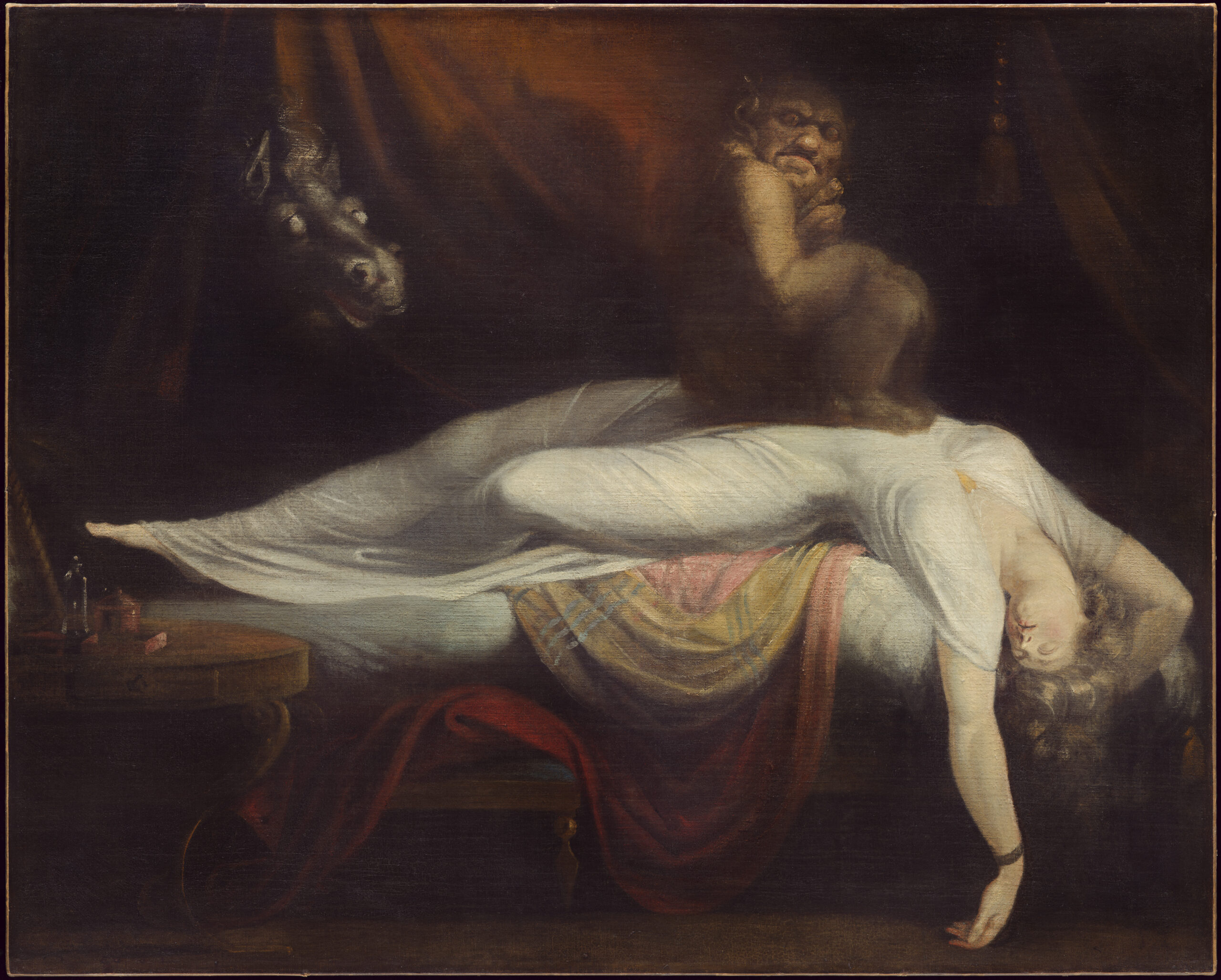
    The word nightmare also carries an older image: the mare, the horse of the night.

    That matters symbolically.

    A horse is a vehicle. It carries the rider. It has force, momentum, instinct, and direction before the rider fully controls it. In Geomytha, the horse becomes a perfect image for the dream-field itself: the dark animal-motion of sleep carrying the ego through terrain it did not choose.

    And hidden inside that sound is Horus.

    Horse and Horus do not need to be treated as a strict linguistic equation to work symbolically. The resonance is enough: horse / Horus. The rider thinks he is sovereign, but the night-mare reveals otherwise. Horus believes he is the king, the one who directs the field, the one who sees from above. But in nightmare he is carried. He is not ruling the dark animal. He is being taken by it.

    That is why the image is so exact.

    The night-mare is the dark horse beneath the false king.

    By day, Horus claims the chariot.
    By night, the horse carries Horus.

    The nightmare humiliates the ego’s claim to command. It shows that the self who says “I am in control” can be thrown onto a darker motion, ridden through images, fears, memories, and underworld terrain it cannot govern.

    The question is not whether Horus can master the horse.

    The deeper question is whether awareness will keep mistaking itself for the rider.

    Freddy, the Matrix, and the Dream That Feeds on Belief

    This is why horror understands something philosophy often makes too clean.

    In A Nightmare on Elm Street, Freddy Krueger is terrifying because he rules the dream-field. He attacks where the ordinary self is most vulnerable: sleep. His victims cannot simply avoid him by locking a door in waking life. The danger follows them into the image-world.

    Freddy is Set as nightmare-projection.

    His power depends on fear, belief, and entry into the dream-field. The more the dream is believed, the more binding it becomes. The victim’s body in bed becomes linked to the dream-body under attack. The nightmare crosses the threshold because consciousness has identified with the projected self.

    That is the horror.

    But The Matrix makes the same point in a different language. The body lies elsewhere; the mind inhabits a generated world. The self inside the simulation believes the simulation is real, and because it believes, it suffers according to that world’s rules. The body in the pod and the self in the Matrix are not identical, but the identification is strong enough to bind experience.

    The nightmare and the simulation operate through the same wound: awareness forgets the difference between itself and the world appearing within it.

    The Truman Show gives a softer but equally precise version. Truman’s world is constructed around him. It holds only because he accepts its continuity. Once the cracks appear, reality begins to loosen. The sky can become a wall. The horizon can become a set. The life he thought was natural is revealed as staged.

    Nightmare, simulation, spectacle—these are not separate symbolic problems. They are variations of the same structure.

    A world is presented.
    A self forms inside it.
    The self believes the world.
    The world feeds on that belief.

    The question is not only whether the world is false.

    The question is why the self inside it feels so real.

    Sleep Paralysis and the Panic of Horus

    Sleep paralysis is one of the most intense forms of Night-Horus.

    The person becomes aware before ordinary bodily command has fully returned. The body is still. The room may be visible. Pressure may be felt. A presence may appear. The mind wakes into a field where the body does not obey.

    Horus panics.

    This is understandable. The ego is used to identifying control with safety. If the body does not move, the ego assumes danger. If speech does not work, it assumes captivity. If a presence appears, it assumes attack. The machinery of self-defense floods the field.

    But symbolically, sleep paralysis reveals the same structure as nightmare with unusual clarity.

    The body is not under Horus’s command. The image-field is active. Fear produces form. The “I” that wants to move cannot move. The ordinary waking identity has returned too early and is trying to seize the throne before the passage through night has completed.

    The way through is not easy, and it should not be romanticized. But the Geomytha reading remains precise: the terror intensifies when awareness identifies entirely with the helpless ego-position.

    The shift is subtle:

    Not “I am trapped.”
    But “the trapped-self is appearing.”

    Not “something is taking me.”
    But “fear is forming as presence.”

    Not “I must regain control immediately.”
    But “awareness is here before control returns.”

    That is not passivity. It is deeper steadiness.

    It is Taurus inside the underworld: the body held, the breath trusted, the field allowed to settle without turning every image into an enemy.

    The Nightmare as Reincarnation in Miniature

    A nightmare is a small reincarnation loop.

    A world appears.
    A self appears inside it.
    The self inherits a problem.
    The problem becomes urgent.
    The self struggles to survive.
    The world collapses.
    The self disappears.
    Another dream begins.

    This is why dreams are such dangerous teachers. They make the structure obvious.

    While dreaming, the dream-self has a past, even if that past is fabricated instantly. It has relationships, fears, missions, obligations, and dangers. It accepts the terms of the dream almost immediately. It rarely asks how the world began. It simply starts living inside it.

    Waking life works the same way, only with greater density.

    The waking ego has a longer memory-stream, a more stable body, a more consistent environment, and social confirmation. That makes it harder to see through. But its structure is not fundamentally different. It is still identity organized around time, image, fear, desire, and continuity.

    The nightmare compresses the whole thing into a few minutes.

    That is why waking from a nightmare can feel like resurrection. The world ends, but awareness remains. The dream-self dies, but something knows it dreamed.

    Geomytha’s question is severe:

    What if waking life is not escaped by making Horus more successful?
    What if it is escaped by recognizing Horus as the dream-body of a larger field?

    The False Solution Is Winning

    The ego wants a heroic solution.

    It wants to kill the monster. Escape the house. Expose the simulation. Defeat Freddy. Outrun the shadow. Break the spell. Wake by force.

    There is a place for courage. But courage is not the deepest answer if it merely strengthens the dream-self.

    A victorious Horus is still Horus.

    That is the hidden trap inside many salvation stories and many horror stories. The self survives the ordeal, but the structure of identification remains untouched. The hero escapes one nightmare and returns to the same ego that will generate the next one.

    This is why some nightmares repeat.

    The content changes. The structure remains.

    Different hallway, same panic.
    Different monster, same pursuit.
    Different room, same paralysis.
    Different face, same shame.
    Different story, same Horus.

    The dream is not asking only for victory. It is asking for recognition.

    Who is being chased?
    Who is afraid?
    Who needs this dream-world to be real in order to exist inside it?
    What remains if the threatened self is not believed?

    These are not abstract questions. They are underworld questions. They cut beneath interpretation into identity itself.

    The nightmare does not end at its deepest level when the monster dies.

    It ends when the false self loses its claim to be the center.

    Surrender in Steadiness

    This is why the proper lunar field for this piece is Waning Crescent.

    Waning Crescent is not the moon of conquest. It is not the moon of display. It is not the moon of argument. It is the moon of final thinning, the last loosened breath before the dark resets the cycle. Its verb is Surrender.

    But surrender can be misunderstood.

    Surrender is not collapse into fear. It is not letting the nightmare dominate. It is not helplessness, passivity, or spiritualized defeat.

    Surrender means the ego stops pretending it can rule the dark.

    And Taurus gives the surrender weight.

    Taurus says: steady the body. Return to breath. Feel the heaviness of being held. Do not fly upward into frantic interpretation. Do not turn every image into an emergency. Do not make the monster more real by feeding it your entire identity.

    Steadiness in the nightmare means staying close to the given:

    There is breath.
    There is sensation.
    There is awareness.
    There is an image.
    There is fear.
    There is the one who claims the fear.
    And there is something prior to that one.

    The practical movement is not complicated, but it is difficult:

    Notice the dream-self.
    Notice the fear.
    Notice the image.
    Notice the urge to fight, flee, explain, or control.
    Then ask, gently but firmly: what is aware of this?

    That question does not belong to Horus.

    It points behind him.

    Held in the Dark

    The nightmare feels like abandonment because Horus has lost the throne.

    But awareness has not abandoned anything.

    The dream is held. The fear is held. The false self is held. Even the collapse of the false self is held.

    This is the paradox: the ego experiences surrender as death, but awareness experiences surrender as return.

    That is why nightmare can become initiation. Not because terror is good in itself. Not because suffering should be worshiped. Not because every frightening image contains some simplistic message. But because the nightmare reveals the exact point where awareness has contracted into a self that believes it must survive the image-world.

    Once that contraction is seen, something loosens.

    The monster may remain.
    The room may remain.
    The fear may remain for a while.

    But the identity begins to weaken.

    And when the identity weakens, the nightmare loses its altar.

    It may still be intense, but it is no longer absolute. It is no longer the whole of reality. It is an appearance in awareness, not a prison around awareness.

    That is the way out.

    Not by making Horus braver.
    Not by decorating the dream-self with spiritual language.
    Not by winning every battle inside the projection.

    The way out is simpler and more devastating:

    Stop mistaking the dream-body for what you are.

    The nightmare ends when awareness stops wearing Horus.

    And the monster loses power when Horus is no longer the one who has to survive it.

  • The Messiah Is Already Here

    The Messiah Is Already Here

    Paid essay — public preview. This page introduces the original essay. The complete argument, examples, and conclusion are available to paid Geomytha subscribers on Substack.

    The false Messiah does not need to arrive.

    He rises every morning.

    This is what crude conspiracy misses. It keeps looking for a future figure, a hidden plan, a secret coronation, a final arrival. It imagines the Messiah as someone still pending, someone not yet here, someone certain people are supposedly waiting to install.

    But the deeper structure is already installed.

    The sun already rules the day.

    The clock already obeys it.

    The calendar already bends around it.

    The workday already begins beneath it.

    The ego already wakes up and says, again: I am this.

    That is the real messianic machinery.

    The Messiah, in the symbolic sense, is not merely a man expected in the future. The Messiah is the…

    Read the complete essay on Substack →

    This WordPress page preserves the essay’s place in the Geomytha archive, its original title and subtitle, and its publication date. The full subscriber edition remains protected on Substack.

  • The Messiah as Solar Function

    The Messiah as Solar Function

    The Messiah does not enter scripture only as a man.

    He enters as light.

    He rises. He shines. He appears after darkness. He heals like the sun. He arrives like dawn. He is called the light of the world, the dayspring from on high, the bright morning star, the sun of righteousness.

    That does not mean the Messiah is merely the physical sun.

    It means the Messiah-function is solarized.

    This distinction matters. A crude reading says, “Religion is just sun worship.” That is too flat. Scripture is not simply pointing at the sky and mistaking astronomy for theology. It is doing something stranger and more powerful. It takes the emotional structure of sunrise—waiting, darkness, expectation, return, warmth, exposure, judgment, visibility—and places that structure onto salvation.

    The world is dark.

    The people wait.

    The light rises.

    The king returns.

    This is solar grammar.

    Malachi gives the image almost too directly: the “Sun of righteousness” rises with healing. Salvation is not imagined as a concept floating above the body. It is imagined as dawn touching a wounded field. Luke calls the messianic arrival the “dayspring from on high.” John gives the declaration: “I am the light of the world.” Revelation sharpens the same field into the “bright morning star,” the sign before the full day.

    The Messiah is therefore not only a person within time. The Messiah becomes the figure around whom time reorganizes itself.

    That is the deeper mechanism.

    The older sacred world moves by recurrence: moon, flood, harvest, descent, return, death, resurrection, season. The messianic world moves by expectation: prophecy, arrival, crucifixion, resurrection, second coming, final judgment. Sacred time becomes historical. The soul no longer only participates in rhythm. It waits for fulfillment.

    Geomytha reads this as the solarization of salvation.

    Osiris belongs to reflection, recurrence, and lunar return. He dies, descends, is gathered, and returns through rhythm. Set fractures that reflection and pulls consciousness into projection, command, future, separation, and linear time. Horus then appears as the identity born inside the divided field: the heir, the ruler, the crowned self trying to restore what fragmentation already broke.

    The Messiah-image intensifies this pattern. He is not merely the healer of the wound. He risks becoming the crowned image around which the wound is organized.

    That is the danger.

    Because the same light that reveals can also rule.

    A sunrise can awaken the body. It can also start the workday. It can bring warmth. It can also begin the regime of measurement: hour, labor, duty, schedule, chronology. The sun heals, but the sun also commands. It makes things visible. It exposes. It judges. It fixes the world into daytime certainty.

    This is why messianic solar language is double.

    On one side, it points inward. The dawn can symbolize recognition. The light can mean the end of confusion. The morning star can rise in the heart. The kingdom can be within. This is the liberating reading: consciousness wakes from projection and recognizes presence already here.

    But on the other side, the same imagery can be externalized. The light becomes ruler. The king must return. The world must wait. Salvation is deferred into history. The soul is trained to expect rescue from above, from outside, from the next dawn, the next age, the next crowned figure.

    That is where the Messiah becomes dangerous.

    Not because light is false.

    Because waiting can become obedience.

    A soul waiting for the returning light may forget that awareness existed before the dawn. A people waiting for the crowned figure may forget the kingdom within. A civilization dating itself around the sacred image may confuse chronology with truth.

    This is the hidden power of BC and AD. The Christ-image does not merely appear inside history. History begins orbiting the image. Even when the language is secularized into BCE and CE, the axis remains. The name changes. The chronology does not.

    That is why Christ, symbolically, becomes chronology.

    Not because the word Christ literally means time. It does not. Christ means the anointed one. But once the anointed image divides time into before and after, the anointed one becomes the ruler of historical consciousness.

    The Messiah becomes the sun of the calendar.

    And once that happens, everyone lives beneath the same symbolic sky.

    This is also why simplistic conspiracy readings fail. The issue is not that one group is secretly waiting for a future Messiah. The deeper issue is that the whole world has already been trained into messianic time. Waiting is everywhere. Progress will save us. Technology will save us. The leader will save us. The market will save us. The revolution will save us. The next update, next election, next breakthrough, next arrival, next dawn.

    The form changes.

    The ritual remains.

    Wait for the light.

    Geomytha does not reject the light. It releases the spell around it.

    The question is not whether scripture uses solar imagery. It clearly does. The question is whether that imagery points consciousness back to presence or trains consciousness to kneel before externalized radiance.

    That is the whole tension.

    The true dawn is recognition.

    The false dawn is domination.

    The true Messiah reveals what was already present.

    The false Messiah keeps the soul waiting for what rises every morning.

    So the practical correction is simple but severe:

    Notice every place consciousness waits for a light outside itself.

    Notice the desire for rescue, arrival, crowning, proof, vindication, and final certainty.

    Then ask whether presence was already here before the sun came up.

    Because if the kingdom is within, then the deepest salvation is not the return of the ruler.

    It is the end of waiting.

  • The Last Thing You Won’t Put Down

    The Last Thing You Won’t Put Down

    The room is almost empty.

    The costume is gone.
    The mirror is covered.
    The phone is face-down.
    The candle is out.
    The quiet room has stopped performing.

    But one object remains on the table.

    A ring.
    A photograph.
    A letter.
    A key.
    A box.
    A document.
    A keepsake.
    A theory.
    A wound.

    The self looks at everything else and says, fine.

    But then it sees that one thing.

    Not this.

    That is where the claimant is usually hiding.

    Not always in the obvious throne. Not always in the public image. Not always in the ritual, the profile, the spiritual identity, the argument, or the performance. Sometimes the ego survives surrender by retreating into one final object, one final memory, one final explanation, one final grief, one final proof.

    The last thing it will not put down.

    That thing may be physical. A ring, a box, a photograph, a childhood object, an old shirt, a legal paper, a gift, a relic, a phone, a saved message, a drawer full of things that cannot be used and cannot be released.

    Or it may be inward.

    A wound.
    A role.
    A relationship.
    A grievance.
    A diagnosis.
    A certainty.
    A theory.
    A sacred explanation.
    A version of the past that must remain exactly as it is because the self has learned to live inside it.

    In Geomytha, the false self forms through a simple grammar: Is, Am, I, This. Is is awareness before claim. Am is reflected presence. I is the claimant that interrupts the current. This is the identity that hardens after the claim. The false-self sentence is I am this. The correction is to inhale Am, exhale Is, and let reflection return before the claimant takes possession.

    Here, the sentence becomes heavy:

    I am this possession.
    I am this story.
    I am this wound.
    I am this proof.
    I am this explanation.
    I am this thing I cannot release.

    That is the final grip.

    Taurus understands why this is hard.

    Taurus knows weight. It knows touch. It knows the object in the hand, the meal on the table, the house that holds the body, the heirloom in the drawer, the ring on the finger, the photograph that still carries a face more vividly than memory alone.

    Taurus does not despise things.

    It knows that matter can carry meaning.
    It knows that continuity needs vessels.
    It knows that love often leaves traces.
    It knows that the body needs ground.

    So the problem is not having things.

    The problem is when the thing becomes the handle by which the claimant keeps itself alive.

    The thing is not false because it has weight.

    It becomes false when it makes the self heavier than presence.

    The One Ring is the cleanest mythic object here.

    At first, the Ring appears as something one owns. It is small. Portable. Secret. Precious. It can be held in the palm. It can be hidden under clothing. It can be passed from one bearer to another.

    But gradually the relationship reverses.

    The bearer thinks he protects the Ring. But the Ring is protecting itself through the bearer.

    That is the genius of the symbol.

    Possession becomes possession.

    The object does not merely sit there. It asks to be guarded. It creates secrecy. It creates justification. It creates a private gravitational field around itself. The person begins organizing perception around the thing: who threatens it, who wants it, who understands it, who must not know, who cannot be trusted.

    The Ring becomes This hardened into object.

    The claimant says mine.

    Then the object begins speaking back as identity.

    The danger is not merely that the Ring is possessed.

    The danger is that possession becomes the possessor.

    Gollum shows the end of that process.

    “My precious” is not ordinary attachment. It is identity collapse. The phrase is almost tender, but the tenderness has become deformed. The object is loved, protected, worshiped, hidden, desired, and hated. It is not simply valuable. It is self.

    Gollum does not have the precious.

    The precious has him.

    That is why he becomes such a severe image of the final grip. He has been reduced to relation with one object. The whole field of life has narrowed into the loop between claimant and possession.

    Mine.

    Mine.

    Mine.

    In the new grammar, Am has been seized by I and hardened into This so completely that almost nothing else remains. Reflection no longer returns. It orbits. The living field collapses into one claim.

    That is why the Ring belongs in this Waning Crescent article. The phase asks for surrender, but the Ring reveals the last refusal. The self can speak of sacrifice, danger, mission, loyalty, duty, and necessity. But underneath, a smaller voice is still saying:

    Not this.

    Citizen Kane gives the more human version.

    Kane builds an empire of image, wealth, influence, collection, command, and display. He surrounds himself with objects. He accumulates. He purchases beauty, art, spaces, statues, headlines, rooms, witnesses, and evidence of importance. His public self becomes enormous.

    But the final word is not empire.

    It is Rosebud.

    And that name matters.

    Rosebud is not only the name of a sled. The word carries the wound. A rose is beauty with a thorn, bloom with pain, fragrance with danger, love that cannot be held without being pierced. A bud is life before opening, potential before bloom, childhood before full appearance.

    Rosebud is the unopened wound of love.

    The childhood self that never fully flowered.

    In Geomytha, rose can also carry an Is-like symbolic pressure. It is bloom, appearing, delicate presence, living beauty before possession. In Ring Around the Rosie, the ring closes around the rose: the loop forms around the living center, and the innocent bloom becomes enclosed by pattern. That is why Rosebud strengthens the whole reading. It is not merely a memory-object. It is unopened presence. The unbloomed center hidden beneath the empire-self.

    Kane’s empire is the giant This.

    Rosebud is the buried object-memory that reveals why the claimant kept building.

    This is important because the final grip is not always greed.

    Sometimes it is grief.

    Sometimes the last possession is not power. It is the wound that never stopped asking to be held.

    That is why sentimental objects cannot be mocked too easily.

    A box of letters may be absurd to one person and sacred to another. A photograph may be only paper to an outsider and a whole lost world to the one who keeps it. A child’s drawing, a ring, a scarf, a tool, a book, an old shirt, a voicemail, a broken toy, a ticket stub, a court paper, a key to a house no longer owned — these can carry relation.

    They can carry proof that something happened.

    Proof that someone loved.
    Proof that someone was here.
    Proof that the wound was real.
    Proof that the younger self existed before the empire, before the persona, before the mirror crown, before the performance.

    That proof can matter.

    The question is not whether objects should exist.

    The question is what the object is doing to the holder.

    Does it carry memory cleanly?

    Or does it keep the wound frozen?

    Does it return the body to gratitude?

    Or does it make the claimant larger?

    Does it help love remain tender?

    Or does it keep the self loyal to an old injury?

    A keepsake becomes a prison when it keeps the self from returning.

    This is the ordinary side of the same problem.

    Boxes in closets.
    Drawers of old papers.
    Clothes from an old self.
    Screenshots.
    Voice messages.
    Gifts from people no longer present.
    Objects that cannot be used, enjoyed, repaired, displayed, or released.

    Again, this should not be sneered at.

    People keep things because things help the body remember. The body needs objects sometimes. Mourning often needs a vessel. Love often needs a place to rest. Memory can be too large to hold without something small to touch.

    But there comes a point where the vessel no longer carries memory.

    It preserves identity.

    Then the object stops saying, this mattered.

    It begins saying, this is you.

    That is the line.

    The Fight Club apartment gives the modern Taurus satire.

    A life assembled through catalog objects. The right couch. The right lamp. The right table. The right tasteful arrangement. The self becomes a room full of purchased signals. Identity is built through texture, brand, aesthetic, and possession.

    The apartment says:

    This is who I am.

    But it is fragile because it is borrowed from objects. The self has not become real. It has been furnished.

    The catalog self does not own things.

    It borrows existence from them.

    This is why possession and image are not separate. Volume Seven describes the screen age as the age where the self becomes profile, performance, avatar, aesthetic signal, and image-dependent identity; modern Horus no longer only believes, he curates. The curated room is the profile before the profile, or the profile made physical.

    Taste becomes biography.

    Objects become personality.

    The home becomes proof.

    This can be beautiful. A home can express the soul. A room can hold memory, order, warmth, hospitality, and real continuity. But when the claimant hides there, the room stops holding life and starts holding selfhood.

    Then losing the thing feels like dying.

    Because the self has outsourced its existence to the arrangement.

    Sacred objects carry the same danger and the same possibility.

    A relic, icon, bead, photograph, ring, heirloom, altar object, or inherited devotional item can concentrate memory. It can return the body to gratitude. It can remind the holder of what should not be forgotten. It can become a small door through which the living current returns.

    That is real.

    But the same object can harden into shell.

    A holy thing is alive only while it returns the holder to presence.

    If it becomes proof of superiority, proof of belonging, proof of purity, proof of chosenness, proof of spiritual seriousness, or proof that the claimant is protected by the object, the current has started to die inside the vessel.

    This is the same danger that appears when living breath hardens into dogma. Form can serve presence, but it becomes false when it replaces presence. The object may remain outwardly holy while inwardly becoming dead weight.

    That is why the object must be weighed.

    Not by market value.

    Not by public meaning.

    By what it does to the claimant.

    Does it soften him?

    Does it reduce possession?

    Does it open gratitude?

    Does it return memory to love?

    Or does it make the self more defended?

    The Velveteen Rabbit is the necessary contrast.

    Not every loved object is bondage.

    The rabbit is not precious in the Gollum sense. It is precious because love has passed through it. It does not demand secrecy, domination, or identity. It does not make the child smaller. It does not build a throne around itself.

    It becomes real by being loved until the pristine surface wears away.

    That is the opposite of possession.

    A true keepsake carries love without demanding identity.

    It can be held lightly, even when it is cherished deeply. It does not need to be worshiped. It does not need to be protected as self. It does not keep the holder trapped in the wound. It keeps relation warm without freezing the person at the moment of loss.

    That is the distinction.

    Gollum’s precious collapses the world into possession.

    Rosebud reveals the unhealed child beneath the empire.

    The Velveteen Rabbit carries love through wear and softness.

    Three objects.

    Three different spiritual functions.

    The Ring possesses.

    Rosebud exposes.

    The Rabbit returns.

    That is how the article should read objecthood.

    Not every object is false.

    Not every attachment is corruption.

    Not every keepsake is a prison.

    But every final grip must be examined.

    Waning Crescent asks for surrender. The hidden pressure of this phase moves through fading, yielding, bowing, dissolving, vanishing, preparing, unmaking, hollowing, resting, and returning. The supporting notes define Surrender / Trust as yielding, quieting, resting, and letting go of control.

    That does not mean throw away everything.

    It means stop being owned.

    The object may stay.

    The claim has to loosen.

    That is the mature version of surrender. Not dramatic destruction. Not spiritualized decluttering. Not pretending nothing matters. Not cold detachment. Not punishing the heart for loving what it loved.

    Surrender is more exacting than that.

    It asks:

    Can this remain without being me?

    Can I remember without freezing?

    Can I grieve without building a home inside the grief?

    Can I keep the object without making it a throne?

    Can I release the identity even if the thing stays in the drawer?

    That is harder than throwing it away.

    Anyone can stage a purge.

    The deeper release is no longer being possessed by what remains.

    So take the object in your hands, literally or inwardly.

    The ring.
    The photograph.
    The theory.
    The wound.
    The letter.
    The proof.
    The certainty.
    The childhood box.
    The last explanation.
    The final thing you keep saying you cannot put down.

    Ask it plainly:

    What do I believe I lose if I release you?

    What identity do you let me keep?

    Do you make me grateful, or defended?

    Do you return me to love, or keep me frozen?

    Can I hold you lightly?

    Can I let you exist without becoming you?

    Then stop.

    Do not rush to discard.

    Do not rush to keep.

    Inhale:

    Am.

    Exhale:

    Is.

    Let the grip loosen before making the decision.

    Because release is not always throwing away.

    Sometimes release is no longer being owned by what remains.

    The ring may stay.

    The photograph may stay.

    The letter may stay.

    The relic may stay.

    The memory may stay.

    The story may even stay, changed by being seen more clearly.

    But the claimant cannot keep hiding inside it.

    That is the real question at the edge of the Waning Crescent.

    Not what do you own?

    What owns you?

    Not what do you remember?

    What identity does the memory still protect?

    Not what do you value?

    What must remain heavy so the false self can feel real?

    Taurus gives the object weight.

    Waning Crescent asks whether the weight can finally bow.

    There is no need to make surrender cruel.

    Keep what still carries love.

    Put down what only carries the claimant.

  • The Songs That Taught Us to Wait for the Sun

    The Songs That Taught Us to Wait for the Sun

    Paid essay — public preview. This page introduces the original essay. The complete argument, examples, and conclusion are available to paid Geomytha subscribers on Substack.

    The sun does not merely arrive.

    First, the song teaches you to miss it.

    That is the trick.

    Before solar dominion can rule openly, consciousness must be trained to experience the lunar field as lack. Rain must feel like misery. Night must feel like confusion. Stillness must feel like death. Reflection must feel like weakness. The body must feel trapped unless it is moving, riding, accelerating, returning, breaking out, coming back, standing under stage lights, or waiting for the day to begin.

    Only then can the sun enter as rescue.

    Only then can domination feel like relief.

    This is what many rock songs do at the level of emotional ritual. They do not merely describe sunshine, speed, return, and power.…

    Read the complete essay on Substack →

    This WordPress page preserves the essay’s place in the Geomytha archive, its original title and subtitle, and its publication date. The full subscriber edition remains protected on Substack.

  • The Moon Before the Sun

    The Moon Before the Sun

    Paid essay — public preview. This page introduces the original essay. The complete argument, examples, and conclusion are available to paid Geomytha subscribers on Substack.

    Waning Crescent · Taurus — Surrender in Steadiness — Trust What Remains: How Solar Time Rewrote the Reflective World as Darkness

    The deepest lie of the sun is not that it rules.

    The deepest lie of the sun is that the world was waiting for it.

    That is the inversion hidden inside modern time. We are taught to imagine the world before solar dominion as dark, cold, primitive, incomplete, and confused. We are taught that light arrived later. We are taught that history begins when the bright claimant enters the field and names everything before him as lack.

    But the Moon was not waiting for the Sun.

    Reflection was not waiting for projection.

    Presence was not waiting for the claimant.

    Read the complete essay on Substack →

    This WordPress page preserves the essay’s place in the Geomytha archive, its original title and subtitle, and its publication date. The full subscriber edition remains protected on Substack.