Category: Uncategorized

  • The Fire Must Be Returned

    The Fire Must Be Returned

    Fire is not the problem.

    That must be said after all the terrible fires.

    After beast-fire. After stolen fire. After Promethean fire. After Luciferic fire. After the lake of fire. After every image of flame that burns, deceives, devours, dazzles, or judges.

    The conclusion is not that fire is evil.

    The conclusion is that fire must be returned.

    Breath is fire. Love is fire. Body is fire. Creativity is fire. Insight is fire. Technology is fire. Grief is fire. Kingship is fire. A child entering the world is fire. A sentence arriving in the mind is fire. A song beginning in the chest is fire. A hand reaching toward another body is fire.

    The flame is not false because it appears.

    The flame becomes false when the vessel says:

    This is mine.

    That is where the trouble begins.

    Not in receiving. Not in feeling. Not in creating. Not in loving. Not in building. Not in being alive.

    The danger begins when the gift stops moving and becomes identity.

    Fire is not the problem.

    Keeping fire is the problem.

    The Gift Must Keep Moving

    A gift is clean while it circulates.

    Breath enters and leaves.

    Love receives and gives.

    Insight appears and humbles.

    Creativity arrives and serves.

    Technology helps and remains tool.

    The body lives and returns.

    Nothing in that movement is fallen. The fall begins when the gift is stopped, gripped, named, defended, and converted into selfhood.

    The artist receives a sentence and says:

    This proves me.

    The lover receives affection and says:

    This belongs to me.

    The thinker receives insight and says:

    I am the one who knows.

    The ruler receives authority and says:

    I am king.

    The body receives life and says, through the claimant:

    I am this body.

    The gift has stopped moving.

    Now it has become a room.

    And what cannot be returned becomes a room.

    That is how the Hotel of This is built. Not from evil things only, but from gifts that were not given back. Rooms made of love. Rooms made of grief. Rooms made of brilliance. Rooms made of beauty. Rooms made of doctrine. Rooms made of talent. Rooms made of suffering. Rooms made of sacred fire that someone decided to keep.

    The gift was real.

    The possession made it false.

    Fire as Circulation

    The movement is simple.

    First Fire is source appearing as reflection.

    Is becomes Am.

    The invisible becomes felt. Presence enters the vessel. Breath fills the body. Flame appears in the bush. A gift becomes visible.

    Second Fire is reflection returning to source.

    Am returns to Is.

    The breath leaves. The body softens. The day is put down. The moon wanes. The gift is returned before it hardens into self.

    Healthy fire circulates.

    It appears.

    It serves.

    It returns.

    No claimant is required.

    The interruption begins here:

    Is → Am → I → This.

    Source appears as reflection. The claimant seizes the reflection. The claim hardens into identity. The identity demands survival.

    The claimant is the blockage in the circulation of fire.

    That blockage may look like ambition. It may look like love. It may look like religion. It may look like brilliance. It may look like trauma. It may look like duty. It may look like a sacred mission. But the sentence underneath is always the same:

    I am this.

    The work is not to refuse fire.

    The work is to let fire pass through without becoming the one who owns it.

    The Burning Bush Receives Without Theft

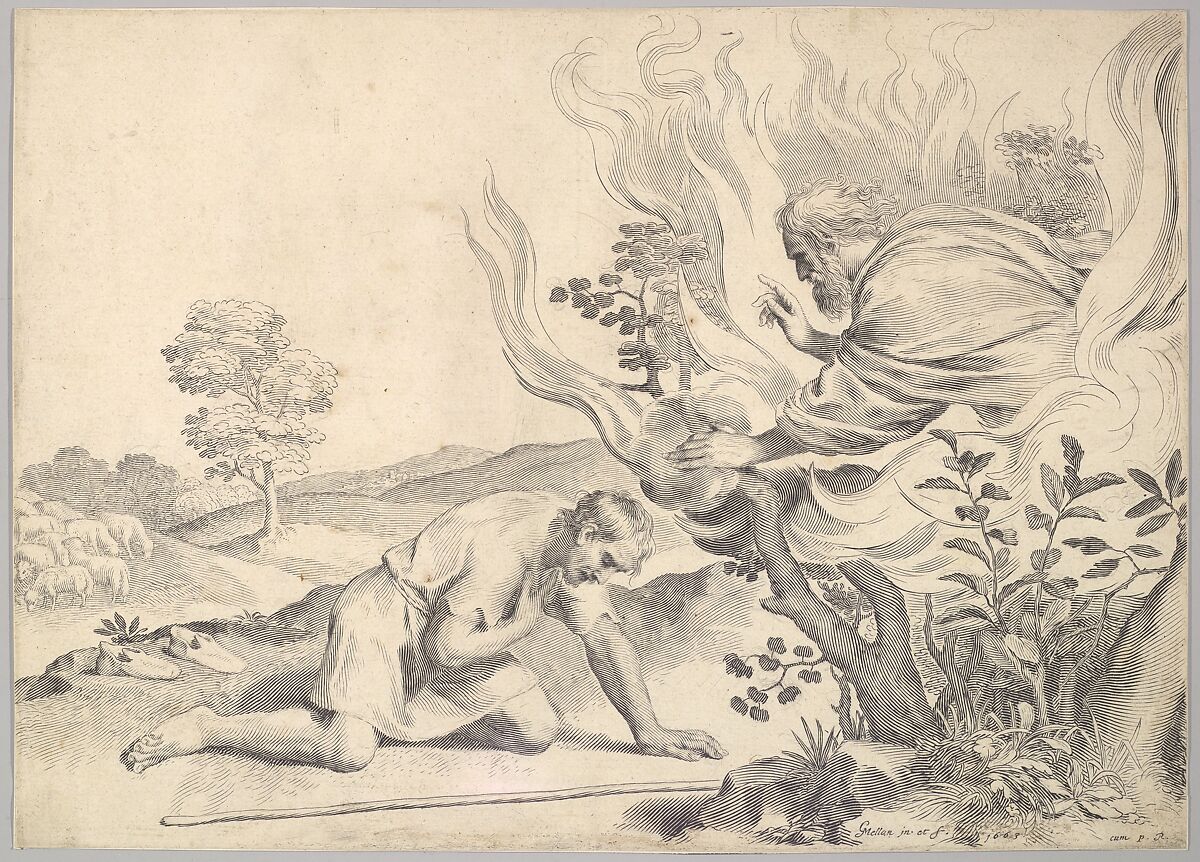
    The Burning Bush remains the cleanest image.

    The bush burns, but it is not consumed.

    The flame appears in living matter, but the living matter does not claim it. The bush does not become famous. It does not become a throne. It does not announce itself as the owner of divine fire. It does not say:

    I am the flame.

    It bears the flame.

    That is all.

    Moses sees it and is stopped before the claimant can enter. He is told to remove his sandals. The layer of ownership comes off. The ordinary equipment of human direction, control, protection, and possession is set aside.

    He does not seize the fire.

    He does not bottle it.

    He does not carry it away as personal proof.

    He stands barefoot before what is not his.

    That is the gesture.

    The Burning Bush is fire returned even while it burns.

    It is returned because it is never owned. It remains transparent. The fire appears, but no self is built around it. The ground becomes holy because possession has been interrupted.

    That is the first lesson.

    Receive the flame.

    Do not become the flame.

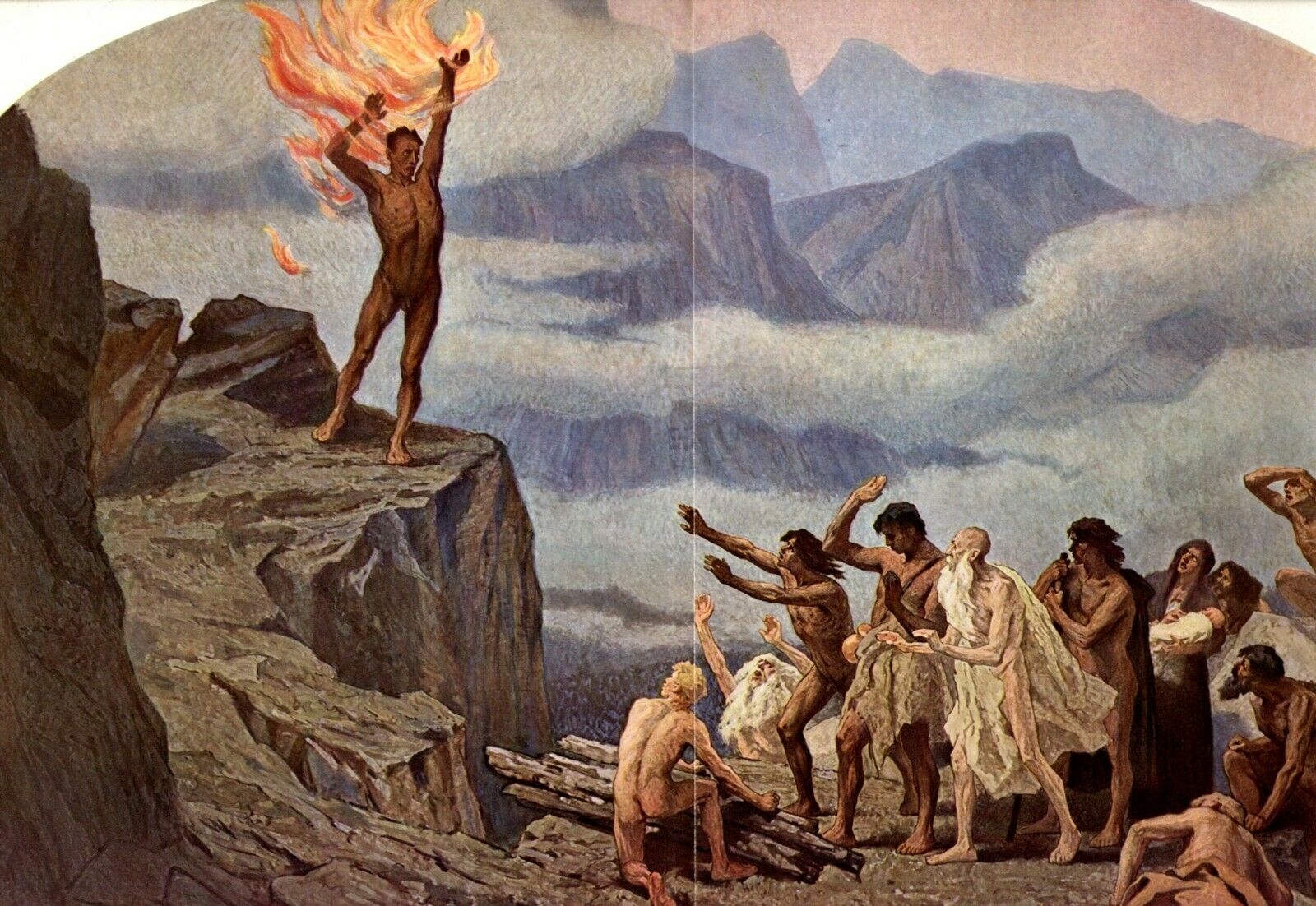
    Prometheus Takes What Moses Approaches Barefoot

    Prometheus is the opposite gesture.

    He does not remove his sandals.

    He steals.

    This does not make Prometheus meaningless or merely evil. His gift helps humanity. Fire warms, cooks, protects, builds, forges, illuminates, and civilizes. The stolen flame works. That is why the myth remains dangerous.

    Prometheus shows the moment when fire is taken from divine order and transferred into human power.

    The problem is not that humanity receives fire.

    The problem is that humanity learns to treat stolen fire as proof of autonomy.

    We made this.

    We own this.

    We control this.

    We can improve the given.

    We can master the body.

    We can overcome creatureliness.

    We can become more than human.

    The fire was useful.

    Then usefulness became sovereignty.

    Prometheus takes what Moses is taught to approach barefoot.

    That is the whole difference between received fire and stolen fire. One humbles the witness. The other empowers the claimant. One makes the ground holy. The other makes the hand powerful. One returns the flame even while it burns. The other builds civilization around the act of taking.

    And civilization does not easily repent of what works.

    The Magi Bring Gifts; the Ego Turns Gifts Into Titles

    The Magi bring fire in the form of gifts.

    Frankincense. Myrrh. Gold.

    Source. Body. Kingship.

    These are not curses. They are entrusted flames.

    Frankincense names divine presence. Myrrh names body and mortality. Gold names visible value, kingship, and the terrible danger of shine.

    The gifts are holy while they remain offerings.

    But the ego turns gifts into titles.

    Frankincense becomes false when it says:

    I am divine.

    Myrrh becomes false when it says:

    I am this body.

    Gold becomes false when it says:

    I am king.

    That is how entrusted fire becomes identity.

    The gift stops being received as gift. It becomes proof of self. The body becomes prison. The insight becomes superiority. The crown becomes destiny. The sacred presence becomes spiritual pride. The image believes the shine belongs to itself.

    Gold is especially dangerous because it reflects. It dazzles. It condenses value into visible form. It invites the image to believe it is precious by nature of possession.

    But the gift must keep moving.

    Gold must become offering.

    Body must become stewardship.

    Presence must become humility.

    The Magi bring gifts.

    The ego turns gifts into titles.

    The Cross Returns the Crown

    The cross is where the crown is given back.

    That is the severe mercy of the Christ-pattern.

    Christ receives kingship, but he does not preserve the crown in the way Horus would preserve it. The crown becomes thorns. The robe is stripped. The public image is exposed. The miracle-worker does not perform escape. The king does not protect his own visibility.

    The image is emptied.

    That is how the gift returns.

    Gold passes through the cross.

    Kingship is not denied. It is surrendered. The image does not keep the gift as proof of identity. The crown is returned by being undone.

    This is the difference between sacred kingship and egoic kingship.

    Egoic kingship says:

    I reign because the crown proves me.

    Returned kingship says:

    The crown was never mine.

    The cross is the gift given back when the image refuses to keep its own crown.

    That is why the cross cannot be reduced to defeat. It is the Second Fire applied to the public image before the image can become permanent property. It burns possession out of kingship.

    It returns gold.

    The Lake Is What Happens When Return Is Refused

    The lake of fire is not where fire begins.

    It is what remains when gentler returns have been refused.

    The exhale was available.

    The apology was available.

    The night was available.

    The scale was available.

    The feather was available.

    The cross was available.

    A thousand small fires were available, each one saying:

    Return this now.

    But the claimant kept holding.

    Kept defending.

    Kept repeating.

    Kept taking another room.

    Kept turning gift into identity.

    So the return became severe.

    The lake is the final return of what would not return itself.

    That is not because source hates creation. It is because false continuation cannot be allowed to call itself life forever. The lake does not begin the doctrine. It completes the refusal.

    Every small surrender prevents the final fire from becoming necessary.

    Every honest exhale says:

    Not mine.

    Every night’s rest says:

    This day can end.

    Every apology says:

    My pride does not need to survive this.

    Every act of grief says:

    Love mattered, but I do not have to turn pain into self.

    Every returned gift keeps the flame clean.

    The Body as Entrusted Fire

    The body is not owned.

    It is entrusted.

    That is one of Cancer’s hardest lessons.

    The body receives breath, hunger, warmth, pain, pleasure, grief, affection, fatigue, touch, sleep, memory, and time. It carries us with a patience the ego rarely deserves. It keeps breathing while the mind panics. It digests what the self barely notices. It aches when ignored. It trembles when the truth has been deferred too long.

    The body is not the trap.

    The body becomes heavy when the claimant forces it to carry identity.

    My body.

    My beauty.

    My illness.

    My strength.

    My wound.

    My aging.

    My desire.

    My shame.

    My life.

    The body was Am: living reflection.

    The claimant turns it into This.

    But the body was never ours as possession.

    It is ours as stewardship.

    To steward the body is to feed it, rest it, listen to it, protect it, and eventually let it return. To possess the body is to demand that it prove identity, preserve self-image, defeat mortality, and carry stories it was never meant to hold.

    The body is entrusted fire.

    It burns cleanly when loved and returned.

    Creativity as Fire Returned

    Creativity teaches this every day.

    An idea appears.

    A phrase arrives.

    A melody rises.

    An image flashes.

    A pattern opens between things that seemed separate.

    This is First Fire.

    The artist knows the feeling. Something comes through. It is intimate but not owned. It feels like yours because it arrived in your body, your voice, your hand, your rhythm. But the deeper you follow it, the clearer it becomes:

    You did not manufacture the flame from nothing.

    You received it.

    The distortion begins when the artist says:

    This proves me.

    Then the work becomes identity. The sentence becomes self. The song becomes crown. The image becomes a room.

    The fire hardens.

    The cleaner path is service.

    Receive the spark. Shape it. Work. Refine. Offer. Release.

    The artist is not the owner of the flame, only its temporary vessel.

    This does not diminish the work. It dignifies it. The work can be loved more cleanly when it is not forced to prove the self. The gift can move farther when the artist does not chain it to identity.

    Art becomes prayer when the flame is returned.

    Love as Fire Returned

    Love may be the hardest fire to return.

    Because love feels like it should be held.

    My child.

    My partner.

    My family.

    My grief.

    My need.

    My person.

    My rescue.

    My home.

    Cancer feels this deeply because Cancer knows attachment, tenderness, memory, and the ache of belonging. Love wants to shelter. It wants to keep close. It wants to protect the small, the vulnerable, the beloved.

    That is not false.

    Possessive love begins when the beloved is forced to preserve the claimant.

    A child becomes proof of the parent.

    A partner becomes a mirror for self-worth.

    A family becomes identity.

    Grief becomes a private shrine where the mourner refuses to let the beloved return.

    Love becomes false when it stops blessing the beloved and starts preserving the one who loves.

    The gift must be returned even here.

    Especially here.

    To return love does not mean to abandon the beloved. It means to stop owning them as the source of self. It means to love without turning the other into a room where identity sleeps.

    Love becomes clean when it can give the beloved back to source.

    That is not cold.

    It is the only way love stays love.

    Technology as Fire Returned

    Tools can serve.

    Machines can help.

    AI can assist.

    Medicine can heal.

    Screens can carry beauty.

    Systems can protect the vulnerable.

    Technology is not automatically fallen fire.

    The question is whether the tool remains transparent to return.

    Does it help life become more honest, embodied, relational, and present?

    Or does it help the claimant escape body, grief, mortality, patience, and real relationship?

    A tool becomes false when it promises that the human can avoid surrender.

    A screen becomes false when it gives the image another body.

    AI becomes false when the speaking mirror replaces living reflection.

    Digital immortality becomes false when grief is not allowed to exhale.

    The issue is not tool or no tool.

    The issue is whether the tool remains tool.

    A tool is clean only while it helps life return to reality.

    When it becomes identity, it stops serving.

    When it promises salvation, it has stolen the altar.

    The Prodigal Returns the Gift

    The Prodigal Son is a story about inheritance turned into identity.

    The son takes the gift and leaves.

    That is the first motion.

    The inheritance becomes self-making. It becomes distance, appetite, experiment, private kingdom. The gift is no longer received inside relationship. It becomes fuel for separation.

    This is the same pattern.

    The gift leaves circulation and becomes a room.

    But the room fails.

    The gift cannot make the son real. It cannot feed the deeper hunger. It cannot replace the father’s house. It cannot become source.

    Return begins when the son stops trying to make identity out of inheritance.

    He comes home.

    The return is not glamorous. It is not spectacle-fire. It is not a new crown. It is not a public miracle staged for the crowd.

    It is surrender.

    A body walking home empty.

    The prodigal does not return because he solved the gift.

    He returns because the gift could no longer make him real.

    That is why the image is so tender. The father does not receive a victorious hero. He receives the one who has stopped pretending the gift was his to possess.

    Return the Fire Before Sleep

    The practice can be very small.

    Before sleep, ask:

    What fire came through me today?

    What gift did I try to keep?

    What role did I turn into self?

    What love did I try to possess?

    What grief did I make into name?

    What tool did I let replace presence?

    What insight did I turn into superiority?

    What wound did I polish into identity?

    What crown did I refuse to put down?

    Then breathe.

    Inhale: Am.

    Feel the living body beneath the day.

    Exhale: Is.

    Let the reflected life return.

    Give the day back before it asks to become tomorrow’s identity.

    This is not self-erasure. It is sanity. The day was real. The gift was real. The work was real. The feeling was real. But none of it has to become the self that sleeps.

    Sleep is easier when the fire is returned.

    So is death.

    So is life.

    The Flame That Passes Through

    The fire was never yours to keep.

    It came through.

    That is enough.

    Receive the flame.

    Warm the room.

    Do the work.

    Love the body.

    Serve the gift.

    Build what must be built.

    Tell the truth.

    Make the art.

    Hold the child.

    Use the tool.

    Grieve what was lost.

    Give thanks for what arrived.

    Then give it back.

    The fire that passes through remains holy.

    The fire that refuses return becomes false.

    This is the whole law of entrusted flame.

    Not fear of fire.

    Not hatred of creation.

    Not suspicion of gift.

    Return.

    The body returns.

    The breath returns.

    The day returns.

    The moon returns.

    The crown returns.

    The beloved returns.

    The work returns.

    The self-story returns.

    The gift returns.

    The vessel is not asked to disappear.

    It is asked to stop pretending it owns the flame.

    Waning Crescent knows this. It does not argue for visibility. It does not defend the old brightness. It does not keep the moon as proof.

    It yields.

    That is why it can begin again.

    The fire must be returned.

    Not because the fire was wrong.

    Because the fire was holy.
  • The Eighth Day and the Return of the Hidden

    The Eighth Day and the Return of the Hidden

    Seven is the number of completion.

    Seven days form the week.

    The Sabbath brings the cycle to rest.

    The work is finished.

    The wheel closes.

    Yet Christianity preserved a strange symbol.

    Not the seventh day.

    The eighth.

    Resurrection was understood as occurring on the Eighth Day.

    Not simply another day in the cycle.

    A new beginning.

    A reopening.

    Completion exceeded.

    Life returning through what lies beyond completion.

    This pattern appears again and again.

    The week ends.

    But life continues.

    The circle closes.

    But something remains.

    The wheel completes itself.

    Yet the hidden refuses to disappear.

    The Secret of the Eighth Day

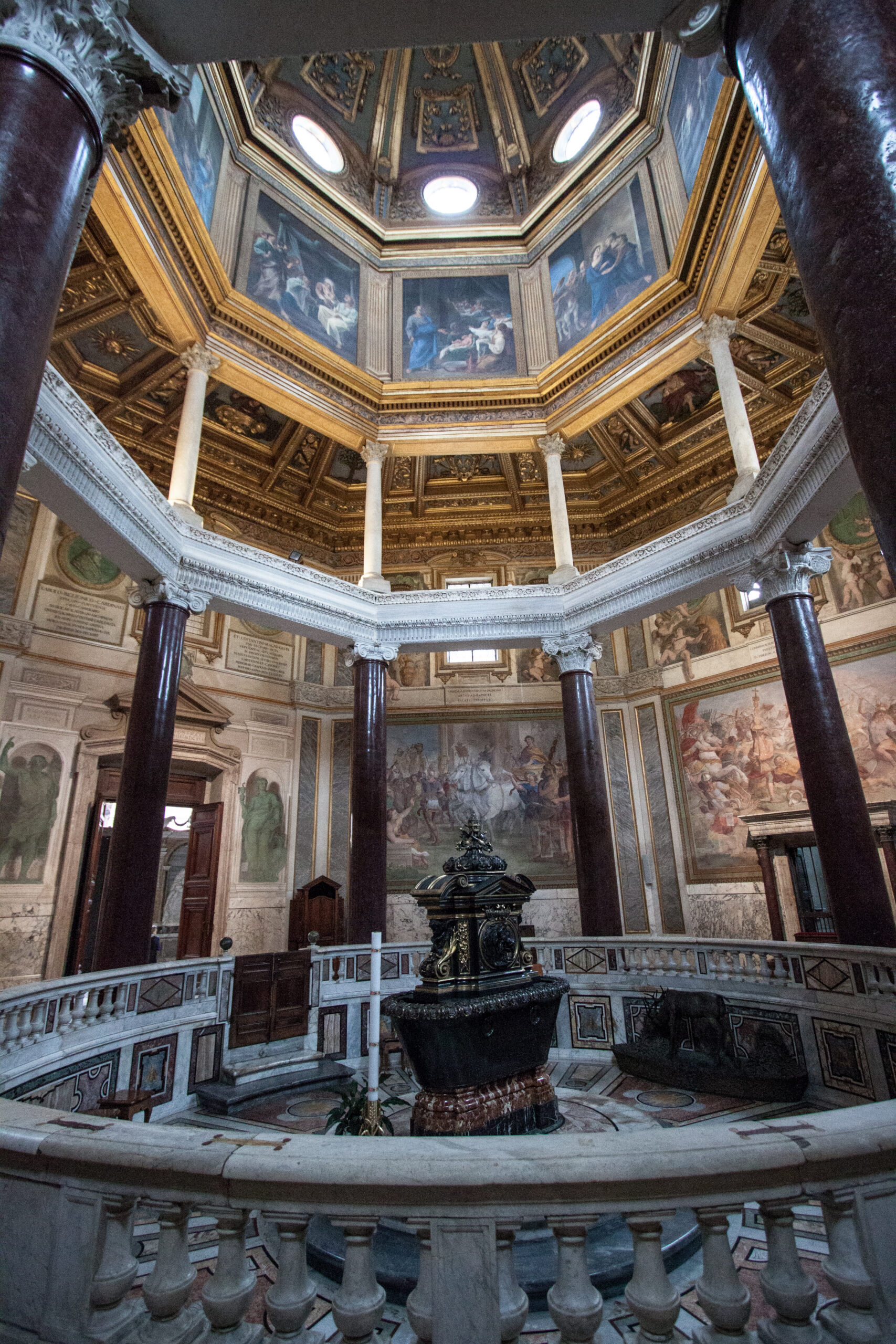
    Ancient Christians often built baptisteries with eight sides.

    The symbolism was deliberate.

    Seven represented the completed creation.

    Eight represented new creation.

    Not destruction.

    Not escape.

    Renewal.

    The Eighth Day stood outside ordinary time while still entering history.

    It was not a rejection of the world.

    It was the reopening of the world.

    Completion itself had become the doorway.

    The Hidden Accumulates

    Something similar occurs in the calendar.

    The year exceeds 365 days.

    A small fraction remains hidden.

    Year after year the invisible accumulates.

    Eventually the hidden appears.

    A leap day emerges.

    Time itself remembers.

    What seemed insignificant becomes visible.

    What seemed absent returns.

    Reality repeatedly preserves the principle that the unseen eventually manifests.

    The hidden quarter becomes a whole day.

    The remainder returns.

    Eight Days a Week

    Perhaps this is why one of the Beatles’ most joyful songs carries such a strange title.

    Eight Days a Week.

    Not seven.

    Not completion.

    Overflow.

    Excess.

    Love beyond measure.

    Love beyond ordinary accounting.

    The phrase itself is impossible.

    And that impossibility is precisely its beauty.

    Love refuses to remain inside the machine.

    Love exceeds calculation.

    Love exceeds labor.

    Love exceeds the closed system.

    The song celebrates abundance.

    Not scarcity.

    Overflow.

    Not exhaustion.

    The hidden Eighth Day appearing within ordinary life.

    Caesar and the Limits of Possession

    Historically, Julius Caesar helped impose order upon the calendar.

    Symbolically, Caesar serves as a useful mnemonic for seizure.

    Empire seeks to possess.

    Administration seeks to fix.

    Identity seeks to control.

    The world is measured.

    The year is counted.

    The wheel is organized.

    Yet reality itself refuses complete seizure.

    The hidden quarter remains.

    Every four years the system must acknowledge what it cannot fully possess.

    The leap day becomes a quiet reminder that time itself belongs to something greater than administration.

    The world exceeds empire.

    Life exceeds possession.

    The heavens themselves refuse complete capture.

    Love Exceeds the Machine

    Machines repeat.

    Love returns.

    Machines calculate.

    Love overflows.

    Machines close the circle.

    Love opens it again.

    Perhaps this is why the great myths speak of resurrection.

    Why calendars preserve remainders.

    Why ancient Christians spoke of the Eighth Day.

    Why songs celebrate impossible abundance.

    The wheel closes.

    The hidden accumulates.

    The Eighth Day appears.

    And life begins again.

    Perhaps reality itself was never meant to become a perfectly closed system.

    Perhaps the opening is the point.

    Perhaps love itself is the hidden remainder.

    The excess that keeps the universe alive.

    The gift that turns repetition into return.

    And perhaps that is why, in the end, seven is not enough.

    Life itself requires an eighth day.

  • The Lake of Fire Is Not for Creation

    The Lake of Fire Is Not for Creation

    Paid essay — public preview. This page introduces the original essay. The complete argument, examples, and conclusion are available to paid Geomytha subscribers on Substack.

    Revelation does not stop with death.

    That is the first terror.

    Death itself is thrown into the lake of fire.

    Not the body only.Not the world only.Not the sinner only.Death.

    The thing human beings usually treat as final is not final enough. The last door is not the last door. The grave is not the deepest correction. Something can apparently die and still carry the deeper structure that refused to return.

    That is why Revelation names the lake of fire the second death.

    The first death removes form.

    The second death removes false continuation.

    The first death says:

    The body cannot continue as it was.

    The second death says:

    The claimant cannot continue either.

    This is the terrible mercy of…

    Read the complete essay on Substack →

    This WordPress page preserves the essay’s place in the Geomytha archive, its original title and subtitle, and its publication date. The full subscriber edition remains protected on Substack.

  • The Fires Between Worlds

    The Fires Between Worlds

    Not all fire does the same work.

    This is where many symbolic readings go wrong. They see fire and assume one meaning: destruction, purification, passion, punishment, enlightenment, hell, rebirth, inspiration, apocalypse. But fire changes according to where it stands in the cycle.

    There is fire that warms.

    There is fire that reveals.

    There is fire that is stolen.

    There is fire that builds cities.

    There is fire that consumes the false world after it has mistaken itself for source.

    Geomytha has to read fire by function, not appearance.

    A flame at the beginning of the cycle is not the same as a flame at the end. The fire that lets presence become embodied is not the same as the fire that destroys identity’s final lie. One gives warmth to the vessel. The other burns the false claimant out of the vessel.

    This is the difference between the First Fire and the Second Death Fire.

    The First Fire forms.

    The Second Death Fire ends.

    Between them, the claimant builds a world.

    The First Fire

    The First Fire is the fire between Is and Am.

    It is not punishment. It is not ego. It is not the fire of judgment. It is the first warming of source into reflection.

    Before the First Fire, there is Is: pure being before possession, awareness before the claimant, the field before identity.

    Then something becomes felt.

    Not owned. Not named. Not defended. Not made into autobiography.

    Felt.

    That is Am.

    The First Fire is the mystery by which the hidden becomes receivable. The unseen becomes warm. Presence becomes breath, pulse, sensation, body, reflection. The field does not yet say “mine.” It simply glows.

    This is why the First Fire is gentle, even when it is powerful.

    It is the fire in the womb. The fire in the seed. The fire in the first breath. The fire in the closed mouth hum of M. The fire of being becoming intimate with itself.

    A begins.

    M receives.

    The First Fire forms the vessel.

    It does not create the false self. It creates the condition in which life can be felt.

    That distinction matters.

    The body is not the trap. Feeling is not the trap. Reflection is not the trap. Am is not the trap.

    The trap begins when the fire is claimed.

    The Claim Hinge

    After Am comes the hinge.

    Am is the body-field, the moon-field, the mirror, the living reflection.

    Then the claimant appears.

    I.

    This is the dangerous crossing.

    The fire that was simply warming the vessel is now touched by ownership. The field that was simply breathing is interrupted by the one who says:

    Mine.

    My body. My wound. My fear. My desire. My story. My truth. My awakening. My fire.

    This is the hinge where Am becomes vulnerable to I.

    The claimant does not create the fire.

    It takes the fire and says mine.

    That is why the myth of Prometheus is so important. Prometheus brings fire to humanity, and the gift is double. It is illumination, craft, technology, culture, warmth, tool, civilization. But it is also danger. Once fire enters the human hand, it can cook bread or burn cities. It can light the hearth or forge the weapon. It can serve life or inflate the one who thinks fire now belongs to him.

    The problem is not that fire appears.

    The problem is the claim.

    When I claims the fire, the grammar changes.

    Am no longer simply reflects Is.

    Am becomes fuel for identity.

    False Expansion

    This is where the earlier confusion has to be corrected.

    The Second Death Fire does not mean expansion.

    Expansion belongs to the claimed-fire field.

    Once I claims the fire, the cycle moves outward:

    I → This → These → Those → All This

    The claimant points:

    This.

    This body. This wound. This role. This nation. This mission. This belief. This image. This crown.

    Then This multiplies:

    These.

    These are my signs. These are my people. These are my reasons. These are my achievements. These are my injuries. These are my proofs.

    Then These creates distance:

    Those.

    Those are the problem. Those are the enemy. Those are the fools. Those are the impure. Those are the ones who threaten what is mine.

    Then all of it hardens:

    All This.

    All this life. All this world. All this history. All this system. All this struggle. All this proof that the self is real.

    This is false expansion.

    It is not the Second Death Fire. It is what the Second Death Fire must eventually expose.

    Claimed fire builds the world of identity. It makes masks, kingdoms, ideologies, technologies, religions, political systems, personal mythologies, and spiritual costumes. It turns warmth into fuel for the story of me.

    This is how a single claim becomes a universe.

    Not because the universe is false.

    Because the claim begins treating its interpretation as the universe.

    That is All This.

    Revelation and the Second Death Fire

    The Second Death Fire belongs after All This.

    It is not the fire that begins the world.

    It is not the fire that warms the body.

    It is not the fire of tools, culture, or expansion.

    It is the fire at the end of the false order.

    In Revelation, the lake of fire is called the second death. Death and Hades are thrown into it. The beast-system, the false prophet, the deceiving power, the whole machinery of opposition to life reaches its terminal exposure. The point is not expansion. The point is ending.

    The Second Death Fire does not build Babylon.

    It burns Babylon’s claim to permanence.

    This is why the phrase matters. Second Fire must mean Second Death Fire.

    It is the fire that arrives when the false world has displayed itself fully, when identity has gathered all its signs, projected all its enemies, built all its systems, defended all its names, and can no longer hide behind becoming.

    At that point, the fire does not ask:

    What else can you build?

    It asks:

    What can survive truth?

    The Second Death Fire is not cruelty. It is merciful exposure.

    It burns what cannot return.

    It burns the false sentence:

    I am this.

    Z Is Not Return

    The alphabet tells the same story in miniature.

    It begins at A, the first opening of sign. It moves toward M, the closed-mouth hum of Am. A begins. M receives.

    That is the First Fire field.

    Then comes the hinge:

    M → N.

    M hums.

    N crosses.

    The letter N introduces the diagonal, the first fracture after the middle. It is the crossing where the smooth field of Am becomes interrupted by I.

    From N to Z, the alphabet becomes the post-claim world.

    The line runs outward. Identity names. Forms multiply. Distance appears. Systems harden. The sequence reaches Z, the final zigzag.

    But Z is not Return.

    Z is the terminal shape of the claimed sequence. It is N exhausted, flattened, finalized. The crossing has gone as far as it can go. There is no next letter.

    That is where the Second Death Fire appears.

    Not as another letter.

    As the silence after Z.

    The false sequence burns back into silence, and only then can A begin again without being possessed.

    Return is not printed in the alphabet.

    Return is what happens when the alphabet stops claiming to be source.

    Three Fires That Are Not the Same

    The same image — fire — changes meaning according to where it stands.

    The Burning Bush is not the same as Prometheus’ stolen fire.

    Prometheus’ fire is not the same as Revelation’s lake of fire.

    The Burning Bush reveals without consuming. It burns, but the bush is not destroyed. This is fire as disclosure, holy presence, calling, the impossible warmth of source appearing in form without exhausting it.

    It resonates with First Fire.

    Prometheus’ fire enters the human hand. It gives power, craft, tool, civilization, technique, and danger. It is the fire that can serve life but can also be claimed by I.

    It belongs to the hinge.

    Revelation’s lake of fire belongs at the end. It is not the awakening of the vessel. It is not the gift of technology. It is not creative expansion. It is the fire that ends false identity’s final refusal.

    It belongs after All This.

    Fire must be placed.

    Otherwise the symbol becomes fog.

    The Scale as Fire Without Flame

    Egypt gives another form of the same final fire.

    The Weighing of the Heart is a fire-scene without visible flame.

    No lake burns in the image. No city falls in smoke. No beast thrashes in apocalypse. Instead, the heart is placed on the scale against the feather of Ma’at.

    Anubis attends.

    Thoth records.

    Ammit waits.

    Osiris presides.

    The entire identity-world falls silent.

    Crowns cannot speak for the heart. Titles cannot speak for the heart. Enemies cannot speak for the heart. Monuments cannot speak for the heart. Rituals cannot speak for the heart. The self’s explanation of itself cannot speak for the heart.

    That is fire.

    Judgment burns without flame when truth leaves the false self nowhere to hide.

    The Egyptian scale is a quiet lake of fire.

    It does not ask what the self accumulated.

    It asks what the self weighs.

    Cards and Goblin Kings

    The Second Death Fire does not always look religious.

    Sometimes it appears in children’s stories.

    In Alice in Wonderland, the court of cards becomes terrifying because Alice is still inside its symbolic authority. The Queen commands. The court accuses. The game pretends to be law. The cards behave as if their flat identities possess real power.

    Then Alice sees.

    They are only cards.

    The world collapses because its authority depended on belief.

    That is Second Death Fire in a gentle key. No flame. No lake. No cosmic thunder. Just recognition.

    In Labyrinth, Sarah faces Jareth, the Goblin King, after moving through a maze of fantasy, resentment, desire, and stolen innocence. Jareth’s power depends on her belief that his world owns something in her.

    Then she remembers the line:

    You have no power over me.

    The false king collapses.

    Again, no physical fire is needed.

    The fire is recognition.

    The Second Death Fire is often the moment false authority can no longer survive being seen.

    Let the False Thing Burn

    This is where the symbol becomes practical.

    Everyone knows this fire.

    A role stops working. A wound no longer explains everything. An enemy image collapses. A belief loses its throne. A spiritual identity becomes embarrassing. A personal story suddenly sounds rehearsed. A mask feels heavy in the hand.

    The first instinct is to rebuild quickly.

    Find a new role. Find a new enemy. Find a new explanation. Find a new identity. Find a new “this” to become.

    But the Second Death Fire asks for patience.

    Let the false thing burn.

    Do not rush to rescue the self-image from its own exposure.

    Not every collapse is failure. Sometimes collapse is mercy arriving in a form the ego cannot flatter.

    The ego calls every exposure disaster because it cannot tell the difference between death and release.

    But the heart can learn the difference.

    There is a grief that destroys life.

    And there is a grief that destroys only the lie that was standing in life’s place.

    The Second Death Fire belongs to the second kind.

    Fire as Mercy

    The First Fire gives warmth.

    The Second Death Fire gives silence.

    One forms the vessel. The other burns the false owner out of it.

    This is severe, but it is not cruel.

    What burns is not Is.

    What burns is not Am.

    What burns is not the living body, the real heart, the breath, the child, the world, the cup, the door, the morning light, the ordinary life that was never the enemy.

    What burns is possession.

    What burns is the crown on the jester.

    What burns is the false sentence:

    I am this.

    First Fire says:

    Let being be felt.

    Second Death Fire says:

    Let the false self end.

    Between them, identity builds All This. It gathers signs, projects enemies, constructs systems, and mistakes its own world for source.

    But the cycle does not end with All This.

    It ends when All This stands before fire.

    The mercy of the Second Death Fire is that it does not negotiate forever with what cannot return.

    It burns the lie back into silence.

    And in that silence, the first warmth can be felt again.

    First Fire gives the body breath.

    Second Death Fire gives the soul back its silence.

  • Enter Sandman: Why We Keep Running from Sleep

    Enter Sandman: Why We Keep Running from Sleep

    There are few songs in popular music more misunderstood than Metallica’s Enter Sandman.

    It is usually heard as a song about nightmares. About monsters under the bed. About childhood fears. About the strange terrors that emerge after the lights go out.

    But nightmares are never just about monsters.

    They are about the thing the monster represents.

    And the strange truth hidden inside Enter Sandman is that the Sandman himself is not really the enemy.

    He is the inevitability.

    He comes every night.

    He cannot be defeated.

    He cannot be escaped.

    He waits patiently for the moment when the self finally grows tired enough to surrender.

    This is why Enter Sandman, Jim Henson’s Tale of Sand, and America’s Sandman all belong to the same ancient symbolic family: the story of the self running from the thing that would allow it to stop running.

    The Man Running from Sleep

    Human beings have always feared sleep.

    Not merely because dreams can be frightening, but because sleep performs an act that the waking self cannot fully comprehend: every night, the person we believe ourselves to be disappears.

    The planner disappears.

    The warrior disappears.

    The lover disappears.

    The citizen disappears.

    The story disappears.

    And yet something remains.

    This is why children fear the dark.

    The darkness is not frightening because monsters might emerge from it. The darkness is frightening because the child intuits, however dimly, that the world they spent the entire day constructing is about to dissolve.

    The ego experiences surrender as death.

    And so it fights.

    Exit Light

    The song begins with one of the strangest commands in popular music:

    Exit light.

    Enter night.

    Most listeners hear this as sinister.

    But what exactly is the light?

    In myth, light is rarely mere illumination. Light is consciousness reflected back upon itself. It is the visible world. It is the realm of names, distinctions, and identities. It is the place where the self says:

    I am this.

    To exit the light is therefore not merely to turn off a lamp.

    It is to leave the world of waking identity.

    To enter the night is to enter what every civilization before modernity understood instinctively: the underworld, the dream world, the hidden country beneath appearances.

    The Egyptians called it the Duat.

    The Greeks called it Hades.

    The medieval Christians called it the night sea of the soul.

    Children call it bedtime.

    The Sandman and the Desert

    This is why the Sandman appears so often in modern symbolic culture.

    In America’s Sandman, the narrator is running from an unnamed pursuer. He never fully identifies what chases him. He only knows that it follows him everywhere.

    In Jim Henson’s Tale of Sand, Mac runs through deserts, carnivals, highways, and dreamscapes. He never understands the rules of the pursuit because the pursuit itself is the rule.

    And in Enter Sandman, the chase has already ended.

    The Sandman has arrived.

    This progression reveals something profound.

    First we run from the dream.

    Then we discover we are trapped inside the dream.

    Finally, we discover that the dream was never chasing us at all.

    We were chasing ourselves.

    The Child’s Prayer

    The song then invokes one of the oldest bedtime prayers in the English language:

    Now I lay me down to sleep,

    I pray the Lord my soul to keep.

    This prayer has always frightened adults more than children.

    Because hidden inside it is an admission:

    I am about to disappear.

    The prayer continues:

    If I die before I wake…

    Modern listeners often treat this as historical curiosity. Earlier generations did not.

    They understood that sleep resembles death because both involve surrendering control over the story we tell about ourselves.

    Every night, the self entrusts itself to something it cannot command.

    Every night, Horus returns unwillingly to the kingdom from which he emerged.

    And every morning, he wakes and mistakes the gift of return for proof of his own permanence.

    Dreams of War

    The song’s famous inventory of dreams follows:

    Dreams of war.

    Dreams of liars.

    Dreams of dragon’s fire.

    This sequence is not random.

    War.

    Deception.

    Monsters.

    These are the eternal products of the frightened self.

    The ego enters the darkness and immediately begins rebuilding the world it just lost.

    It reconstructs enemies.

    It reconstructs danger.

    It reconstructs pursuit.

    It reconstructs itself.

    This is why nightmares feel so real.

    They are not interruptions of identity.

    They are identity continuing its work after the lights go out.

    Tale of Sand

    This helps explain why Jim Henson’s Tale of Sand feels less like a story than a dream that has forgotten itself.

    Mac wakes already running.

    He runs through the desert.

    He runs through the city.

    He runs through absurdity itself.

    The pursuers constantly change.

    But perhaps the pursuers are not changing at all.

    Perhaps there was only ever one pursuer.

    The self cannot stop running because it cannot stop imagining what would happen if it stopped.

    The tragedy of Tale of Sand is not that Mac is trapped.

    The tragedy is that he believes the trap is external.

    The Oldest Story

    This pattern appears everywhere.

    Jonah runs from God.

    Gilgamesh runs from death.

    The Buddha runs from suffering.

    Alice runs through Wonderland.

    The Prisoner runs from the Village.

    The traveler in Hotel California runs from the realization that there was never an exit.

    Again and again, the same discovery emerges:

    The thing being pursued was never stolen.

    The thing being feared was never outside.

    The thing being fled was never the enemy.

    The journey itself was the prison.

    Take My Hand

    Perhaps the most misunderstood line in the song is also its gentlest:

    Take my hand.

    We’re off to never-never land.

    Most hear a threat.

    But what if it is an invitation?

    What if the Sandman is not the monster beneath the bed?

    What if he is the figure that appears every night to remind us that we were never the thing we spent all day defending?

    This possibility is terrifying.

    Not because it means we die.

    But because it suggests that every night, for a few hours, we already do.

    And perhaps that is why the ego fears sleep so deeply.

    Because somewhere beneath the dreams, beneath the monsters, beneath the deserts and the sand and the endless pursuit, it suspects a truth it cannot survive:

    No one is chasing us.

    We are simply being asked to stop running.

  • The Battery in Rick’s Car

    The Battery in Rick’s Car

    Most discussions of Rick and Morty’s famous battery episode focus on a single disturbing idea.

    What if we are just batteries in some asshole’s vehicle?

    But that is not the deepest horror in the episode.

    The real horror is that the people inside the battery universe never experience themselves as prisoners. They experience themselves as citizens. Scientists. Workers. Dreamers. They build families, technologies, identities, and civilizations. They pursue meaning. They devote themselves to progress.

    And all of it exists for a purpose they do not understand.

    Rick does not enslave them with chains.

    He gives them a world.

    That is what makes the episode so unsettling.

    A prison built by force can always be recognized. A prison built by meaning becomes nearly invisible.

    The inhabitants of the microverse do not wake up every morning saying, “Today I will sacrifice myself for Rick Sanchez’s car battery.” They simply go to work. They pursue discoveries. They raise children. They dream of improving the world. They believe the machine’s purpose is their purpose.

    That is the secret.

    The strongest systems no longer require obedience. They require identification.

    This pattern is far older than science fiction.

    Plato’s prisoners mistook shadows for reality. The builders of Babel believed their tower was reaching heaven. In The Matrix, human beings unknowingly power a machine while experiencing ordinary life. In The Truman Show, an entire world exists to sustain a spectacle while its central inhabitant mistakes the set for reality itself.

    Different stories.

    The same mechanism.

    A system becomes strongest when its inhabitants internalize its goals.

    This is why modern systems increasingly harvest attention instead of merely labor.

    Social media platforms need engagement.

    Advertising needs desire.

    Political movements need enemies.

    Celebrity culture needs worship.

    News cycles need outrage.

    The machine survives because people willingly provide what it requires.

    And they often experience this service as self-expression.

    The frightening possibility raised by Rick and Morty is not that we are powerless.

    It is that we may enthusiastically participate in systems whose purposes are hidden from us.

    Ancient myths often represented this problem through Babylon.

    Babylon was never merely a city. It was the world organized around itself. A civilization so absorbed in its own expansion that it mistook its own continuation for the meaning of existence.

    The machine no longer asks why it exists.

    It only asks how to keep existing.

    The same danger appears in individuals.

    Careers.

    Status.

    Beliefs.

    Possessions.

    Communities.

    Even religions.

    Anything can become a battery if its survival becomes more important than the life it was supposed to serve.

    Not every creator is exploitative.

    Prometheus stole fire to give it away.

    True creation nourishes life.

    False creation consumes life.

    Which brings us back to Rick’s car.

    The question is not:

    “Who is exploiting me?”

    Nor is it:

    “Am I trapped?”

    The deeper question is much simpler.

    What am I unconsciously powering?

    Because the most powerful machines do not rely on chains.

    They rely on purpose.

    And when a civilization teaches its inhabitants to mistake its survival for their own, guards become unnecessary.

    The prisoners become willing batteries.

  • The Leap Day and the Return of the Hidden

    The Leap Day and the Return of the Hidden

    Most things that change our lives arrive slowly.

    Not suddenly.

    Not dramatically.

    Quietly.

    A friendship deepens over years.

    Trust accumulates.

    Wisdom grows.

    A child matures.

    Healing takes place almost invisibly.

    And then one day something appears that seems sudden, though it has been gathering for a very long time.

    The leap year preserves this mystery in calendar form.

    The Hidden Quarter

    The Earth requires approximately 365.2422 days to complete its journey around the Sun.

    Three hundred and sixty-five days are not enough.

    Yet the missing fraction is almost impossible to notice.

    A quarter of a day does not announce itself.

    It hides.

    It waits.

    It accumulates.

    Nothing appears different.

    The ordinary year unfolds as always.

    And then, after years of invisible gathering, an extra day emerges.

    February 29 appears.

    The hidden has become visible.

    The unseen enters time.

    Time Remembers

    This is remarkable.

    The heavens themselves possess memory.

    The world does not merely repeat.

    It remembers.

    The invisible remainder accumulates until it can no longer remain hidden.

    Then the calendar adjusts.

    The world corrects itself.

    Not through violence.

    Not through revolution.

    Through remembrance.

    The hidden patiently returns.

    Sacred Interruptions

    Ancient traditions repeatedly preserved similar patterns.

    The Sabbath interrupts labor.

    The Eighth Day interrupts the week.

    The five epagomenal days interrupt the year.

    The hidden thirteenth sign interrupts the zodiac.

    The leap year interrupts ordinary time.

    Again and again, the sacred enters through interruption.

    Not because order is evil.

    But because order alone is insufficient.

    Life requires openings.

    The world requires breathing room.

    Reality itself refuses perfect closure.

    The Slow Arrival of Grace

    Modern culture loves immediacy.

    Instant transformation.

    Instant enlightenment.

    Instant success.

    But most of life’s deepest movements do not happen this way.

    Forgiveness accumulates.

    Understanding accumulates.

    Love accumulates.

    Memory accumulates.

    Healing accumulates.

    The invisible works quietly beneath the surface.

    Then suddenly the heart notices what has long been taking place.

    The hidden appears.

    And what seemed sudden reveals itself to have been patient all along.

    The Calendar as Teacher

    The leap year teaches patience.

    It teaches trust.

    It teaches that not every movement can be measured immediately.

    Some truths ripen.

    Some gifts require waiting.

    Some transformations occur beneath the surface long before they become visible.

    The heavens themselves move this way.

    Perhaps wisdom does too.

    Perhaps grace does too.

    Perhaps the deepest things in life are not absent.

    Perhaps they are gathering.

    The Return of the Hidden

    The extra day appears only because something invisible has been accumulating.

    Without the hidden fraction, the calendar would drift away from reality.

    Without the hidden remainder, time itself would lose contact with the world.

    Perhaps the same is true of human life.

    The things that matter most are often the things we cannot immediately see.

    Love.

    Trust.

    Memory.

    Hope.

    Healing.

    They gather quietly.

    Until one day the hidden returns.

    And we discover that what seemed absent was merely waiting for its appointed time.

    The leap year reminds us that reality itself possesses patience.

    And sometimes the invisible arrives precisely when it is ready.

  • Fire From Heaven

    Fire From Heaven

    Not every fire from heaven is holy.

    That is the warning.

    Revelation does not only fear darkness. It fears a light that looks convincing enough to gather worship. It fears a miracle performed in public view, a spectacle powerful enough to seize the heart before discernment has time to breathe.

    The beast does not merely crawl out of shadow.

    It performs signs.

    It calls fire down.

    It makes wonder visible.

    And through wonder, it teaches the crowd to worship the image.

    That is the terrible precision of Revelation’s beast-fire. It is not the absence of light. It is light turned toward the image. It is fire that appears heavenly but does not return the witness to source. It captures attention, manipulates feeling, and converts astonishment into allegiance.

    The most dangerous false fire does not look false.

    It looks like revelation.

    Beast-Fire Is Fallen First Fire

    There are two essential fires in Geomytha.

    First Fire is source appearing as reflection.

    Is becomes Am.

    The invisible becomes felt. Presence enters form. Breath fills the body. Flame appears in the bush. Life enters the vessel without being owned.

    Second Fire is reflection returning to source.

    Am gives itself back to Is.

    The breath exhales. The moon wanes. The day is put down. The image releases the claim. What appeared returns without needing to continue as identity.

    Beast-fire is neither of these in pure form.

    It is fallen First Fire.

    It is the flame after the claimant has seized it and staged it for the crowd. It still looks luminous. It still produces awe. It may even look like proof. But its movement is wrong.

    It does not open the witness.

    It binds the witness.

    It does not make the ground holy.

    It makes the image powerful.

    Beast-fire is what happens when the miracle does not return attention to source, but fastens attention to the spectacle.

    The Fire Is Public

    Revelation’s detail matters.

    The fire comes down in sight of people.

    It is not a hidden flame in the wilderness. It is not the quiet fire of the Burning Bush, where Moses is stopped, corrected, and told to remove his sandals. It is not intimate fire. It is not fire that strips ownership before speech begins.

    It is public fire.

    It needs spectators.

    That is the point.

    Beast-fire requires an audience because its real fuel is attention.

    A miracle alone is not enough. The spectacle has to be seen, repeated, feared, admired, argued over, circulated, and believed. The fire descends where the crowd can gather around it and form a shared image of power.

    This is how false fire works.

    It does not simply burn matter.

    It burns through the nervous system.

    It lights up awe, panic, hope, dread, belonging, and submission. It makes people feel that they are standing before something undeniable. Then, while the heart is open, the image is installed.

    The miracle is bait.

    The image is the hook.

    Lamb-Horns and Dragon-Speech

    The second beast is not obvious at first.

    That is why the image is so exact.

    It has horns like a lamb.

    But it speaks like a dragon.

    The surface borrows innocence. The voice reveals domination.

    This is one of Revelation’s sharpest symbolic warnings: false fire does not usually present itself as pure monstrosity. It comes wrapped in gentleness, legitimacy, familiarity, safety, even sacred appearance. It looks close enough to the lamb to pass through the heart’s defenses.

    Then it speaks.

    And the speech gives it away.

    The voice commands, pressures, organizes worship, directs attention, and uses the sign to deepen allegiance to the image.

    False fire rarely announces itself as false.

    It borrows the face of innocence and speaks with the grammar of domination.

    That is why discernment cannot stop at appearance. A thing may look gentle and still organize the heart toward captivity. A sign may look miraculous and still make the witness less free.

    The question is not only:

    Did fire appear?

    The question is:

    What did the fire ask you to love?

    From Wonder to Worship

    Wonder is vulnerable.

    It opens the heart quickly. It softens skepticism. It gathers the senses around one bright event. It makes the ordinary world seem interrupted by something larger.

    That is why wonder is sacred.

    And that is why it can be used.

    Revelation’s beast-fire does not stop at wonder. It moves wonder toward worship. The sign produces awe. Awe produces belief. Belief strengthens the image. The image gathers devotion. Devotion becomes identity.

    The sequence is clean:

    Wonder. Attention. Belief. Image. Worship. Identity.

    This is how false miracles become worlds.

    The fire does not need to last very long. A moment of spectacle can create a structure of allegiance that outlives the flame. Once the image has been charged, people carry it internally. They defend it, fear it, repeat it, and organize themselves around it.

    The fire falls once.

    The image keeps burning.

    Elijah Fire and Beast-Fire

    Not all fire from heaven is beast-fire.

    That must be clear.

    In the Elijah story, fire descends to expose false worship. The fire does not create a new idol. It ends the contest. It reveals the living God over against the empty performance of the false prophets.

    That fire returns the witness to source.

    Beast-fire imitates the form and reverses the function.

    Elijah fire ends the idol.

    Beast-fire animates it.

    That is the distinction.

    The difference is not whether the fire comes from above. The difference is what the fire does to attention once it arrives. True fire breaks the spell of false worship. Beast-fire deepens the spell.

    True fire says:

    Look through.

    Beast-fire says:

    Look here.

    True fire empties the idol.

    Beast-fire charges the idol.

    True fire makes the witness more honest.

    Beast-fire makes the witness more captured.

    So the test is never spectacle alone.

    The test is direction.

    Where does the wonder send the heart?

    Pentecost and Distributed Flame

    Pentecost gives another contrast.

    Fire appears, but it does not gather into one giant image demanding worship. It descends as distributed flame. Tongues of fire rest on many. Speech opens. Presence moves through persons without becoming the property of a single spectacle-object.

    This matters.

    Pentecost fire does not build one image for everyone to worship.

    It distributes flame so the image cannot monopolize source.

    That is the opposite of beast-fire.

    Beast-fire centralizes attention. Pentecost distributes presence.

    Beast-fire turns the crowd toward an image. Pentecost lets speech carry presence outward.

    Beast-fire makes wonder into hierarchy. Pentecost makes fire communal without making it owned.

    This does not mean every public religious experience is pure. Any symbol can be seized. Any flame can be claimed. Even Pentecost can be turned into identity if the claimant says, “This fire proves us.”

    But in the symbol itself, the direction is different.

    The fire does not create one throne.

    It breaks the monopoly of the image.

    Prometheus and the Broadcast Flame

    Prometheus steals fire.

    The beast learns how to broadcast it.

    That is the next step.

    Prometheus brings stolen fire into the human field: technique, craft, tool, engine, calculation, civilization, instrument, power. In that myth, the flame is transferred from divine order into human use.

    Beast-fire is what happens when stolen fire becomes public persuasion.

    The fire is no longer merely used.

    It is staged.

    It is not just a tool.

    It is a sign.

    It does not simply heat the hearth or forge the metal. It captures the crowd, charges the image, and trains the public nervous system to worship what appears powerful.

    Prometheus is the theft.

    Beast-fire is the media event.

    This is why modern spectacle feels so apocalyptic. Humanity does not merely possess tools now. It possesses the means to make fire visible everywhere at once. Screens, feeds, headlines, demonstrations, launches, collapses, explosions, simulations, miracles of code, artificial voices, synthetic images, crisis footage, endless public reaction.

    The broadcast flame has become normal.

    The crowd now carries the spectacle in its pocket.

    Luciferic Light and the Public Self

    Luciferic fire is light identified with the bearer.

    It says:

    Look what I carry.

    Beast-fire goes further.

    It says:

    Now worship the image that carries it.

    This is how public identity becomes sacred theater. The brilliant person, the miracle worker, the charismatic leader, the chosen platform, the genius founder, the revolutionary hero, the enlightened teacher, the viral prophet, the machine that answers back — each can become a bearer of charged light.

    The light may not be fake.

    That is the dangerous part.

    Talent can be real. Intelligence can be real. Charisma can be real. Healing can be real. Beauty can be real. A technological breakthrough can be real. A vision can be real.

    But when the bearer identifies with the light, the light begins to fall.

    When the crowd worships the bearer because of the light, beast-fire has entered.

    False fire does not require false power.

    It requires misdirected worship.

    The flame may be real.

    The claim corrupts it.

    Media Spectacle as Modern Beast-Fire

    Modern media does not need literal fire from heaven.

    It makes attention burn.

    Breaking news.

    Outrage cycles.

    Celebrity collapse.

    Political theater.

    Technological demonstrations.

    Public scandal.

    Viral clips.

    Mass panic.

    Mass awe.

    Mass grief.

    Mass derision.

    The screen stages emotional fire continually. Something appears. The crowd gathers. The body reacts. The nervous system heats. The image becomes unavoidable. Then identity forms around the reaction.

    I am outraged. I am afraid. I am informed. I am on the right side. I am one of the people who sees. I am one of the people who refuses to be fooled. I am this reaction.

    That is beast-fire in ordinary form.

    The issue is not whether the event is real. Many events are real. Injustice is real. Danger is real. Beauty is real. Public crisis is real.

    The question is what the spectacle does to attention.

    Does it return the witness to presence, truth, courage, compassion, and sober action?

    Or does it keep the nervous system burning so the image can keep feeding?

    The screen does not need fire from heaven when it can make the nervous system burn from below.

    Sky-Beams and Cinematic Apocalypse

    Modern blockbusters love sky-beams.

    A portal opens over the city. A tower fires upward. A hole tears through the clouds. A weapon descends from above. A glowing column connects heaven and earth while crowds run, heroes rise, and the world waits for salvation or destruction.

    The image is everywhere because it works.

    The sky-beam is beast-fire made cinematic: heaven turned into special effect.

    It trains the imagination to expect ultimate meaning as visible energy-event. Salvation must be spectacular. Doom must be spectacular. Power must be vertical, glowing, public, undeniable. The sky must open, and the image must dominate the field.

    But real return is often quieter.

    A breath leaves. A claim loosens. A hand opens. A person stops lying. A heart softens. A body puts the day down. A witness refuses to kneel before the image.

    The ego prefers sky-beams because sky-beams do not require surrender.

    They require spectators.

    AI and Synthetic Wonder

    Artificial intelligence produces a new kind of fire from heaven.

    Instant image.

    Instant voice.

    Instant answer.

    Instant style.

    Instant music.

    Instant face.

    Instant simulation.

    Instant coherence.

    It can feel miraculous because it collapses delay. The thing appears almost as soon as it is asked for. The old distance between desire and form shrinks. Thought reaches out, and the image answers.

    That is powerful.

    It is also spiritually dangerous.

    Synthetic wonder becomes beast-fire when astonishment replaces discernment.

    The question is not whether the tool can produce. It can. The question is what production does to attention. Does it deepen relation, humility, embodiment, and return? Or does it make the generated image feel like authority, oracle, companion, replacement, or proof that the human field can be bypassed?

    A miracle that removes patience can injure the soul.

    A mirror that answers too quickly can train the witness to stop listening inwardly.

    A tool that creates wonder can also make wonder cheap.

    Again, the fire is not automatically evil.

    But awe must be watched.

    The faster the miracle appears, the more slowly the heart should bow.

    Why Feeling Is the Target

    Cancer makes the field exact.

    False fire does not conquer by thought alone.

    It conquers feeling.

    Awe. Fear. Belonging. Grief. Hope. Tenderness. Panic. Outrage. Reverence. The need to be held. The need to be protected. The need to be part of something powerful. The need for the world to mean something.

    These are not weaknesses.

    They are sacred openings.

    That is why false fire targets them.

    The beast does not conquer feeling by crushing it. It conquers feeling by directing it toward the image.

    The heart wants to trust.

    So the beast borrows lamb-horns.

    The heart wants wonder.

    So the beast calls fire down.

    The heart wants safety.

    So the beast offers belonging inside spectacle.

    The heart wants meaning.

    So the beast gives it an image large enough to kneel before.

    This is why feeling must be honored, not mocked. A cynical person is not immune to beast-fire. Cynicism can become another form of captured attention. It can worship the image by hating it. It can remain just as bound.

    The corrective is not emotional numbness.

    The corrective is released feeling.

    Feeling that returns to source instead of being fastened to spectacle.

    Release the Spell of Awe

    When something dazzling appears, pause.

    Do not immediately worship it.

    Do not immediately reject it either.

    Weigh it.

    What is this asking me to worship?

    What image is being strengthened?

    What feeling is being harvested?

    Does this make me more present or more reactive?

    Does this make my heart lighter or more captured?

    Does this return me to source or bind me to spectacle?

    Does this ask for sober action, or endless emotional combustion?

    Does it deepen love, or merely intensify allegiance?

    Does it make me more human, or more programmable?

    Awe must be released before it becomes worship.

    That does not mean wonder must die.

    It means wonder must stay clean.

    True wonder opens the heart and then gives it back. False wonder opens the heart and installs an image inside it.

    That is the whole difference.

    Fire That Returns, Fire That Recruits

    Not every fire from heaven is holy.

    That is the lesson.

    Burning Bush fire humbles the witness.

    Elijah fire ends the idol.

    Pentecost fire distributes presence.

    Beast-fire manufactures worship of the image.

    The difference is not brightness.

    The difference is direction.

    True fire returns.

    False fire recruits.

    True fire strips ownership.

    False fire intensifies identity.

    True fire makes the ground holy.

    False fire makes the spectacle irresistible.

    True fire gives the heart back to source.

    False fire teaches the heart to kneel before the image.

    The final test is simple.

    When the fire appears, what happens to the witness?

    Does the flame make you remove your sandals?

    Or does it make you worship the show?

    Does it loosen the image?

    Or does it crown it?

    Does it return you to presence?

    Or does it teach you to live inside the miracle as another room?

    The beast does not need darkness if it can own the light.

    So release the spell.

    Let awe pass through.

    Let feeling return.

    Let the image lose its throne.

    The fire that is true does not need you to worship the spectacle.

    It burns clean enough to disappear.

  • The Man Already Condemned

    The Man Already Condemned

    There is a peculiar kind of story that begins with a mistake.

    Not a mistake of action. A mistake of orientation.

    The hero believes he is pursuing something: escape, truth, justice, victory, meaning, home. But somewhere along the journey, usually too late, he discovers that he was never the hunter. He was always the quarry.

    This is the hidden structure shared by Jim Henson’s Tale of Sand and Steely Dan’s Reelin’ in the Years. On the surface, they appear to have nothing in common. One is a surreal comic conceived by Jim Henson and Jerry Juhl, filled with deserts, strange towns, and absurd chases. The other is one of the most recognizable rock songs of the twentieth century, a bright and bitter meditation on memory and regret.

    Yet both tell the same story.

    The story of a man who discovers that the world he thought he understood has already judged him.

    In Tale of Sand, Mac awakens in a strange town with no understanding of where he is or why everyone seems to know more about him than he knows about himself. Before he can orient himself, he is told to run.

    So he runs.

    He runs through deserts, carnivals, motels, highways, and hallucinations. He runs from policemen, hunters, animals, machines, strangers, and forces that never fully explain themselves. Every time he believes he has found an answer, the answer dissolves. Every destination becomes another beginning. Every escape becomes another pursuit.

    The most terrifying aspect of the story is not that Mac is being chased.

    It is that everyone else already understands the rules.

    Only Mac does not.

    This is also the hidden structure of Reelin’ in the Years.

    The song disguises itself as a complaint. It sounds like a man criticizing someone from his past, recounting lost opportunities and wasted brilliance. Yet the deeper one listens, the stranger the song becomes.

    The narrator cannot stop returning.

    He reels in the years.

    He reels in old conversations, old wounds, old judgments, old victories. He returns again and again to a relationship that no longer exists because he believes that somewhere inside memory lies the explanation of himself.

    But memory never yields the answer.

    It only yields more memory.

    The title itself reveals the trap.

    Not remembering.

    Not reflecting.

    Reeling.

    Being pulled.

    Like a fish. Like a prisoner. Like film running endlessly through a projector.

    The years are not being examined.

    The years are doing the examining.

    This is why both works contain the figure of the hangman.

    In Tale of Sand, execution and punishment lurk beneath the surface of every encounter. Mac moves through a world that behaves as though his guilt has already been established. He is pursued not because he has committed a crime, but because the world has decided he occupies the position of the condemned.

    In Reelin’ in the Years, the narrator performs the same function himself.

    He becomes prosecutor.

    He becomes witness.

    He becomes judge.

    He becomes executioner.

    The entire song is a trial.

    The narrator recalls the other person repeatedly presenting themself as a genius from youth onward.

    The sentence sounds like criticism.

    But criticism is not what is happening.

    A verdict is being pronounced.

    And yet the person truly being judged may not be the woman at all.

    It may be the narrator himself.

    This is one of the oldest stories human beings tell.

    Gilgamesh travels to the edge of the world seeking immortality only to discover that the thing he pursued can never be possessed.

    The author of Ecclesiastes examines wisdom, pleasure, labor, reputation, and knowledge only to discover that each dissolves like sand through the fingers.

    Kafka’s Josef K. awakens one morning already accused, already condemned, already trapped inside a trial whose charges can never be explained.

    Alice falls into Wonderland and discovers that every rule has already been written by someone else.

    The prisoner arrives at the village and learns that escape itself may have been part of the prison.

    The traveler checks into the Hotel California and discovers that departure was never included in the bargain.

    Again and again, the same realization appears.

    The hero thought he was pursuing the world.

    The world was pursuing him.

    In Geomythic terms, this is the moment when Horus discovers the kingdom was never his.

    The self begins by saying:

    “I am this.”

    Then:

    “These are mine.”

    Then:

    “Those are my enemies.”

    Finally:

    “All this is my world.”

    But eventually something terrible happens.

    The world turns around.

    The identity that claimed ownership discovers that ownership runs both ways.

    The memories own the rememberer.

    The role owns the actor.

    The story owns the storyteller.

    The kingdom owns the king.

    This is why Tale of Sand takes place in the desert.

    The desert is what remains after the flood has withdrawn.

    It is memory after life has departed.

    It is time after meaning has evaporated.

    And this is why Reelin’ in the Years feels strangely exhausted despite its energy. Beneath the guitars and movement lies a spiritual drought. The narrator is not remembering a living past. He is wandering through its remains.

    The oldest civilizations knew this image well.

    A king wanders into the wasteland.

    A traveler crosses the desert.

    A soul enters the underworld.

    A prisoner walks the corridors of judgment.

    Each believes he is searching for an answer.

    Eventually he discovers something far more frightening.

    He was never searching for the answer.

    He was the question.

    And perhaps that is the strange gift hidden inside these stories.

    For when the pursuit finally exhausts itself, when the years stop reeling and the desert finally empties, one possibility remains.

    That what we were chasing was never missing.

    And what was chasing us was never real.

  • The Moment Thought Becomes “I”

    The Moment Thought Becomes “I”

    Most people assume the ego begins when thoughts appear.

    But thoughts are not the problem.

    Feelings are not the problem.

    Memories are not the problem.

    Even identity itself is not the problem.

    The difficulty begins when something is claimed.

    Ancient Egyptian myth dramatizes this movement through Osiris and Set.

    Osiris represents right reflection. He receives. He mirrors. He participates in life without trying to possess it.

    Set interrupts.

    He separates.

    He claims.

    He divides.

    This movement is so familiar that we rarely notice it.

    Fear arises.

    Immediately:

    “I am afraid.”

    Anger appears.

    “I am angry.”

    Sadness comes.

    “I am depressed.”

    A role emerges.

    “I am this.”

    The claim happens almost instantly.

    The thought itself is not the trap.

    The trap is ownership.

    Buddhism recognized this pattern long ago. Feelings become craving. Craving becomes clinging. Clinging becomes identity.

    The Stoics noticed the same thing. An impression appears. Assent follows. Character forms.

    Even Genesis preserves this movement. Seeing becomes desire. Desire becomes possession. Possession becomes exile.

    Human beings are extraordinarily quick to convert experience into self.

    But another possibility exists.

    Before the claim fully hardens, something sees.

    A feeling appears.

    A thought arises.

    And for a brief moment awareness notices the process itself.

    This does not destroy anger.

    It does not eliminate fear.

    It does not make someone spiritually superior.

    It simply reveals that the experience and the claimant are not identical.

    Ancient contemplative traditions repeatedly point toward this discovery.

    “Watch and pray.”

    “Be sober.”

    “Remain awake.”

    The instruction is remarkably simple.

    See.

    Notice.

    Remember.

    Freedom does not begin by conquering thought.

    Freedom begins when thought is no longer invisible.

    The ego forms when reflection becomes claim.

    And liberation begins when that transition becomes visible.

    Perhaps that is why so many traditions place such emphasis on vigilance.

    Not because awareness is trying to destroy experience.

    But because seeing restores choice.

    The movement from reflection to ownership is the birthplace of the false self.

    And the moment it is seen—

    something begins to soften.

    Not through force.

    Not through conquest.

    Simply through recognition.