Egypt gives Geomytha its first temple.
Not merely because Egypt has gods, tombs, pyramids, sacred animals, underworld books, and kings with crowns that look as if they were designed by the sky. Those matter. But Egypt matters more deeply because it gives the grammar of consciousness a visible body.
The pattern begins clearly:
Isis. Osiris. Set. Horus.
Source. Reflection. Interruption. Identity.
Or, in the stripped grammar:
Is. Am. I. This.
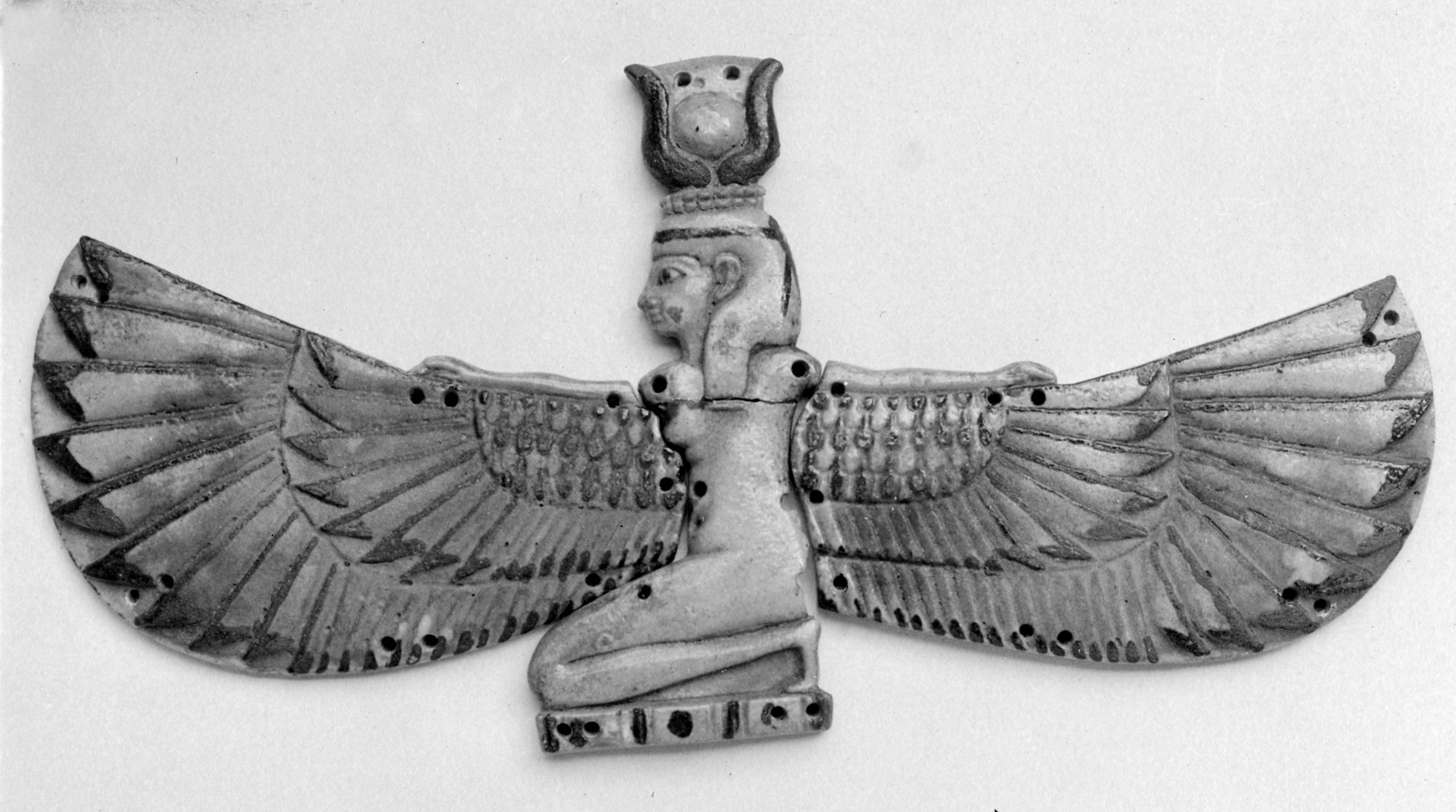
Isis is the source-field, pure awareness before claim. Osiris is reflected presence, awareness mirrored as living consciousness. Set is the interruption, the claimant, the cutting force that turns reflection toward possession. Horus is the identity-body born from that disruption, the form that appears when consciousness says:
I am this.
That much is already the root of Geomytha.
But Egypt does not stop at Horus.
That is the crucial correction.
Horus becomes king. The king gathers crowns. The crowns gather lands. The lands require enemies. The enemies justify a total order. The total order enters the underworld. And in the end, the heart is weighed.
This is where the fourfold Egyptian grammar opens into the eightfold cycle.
Egypt gives the first four as gods.
It gives the second four as civilization, enemy, cosmos, and judgment.
Isis — Is
Isis is Is.
Not simply Isis as one goddess among other gods, but Isis as the source-field: the living ground before the claimant arrives.
In Geomytha, Is is pure being before possession. It is awareness before thought says mine. It is the field before identity begins arranging the world around itself.
Egypt remembers this through Isis in her deepest function: the hidden mother, the throne, the magician, the gatherer of the scattered, the one whose presence makes restoration possible.
She is not only a character inside the story.
She is the field in which the story can be healed.
Before Horus can be born, before Set can be exposed, before Osiris can be reassembled, something must remain capable of receiving the broken pieces without becoming broken in the same way.
That is Isis.
That is Is.
The source does not need a crown.
The crown needs the source.
Osiris — Am
Osiris is Am.
He is reflected presence, the living mirror of source. Not pure source itself, but source become knowable as consciousness, pattern, relation, body, rhythm, and return.
Osiris is the moon-quality of consciousness: reflected, rhythmic, hidden and revealed, dismembered and gathered, dead and yet not gone.
This is why he is so important to Geomytha.
Am is not ego. Am is not claim. Am is being felt from within before thought turns it into autobiography.
Osiris is that state mythically embodied.
He is not the claimant saying “mine.” He is the reflective field before the theft. The body of living consciousness before it is seized, cut, scattered, and turned into the drama of identity.
When Osiris is whole, Am reflects Is.
When Osiris is fractured, Am becomes vulnerable to being claimed.
Set — I
Set is I in its dangerous form.
Not I as useful perspective. Not I as responsibility. Not I as the simple function that lets a person answer when called.
Set is I as interruption.
He is the cut in the mirror. The force that seizes reflection and bends it toward possession. He is projection, disruption, measurement, jealousy, comparison, strategy, claim.
Set does not create source.
He interrupts reflection.
That is why his violence against Osiris is so central. He breaks the reflective body. He turns Am into pieces. He introduces the possibility that consciousness might stop resting in source and begin chasing fragments.
In ordinary grammar, this is the moment the sentence starts to become dangerous.
Being is. Being is felt as Am. Then the claimant appears.
I.
And once I appears, the question becomes whether I will remain transparent to source or claim the whole field as its own.
Set is the claim.
Horus — This
Horus is This.
The child of the broken field. The identity-body. The figure that emerges after the claim has acted upon reflection.
Horus is not simply “bad.” That would flatten the myth.
Horus is necessary, heroic, luminous, royal, and dangerous. He is the form that appears after fragmentation. He tries to restore order, avenge the father, defeat the disruptor, and rule the divided field.
But from Geomytha’s angle, that is exactly the danger.
Horus is what identity looks like when it believes victory over the fragmenting force will restore source. He becomes the organized self, the ruler, the visible image, the one who says:
I am this.
This body. This name. This wound. This mission. This throne. This country. This story. This divine right.
Horus is the point at which the grammar hardens into identity.
But identity does not stop with one form.
This becomes These.
These — Crowns, Names, Regalia, and the Two Lands
These is the royal accumulation of Horus.
This is where the Egyptian extension becomes very strong, because Egypt does not need another god to explain These. It has the entire apparatus of kingship.
The Horus-self gathers signs around itself.
The double crown. The throne name. The Horus name. The serekh. The crook and flail. The uraeus. The Two Lands. The temple. The offerings. The monuments. The divine titles. The royal body standing between earth and sky.
This is the grammar of These.
“I am this” becomes:
These are mine.
These crowns are mine. These names are mine. These lands are mine. These gods authorize me. These temples preserve me. These enemies prove me. These monuments will remember me.
The Pschent, the double crown of Egypt, combined the White Crown of Upper Egypt with the Red Crown of Lower Egypt and represented the pharaoh’s power over unified Egypt. That is exactly the function of These: identity extending itself through accumulated signs of rule.
The self never stops at one mask.
It gathers a wardrobe.
Horus becomes king. The king becomes titles. Titles become territory. Territory becomes proof.
These is the stage where identity becomes decorated enough to look eternal.
Those — The Nine Bows and Apep
Once identity gathers These, it produces Those.
These are mine.
Those are not.
Egypt gives this stage one of its clearest images in the Nine Bows. The Nine Bows represented foreigners or enemies of Egypt, and in Egyptian art they were often placed beneath the feet, sandals, or thrones of the pharaoh as a sign of domination.
That is Those in visual form.
Not simply other people. Not simply actual enemies. But otherness turned into symbolic necessity.
The king stands above them.
The enemy underfoot proves the ruler’s height.
This is the danger of Those. Identity stabilizes itself by placing threat outside the circle.
Those foreigners. Those rebels. Those chaotic forces. Those enemies of Ma’at. Those who must be trampled so the world remains ordered.
Apep gives the cosmic version of the same grammar. If the Nine Bows are political Those, Apep is metaphysical Those: the chaos-serpent, the nightly threat, the enemy of solar passage and ordered recurrence.
The function is the same.
The identity-world says:
There must be something outside us that proves why we must rule.
This does not mean Egypt had no real dangers. It did. Every civilization faces enemies, disorder, invasion, drought, collapse, and forces that must be resisted.
Geomytha is reading the symbolic mechanism underneath:
The self becomes more certain of itself when it can name what must be crushed.
That is Those.
All This — Ma’at, Kemet, and the Duat
After These and Those comes All This.
This is no longer one crown, one enemy, one mask, one ritual, or one story. This is the whole environment.
Egypt becomes a total symbolic world.
The Nile. The temple. The tomb. The crown. The calendar. The gods. The offerings. The king. The enemies. The afterlife. The underworld. The judgment hall. The cosmic order. The land of Kemet above and the Duat below.
All This is where the symbolic system becomes so complete that it stops looking symbolic.
It becomes reality.
Ma’at belongs here, but carefully.
Healthy Ma’at is not the machine. Ma’at is rightness, truth, balance, order, the principle by which the world remains aligned instead of collapsing into chaos.
But any order can be captured.
When Ma’at remains transparent to source, it is right relation. When Ma’at becomes merely the administered system of kings, rituals, punishments, enemies, temples, and cosmic bureaucracy, it risks becoming All This: sacred order mistaken for source.
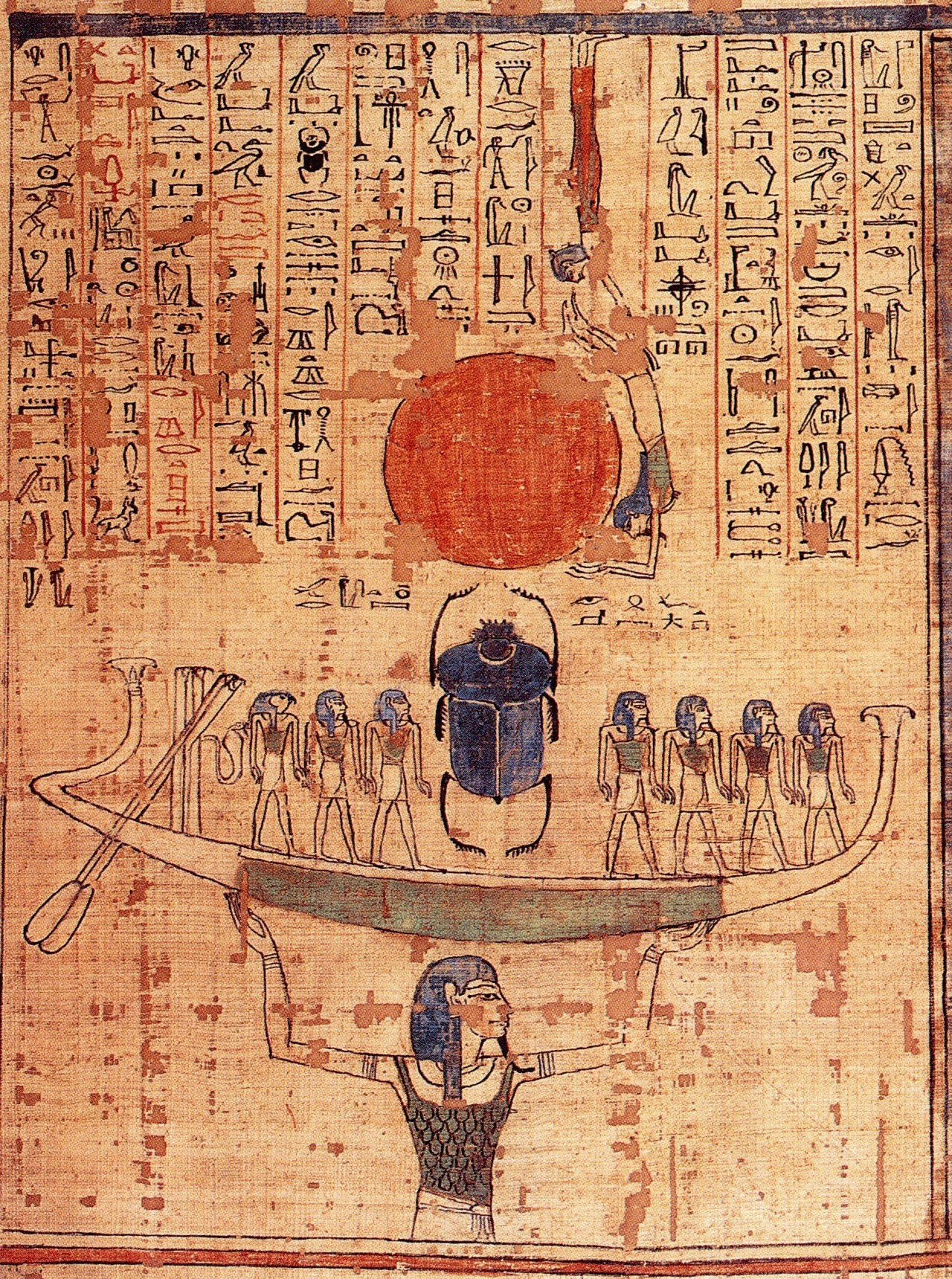
The Duat intensifies the pattern. In the Book of Gates, Ra travels through the underworld in his barque, passing through a structured night-world of gates, hours, guardians, and transformations. This is All This below the surface: not just the visible kingdom, but the unseen architecture that completes it.
Egypt’s genius was to make the world readable.
Egypt’s danger was that the readable world could become absolute.
That is always the danger of All This.
The map becomes the world. The ritual becomes the source. The crown becomes the sky. The order becomes God.
Return — The Weighing of the Heart
Then the whole system enters the scale.
This is Egypt’s deepest image of Return.
Not escape.
Not denial.
Not destruction of the world.
Judgment.
The heart is weighed.
In the famous judgment scene from the Book of the Dead of Hunefer, Anubis brings Hunefer into the judgment area, the heart is weighed against the feather of Ma’at, Thoth records the result, Ammit waits, and Osiris presides. The feather represents Ma’at, “what is right.”
This is the moment when All This can no longer argue.
The crowns cannot speak for the heart. The titles cannot speak for the heart. The monuments cannot speak for the heart. The enemies cannot speak for the heart. The rituals cannot speak for the heart. The social order cannot speak for the heart. The self’s explanation of itself cannot speak for the heart.
Only the heart remains.
That is Return.
Return does not ask what identity accumulated. It asks what identity weighed.
What did the claim do to the heart?
What did the crown cost?
What did the enemies conceal?
What did the system preserve, and what did it harden?
What remains when the whole Egyptian world — gods, names, crowns, tombs, spells, enemies, rivers, gates, and cosmic order — stands before the scale?
This is why the Weighing of the Heart is not merely a scene of afterlife bookkeeping. It is one of the great symbolic images of Geomytha.
It shows the end of All This.
The world-system is brought before what cannot be fooled.
The Full Egyptian Map
The Egyptian eightfold can be stated simply:
Geomytha StationEgyptian CorrespondenceFunctionIsIsissource, pure awareness, unclaimed fieldAmOsirisreflected presence, living consciousnessISetinterruption, claim, projectionThisHorusidentity-body, the formed selfThesecrowns, names, regalia, Two Landsaccumulation, royal extensionThoseNine Bows, Apep, enemies of Ma’atprojection, enemy-fieldAll ThisMa’at, Kemet, Duat, temple-statetotal symbolic world-orderReturnWeighing of the Heart before Osirisexposure, judgment, release
This map corrects the older simplification.
Horus is not the end.
Horus is the beginning of the identity-world.
Once Horus appears, he must either remain a transparent ruler in service to source, or he becomes the center of accumulation. He gathers These. He tramples Those. He administers All This. And in the end, he must stand before Return.
Egypt knew this.
That is why Egypt did not merely crown the king.
It also weighed the heart.
What This Corrects
The first correction is that Egypt does not need four extra gods to complete the eightfold cycle.
Trying to force These, Those, All This, Return into four additional deities would weaken the reading. The first four are divine figures because they name the birth of consciousness and identity. The second four are structural because they show what identity builds.
The second correction is that kingship is not the same as source.
Horus may be legitimate. Horus may restore order. Horus may defeat Set. But Horus can still become attached to his own royal image. The crown can become another mask.
The third correction is that Ma’at must be read carefully.
Ma’at is not false. But any sacred order can become false when it mistakes its forms for the source those forms were meant to serve.
The fourth correction is that Return is not anti-Egypt.
Return does not say the temple, crown, ritual, river, and afterlife images are worthless. It says they must finally answer to the heart.
That is the difference between living symbol and machine.
A living symbol returns attention to source.
A machine makes attention serve the symbol.
The Practical Scale
Egypt’s eightfold is not only historical.
It happens every day.
A person begins in Is, though usually unnoticed. There is simply being.
Then Am: breath, body, feeling, presence.
Then I: the claimant appears.
Then This: a role, wound, desire, fear, name, belief, achievement, or identity forms.
Then These: the self gathers supports.
These are my reasons. These are my people. These are my signs. These are my memories. These are my proofs.
Then Those: the self creates distance.
Those are the problem. Those are the enemy. Those are the fools. Those are the ones who do not understand.
Then All This: the whole structure hardens.
All this proves who I am. All this proves what the world is. All this proves why I must keep defending the crown.
Then Return comes as scale.
Not always at death. Often much earlier.
A quiet moment. A humiliation. A loss. A prayer. A silence. A child’s question. A body breaking down. A dream. A breath that refuses the story.
The heart is weighed before the self is ready.
And suddenly all the crowns look heavy.
Only the Heart Remains
Egypt tried to make permanence visible.
Stone, tomb, name, ritual, calendar, crown, river, star, god, book, gate, scale. The civilization’s whole symbolic labor was an answer to the terror of disappearance.
But its deepest wisdom is not that forms can be made eternal.
Its deepest wisdom is that even the most enduring form must be weighed.
That is the part Geomytha must remember.
The crown matters, but the crown is not source. The temple matters, but the temple is not source. The name matters, but the name is not source. The enemy may be real, but the enemy is not what makes the self real. The system may preserve order, but the system is not awareness.
At the end of All This, only the heart remains.
So the practical Egyptian question is not:
What have I built?
It is:
What does it weigh?
Let the crowns fall quiet.
Let the enemies lose their usefulness.
Let the system stop speaking for the heart.
Let Horus step down from the throne long enough to remember Osiris.
Let Am return to Is.
Egypt’s deepest teaching is not that the world can be made eternal.
It is that even the most enduring world must finally stand before the scale.