The first thing crisis steals is not safety.
It steals ordinary time.
A morning becomes a before-and-after. A broadcast becomes a wound. A skyline becomes a symbol. A harbor becomes a shrine. A cough becomes a signal. A mask becomes a moral language. Streets empty. Sirens multiply. Television repeats the same image until the image stops being information and becomes atmosphere.
This is how crisis enters the body.
Pearl Harbor was not only an attack on ships. It became a national wound arranged around surprise, violation, smoke, water, and fire. 9/11 was not only the destruction of buildings. It became an image-loop: planes, towers, dust, falling paper, emergency lights, faces turned upward, the terrible feeling that the sky itself had become hostile. COVID was not only a disease event. It became invisible threat made daily through dashboards, distancing, masks, isolation, mandates, arguments, deaths, numbers, and the sudden suspicion of breath itself.
Fear did not remain fear.
It became form.
That is the crucial movement.
A crisis may begin as shock, grief, confusion, or bodily alarm. But once it is gathered by media, state, memory, ritual, slogan, enemy-image, and identityThis — IdentityThis names the formed identity: the body, role, image, wound, belief, or story claimed as what the self is.Read full entry →, it becomes something else. It becomes fuel. It becomes the emotional power that drives a larger machine.
The question is not whether fear is real. Fear is often real. Grief is real. Death is real. Attack is real. Disease is real. Violation is real.
The question is what happens next.
Does fear pass through the body as weather, warning, mourning, and necessary response? Or does fear become the new center around which the self organizes? Does grief become wisdom, or does grief become a throne? Does protection serve life, or does protection become identity? Does memory preserve the dead, or does memory become a battery that must keep the wound alive to keep the system charged?
This is where Geomytha enters.
In Geomytha, SetSetIn Geomytha, Set names the claimant: I — the interruption by which reflection is taken as mine and converted toward ownership.Read full entry → is not merely destruction. Set is the force that seizes the reflective field and redirects it into projectionThose — ProjectionThose names projection: enemies, outsiders, competitors, threats, and disowned qualities placed beyond the identity boundary.Read full entry →, division, and control. Set does not need to invent pain. He only needs to take real pain and arrange it so that consciousness cannot returnReturn — RemembranceReturn names remembrance and release: the loosening of possession so reflection can become transparent to source again.Read full entry → from it.
Then HorusHorusIn Geomytha, Horus names the identity that forms after claim: This — the body, role, image, wound, belief, or story taken as what the self is.Read full entry → forms.
Horus is the identity born from the wound: the one who says, “I am thisThe False-Self Sentence — I Am ThisThe false-self sentence forms when claim joins reflection to a fixed object of identity: I am this.Read full entry →.” I am the attacked one. I am the endangered one. I am the righteous one. I am the vigilant one. I am the survivor who must never relax. I am the nation that must never forget. I am the body that must never trust. I am the citizen who must obey. I am the rebel who must resist. I am the one who knows what the threat means.
The wound becomes the self.
And once that happens, the wound must be fed.
This is the day fear becomes fuel.
Pearl Harbor shows the first great modern American form of this mechanism. Before the attack, the United States was divided over the war. After the attack, fear and outrage condensed almost immediately into mobilization. The wounded harbor became a national altar. The burning ship became a command. The dead became a summons. The question “What happened?” was quickly overtaken by the question “Who are we now?”
That shift is decisive.
A people under shock does not only seek facts. It seeks shape. It seeks a story strong enough to hold terror. This is understandable. Pure fear without form is unbearable. The mind needs a boundary, a name, an enemy, a ritual, a direction. It wants the emotional flood to become a road.
Set offers that road quickly.
He says: here is the enemy. Here is the mission. Here is the flag. Here is the wound. Here is the story. Here is the oath. Here is the map of meaning. Walk.
Some of that is necessary. A real attack requires response. The dead deserve remembrance. Disorder must be answered. But Set’s power lies in the subtle excess. He does not stop at response. He converts response into identity. He does not stop at memory. He converts memory into permanent fuel. He does not stop at protection. He converts protection into a sacred machine that cannot admit when the emergency has ended.
After 9/11, the image-worldImage WorldImage World names a symbolic environment in which representation becomes the dominant medium through which reality, value, identity, and belonging are encountered.Read full entry → intensified this pattern.
Pearl Harbor was photographed, reported, mythologized, and memorialized. But 9/11 happened inside the mature screen age. The wound was not only remembered afterward. It was witnessed in real time, replayed endlessly, slowed down, narrated, interpreted, archived, ritualized, and returned to the public nervous system again and again.
The towers fell once.
The image fell thousands of times.
That matters.
In the image age, trauma does not remain located in the event. It becomes portable. It enters living rooms, classrooms, airports, phones, documentaries, speeches, campaigns, anniversaries, security checkpoints, and the background feeling of an entire culture. The event becomes a screen-lit sacrament of vulnerability. People remember where they were because the image cut time in half.
Before.
After.
That is the grammar of crisis identity.
A wound becomes a calendar.
The country did not merely mourn. It reorganized. The word “homeland” returned with enormous symbolic force. Homeland is a CancerCancer — Zodiac SignCancer, the zodiacal sign used by Geomytha as the solar field of feeling.Read full entry → word: shelter, house, border, mother-field, inner room, defended origin. Once the homeland is wounded, fear becomes intimate. The threat is no longer “out there.” It is imagined as already through the door, already in the sky, already inside the ordinary.
This is why 9/11 did not only produce foreign policy. It produced atmosphere.
Airports changed. Language changed. News changed. Suspicion changed. Patriotism changed. Protest changed. The enemy became both specific and vaporous. Terror was not only an act. It became a field. And a field is much harder to end than an event.
That is Set’s genius.
He turns an event into a field.
Once fear becomes a field, Horus can live inside it for years. The identity remains charged because the threat is never fully concluded. The self can always say: stay alert, stay angry, stay loyal, stay suspicious, stay ready. The machine does not need constant attack. It needs the memory of attack kept emotionally available.
The same structure appeared differently during COVID.
Here the threat was not a visible enemy with planes or bombs. It was breath, touch, proximity, surfaces, crowds, family gatherings, restaurants, schools, churches, hospitals, strangers, friends. The invisible threat entered the most intimate layers of life. The body itself became a possible border breach.
Again, fear was not fake. People died. Hospitals filled. Families broke. Workers were exposed. Isolation wounded millions. The point is not to deny the reality of disease. The point is to see how reality becomes identity once fear is organized into symbolic roles.
COVID produced many Horus-forms.
There was the responsible self, the defiant self, the obedient self, the suspicious self, the expert-trusting self, the anti-system self, the masked self, the unmasked self, the isolated self, the essential self, the contaminated self, the morally pure self, the awakened skeptic self, the anxious body-self, the socially dangerous other.
The crisis did not only ask, “How do we protect life?”
It began asking, “What kind of person are you?”
That is the identity turn.
Once crisis reaches that point, the machine has found a deeper fuel sourceIs — SourceIs names unclaimed being: awareness before possession, distinction, or identity.Read full entry →. It is no longer running only on fear of the threat. It is running on fear of being the wrong self in relation to the threat. Fear becomes social. Fear becomes moral. Fear becomes performative. Fear becomes tribal. Fear becomes algorithmic.
The feed loves this.
The feed does not care whether the user is afraid in the approved direction or the rebellious direction. It can harvest both. It can feed the frightened citizen and the furious dissenter. It can amplify the official warning and the counter-warning. It can turn caution into identity and skepticism into identity. It can make every person feel surrounded by fools, cowards, tyrants, sheep, enemies, or threats.
This is the battery-world.
Rick and MortyRick and Morty — Television SeriesRick and Morty is Adult Swim’s animated science-fiction series centered on Rick Sanchez and Morty Smith.Read full entry → makes the battery-world absurd and literal: an entire civilization lives, works, believes, loves, competes, and builds, while unknowingly powering someone else’s vehicle. The horror of the joke is not only exploitation. It is misrecognized scale. The beings inside the battery think their conflicts are ultimate. They do not know their whole world has been arranged as a power source.
Modern crisis can work the same way.
People fight inside the emotional world generated by fear, but the larger machine feeds on the fighting itself. Pro-war and anti-war, compliant and defiant, terrified and enraged, official narrative and counter-narrative — all can become usable if they keep attention burning inside the system. The machine does not always require agreement. It often prefers conflict, because conflict keeps the battery hot.
This is where Horus fights Horus.
One identity opposes another identity. Each needs the other to remain charged. The patriot needs the traitor. The rebel needs the sheep. The cautious need the reckless. The awakened need the asleep. The righteous need the impure. The frightened need the dangerous. The dangerous need the frightened. Each side becomes proof of the other’s necessity.
Set smiles because the circulation continues.
This is why the enemy-image is so powerful after crisis. The enemy gives fear a face. Without a face, fear may dissolve back into grief, uncertainty, complexity, or humility. With a face, fear becomes usable. It can be pointed. It can be repeated. It can be made into doctrine. It can be passed to children.
Every identity-system needs a wound and a threat.
The wound explains why the system exists.
The threat explains why it must continue.
This is true at every scale. Nations do it. Movements do it. Religions do it. Families do it. Personal egos do it. A person can build an entire self around what happened to them. A country can build an entire future around what was done to it. A platform can build an entire economy around keeping everyone emotionally available to danger.
And yet the wound itself may be real.
That is the difficult part.
Geomytha is not asking for cold detachment from suffering. It is not saying Pearl Harbor was not an attack, 9/11 was not an atrocity, COVID was not a crisis, or fear is always manipulation. That would be shallow and cruel.
The sharper claimI — ClaimI names claim: the interruption by which reflected presence is taken as mine.Read full entry → is this: real wounds are precisely what systems prefer to harvest, because real wounds carry real energy.
Artificial outrage can fade quickly. Real grief has depth. Real fear has heat. Real death has gravity. If Set can seize that gravity, he does not need to fake sacredness. The wound already feels sacred. The task is only to redirect its power.
That redirection follows a pattern.
First, shock breaks ordinary time.
Second, media repeats the image until the image becomes atmosphere.
Third, authority names the meaning of the wound.
Fourth, identity forms around the named meaning.
Fifth, enemies are clarified.
Sixth, rituals of remembrance stabilize the new self.
Seventh, institutions preserve the emergency.
Eighth, the system feeds on the very fear it claims only to manage.
This is how crisis becomes machine.
But there is another path.
The contrast is Noah’s Ark.
The flood in the Noah story is overwhelming judgment, catastrophe, weather beyond human control. But the ark does not become a weaponized identity. It does not defeat the flood by becoming more flood-like. It does not turn terror into a permanent empire of panic. It contains life through the storm.
That distinction matters.
An ark is not an engine.
An engine uses force to keep moving. An ark preserves life until the flood passes. An engine needs fuel. An ark needs fidelity. An engine converts fear into motion. An ark allows fear to be felt without letting it become the ruler of the field.
This is the practical key.
When crisis comes, the question is not whether to feel. Under Cancer, feeling is unavoidable and necessary. The question is whether feeling can remain honest without hardening into permanent identity. Can grief be honored without being enthroned? Can danger be answered without becoming the center of reality? Can memory preserve the dead without recruiting them forever into the machinery of fear?
This is difficult because fear feels like truth when it is inside the body.
Fear narrows the world. It makes the possible enemy brighter than the quiet friend. It makes the future louder than the present. It makes the protective story feel morally superior to the open field. It says: if you relax, you betray the wound. If you forgive, you dishonor the dead. If you breathe, you are naïve. If you stop watching, you are unsafe.
That is how fear keeps itself installed.
The return begins when this installation is noticed.
Not denied.
Not mocked.
Not spiritually bypassed.
Not replaced with slogans.
Noticed.
The body is afraid. The mind is making pictures. The image is replaying. The story is asking to become self. The group is offering belonging through shared alarm. The machine is asking for attention. The wound is asking to be remembered, but the system is asking to be fed.
Those are not the same request.
The wound asks for truth.
The system asks for fuel.
The dead ask for reverence.
The machine asks for repetition.
The body asks for care.
The identity asks for control.
The soul asks for return.
Set asks for another world to build from the wound.
This is where decisive feeling becomes necessary. The answer is not numbness. It is not cynicism. It is not pretending the crisis did not matter. It is the disciplined refusal to let crisis become the author of the self.
Feel the fear.
Do not become fear’s vehicle.
Remember the wound.
Do not let the wound become king.
Protect the house.
Do not worship the locked door.
Mourn the dead.
Do not let the machinery of fear speak in their name forever.
This is the difference between living memory and battery memory. Living memory deepens presence. Battery memory keeps the charge circulating. Living memory can become wisdom, gratitude, vigilance, compassion, proportion. Battery memory becomes compulsion, enemy-addiction, identity maintenance, and endless replay.
The day fear becomes fuel is not always the day of the crisis.
Often it is the day after.
The day the story hardens.
The day the image becomes ritual.
The day the wound becomes identity.
The day the emergency becomes architecture.
The day the self learns to say, “I am this,” and forgets there was awareness before the wound.
That is the true danger.
Because what you are is not the crisis.
What a people is cannot be reduced to its violation.
What the body is cannot be reduced to its vulnerability.
What memory is cannot be reduced to replay.
What protection is cannot be reduced to fear.
There is a place before the wound hardened into name.
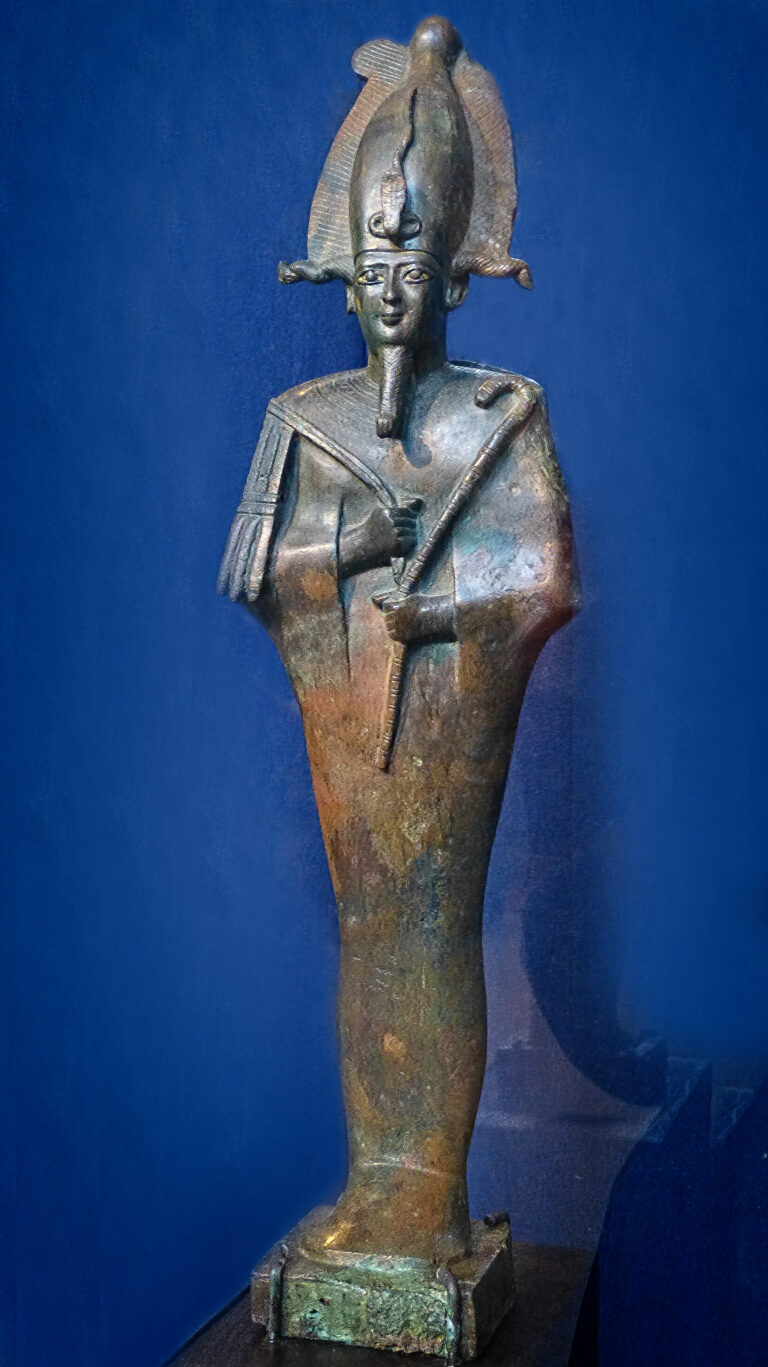
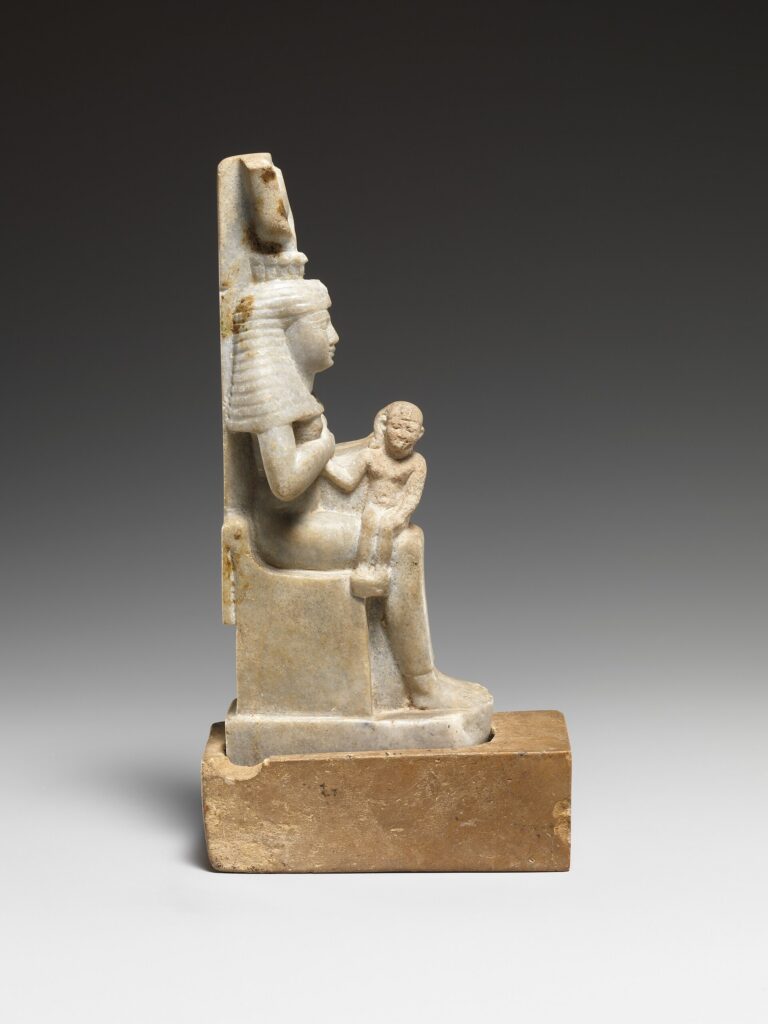
Geomytha calls that place presence. IsisIsisIn Geomytha, Isis names the unclaimed field: Is — pure being, awareness before possession, and the ground before the claimant appears.Read full entry → as ground. OsirisOsirisIn Geomytha, Osiris names reflected presence: Am — awareness reflected as living consciousness without yet becoming ownership.Read full entry → as right reflectionAm — ReflectionAm names reflected presence: awareness embodied or mirrored without yet becoming ownership.Read full entry →. The ark floating on the flood without becoming the flood. Breath still moving when the world-image demands panic. The quiet center that can mourn without becoming a machine for mourning.
This does not make anyone passive. In fact, it may be the only ground from which action becomes clean.
Panic acts quickly but often serves the wrong master. Presence can still act. It can defend, repairWorld-RepairWorld-Repair names the work of regathering relation, pattern, and presence inside a field that has been fractured rather than simply escaping the field.Read full entry →, grieve, investigate, build, resist, heal, and remember. But it does not need fear to remain enthroned in order to do so.
That is the hidden liberation.
A people can remember Pearl Harbor without living forever as the attacked harbor.
A people can remember 9/11 without letting the falling tower become the permanent architecture of consciousness.
A people can remember COVID without allowing invisible threat to become the final grammar of relation.
A person can remember what happened without saying, forever, “I am this wound.”
Build an ark, not an engine.
An ark carries life through the flood.
An engine burns the flood forever.
The crisis will ask for feeling. Give it honest feeling.
The dead will ask for remembrance. Give them reverent remembrance.
The body will ask for care. Give it care.
The world may ask for action. Give it action.
But when the machine asks for your fear as fuel, refuse.
That refusal is not forgetting.
It is return.