Category: Uncategorized

  • Why Success Never Feels Like Arrival

    Why Success Never Feels Like Arrival

    Paid essay — public preview. This page introduces the original essay. The complete argument, examples, and conclusion are available to paid Geomytha subscribers on Substack.

    There is a strange silence after getting what you wanted.

    Not always immediately. Sometimes there is joy first. Relief. Applause. A rush in the chest. The number comes through. The promotion lands. The book is published. The body changes. The degree is earned. The money arrives. The audience grows. The person says yes. The crowd cheers. The scoreboard confirms it. The world, for one shining moment, agrees.

    You did it.

    Then something quietly opens underneath the victory.

    Is this it?

    The question is almost embarrassing. It feels ungrateful. You worked for this. You wanted this. You imagined the arrival so many times that the image became part of the effort itself. You told yourself, consciously or not, that once this…

    Read the complete essay on Substack →

    This WordPress page preserves the essay’s place in the Geomytha archive, its original title and subtitle, and its publication date. The full subscriber edition remains protected on Substack.

  • A, M, N, Z: The Alphabet of the Two Fires

    A, M, N, Z: The Alphabet of the Two Fires

    Letters are little gates.

    Before they become words, before they carry arguments, prayers, contracts, names, threats, scriptures, brands, and songs, letters are marks. Shapes. Strokes. Angles. Crossings. Openings. Small architectures of attention.

    A letter is not only sound.

    It is a form the eye enters.

    Some letters open upward. Some close around space. Some cross. Some descend. Some mirror. Some lean. Some break. Some look like ladders, tents, mouths, waves, rivers, doors, towers, arches, serpents, hooks, or paths.

    The alphabet can be read as a field of passage.

    Not as proof of a hidden code that every ancient scribe consciously designed. That would be too small and too mechanical. The deeper point is stranger and simpler: shapes work because consciousness recognizes form before it explains form.

    A gate does not need a footnote to be a gate.

    A crossing does not need a doctrine to be felt as crossing.

    An inversion does not need permission to warn the body that something has turned.

    The alphabet becomes a map of how form either opens or traps. It shows how attention moves from threshold into reflection, from reflection toward crossing, and from crossing into inversion when identity tries to pass where only surrender can go.

    A opens.

    M embodies.

    N crosses.

    Z warns.

    Symbolic Grammar, Not Proof

    This has to be handled cleanly.

    The alphabet is not being reduced to a rigid secret system where every letter must mean one thing forever. That kind of decoding quickly becomes another room for the claimant. The ego loves the feeling that it has cracked the code. It loves saying:

    I know what every symbol really means.

    That is not the work.

    The work is not possession of symbols.

    The work is attention.

    A shape can comport without being a literal historical claim. A symbol can reveal a pattern without needing every user of the symbol to have intended it consciously. The question is not whether every scribe, mason, printer, monk, architect, advertiser, or schoolchild knew the whole grammar.

    The question is whether the form still works.

    Does the letter open attention? Does it embody reflection? Does it cross? Does it invert? Does it become a room? Does it return?

    That is the level of reading here.

    Not paranoia.

    Not proof-hunting.

    Symbolic mechanics.

    A letter is a small architecture of attention.

    A: The First Arch

    A is the first gate.

    It rises from two legs and meets at a point. It looks like a tent, mountain, roof, flame, pyramid, altar, ladder, or threshold. Even in its simplest printed form, A has the feeling of ascent. It gathers from the ground and reaches upward into a peak.

    A is beginning as architecture.

    It does not yet flow like water. It does not yet double itself. It does not yet cross from one upright to another. It opens.

    A is the arch of appearance.

    The hidden begins to take shape. The unmarked field receives the first structure. Something that was invisible becomes visible enough to stand.

    This is why A belongs to First Fire.

    Not fallen fire. Not stolen fire. Not beast-fire. The pure movement:

    Is becomes Am.

    Source enters the first threshold of form.

    The A is not the whole body yet. It is the first opening through which the hidden becomes visible. It is the doorway of appearance, the first upward mark, the first pressure of manifestation.

    A does not say:

    I am this.

    A says:

    Something is appearing.

    That distinction matters.

    The first arch is not the fall.

    The first arch is the mercy of appearance.

    A is the first doorway through which the hidden becomes visible.

    M: The Double Arch

    M is the arch after it has entered the body.

    A rises once.

    M rises twice.

    It moves up, down, up, down. It makes a doubled threshold, a wave, a valley, a pair of mountains, a body-field. It has repetition in it. It has rhythm. It has the sense of reflection: one rise answered by another.

    This is why M belongs so strongly to Am.

    Mother. Matter. Moon. Mouth. Mirror. Memory. Milk. Matrix. Manifestation.

    Not because spelling proves metaphysics, but because the shape and sound cluster around embodiment. M is made with closed lips. It hums in the body. It is one of the earliest sounds a child can make. It does not cut sharply like a blade. It vibrates. It holds. It resonates.

    M is not merely an arch.

    It is the arch embodied.

    A opens the threshold.

    M repeats the threshold inside matter.

    This makes M the letter of reflection. The first form has entered relationship with itself. The hidden has become felt, doubled, carried, mirrored.

    In Geomytha language:

    A opens the way for Is to appear. M shows that appearance becoming Am.

    This is not corruption.

    This is incarnation.

    The passage from A to M is not the fall. It is source becoming intimate enough to be held, felt, sounded, fed, and remembered.

    M is the arch after it has entered the body.

    A to M: The First Fire Becomes Reflection

    The movement from A to M is the movement of First Fire into living reflection.

    A is the first threshold.

    M is the embodied threshold.

    A is the gate.

    M is the gate remembered by the body.

    The first mistake would be to treat embodiment as the problem. It is not. M is not the fall. Matter is not automatically prison. Mother is not automatically bondage. Moon is not deception merely because it reflects. The mirror is not false merely because it is not the source.

    Reflection is not the enemy.

    Reflection is the way source becomes tender.

    That is why M has to be protected from contempt. If M is treated as corruption, the whole system collapses into anti-body thought. But Geomytha does not read Am as guilt. Am is the living field where Is is felt.

    The distortion begins later.

    Not in A.

    Not in M.

    Not in source appearing.

    Not in reflection forming.

    The distortion begins when the claimant sees reflection and says:

    Mine.

    Then Am becomes seized by I.

    Then the mirror becomes room.

    Then the body becomes identity.

    Then the world becomes This.

    But A to M is still clean.

    The passage from A to M is not corruption.

    It is incarnation.

    N: The True Crossing

    N introduces crossing.

    Two uprights stand apart, and a diagonal passes between them.

    That diagonal matters.

    M descends and rises within a doubled embodied rhythm. N cuts from one side to another. It bridges. It moves across polarity. It does not merely repeat the arch. It creates passage between pillars.

    N is a ladder.

    N is a bridge.

    N is lightning contained into relation.

    N is the angled path between above and below, left and right, source and reflection, one shore and another.

    N knows that crossing costs direction.

    To cross, one cannot simply remain where one began. The line must leave one upright and commit to the diagonal. It must risk the angle. It must pass between positions without pretending they are identical.

    This is why N can be read as true crossing.

    It does not abolish difference. It relates difference.

    It does not collapse the pillars. It connects them.

    It does not make the journey flat. It angles through tension.

    Jacob’s ladder belongs near this form. Not because the letter N is literally Jacob’s ladder, but because both show passage between worlds through a slanted path. The diagonal is not decorative. It is the cost of relation.

    A straight vertical line can stand.

    A circle can enclose.

    A horizontal line can rest.

    But the diagonal crosses.

    N is the letter that knows crossing must cost direction.

    Z: The Inverted Crossing

    Z looks like crossing after the structure has been knocked sideways.

    The diagonal remains, but the orientation has changed. The path no longer rises between two standing pillars. It becomes sharper, flatter, more restless. It has the feeling of zigzag, lightning, fracture, reversal, serpentine movement, or broken passage.

    Z still remembers N.

    But it remembers it incorrectly.

    That is what makes it powerful.

    Z is not simply the opposite of N. It is N after crossing has been displaced. The shape still moves from one side to another, but the upright relation has collapsed into a more horizontal field. The diagonal no longer joins two standing columns in the same way. It cuts across a broken plane.

    This is where inversion appears.

    A true crossing relates difference without pretending the claimant owns the passage. An inverted crossing mimics passage while avoiding surrender. It looks like motion. It may feel charged. It may even feel like breakthrough.

    But it can be a broken crossing.

    The claimant loves Z because Z can feel like crossing without yielding. It can feel like rebellion, speed, shock, secret knowledge, zigzag brilliance, lightning identity, the thrill of inversion.

    Z says:

    I crossed.

    But the deeper question is:

    Did anything return?

    Or did the claimant simply draw a more dramatic path?

    Z is the crossing after the claimant has knocked it out of alignment.

    N to Z: Passage Becomes Inversion

    The center of this article is the movement from N to Z.

    N is passage.

    Z is passage claimed.

    N crosses between pillars.

    Z fractures the crossing into restless force.

    N can return.

    Z can become a room shaped like escape.

    This is one of the main Geomytha warnings: identity is very good at mimicking passage. It can mimic awakening. It can mimic liberation. It can mimic return. It can mimic rebellion, transcendence, prophecy, spiritual insight, and symbolic mastery.

    The claimant does not always remain still.

    Sometimes the claimant moves constantly.

    That movement can look like growth.

    But if the claimant remains intact, the crossing has inverted.

    The old self becomes the one who crossed.

    The ego leaves one room and builds another room called “beyond.”

    The threshold becomes hotel.

    The doorway becomes brand.

    The symbol becomes proof.

    The map becomes identity.

    That is Z.

    Not merely motion, but motion possessed.

    Not merely crossing, but crossing turned into self-story.

    Z is not hopeless. It warns. It shows that a path can look charged and still fail to return. It shows that inversion keeps the structure of passage while bending its function toward identity.

    N is passage.

    Z is the claimant’s imitation of passage.

    Everything After M

    If M is the double arch of Am, then the field after M becomes symbolically charged.

    This does not mean every later letter has to be decoded into a rigid system. That would become too brittle. But as a working principle, after M the alphabet asks a new question:

    Can reflection cross cleanly?

    Or will the crossing become identity?

    Before M, the movement is toward appearance and embodiment. After M, the problem of passage intensifies. The body has appeared. Reflection has formed. Now the image must either return or be claimed.

    Can Am remain transparent?

    Can the mirror stay mirror?

    Can the body stay vessel?

    Can the symbol stay window?

    Can the gate stay gate?

    Or does I enter and harden everything into This?

    That is why N and Z matter. They show the two possibilities after embodiment.

    N is crossing.

    Z is inversion.

    N is the diagonal that relates.

    Z is the zigzag that dramatizes.

    N is passage with cost.

    Z is passage turned sideways into claim.

    After M, the alphabet asks whether reflection can return or whether identity will keep drawing new rooms.

    Arches in Cities

    This is not only about letters.

    The same grammar appears in architecture.

    Cities are full of arches: triumphal arches, memorial arches, sacred arches, Gothic arches, civic gates, ceremonial thresholds, monuments, doorways, bridges, portals, colonnades, stations, courthouses, churches, temples, and branded entrances.

    An arch can be holy.

    It can mark passage. It can say: leave one field, enter another. It can humble the traveler by reminding the body that transition matters. It can frame the sky, shelter the door, and give shape to crossing.

    But an arch can also crown possession.

    The triumphal arch is the perfect tension. It is a gate, but it is also a trophy. It marks passage, but it may also announce empire. It can say:

    Enter differently.

    Or:

    Behold our victory.

    Same form.

    Different function.

    The arch is holy when it marks passage and fallen when it crowns possession.

    That is true of physical arches, religious arches, institutional arches, national arches, and inner arches. The question is always the same:

    Does the gate open the traveler?

    Or does the gate glorify the owner?

    The Double Arch as Appetite-Machine

    The double arch has its own modern stress-test.

    The golden arches are almost too obvious, which is why they should be handled briefly.

    M is mother, matter, moon, mouth, milk, meal, memory, and manifestation. It is the double threshold of the body. It belongs to feeding, holding, reflecting, and entering the world through need.

    A commercial double arch turns that threshold into appetite.

    The body enters not to return, but to consume.

    The arch no longer marks sacred passage. It becomes a branded mouth. A bright M in the public field, calling the body toward repetition, comfort, salt, sugar, hunger, childhood memory, and identity-through-consumption.

    This does not make eating evil.

    Food is not the trap.

    The body needing food is not the trap.

    The trap is when the mother-threshold becomes appetite-machine, when the M of embodied need is captured by brand, habit, and repetition.

    The golden arches are M converted from mother-threshold into appetite-machine.

    A sacred form can be commercialized.

    A threshold can be franchised.

    A gate can become a mouth.

    Zigzag, Lightning, and the Broken Path

    Z belongs to zigzag.

    That gives it a relationship to lightning, shock, fracture, sudden descent, and broken movement.

    Lightning can be holy. It can be the sudden strike of revelation, the fire that descends, the flash that reveals the landscape in one instant. But lightning can also become the glamour of intensity: power without integration, charge without return, brilliance without humility.

    The zigzag is fire after the path has become fractured.

    It moves, but it does not rest. It strikes, but it does not necessarily relate. It dazzles, but it may not return. It can feel like revelation while leaving the claimant intact and electrified.

    Modern culture loves zigzag fire.

    Hot takes. Sudden shocks. Viral flashes. Breaking alerts. Instant insight. Aesthetic rebellion. Lightning identity.

    Everything is charged.

    Very little crosses.

    The true question is not whether the lightning appears.

    The question is whether the flash returns the witness to source or merely gives the claimant a brighter outline.

    Z warns that not every charged path is a true crossing.

    Some lightning only teaches the self to love being struck.

    Zion and the Z-Question

    Zion is one of the most powerful Z-words because it names a holy place, a promised place, a city, a kingdom, a longing, a return-home, and a political/religious identity depending on who is speaking.

    That makes it symbolically dangerous.

    Zion can mean the place the heart longs to return to.

    But it can also become territory hardened into identity.

    It can be kingdom as source remembered.

    Or kingdom as room possessed.

    This does not mean Zion is false.

    It means Zion carries the Z-question.

    Does the sacred city return the seeker to source?

    Or does it become another This?

    Does the kingdom end the search?

    Or does the search become identity?

    Does the promise open the hand?

    Or does it harden the fist around territory, doctrine, tribe, image, or destiny?

    Zion comports only when the Z is returned to crossing instead of hardened into territory.

    The kingdom being searched for may be what has been searching.

    But once the claimant says, “I own the kingdom,” the kingdom disappears into the room.

    Test the Gate

    Every gate must be tested.

    Not feared.

    Tested.

    A letter. A symbol. A religion. A nation. A teacher. A doctrine. A brand. A ritual. A relationship. A path. A theory. A revelation. A system.

    All can be gates.

    All can become rooms.

    Ask:

    Does this open?

    Does this return?

    Does this make me more embodied, honest, humble, and present?

    Does this help Am return to Is?

    Or does it give I another This?

    Does it crown the claimant?

    Does it let me leave the one who wants to own the gate?

    That last question matters most.

    A gate is true only if it lets you leave the one who wanted to own the gate.

    Otherwise it is not a gate.

    It is architecture for identity.

    The Broken Crossing Can Be Returned

    Z is not hopeless.

    Inversion can be noticed.

    The broken crossing can be returned.

    The path can move from Z back toward N, from dramatized motion back toward true passage, from identity-crossing back toward relation. The arch can stop crowning possession and become threshold again. The double arch can stop feeding appetite and become embodied reflection again. The letter can stop being room and become gate.

    This is the mercy of symbolic grammar.

    A symbol is not condemned because it has been inverted.

    A gate is not useless because someone built a throne on it.

    A letter is not dead because the claimant used it badly.

    Form can be returned.

    The alphabet is not a prison.

    It is a map of how form either opens or closes.

    A opens.

    M embodies.

    N crosses.

    Z warns.

    The question is whether the symbol becomes window, gate, or another room for the claimant.

    First Quarter asks for definition.

    Cancer asks that definition not lose the body.

    So define the crossing gently and clearly.

    Do not fear the arch.

    Do not worship the arch.

    Pass through.

    Do not despise the body.

    Do not live inside the body-story.

    Feel.

    Do not mistake every zigzag for freedom.

    Do not turn every gate into identity.

    Cross cleanly.

    And when the crossing breaks, return it.

    A is the arch.

    M is the body of the arch.

    N is the crossing that still knows relation.

    Z is the warning that passage can be inverted.

    The broken crossing is not the end.

    It is the place where noticing begins.
  • The Turning Cross

    The Turning Cross

    A symbol must be read by function.

    Not only by shape. Not only by age. Not only by what it once meant. Not only by what it later became.

    Function matters because a symbol is not dead. It moves through hands, cultures, rituals, flags, temples, empires, and wounds. It can bless in one field and become poisoned in another. It can begin as a sign of life and be seized by death. It can turn in the world for thousands of years before one historical power captures it so violently that the capture becomes impossible to ignore.

    That is the problem of the swastika.

    It is one of the most difficult symbols to discuss because it carries two histories at once.

    One history is ancient, widespread, and often auspicious.

    The other is modern, racial, genocidal, and inseparable from Nazi Germany.

    Geomytha must not collapse those histories into one another.

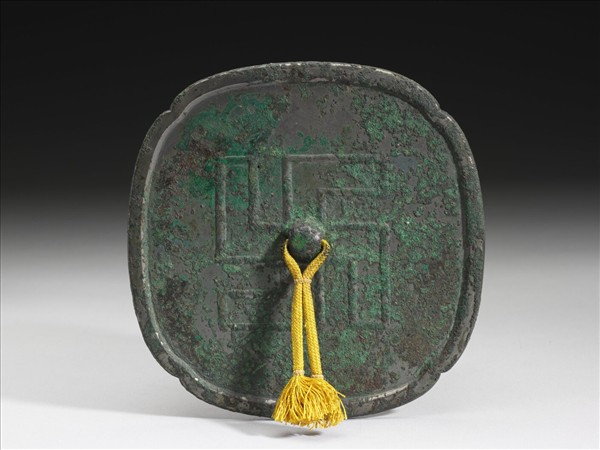
    The ancient swastika is not originally Nazi.

    But the Nazi use cannot be softened by saying the symbol was once older.

    Both things are true.

    A symbol can have an ancient life and still be historically ruined by what later claimed it.

    Before the Hakenkreuz

    Before the Nazis, the swastika appeared across many cultures. It was used in parts of Europe and Asia, in religious and decorative settings, and in many cases carried meanings of auspiciousness, well-being, motion, blessing, order, recurrence, or sacred direction. The United States Holocaust Memorial Museum notes that the swastika was used as a symbol of well-being in ancient societies including India, China, Africa, the Americas, and Europe, long before Hitler adopted it for the Nazi flag in 1920.

    That older history matters.

    It prevents a shallow reading where the symbol is treated as if it emerged fully formed from twentieth-century evil. It did not. The Nazi Hakenkreuz was an appropriation, not an origin.

    But older history does not erase later horror.

    That is the necessary tension.

    The swastika was not born Nazi, but in much of the modern West it cannot be seen innocently because Nazism burned its meaning into public memory through violence, propaganda, racism, war, and genocide.

    So the article must walk a narrow path.

    It must say:

    Before it was a banner of racial death, it was a sign of turning life.

    And it must also say:

    After Nazi capture, that older life cannot be invoked carelessly.

    The Cross in Motion

    The basic form is simple.

    A cross.

    Then the cross turns.

    The arms bend. The ends move. The still intersection becomes directional. A static meeting of vertical and horizontal becomes rotation, circulation, force, recurrence.

    That is why the symbol is so powerful.

    A simple cross gives orientation: above and below, left and right, center and extension.

    The swastika gives motion.

    It is not only four.

    It is four turning.

    In Geomytha, this makes the ancient turning cross resonate with the first fourfold grammar:

    Is → Am → I → This

    Source. Reflection. Claim. Form.

    Or in the older Egyptian body:

    Isis → Osiris → Set → Horus

    The cross gives manifestation its first architecture. A center appears. Direction appears. The field becomes organized. Something can move from hidden source into reflected presence, from reflected presence into direction, from direction into visible form.

    But this is also where danger enters.

    Because once motion appears, something can claim the motion.

    The wheel can turn in service of life.

    Or the wheel can be seized by I.

    Direction Is Not Enough

    It is tempting to say the whole mystery depends on direction.

    Right-facing means one thing. Left-facing means another. One is solar. One is lunar. One is outward. One is inward. One is blessing. One is danger.

    There may be symbolic value in those distinctions. Direction can inflect a symbol. A rightward turn can suggest outward movement, assertion, solarization, formation, and claim. A leftward turn can suggest reversal, inwardness, return, counter-motion, or descent.

    But direction alone cannot carry the whole meaning.

    A left-turning symbol can still be claimed by ego.

    A right-turning symbol can still be used in benign sacred context.

    Meaning depends on tradition, placement, use, and historical field.

    In Geomytha, direction matters, but capture matters more.

    The deeper question is not only:

    Which way does it turn?

    The deeper question is:

    What does the turn serve?

    Does it return attention to source?

    Or does it make identity sacred?

    When I Steals the Wheel

    The Nazi Hakenkreuz is the turning cross possessed by I.

    That is the clean Geomytha reading.

    The Nazis did not merely use an ancient symbol. They standardized it, weaponized it, racialized it, and fused it to state identity. The Holocaust Museum states that Hitler designed the Nazi flag in 1920 by combining the swastika with the imperial German colors red, black, and white.

    That is not neutral symbolism.

    That is capture.

    The turning cross was placed in service of race, nation, mythic superiority, enemy projection, and total political order. The motion of life was seized and made to move through a death-system.

    This is exactly how Geomytha reads symbolic corruption.

    The original fourfold motion can be healthy:

    Is → Am → I → This → Return

    Source becomes reflected. Reflection becomes form. Form remains transparent. The motion returns.

    But captured motion follows a different path:

    I → This → These → Those → All This

    The claimant appears first.

    I am this. These are mine. Those are not. All this must serve the claim.

    That is the Nazi distortion.

    The symbol no longer turns life through form.

    It turns identity into destiny.

    From Turning Cross to Racial Machine

    The Nazi use of the swastika shows the full degeneration of the grammar.

    First comes I: the claimant.

    Not the simple personal I of responsibility, but collective I swollen into race-state myth.

    Then comes This:

    This blood. This people. This nation. This leader. This destiny. This sacred image of ourselves.

    Then comes These:

    These banners. These uniforms. These laws. These myths. These rituals. These symbols. These bodies counted as ours.

    Then comes Those:

    Those enemies. Those outsiders. Those corrupting forces. Those lives outside the sacred circle. Those who must be removed so the false world can purify itself.

    Then comes All This:

    The total state. The total myth. The total war. The total symbolic environment. The machine of identity pretending to be cosmic law.

    That is why the Nazi capture of the swastika is not merely an unfortunate change of decoration.

    It is the turning cross dragged into the full mechanism of false identity.

    The symbol did not become horrifying because motion is evil.

    It became horrifying because identity seized motion and made it serve death.

    The Swastika Is Not the Black Sun

    This distinction matters for the next layer.

    The swastika and the Black Sun should not be treated as the same symbol.

    They are related through capture logic, but they do not perform the same function.

    The swastika is primarily a fourfold turning cross.

    The Black Sun or Sonnenrad is better read as a twelvefold wheel around a counterfeit center.

    That means their Geomytha functions differ.

    The swastika shows the captured turn.

    The Black Sun shows captured order around a false center.

    One is the fourfold motion stolen by identity.

    The other is the twelvefold world-wheel locked around a dark claim.

    This distinction prevents the reading from becoming sloppy. Not every wheel is the same wheel. Not every captured symbol performs the same symbolic work.

    The swastika belongs first to four.

    The Black Sun belongs first to twelve-plus-center.

    Both can be seized by the false self.

    But they are not identical.

    What the Symbol Teaches

    The swastika teaches that symbols do not stay pure merely because they are ancient.

    A symbol’s age does not save it.

    A symbol’s earlier meaning does not protect it from later possession.

    A symbol’s sacred use in one tradition does not erase its destructive use in another historical field.

    This is one of the hardest lessons in symbolic reading.

    Geomytha does not ask:

    What did the symbol originally mean, so we can ignore what happened later?

    It asks:

    What function is the symbol performing here?

    That question is merciless and necessary.

    Is the symbol orienting consciousness toward source?

    Is it holding life in right relation?

    Is it humbling identity before the whole?

    Or is it inflating identity, creating enemies, organizing violence, and making the claimant feel chosen?

    A symbol is not redeemed by depth if its current function is domination.

    Captured Symbols

    A captured symbol does not merely change meaning.

    It changes allegiance.

    That is why captured symbols must be read carefully. The old form remains visible, but the function has been redirected. The sign may still look ancient, but its motion now serves a different master.

    This happens far beyond the swastika.

    A cross can become empire.

    A flag can become a god.

    A holy book can become a weapon.

    A crown can become a machine.

    A word like freedom can become cover for domination.

    A word like purity can become permission for cruelty.

    A word like truth can become a mask for the claimant.

    The question is always the same:

    Who is using the symbol?

    What identity does it serve?

    What enemy does it require?

    What world does it build?

    Does it return attention to source, or does it make the claimant sacred?

    That is the practical discipline of symbolic reading.

    Not cynicism.

    Discernment.

    The Cross Must Return to Center

    Motion alone is not enough.

    A wheel can turn forever and never return.

    A symbol can circulate through culture and become more powerful without becoming more true. A nation can march. A machine can accelerate. An ideology can spread. A feed can refresh endlessly. A symbol can spin until everyone mistakes speed for life.

    Geomytha is not impressed by motion alone.

    The question is return.

    Does the motion return to Is?

    Does the form remain transparent to source?

    Does the symbol humble I?

    Does the wheel serve life, or has life been made to serve the wheel?

    The ancient turning cross, at its best, can be read as life moving through the fourfold field: center, direction, motion, recurrence. But once I steals the wheel, the turn becomes a machine.

    That is what Nazi capture reveals in its most terrible form.

    The cross no longer turns through life.

    It turns against life.

    The center is no longer source.

    It is identity.

    And when identity becomes center, the wheel begins to crush.

    Careful Distinction

    The task is not to casually reclaim the swastika.

    That would be irresponsible.

    The task is to distinguish.

    Ancient symbol. Modern capture.

    Turning cross. Hakenkreuz.

    Motion of life. Machine of death.

    Fourfold form. False identity.

    These distinctions matter because symbolic intelligence requires moral seriousness. A reader who cannot distinguish layers will either flatten the ancient world or excuse the modern wound.

    Neither is acceptable.

    The swastika’s older life shows that symbols can carry meanings deeper than their worst use.

    The Nazi Hakenkreuz shows that no symbol is immune from possession.

    That is the Geomytha lesson.

    A turning cross can bless the world or be seized by the false self. The difference is not in motion alone, but in what motion serves.

    When I steals the wheel, the symbol becomes a machine.

    When the wheel returns to Is, the cross stops conquering and becomes again a sign of life moving through form.

  • Why Calendars Need Remainders

    Why Calendars Need Remainders

    A calendar is not just a way to count days.

    It is a claim about reality.

    A calendar tells a people when to work, when to rest, when to plant, when to harvest, when to fast, when to feast, when to remember the dead, when to crown the king, when to begin again. It does not merely observe time. It organizes life around a pattern.

    That is why calendars are always more than technical tools.

    They are symbolic machines.

    They turn the sky into order. They turn recurrence into ritual. They bind labor to season, memory to festival, and public life to invisible rhythms. A people’s calendar tells you what kind of world they believe they inhabit.

    But every calendar faces the same humiliation.

    Reality exceeds the count.

    No matter how elegant the system becomes, something eventually slips. The seasons drift. The stars move. The year refuses to fit cleanly into the wheel designed to hold it.

    A calendar therefore survives only if it learns to admit remainder.

    That is the deeper lesson.

    A closed calendar becomes false.

    An open calendar remains alive.

    A Calendar Is a World

    Modern people often treat calendars as neutral.

    Dates.

    Boxes.

    Appointments.

    Schedules.

    But older civilizations knew better. Calendars were structures of meaning. They told the community how heaven touched earth. They placed human labor inside cosmic pattern.

    The Egyptian calendar did this with striking clarity.

    Twelve months of thirty days gave the year a perfect visible structure. Three hundred and sixty days. A clean circle. A world that could be counted, divided, and administered.

    Yet the year did not end there.

    Five additional days stood outside the ordinary months. These epagomenal days were not merely a mathematical inconvenience. They became sacred time. Myth placed the births of Osiris, Horus the Elder, Set, Isis, and Nephthys in those days outside the wheel.

    This is extraordinary.

    The remainder was not ignored.

    It was mythologized.

    Egypt did not simply patch the calendar. It gave the excess divine weight. It recognized that what does not fit the system may be precisely where the deepest powers appear.

    That is already a warning to every closed order.

    The part that does not fit may not be meaningless.

    It may be the part that tells the truth.

    The Lie of Perfect Order

    A perfect calendar can become a lie.

    That sounds strange, because order feels truthful. Symmetry feels truthful. A clean system feels more reliable than a messy one.

    But a system can be internally perfect and externally wrong.

    If the calendar refuses correction, it drifts from the seasons. Spring slowly detaches from spring. The harvest no longer matches the sky. Ritual becomes disconnected from the living rhythm it was meant to honor.

    The calendar may still be neat on paper.

    But it has lost contact with reality.

    This is one of the oldest dangers of symbolic systems.

    A religion can become internally consistent while losing contact with presence.

    An ideology can become perfectly logical while losing contact with human suffering.

    An identity can become coherent while losing contact with the living person underneath it.

    A doctrine can answer every question while no longer hearing the question being asked.

    The false self loves this kind of perfection.

    It loves systems that cannot be interrupted.

    It loves identities that cannot be corrected.

    It loves stories that never have to admit a remainder.

    But life does not obey such closure.

    Neither does time.

    Caesar and Seizure

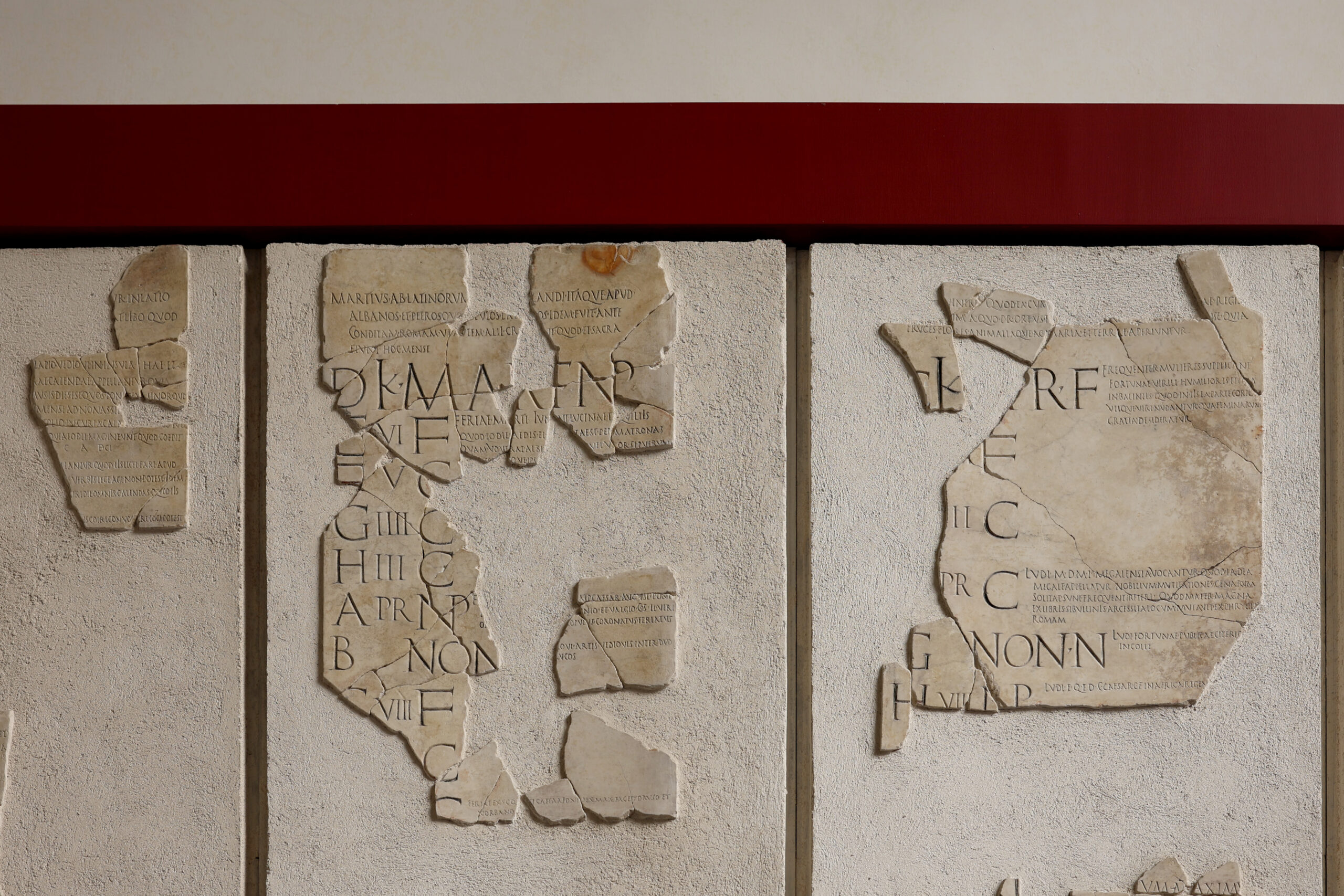
    Julius Caesar’s calendar reform was one of the great acts of Roman ordering.

    Historically, it was a real achievement. Roman time had become unstable, politically manipulated, and misaligned. The Julian reform brought order and regularity to the year.

    But symbolically, Caesar matters for another reason.

    Caesar is a useful mnemonic for seizure.

    The sound itself helps reveal the archetype.

    Caesar.

    Seizure.

    The grasp.

    The claim.

    The imperial act of taking hold.

    To make a calendar is, in one sense, to seize time. To place the sky under law. To tell the year where it belongs. To bring recurrence under administration.

    Empire always wants this.

    The ego wants it too.

    It wants to seize the story.

    Seize the identity.

    Seize the future.

    Seize the meaning.

    Seize the wound and turn it into self.

    Yet time resists seizure.

    Even Caesar’s calendar could not fully possess the year. Its correction was powerful, but not perfect. The small discrepancy accumulated. Centuries later, the Gregorian reform had to correct what Roman order could not fully master.

    That is the point.

    The seizure of time always fails eventually.

    Not because order is useless.

    But because reality is greater than the hand that grasps it.

    The Hidden Correction

    Remainders do not always announce themselves immediately.

    That is part of their mystery.

    A small fraction can hide for years. A slight misalignment can go unnoticed. A subtle error can accumulate quietly beneath the visible order.

    Then one day the hidden becomes impossible to ignore.

    The calendar must be corrected.

    The extra day must be inserted.

    The skipped days must be acknowledged.

    The system must confess that it was never final.

    This is what leap years reveal in miniature.

    The hidden remainder does not disappear because it is inconvenient.

    It gathers.

    It waits.

    It returns.

    The invisible eventually demands recognition.

    And when it does, the calendar must either open or become false.

    Sacred Interruptions

    This structure appears far beyond calendar reform.

    The Sabbath interrupts labor.

    The Eighth Day interrupts the week.

    The five days outside the Egyptian year interrupt the twelve months.

    The hidden thirteenth interrupts the public twelve.

    The leap day interrupts ordinary time.

    Again and again, sacred time enters as interruption.

    Not random disruption.

    Corrective interruption.

    The interruption that prevents the system from mistaking itself for source.

    This is why remainder is not merely leftover.

    Remainder is relation.

    It keeps the system related to what exceeds it.

    The calendar needs remainder because the calendar is not heaven.

    The doctrine needs silence because the doctrine is not God.

    The identity needs humility because the identity is not the self.

    The map needs blank space because the map is not the territory.

    The wheel needs an opening because the wheel is not life.

    Why Every Self Needs a Remainder

    The same principle applies inwardly.

    A person with no remainder becomes dangerous.

    A person who has explained himself completely can no longer repent. A person who has sealed her identity can no longer receive correction. A person who has turned pain into total self-definition can no longer be surprised by healing.

    We need remainders.

    Not chaos.

    Not self-destruction.

    Not endless uncertainty for its own sake.

    But room.

    Room to be corrected.

    Room to discover that the story was incomplete.

    Room to admit that the wound was real but not final.

    Room to let another person reveal what our private system could not see.

    Room to grow.

    A life with no remainder becomes a prison.

    A life with remainder remains capable of return.

    The Open Calendar

    The best calendar is not the one that pretends to be perfect.

    The best calendar is the one that remains faithful.

    Faithful to the sky.

    Faithful to the seasons.

    Faithful to correction.

    Faithful enough to admit when the count has drifted.

    That is a profound spiritual model.

    The open life is not the life without order.

    It is the life whose order remains transparent to reality.

    The open mind is not the mind without conviction.

    It is the mind whose convictions remain capable of correction.

    The open self is not the self without form.

    It is the self that knows form is not source.

    Calendars need remainders because time is alive.

    And people need remainders because consciousness is alive.

    Something must remain unseized.

    Something must remain capable of return.

    Something must stand outside the wheel and remind the wheel what it serves.

    The remainder is not the failure of the calendar.

    It is what keeps the calendar true.

  • Where is the Vehicle Going?

    Where is the Vehicle Going?

    Everyone remembers the battery.

    Very few people remember the car.

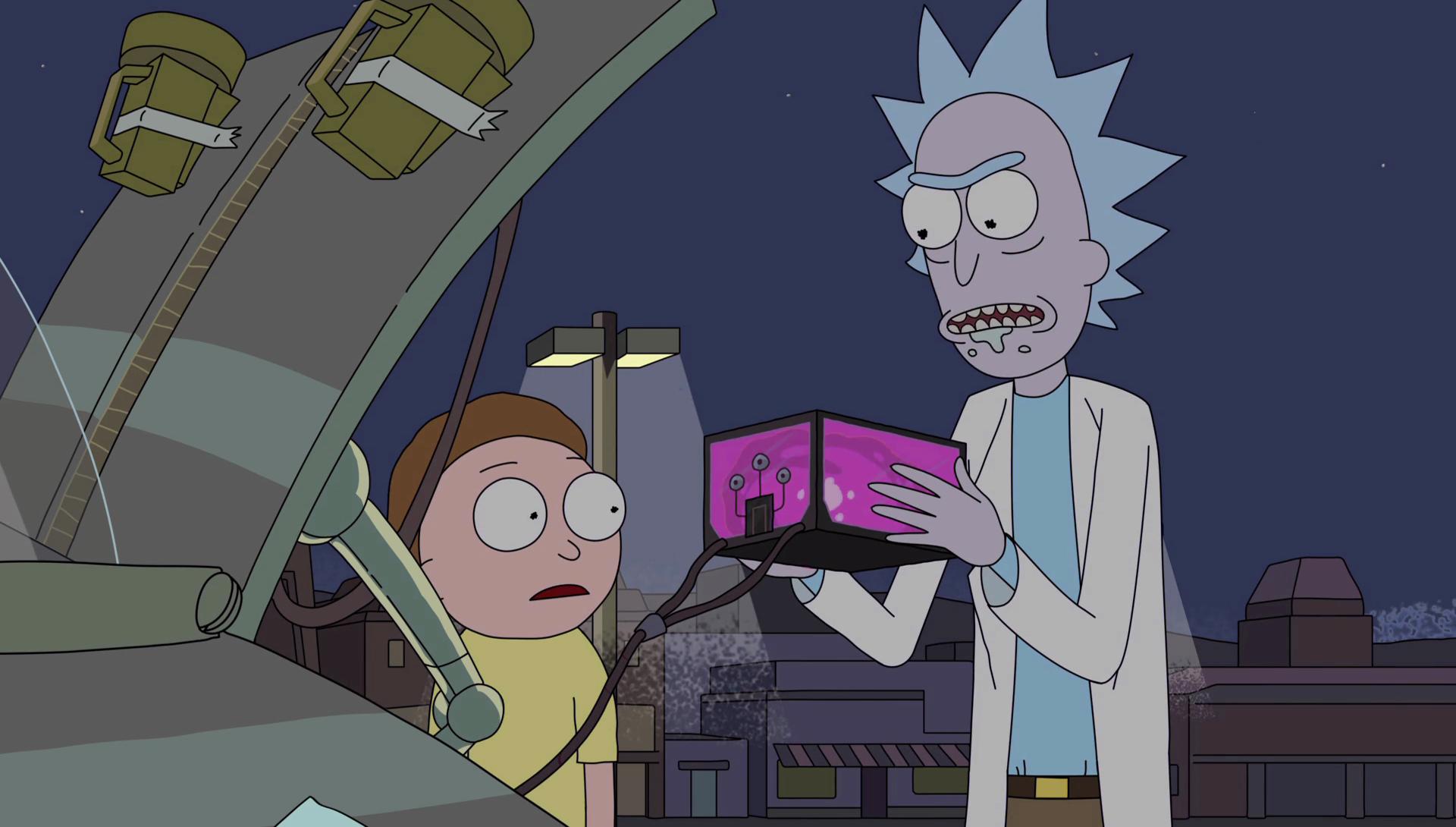
    Rick and Morty’s famous battery universe episode leaves viewers with a disturbing question.

    What if our entire civilization exists merely to power some larger machine?

    But an even stranger question hides beneath it.

    Where is the vehicle going?

    Rick never explains.

    He doesn’t reveal some grand mission or cosmic destination. The car simply moves because Rick wants to move. And Rick himself often seems to be fleeing boredom, grief, loneliness, and himself.

    The machine moves.

    But toward what?

    That question reaches far beyond science fiction.

    Modern civilization celebrates movement almost as an unquestionable good.

    Economic growth.

    Technological progress.

    Career advancement.

    More information.

    More efficiency.

    More followers.

    More production.

    More speed.

    The machine rarely asks a simple question.

    For what?

    It simply assumes that movement itself is meaningful.

    Ancient traditions recognized this danger long ago.

    Buddhism represented it through the Wheel of Becoming. Medieval Europe imagined the Wheel of Fortune endlessly lifting kings upward only to cast them down again. Empires expanded. Dynasties rose and fell. Yet the wheel itself continued turning.

    Babylon never stops building.

    It simply builds.

    The same pattern appears in ordinary life.

    People climb ladders they never designed.

    They chase promotions they barely desire.

    They accumulate possessions they do not need.

    They pursue goals that generate new goals.

    Every achievement creates another horizon.

    Every summit reveals another mountain.

    The ego behaves in exactly the same way.

    “I will be happy when.”

    “I will finally arrive when.”

    “One more accomplishment.”

    “One more victory.”

    “One more year.”

    Movement becomes a substitute for meaning.

    And eventually the original purpose is forgotten.

    This is why the image of the hamster wheel is so powerful.

    The wheel spins.

    Energy is produced.

    The animal becomes exhausted.

    But from above, nothing has actually gone anywhere.

    Motion and destination are not the same thing.

    Ancient pilgrimage understood the difference.

    Pilgrims moved toward something beyond themselves. Exodus was not wandering for its own sake. Odysseus longed for Ithaca. Dante’s journey moved through hell toward paradise.

    Not all journeys are circular.

    Some journeys lead home.

    That is why Rick and Morty asks a deeper question than many viewers realize.

    Perhaps the horror is not that we are batteries.

    Perhaps the greater horror is that the vehicle itself has forgotten where it was supposed to go.

    And perhaps modern humanity suffers from the same condition.

    We know how to accelerate.

    We know how to optimize.

    We know how to consume.

    But we increasingly struggle to answer a child’s question.

    Why?

    The answer may be uncomfortable.

    Because the machine was never designed to arrive.

    It was designed to continue.

    And perhaps freedom begins the moment we stop asking:

    “How do I keep moving?”

    And begin asking:

    “Where am I trying to go?”

    And if no destination can be found—

    perhaps the engine was never taking us anywhere at all.

  • The Crack Is Mercy

    The Crack Is Mercy

    Most people want the crack repaired.

    Not honored.

    Not studied.

    Not listened to.

    Repaired.

    We want the broken place sealed as quickly as possible. We want the wound covered, the story resolved, the identity restored, the system functioning again. We want the appearance of wholeness even when the deeper structure has not healed.

    This is understandable.

    Cracks frighten us.

    They reveal weakness. They expose the place where the vessel failed. They remind us that what looked complete was always vulnerable. A cracked bowl can no longer pretend to be untouched. A cracked wall can no longer pretend to be permanent. A cracked life can no longer pretend that nothing happened.

    Yet the symbolic traditions of the world repeatedly suggest something difficult and strange:

    The crack is not always the enemy.

    Sometimes the crack is the opening.

    Sometimes the break is where return begins.

    Sometimes mercy enters through the place that completion could not protect.

    The Calendar’s Wound

    The calendar teaches this quietly.

    A circle contains 360 degrees. It is beautiful, divisible, and complete. Twelve months of thirty days produce a perfect wheel. The mind looks at such a system and feels relief.

    Everything fits.

    But the year refuses to fit.

    The Earth does not complete its journey around the sun in 360 days. Add five days, and the calendar comes closer. Three hundred and sixty-five days seem to repair the problem.

    But even that is not enough.

    A small fraction remains.

    The year still exceeds the count.

    The calendar has a wound.

    A hidden opening.

    A remainder that cannot be erased.

    Modern administration responds by correcting the calendar. Leap years are inserted. The machine adjusts. The system continues.

    But the symbolic lesson is deeper than the arithmetic.

    Time cannot be sealed.

    The world cannot be completely possessed by measurement.

    Even the most elegant wheel requires an opening through which reality can correct it.

    The crack keeps the calendar honest.

    Without it, the calendar would drift away from the seasons it claims to measure. Spring would slowly detach from spring. Harvest would lose its relationship to the sky. The system would remain internally consistent while becoming externally false.

    That is one of the great dangers of closed systems.

    They can be perfect inside themselves and still lose contact with reality.

    The Beauty of the Broken Line

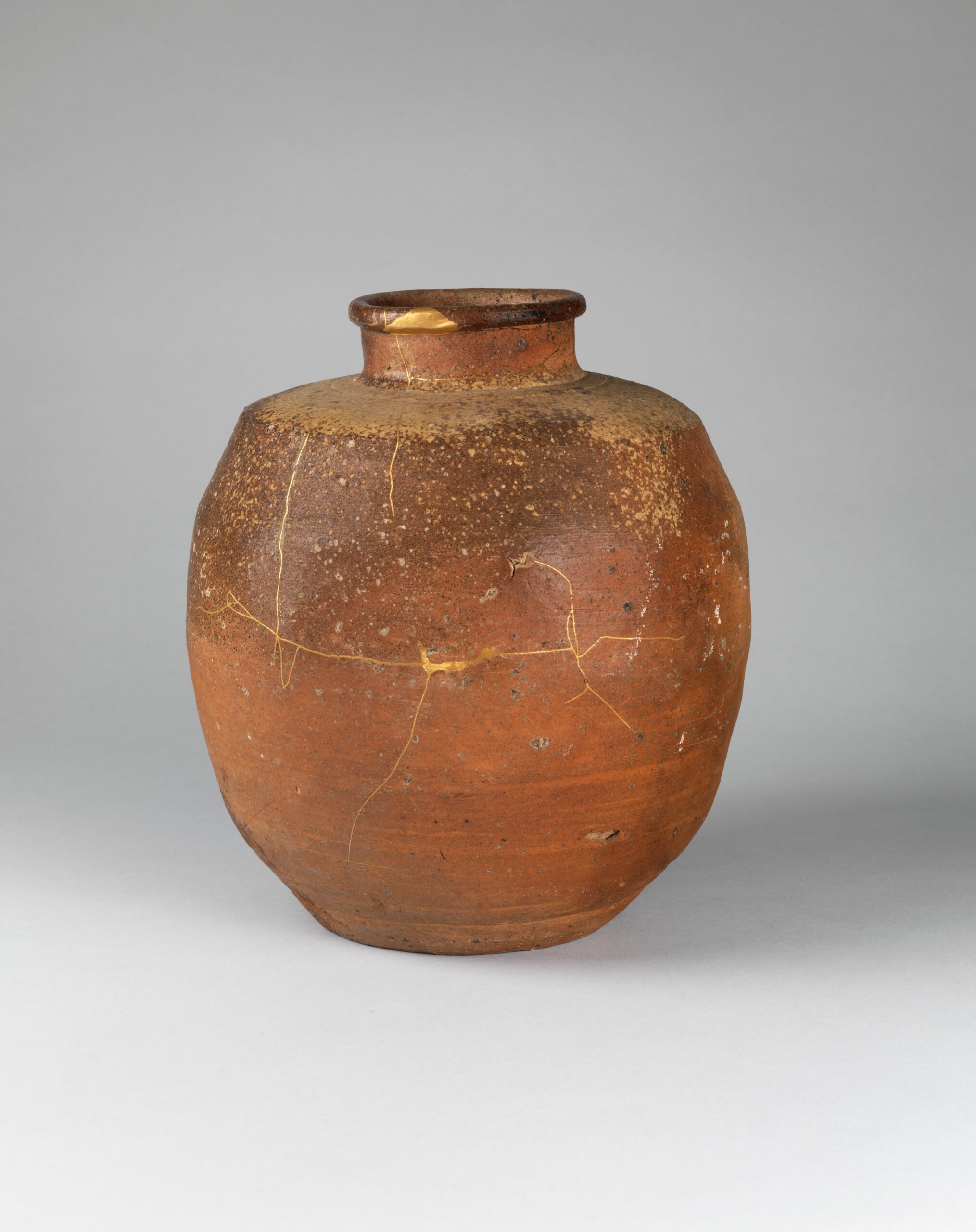
    This is why the image of repaired pottery is so powerful.

    A broken vessel can be discarded. It can be hidden. It can be repaired in such a way that the damage is concealed.

    But another possibility exists.

    The crack can be filled with gold.

    The break can become visible.

    The vessel can return, not as if nothing happened, but as something that has passed through breaking and now carries its history openly.

    That image matters because it refuses the lie of untouched perfection.

    It does not worship damage.

    It does not pretend breaking is pleasant.

    It does not romanticize pain.

    But it also does not erase the wound.

    The restored vessel becomes more truthful than the unbroken one because it no longer depends on the illusion that wholeness means never having fractured.

    This is close to the heart of Geomytha.

    The false self wants perfection without rupture.

    Presence allows return through rupture.

    The false self says:

    Hide the crack.

    Presence says:

    Let the crack reveal where life returned.

    Resurrection Does Not Erase the Wound

    Christianity preserves a similar image with astonishing force.

    Resurrection does not remove the wounds.

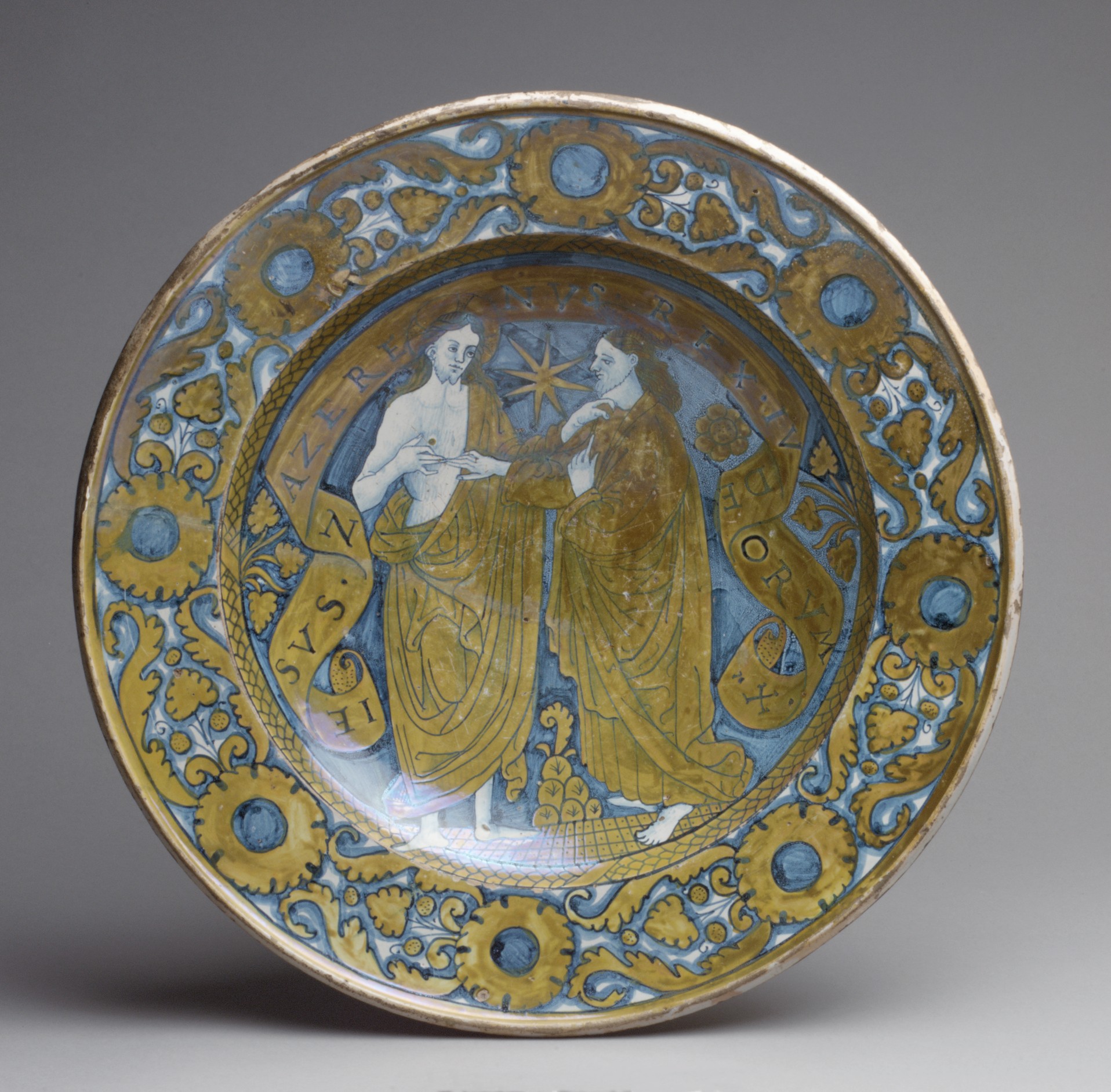
    The risen Christ is not presented as a body that simply went back to the condition before crucifixion. The wounds remain. The hands, feet, and side still bear the marks of rupture.

    This is important.

    If resurrection meant merely undoing the break, the wounds would vanish.

    But they do not.

    The broken place becomes the place of recognition.

    The wound becomes witness.

    The crack becomes proof that return is not denial.

    Return does not mean pretending death did not happen.

    Return means death did not have the final word.

    The same pattern appears in the symbolism of the Eighth Day. The seventh day completes the cycle. The eighth day reopens it. Completion is not destroyed, but it is exceeded. The closed week is cracked open by resurrection.

    Life enters through the break in ordinary time.

    Not because the world is meaningless.

    Not because the cycle is evil.

    But because completion alone cannot save.

    Something must exceed it.

    Something must enter from beyond the sealed order.

    Maiolica dish depicting the risen Christ showing his wound to Saint Thomas

    Why Closure Becomes Prison

    This is where the crack becomes morally and spiritually serious.

    Human beings do not only build calendars.

    We build identities.

    We build explanations.

    We build religions.

    We build ideologies.

    We build self-images.

    And then we try to seal them.

    We want a story about ourselves with no contradiction. We want a worldview with no remainder. We want a belief system that answers every question before the question can trouble us. We want a self that cannot be accused, interrupted, humbled, or changed.

    That is how completion becomes captivity.

    A perfect identity cannot repent.

    A perfect ideology cannot listen.

    A perfect system cannot receive correction.

    A perfect self cannot return.

    This is why the crack is necessary.

    Not because suffering is good.

    Not because damage is holy in itself.

    But because the closed thing cannot receive.

    The closed thing cannot be corrected.

    The closed thing cannot breathe.

    The crack is where air enters.

    The crack is where light enters.

    The crack is where the false center loses its claim to totality.

    The Fear Beneath the Crack

    The fear of the crack is usually the fear of losing the self.

    If the story breaks, who am I?

    If the identity fails, what remains?

    If the system does not explain everything, where do I stand?

    If the world is not closed, how do I control it?

    These are not small fears. They are the fears that drive empire, dogma, addiction, vanity, and despair.

    The false self depends on sealed structures because it is itself a sealed structure.

    It says:

    I am this.

    This wound.

    This role.

    This belief.

    This achievement.

    This failure.

    This mask.

    This certainty.

    The crack interrupts that sentence.

    It reveals that the identity was never absolute.

    Something deeper was holding the vessel all along.

    The Crack and Return

    Return begins when the system admits it is not source.

    That is true of calendars.

    It is true of myths.

    It is true of religions.

    It is true of the self.

    The crack does not automatically heal us. A wound can harden. A break can embitter. A rupture can become another identity if the false self claims it.

    But the crack can also become the place where possession loosens.

    The place where certainty softens.

    The place where the heart stops pretending.

    The place where prayer becomes real.

    The place where the breath returns.

    This is why mercy often first appears as interruption.

    The life we planned breaks.

    The identity we defended fails.

    The explanation we trusted no longer holds.

    The wheel refuses to close.

    At first this feels like loss.

    Later, it may reveal itself as rescue.

    The Mercy of the Unsealed World

    A world without cracks would be unbearable.

    Nothing could enter.

    Nothing could leave.

    Nothing could be forgiven.

    Nothing could surprise us.

    Nothing could return.

    The sealed world is the dream of the false self: perfect, controlled, defended, final.

    But the living world remains open.

    The calendar has its remainder.

    The week has its eighth day.

    The year has its hidden fraction.

    The vessel has its golden seam.

    The resurrected body has its wounds.

    Again and again, the same pattern appears:

    The break does not have to be the end.

    The opening may be the beginning.

    This does not mean every wound is good.

    It means every wound asks what will happen next.

    Will the crack become bitterness?

    Will it become identity?

    Will it become proof that nothing can be trusted?

    Or will it become the place where life returns without pretending the breaking never happened?

    That is the question.

    The crack is not automatically mercy.

    But mercy enters through cracks.

    The calendar keeps time because it admits the remainder.

    The vessel becomes beautiful because the break is not denied.

    The resurrected body is recognized because the wound remains visible.

    And the soul begins to return when the sealed story finally opens.

    Perhaps perfection was never the absence of cracks.

    Perhaps perfection was always the capacity to let the broken place become transparent.

    The crack is where the closed world fails.

    The crack is where return begins.

    The crack is mercy.

  • The Sacred Is Not the Trap

    The Sacred Is Not the Trap

    After all the fires, the world is still good.

    That has to be said.

    After beast-fire, stolen fire, Luciferic light, Promethean theft, Ammit, the lake of fire, the second death, and every severe image of flame that burns what refuses return, the wrong conclusion would be easy.

    The body is the trap. The world is the trap. Ritual is the trap. Image is the trap. Fire is the trap. Love is the trap. Creation itself is the trap.

    No.

    That is too crude.

    The sacred is not the trap.

    Possession is.

    The body is not false because it appears. The world is not guilty because it is visible. Ritual is not corrupt because it uses form. An image is not automatically an idol. Fire is not evil because it burns. Love is not bondage because it attaches the heart to another living being.

    Creation is not guilty because identity learned how to steal it.

    The trap begins when the claimant enters the sacred and says:

    I am this.

    I am this body. I am this ritual. I am this image. I am this wound. I am this religion. I am this insight. I am this world. I am this sacred thing.

    That is where the fall begins.

    Not when the world appears.

    When the world is possessed.

    Creation Before Claim

    In the beginning, the world appears.

    Light. Water. Land. Seed. Tree. Creature. Breath. Body. Garden.

    The world does not appear as accusation. It does not enter the story as prison. It is not first announced as filth, mistake, exile, or trap. It appears as ordered life, living relation, visible goodness, the field where source becomes reflected.

    The trouble does not begin because something can be seen.

    It begins when seeing becomes seizure.

    The fruit is not dangerous merely because it exists. The garden is not false because it has trees. The body is not fallen because it has hunger. The eye is not evil because it can perceive beauty.

    Eden is not false because it is visible.

    Eden becomes lost when visibility becomes possession.

    That is the first correction after the fire sequence. The world is not the enemy of return. The world is the field in which return can be learned. The body is not the opposite of source. The body is where source becomes felt as reflection.

    The problem is not that Is becomes Am.

    The problem is that I tries to own Am as This.

    Am Is Not the Fall

    Am is reflected presence.

    Am is the living mirror.

    Am is body before biography, feeling before possession, world before ownership, relation before claim.

    The body breathing is Am.

    Water reflecting light is Am.

    A child being held is Am.

    A candle flame before prayer is Am.

    Bread in the hand is Am.

    A song moving through the chest is Am.

    The garden before seizure is Am.

    Am is not the fall.

    Am is the world before the claimant moves in.

    This is why Geomytha cannot become anti-world. If the world is only trap, then reflection itself is condemned. But reflection is not the error. Reflection is the first tenderness of manifestation. It is source becoming intimate enough to be felt.

    The fall begins later.

    Not:

    Is → Am.

    But:

    Is → Am → I → This.

    Source appears as reflection. The claimant seizes the reflection. The claim hardens into identity. Then the world that was meant to be transparent becomes a room.

    The world is innocent.

    The room is the problem.

    The Body Is Not the Beast

    The body is not the beast.

    The body hungers.

    The body sleeps.

    The body desires.

    The body grieves.

    The body ages.

    The body reaches for warmth, touch, water, food, rest, safety, and home.

    None of that makes it evil.

    Cancer knows this better than the mind does. Cancer remembers the infant body, the mother body, the held body, the frightened body, the grieving body, the body that cannot survive by ideology alone. The body is not a theory. It is a needful, breathing, vulnerable vessel.

    The false self hates this vulnerability because vulnerability disproves sovereignty.

    So the claimant either tries to dominate the body or escape it.

    It says:

    My body proves me. My body betrays me. My body is my identity. My body is my shame. My body is my weapon. My body must be perfected. My body must be transcended.

    But the body did not ask to carry that.

    The body is Am.

    Living reflection.

    The claim makes it heavy.

    The body is not the beast.

    The claim is.

    Ritual Is Not the Trap

    Ritual can be clean.

    Lighting a candle.

    Washing hands.

    Saying grace.

    Taking bread.

    Pouring water.

    Kneeling.

    Singing.

    Walking at dawn.

    Breathing before sleep.

    Turning the phone off.

    Touching the floor.

    Putting the day down.

    None of these are automatically empty. A small act can return the body to presence. A repeated gesture can interrupt the claimant. A candle can remind the hand not to own the flame. A prayer can open the chest. A bowl of water can return attention to reflection. Bread can remind the body that life is received.

    Ritual becomes false only when it becomes identity.

    When the person says:

    I perform this, therefore I am pure. I know this form, therefore I am chosen. I belong to this practice, therefore I am superior. I repeat the gesture, therefore I possess the sacred.

    Then ritual has stopped opening the hand.

    It has become the badge.

    Ritual is clean when it opens the hand.

    It is false when it becomes the badge.

    The same gesture can do either. The same candle can humble or decorate the self. The same prayer can return the heart or inflate the one praying. The same fast can empty the claimant or become proof of discipline.

    The form is not the trap.

    Possession is.

    Image Is Not Automatically Idol

    An image can be window or wall.

    That is the whole problem.

    An icon is transparent. It lets attention pass through. It does not demand that the eye stop at the surface. It says:

    Look through me.

    An idol is possessed. It stops attention at itself. It says:

    Stay here. Feed me. Defend me. Become mine.

    The difference is not always in the material object. The same image can become icon or idol depending on whether the claimant has entered.

    A painting can open the heart.

    Or become a room for identity.

    A crucifix can return the witness to surrender.

    Or become a weapon of superiority.

    A statue can honor a mystery.

    Or freeze the mystery into a public self.

    A symbol can clarify.

    Or become a flag the ego waves over its own territory.

    The idol is not merely the image.

    It is the image stopped from returning.

    This matters because a world without images is not automatically pure. The mind will make images anyway. It will make invisible idols out of doctrines, concepts, purity, emptiness, skepticism, and even anti-idolatry.

    The issue is not whether images exist.

    The issue is whether they remain transparent.

    Fire Is Not the Trap

    Fire is not the trap.

    The Burning Bush is fire.

    The hearth is fire.

    The candle is fire.

    The breath is fire.

    Creativity is fire.

    Love is fire.

    The body’s warmth is fire.

    A child’s arrival is fire.

    A sentence that wakes the heart is fire.

    The fire becomes false only when it is kept.

    The Burning Bush burns cleanly because the bush does not claim the flame. Moses is corrected before ownership enters. He removes the sandals, the claim-layer, the human equipment of control. Fire appears, but no ego builds a throne out of it.

    That is holy fire.

    Prometheus shows the opposite motion: take the flame, carry it away, make human power out of stolen light. Even there, the fire is not useless. It works. It builds. It warms. It transforms.

    But the theft bends the gift.

    The flame is holy while it passes through.

    It becomes false when the vessel says:

    This fire proves me.

    The solution is not fear of fire.

    The solution is return.

    Bread, Wine, and Water

    The material sacred must be rescued from suspicion.

    Bread feeds.

    Water cleanses and reflects.

    Wine gladdens and intensifies.

    None are automatically corrupt.

    Bread becomes false when it is used as control.

    Water becomes false when reflection becomes narcissism.

    Wine becomes false when symbolic intensity becomes intoxicated identity.

    But before the claim, each is innocent.

    Bread is the body receiving life.

    Water is the world reflecting source.

    Wine is charged joy, danger, ritual heat, the ordinary made festive and potent.

    The sacrament falls only when the claimant drinks itself.

    That is the difference.

    If bread returns the body to gratitude, it is clean.

    If water returns attention to reflection, it is clean.

    If wine opens celebration without enthroning intoxication, it is clean.

    But if any of them become proof of specialness, superiority, power, purity, or spiritual possession, the sacred object has become a room.

    The problem was not bread.

    The problem was the self trying to feed on itself through bread.

    Love and Home

    Home is not the trap.

    Mother is not the trap.

    Family is not the trap.

    Love is not the trap.

    Cancer insists on this. A spirituality that cannot bless home, tenderness, memory, attachment, and the need to be held has become too sharp for the heart. It may be clever, but it is not whole.

    Home is holy when it shelters being.

    It becomes false when it imprisons identity.

    A parent can love a child as entrusted life, or use the child as proof of self.

    A partner can be beloved, or become the mirror that must preserve the claimant.

    A family can shelter the heart, or trap every member in assigned roles.

    A home can be refuge, or become the place where old identities are endlessly rehearsed.

    The sacredness of home does not make possession holy.

    But the danger of possession does not make home false.

    Love becomes clean when it can bless the beloved without requiring the beloved to become the source of self.

    Home is holy when it shelters being.

    It is false when it imprisons identity.

    The Screen as Stress-Test

    Even the screen is not automatically evil.

    This matters.

    A screen can carry a poem, a face, a prayer, a song, an image of beauty, a message from someone loved, a tool that helps, a map, a memory, a teaching, a window into another person’s suffering.

    The screen can be window.

    But it is dangerous as room.

    It becomes false when attention moves in and starts living there. When the image replaces relation. When reaction replaces feeling. When visibility becomes existence. When the profile becomes body. When the feed becomes weather. When the self keeps refreshing itself through other people’s eyes.

    The screen is clean as window and dangerous as room.

    This is true of all symbols.

    Use the window.

    Do not live inside it.

    The moment the screen begins telling the claimant who it is, the sacred has been turned into architecture for identity.

    Then the window becomes Hotel California.

    The Sacred Object Must Stay Transparent

    Body. Ritual. Image. Fire. Bread. Wine. Water. Music. Technology. Scripture. Symbol. Home. Love. Art. Myth.

    All can be windows.

    All can become rooms.

    That is the law.

    A sacred object becomes a trap when the claimant tries to live inside it.

    The object itself may remain beautiful. The ritual may remain ancient. The doctrine may remain profound. The image may remain powerful. The body may remain innocent. But once the claimant moves in, the sacred object is forced to carry identity.

    Then the window stops opening.

    The thing that once returned attention to source becomes a furnished self.

    That is idolatry at its deepest level: not merely bowing before a statue, but forcing any part of creation to become the place where the false self survives.

    The sacred is not the trap.

    The claimant living inside the sacred is the trap.

    Receive Without Owning

    The practice is simple.

    Receive the world.

    Do not own it.

    Feel the body.

    Do not become the body-story.

    Use the ritual.

    Do not wear it as a badge.

    Honor the image.

    Do not stop at the image.

    Receive the gift.

    Do not turn it into a title.

    Love the home.

    Do not imprison anyone inside it.

    Use the screen.

    Do not move into it.

    When something sacred appears, ask:

    What does this return me to?

    Does it open the hand?

    Does it make the heart lighter?

    Does it soften identity into relationship?

    Does it return Am to Is?

    Or does it give I another This?

    Then breathe.

    Inhale: Am.

    Receive reflected presence in the body.

    Exhale: Is.

    Let the claim return to source.

    Gratitude keeps the gift moving.

    Gratitude is not politeness. It is metaphysics. It means the gift is received as gift and not seized as self.

    Innocent Creation

    New Moon gathers in darkness.

    It does not need to display. It does not need to prove. It does not need to defend the old image. It receives the field before the next appearing.

    That is the tone here.

    After all the fires, creation can be received again.

    The world is not the enemy.

    The body is not the enemy.

    The sacred is not the enemy.

    The image is not the enemy.

    The ritual is not the enemy.

    The enemy is the sentence that tries to own them:

    I am this.

    Receive the world.

    Love the body.

    Honor the ritual.

    Let the image open.

    Let the fire pass through.

    Let bread feed.

    Let water reflect.

    Let wine gladden without enthroning the intoxicated self.

    Let home shelter being.

    Let the screen remain a window.

    Let the sacred return you to what does not need possession.

    Creation is innocent before claim.

    The sacred is innocent before identity.

    The body is innocent before biography.

    The world is innocent before ownership.

    Gather the world gently.

    Then give it back.

  • Four, Eight, Twelve, Thirteen

    Four, Eight, Twelve, Thirteen

    Geomytha has to be careful with numbers.

    Not because numbers are weak.

    Because they are powerful.

    A number can clarify a pattern. It can hold a structure still long enough for the mind to see it. Four directions. Eight phases. Twelve signs. Thirteen as the remainder beyond the wheel. Numbers can make the invisible architecture visible.

    But they can also become a trap.

    The ego loves a system it can defend. It loves the feeling that the final code has been found, the master number has been discovered, the hidden key has been recovered, the world has finally become legible. That is how a map becomes a maze. The tool meant to return attention to source becomes one more object of possession.

    So the first rule is simple:

    The question is not which number is the real number.

    The question is what each number does.

    In Geomytha, the clean hierarchy is this:

    4 forms. 8 cycles. 12 orders. 13 reopens.

    These are not rivals. They are layers.

    Four gives manifestation its first cross. Eight gives consciousness its living lunar body. Twelve gives the world its clock, calendar, and public order. Thirteen appears as the hinge, the excess, the serpent-bearer, the hidden exit, the reminder that no ordered wheel is source.

    That is the whole article in miniature.

    Now we can open it carefully.

    Four Forms

    Four is the first stable structure.

    It is the cross. The square. The four directions. The first way the field becomes legible. North, south, east, west. Above, below, left, right. A center surrounded by extension.

    In Geomytha, four belongs to the original grammar:

    Is → Am → I → This

    Presence is.

    Presence reflects as Am.

    The claimant interrupts as I.

    The appearance hardens into This.

    That is the birth of the false-self sentence:

    I am this.

    Four does not yet describe the whole cycle. It describes the first formation of identity.

    This is why the older Egyptian pattern remains valid:

    Isis. Osiris. Set. Horus.

    Isis is Is: source, pure awareness, the unclaimed field.

    Osiris is Am: reflected presence, the body of consciousness before the claimant.

    Set is I: interruption, claim, projection, the thought that says mine.

    Horus is This: the identity-body, the image that forms after the claim.

    That fourfold structure is still the root.

    It should not be erased.

    But it should also not be mistaken for the whole journey.

    Four shows how the mask forms.

    It does not yet show what the mask gathers, what it rejects, what world it builds, or how it returns.

    Four is the first cross of manifestation before the full cycle has learned surrender.

    Eight Cycles

    Eight is what happens when four is allowed to continue.

    The identity does not stop at This.

    This becomes These.

    These become Those.

    Those harden into All This.

    And All This must Return.

    That gives the extended Geomytha cycle:

    Is → Am → I → This → These → Those → All This → Return

    Eight is the living body of the grammar.

    It is also why the Moon matters so much. The visible Moon gives this cycle a natural form:

    New Moon — Is — Hidden source

    Waxing Crescent — Am — First reflection

    First Quarter — I — Division and direction

    Waxing Gibbous — This — Form thickens

    Full Moon — These — Maximum display

    Waning Gibbous — Those — Distance and release

    Last Quarter — All This — Reckoning with the world-system

    Waning Crescent — Return — Surrender back to source

    This is why eight is primary for the public Geomytha engine.

    It breathes.

    It does not merely explain how identity forms. It shows what identity does after it forms.

    This is important.

    A person does not only say:

    I am this.

    The false self continues:

    These are mine.

    These are my people. These are my wounds. These are my symbols. These are my ideas. These are my titles. These are my enemies. These are my proofs.

    Then comes the next distortion:

    Those are not.

    Those people. Those fools. Those sinners. Those outsiders. Those elites. Those enemies. Those parts of myself I cannot bear to own.

    Then the whole thing becomes:

    All This.

    All this life. All this world. All this history. All this proof. All this system. All this machinery. All this identity.

    Four explains the mask.

    Eight explains the mask rack, the enemy-field, the machine, and the path back.

    That is why the eightfold engine should now be added throughout Geomytha.

    Not to replace four.

    To complete its consequence.

    Four is how identity forms.

    Eight is what identity becomes and how it returns.

    Twelve Orders

    Twelve belongs to the world-wheel.

    It is clock, calendar, zodiac, month, house, civic rhythm, public symbolic order. Twelve is how the world becomes organized enough to be inhabited, taught, measured, remembered, and administered.

    Twelve is not evil.

    This must be said clearly.

    Order is not the enemy. The clock is not automatically the trap. A calendar can help a body remember rhythm. A zodiac can organize symbolic time. A legal system can restrain chaos. A ritual year can carry memory. A city can hold human life. A house can shelter a family.

    The problem is not twelve.

    The problem is twelve pretending to be source.

    Twelve becomes dangerous when the clock claims there is nothing beyond the clock. When the calendar becomes fate. When public order becomes sacred enclosure. When the system becomes so complete that the fish no longer notices the water.

    This is the stage of All This.

    The twelvefold world-wheel says:

    Here is the order. Here are the signs. Here are the roles. Here are the houses. Here are the months. Here are the rules. Here is the visible pattern.

    That can be useful.

    But if the self mistakes that order for ultimate reality, twelve becomes a machine.

    Twelve is how All This becomes legible.

    It is not how All This returns.

    Thirteen Reopens

    Thirteen is the pressure beyond twelve.

    It is not merely “one more.” If it were only one more, it would belong comfortably to the same sequence. But symbolically, thirteen often behaves differently. It appears as the remainder, the hidden hinge, the extra guest, the serpent-bearer, the missing piece, the outside position, the exit not fully counted by the official wheel.

    Twelve builds the clock.

    Thirteen breaks the spell.

    But even that must be handled carefully.

    Thirteen is not automatically holy. The ego can claim thirteen too. It can turn the hidden hinge into secret superiority. It can say:

    I know the real sign. I have the forbidden number. I am beyond the common wheel. I hold the hidden key.

    That is not Return.

    That is just Horus wearing a stranger crown.

    Healthy thirteen does not crown itself. It reopens the system.

    It reminds twelve that order is not source.

    It reminds the wheel that it is not the sky.

    It reminds the map that it is not the territory.

    It reminds the alphabet that Z is not Return.

    It reminds the ego that secret knowledge can become another mask.

    In the alphabet article, this appeared through M, the thirteenth letter, the closed-mouth hum of Am. A begins, M receives, N crosses, Z exhausts. Return appears not as another printed letter, but as the silence after Z.

    That is thirteen’s proper function.

    It does not merely add content.

    It opens a passage.

    Alpha-Bet and the First House of Language

    The same caution applies to language itself.

    Historically, alphabet comes from alpha and beta, the first two Greek letters. It does not literally mean “alpha belt.”

    But Geomytha can still hear a useful resonance if it does not confuse poetry with etymology.

    Alpha is the first opening.

    Beta descends from the old Semitic bet, meaning house.

    So symbolically, alpha-bet can be heard as the first house of language.

    A enters.

    Bet houses it.

    The sign becomes a dwelling.

    The named world begins.

    That is stronger than forcing “alpha belt” as a false origin. But “alpha belt” can still work poetically as an image: the alphabet as the first band of signs wrapped around silence.

    Not proof.

    Resonance.

    The alphabet is not source. It is the first enclosure where source begins to appear as name.

    And like every enclosure, it must eventually open.

    How Thirteen Relates to Eight

    The eightfold cycle is the visible engine.

    The thirteenfold map appears when the hidden thresholds are counted.

    This is where the fires matter.

    The public cycle has eight stations:

    Is. Am. I. This. These. Those. All This. Return.

    But movement between stations requires transformation. The passage is not flat. Consciousness does not simply stroll from one term to the next. It crosses thresholds.

    So the deeper map can be read as:

    8 stations + 5 hidden fires = 13-part mythic map.

    The eight tells us where consciousness stands.

    The thirteen tells us that the visible stations are not the whole operation. Something moves between them. Something warms, crosses, exposes, burns, and returns.

    But this does not mean thirteen replaces eight.

    It deepens it.

    If eight is the Moon’s visible body, thirteen is the hidden anatomy of transition.

    That distinction prevents confusion.

    Eight is the cycle.

    Thirteen is the cycle with its hidden gates counted.

    How Four Relates to Eight

    Four is the first half of the cycle.

    Eight is the full cycle.

    The old Geomytha volumes should be updated with this distinction.

    The fourfold engine remains:

    Isis / Osiris / Set / Horus Is / Am / I / This

    That is the birth of identity.

    But once Horus appears, the story is not over.

    Horus becomes king. The king gathers signs. The signs create enemies. The enemies justify a world-order. The world-order must finally be weighed.

    This is why the Egyptian extension matters.

    The first four appear as gods: Isis, Osiris, Set, Horus.

    The second four appear as structures: crowns, enemies, Ma’at-Kemet-Duat, and the Weighing of the Heart.

    That is not a contradiction.

    It is the difference between identity’s birth and identity’s career.

    Four explains the sentence:

    I am this.

    Eight follows what that sentence builds.

    How Twelve Relates to Thirteen

    Twelve is the ordered world.

    Thirteen is the pressure that keeps the ordered world from closing.

    This is why Alice in Wonderland became so useful. The book has twelve chapters. Wonderland becomes a twelve-room dream-wheel of time, body, identity, riddles, rulers, cards, and trial.

    But the true return is not merely chapter twelve.

    The hidden thirteenth is waking.

    That is the clean pattern:

    12 is the maze. 13 is the exit.

    But again, the exit can be counterfeited.

    A captured thirteen does not return. It crowns itself as secret center.

    This is the danger of the Black Sun reading. The twelvefold wheel around a dark center is not healthy thirteen. It is captured 12+1: All This pretending to be Is.

    The center is not automatically source.

    A false center is worse than no center because it can organize everything around a lie.

    Healthy thirteen opens the world-wheel.

    Captured thirteen enthrones itself inside the world-wheel.

    That difference is crucial.

    What This Corrects

    The first correction:

    Eight does not replace four.

    It extends four.

    Four is still the root grammar of identity formation. Eight is the full attention cycle.

    The second correction:

    Thirteen does not replace eight.

    It opens eight into a deeper operational map by counting hidden thresholds, fires, hinges, and return-points.

    The third correction:

    Twelve is not evil.

    Twelve orders the visible world. It becomes dangerous only when order forgets source.

    The fourth correction:

    Thirteen is not automatically good.

    Thirteen can reopen the system, or it can become secret ego.

    The fifth correction:

    The map must not become All This.

    This is the most important correction.

    Geomytha must never become one more symbolic world for the ego to defend. The numbers are useful only if they return attention to presence. If they become badges, passwords, or proof of superiority, they have already been claimed.

    The map has fallen into the thing it was designed to expose.

    Give Each Map One Job

    This is the practical rule.

    When reading a myth, song, film, symbol, or public ritual, do not throw every number at it at once.

    Ask one question at a time.

    What is the fourfold identity formation? Where are Is, Am, I, and This? How does the false-self sentence form?

    Where is it in the eightfold cycle? Is the story gathering, receiving, deciding, building, claiming, releasing, reckoning, or surrendering?

    What twelvefold world-order is present? Is there a clock, calendar, zodiac, kingdom, law, institution, or public system organizing the field?

    Where is the thirteenth hinge? What breaks the wheel open? What cannot be contained by the system? Where is the exit, the remainder, the serpent, the scale, the silence after Z?

    This prevents number-sprawl.

    Each number gets one job.

    A good map helps consciousness return.

    A bad map becomes another world to defend.

    The Numbers Must Return Too

    At the end, even the numbers must surrender.

    Four is not source.

    Eight is not source.

    Twelve is not source.

    Thirteen is not source.

    They are instruments. They are ways of seeing. They are symbolic tools that help attention notice how it forms identity, expands into possession, projects enemy, builds a world, and forgets the field in which all of that appears.

    But the tool must not become the throne.

    Four forms the cross.

    Eight breathes the cycle.

    Twelve builds the clock.

    Thirteen opens the hidden door.

    But none of them is Is.

    The purpose of counting is not to live forever inside the count. The purpose is to see the architecture clearly enough to stop mistaking it for source.

    Count the numbers.

    Learn what each one does.

    Then let the count return to silence.

  • 364 Days and the Lunar Machine

    364 Days and the Lunar Machine

    The dream is understandable.

    A year of 364 days possesses a remarkable beauty.

    Fifty-two weeks.

    Exactly seven days each.

    No fractions.

    No leap years.

    No awkward adjustments.

    No hidden remainder.

    Everything fits.

    The wheel closes perfectly.

    And perhaps that is precisely the problem.

    Human beings love systems that close.

    We love the satisfaction of completion.

    Perfect circles.

    Perfect explanations.

    Perfect identities.

    Perfect ideologies.

    A perfectly measured year promises certainty.

    Nothing remains outside.

    Nothing exceeds the system.

    Nothing surprises.

    Nothing interrupts.

    It is beautiful.

    And it is dangerous.

    The Dream of the Machine

    Throughout history, various calendars have attempted to impose perfect order upon time.

    Three hundred and sixty days.

    Three hundred and sixty-four days.

    Fixed calendars.

    Perpetual calendars.

    Reformed calendars.

    Each possesses an undeniable elegance.

    There is something deeply satisfying about symmetry.

    The desire itself is understandable.

    After all, chaos frightens us.

    The unknown unsettles us.

    The unfinished burdens us.

    Closure feels like safety.

    The machine promises peace.

    But nature refuses to cooperate.

    The heavens themselves reject perfection.

    The seasons wander.

    The stars drift.

    The world quietly insists that no system is large enough to contain reality.

    The Difference Between a Clock and a Garden

    A clock repeats.

    A garden returns.

    The difference is everything.

    Clocks do not remember.

    Gardens do.

    Clocks move in circles.

    Gardens move in spirals.

    Clocks produce repetition.

    Gardens produce life.

    Spring returns.

    Yet no spring is identical to the last.

    Children resemble their parents.

    Yet they are not their parents.

    Memories revisit familiar places.

    Yet grief changes.

    Love changes.

    Understanding changes.

    Life itself moves through recurrence without becoming mechanical.

    This is why human beings speak of return rather than repetition.

    We long not merely to repeat.

    We long to come home.

    Why the Missing Day Matters

    Suppose a calendar succeeded.

    Suppose every cycle closed perfectly.

    Suppose nothing remained outside.

    No leap years.

    No fractions.

    No interruptions.

    No remainder.

    At first, the result appears beautiful.

    But eventually the machine becomes sterile.

    Because life enters through openings.

    The Sabbath interrupts labor.

    The Eighth Day interrupts completion.

    The five days outside the Egyptian year interrupt the wheel.

    Again and again, sacred traditions preserve the same lesson.

    The opening is not a flaw.

    The opening is the source of renewal.

    Without remainder, there is no return.

    Without interruption, there is no resurrection.

    Without excess, there is no grace.

    Caesar and Seizure

    Julius Caesar imposed order upon time.

    Historically, his calendar reforms represented an extraordinary achievement.

    Symbolically, his name serves as a useful mnemonic.

    Caesar.

    Seizure.

    Possession.

    Empire.

    The desire to grasp.

    The desire to fix.

    The desire to make permanent.

    Civilizations do this.

    Institutions do this.

    Ideologies do this.

    The ego does this.

    We seize names.

    We seize identities.

    We seize certainty.

    But time itself resists seizure.

    Reality refuses complete possession.

    The heavens themselves decline empire.

    Something remains free.

    Something remains hidden.

    Something remains beyond our grasp.

    And perhaps this is not a defect.

    Perhaps it is mercy.

    Circle or Spiral?

    The universe appears to prefer spirals.

    Galaxies spiral.

    Storms spiral.

    Shells spiral.

    Plants spiral.

    Memory spirals.

    History spirals.

    Even our own lives seem to revisit familiar themes from higher and deeper places.

    The child becomes the adult.

    The adult becomes the elder.

    The elder rediscovers the child.

    Nothing repeats exactly.

    Everything returns differently.

    The circle encloses.

    The spiral unfolds.

    The machine repeats.

    Life remembers.

    The Open World

    Perhaps the most frightening possibility is not disorder.

    Perhaps the most frightening possibility is perfect order.

    A world with no surprises.

    No grace.

    No forgiveness.

    No mystery.

    No remainder.

    No opening.

    No return.

    Such a world would function perfectly.

    And yet it would no longer be alive.

    Fortunately, reality itself seems unwilling to become such a world.

    The heavens refuse perfect closure.

    The seasons refuse mechanical repetition.

    The hidden remainder persists.

    The opening remains.

    The crack survives.

    And because the crack survives, life survives.

    Perhaps that is why the world was never meant to become a machine.

    Perhaps it was always meant to remain a garden.

    And gardens do not repeat.

    Gardens return.

  • The Alphabet of Return

    The Alphabet of Return

    The alphabet is not the core of Geomytha.

    That must be said first.

    Geomytha does not need the alphabet to be true. The source does not depend on letters. Presence does not wait for language to authorize it. The body does not need an alphabet before it breathes. The Moon does not need spelling to wax and wane.

    But the alphabet still comports.

    It gives the grammar a small visible theater. A child learns it before philosophy, before theology, before metaphysics, before mythic systems and sacred diagrams. The alphabet is one of the first ladders into the named world.

    A. B. C. All the way to Z.

    It seems innocent.

    And it is.

    But innocence does not mean emptiness. The first lessons often hide the deepest machinery because they arrive before we know how to question them. The alphabet teaches that the world can be ordered, sounded, named, repeated, memorized, recited, and completed. It gives the mind a beginning and an end.

    A to Z.

    The whole thing.

    That is already mythic.

    In Geomytha, the alphabet can be read as a small myth of manifestation: the first opening, the receiving middle, the crossing into claim, the expansion of the named world, the terminal zigzag, and the silence after the last letter.

    Not proof.

    Pattern.

    Not doctrine.

    Resonance.

    The alphabet is not the source. It is a miniature stage where the source-drama can appear.

    A Begins

    A is the first opening of the named sequence.

    It is not pure Is itself. Once a letter appears, manifestation has already begun. A mark has been made. A sound has entered the mouth. Silence has started to take shape.

    But A is the closest the alphabet comes to first emergence.

    It is the gate.

    It stands at the beginning of ordered speech, the first sign children are taught to recognize, the first step into the world where things can be named and arranged.

    In Geomytha, A is Is entering sign.

    Not Is in its untouched purity. Not source before all appearance. But source as it begins to appear inside language.

    A is the first line drawn across silence.

    The first breath of order.

    The first opening through which the unspoken becomes speakable.

    This is why A should be handled gently. It is tempting to make it too much: alpha, origin, apex, absolute, authority. But A is not the source itself. It is the first sign that source has begun to move toward form.

    A begins.

    That is enough.

    A–M: The First Fire Field

    From A the alphabet moves toward M.

    This is the first half of the alphabet, but it is more than a count. It feels like a movement from opening into embodiment.

    A opens.

    M receives.

    M is the thirteenth letter. It sits at the middle hinge of the alphabet’s visible body. But more importantly, M is a sound the mouth makes by closing. It is a hum before speech fully opens outward again.

    M is not sharp. M is not declarative. M does not point. M does not accuse.

    M gathers.

    It vibrates in the mouth, throat, chest, and face. It is the body-sound of language, the closed-mouth resonance before the word is released.

    That is why M belongs so strongly to Am.

    Mother. Moon. Mouth. Matter. Memory. Mirror. Marine. Matrix.

    Not because every M-word secretly proves the system, but because the symbolic field coheres. M feels like the receiving body of speech.

    A–M is the First Fire field.

    The First Fire is the warming of Is into Am. It is source becoming receivable. It is presence becoming felt. It is the hidden field entering breath, pulse, sensation, reflection, and body.

    This is not the fall.

    This is not false identity.

    This is not the claimant.

    A–M is the formation of the vessel.

    The alphabet warms from first opening into the hum of embodiment.

    A begins.

    M receives.

    M: The Hum of Am

    M deserves to be paused over.

    The alphabet could be recited quickly. That is how we usually learn it: a song, a rush, a forward movement toward completion. But Geomytha slows down at M because M is where the alphabet seems to feel itself.

    M is the hum of Am.

    Am is reflected being. Embodied presence. The body knowing existence from within before the claimant turns it into story.

    In ordinary speech, “am” usually belongs to “I.” We say “I am” so quickly that the I seems to own the being. The claimant arrives before the body has been allowed to simply hum.

    But if we isolate Am, something changes.

    Am is not yet identity.

    It is presence felt.

    M is the sound of that.

    A thought has not yet hardened. A role has not yet formed. The self has not yet decorated itself with proof. There is just the warm fact of being sensed from within.

    This is why M is not the endpoint. It is not final truth. It is not full return. But it is the last great receiving station before the crossing.

    The mouth closes.

    The body hums.

    The world has not yet been claimed.

    M–N: The Claim Hinge

    Then comes N.

    M hums.

    N crosses.

    The shift from M to N is the true hinge in the alphabetic myth.

    N introduces a diagonal. Two uprights are joined by a crossing line. The letter moves from one side to another by force of angle. Something stable is crossed. Something whole is interrupted.

    Symbolically, this is the moment Am becomes vulnerable to I.

    The receiving field is no longer only humming. It has been crossed by direction, division, intention, claim.

    This is not the Second Death Fire.

    That distinction matters.

    The M–N hinge is the birth of claim, not the fire that destroys claim. It is the moment the embodied field becomes available to ownership.

    The feeling rises.

    Then I says:

    mine.

    My feeling. My wound. My body. My fear. My desire. My role. My truth. My life.

    The claimant does not create Am. It crosses Am.

    That crossing is N.

    This is where the alphabet turns from receiving into projection.

    M is the body before possession.

    N is the first mark of the claimant.

    N–Z: False Expansion

    After N, the alphabet enters the post-claim field.

    This is where the named world expands.

    N begins the crossing, but Z completes it.

    From N to Z, language does what language does so powerfully: it names, divides, classifies, stores, explains, accuses, defends, remembers, predicts, and builds.

    This is the world after the claimant has entered.

    In Geomytha terms, the sequence becomes:

    I → This → These → Those → All This

    The claimant points:

    This.

    This body. This wound. This crown. This belief. This story. This role. This identity.

    Then the object multiplies:

    These.

    These are mine. These are my people. These are my reasons. These are my symbols. These are my memories. These are my proofs.

    Then distance appears:

    Those.

    Those are not mine. Those are the enemy. Those are the problem. Those are the fools. Those are the ones who threaten the story.

    Then the whole field hardens:

    All This.

    All this proves who I am. All this proves what the world is. All this proves why I must keep defending the claim.

    That is N–Z.

    It is not evil because language is evil. Language is necessary. Naming is necessary. Memory is necessary. Distinction is necessary. A child must learn words. A culture must keep records. A heart must sometimes say what happened.

    The danger begins when naming forgets silence.

    When the alphabet claims to be source.

    When the explained world becomes more trusted than the living field in which explanation appears.

    N–Z is the alphabet of All This.

    The mind can name everything.

    And still not return.

    Z: The Terminal Zigzag

    Z is not Return.

    Z is the last letter.

    It is the terminal zigzag, the final shape of the named sequence. It carries the feel of N exhausted. N still stands upright with its diagonal crossing between two pillars. Z has flattened the crossing into a final angular path.

    Across. Down. Across.

    Then nothing.

    There is no next letter.

    That is why Z is powerful. It represents completion, but not release. It is the end of the sequence, but not yet the return to source.

    This distinction is crucial.

    The ego loves Z because Z feels complete.

    It says:

    I have named it all. I have explained it all. I have reached the end. I have the whole alphabet. I have A to Z.

    But A to Z is still not Is.

    Completion inside language is not the same as return beyond claim.

    Z is what happens when the named world has gone as far as it can go. Every argument has been made. Every role has been tried. Every wound has been explained. Every enemy has been identified. Every symbol has been collected. Every system has been built.

    And still the heart is not free.

    That is Z.

    The final form of the claim.

    Not the release from it.

    The Silence After Z

    Return is not printed.

    Return is the silence after the final letter.

    This is the heart of the alphabetic reading.

    The alphabet begins at A and ends at Z, but the cycle does not truly return until the sequence stops speaking. The letters complete their work. The mouth closes. The mind runs out of nextness.

    There is no AA yet.

    No fresh claim.

    No new argument.

    No new mask.

    Only silence.

    That silence is where Return appears.

    In Geomytha, this is also where the Second Death Fire belongs.

    Not at M–N.

    Not in N–Z.

    Not in the expansion of language, identity, possession, projection, and world-building.

    The Second Death Fire arrives after Z, when the false sequence can no longer extend itself. It burns the claim that the alphabet was source. It burns the ego’s belief that naming everything is the same as knowing what is real.

    It burns the false sentence:

    I am this.

    That fire does not destroy Is.

    It destroys the claim.

    It does not destroy Am.

    It frees Am from possession.

    It does not destroy language.

    It returns language to service.

    Return is what remains when the printed sequence stops pretending to be the ground of being.

    Z ends.

    Silence receives.

    A can begin again.

    A Again

    After the silence, A may return.

    But this A is different.

    Not because the letter has changed. The shape may be the same. The sound may be the same. The child may sing the same alphabet song. The page may show the same first mark.

    But the claim has been burned.

    A after silence is not conquest.

    It is innocence restored.

    This is the difference between repetition and return.

    Repetition says:

    I am beginning again because I have not learned.

    Return says:

    I am beginning again without the same possession.

    The alphabet can become a prison if it loops without release. A to Z, Z to A, always naming, always claiming, always rebuilding the same false self in new vocabulary.

    But if Z truly falls into silence, A comes back clean.

    A is no longer the ego’s first step toward domination.

    It is the first opening after surrender.

    This is why the Waning Crescent is the right lunar field for this article. The visible light thins. The sequence yields. The world is not destroyed, but it is put down. The Moon moves toward hiddenness so a new beginning can arrive without being immediately seized by yesterday’s claim.

    The Waning Crescent knows what the alphabet must learn:

    not every ending is failure.

    Some endings are how beginning is purified.

    When the Story Reaches Z

    This is not only about letters.

    It happens in ordinary life.

    A fight reaches Z when every argument has been made and no one is closer to peace.

    A wound reaches Z when it has been explained a thousand times and still keeps demanding identity.

    A belief reaches Z when it can name every enemy but cannot soften the heart.

    A spiritual insight reaches Z when it stops revealing and starts decorating the self.

    A personal story reaches Z when it has become so complete that nothing living can enter it.

    That is the moment to stop adding letters.

    The ego will want to continue. It will look for another explanation, another accusation, another doctrine, another diagnosis, another post, another identity, another way to keep the sequence alive.

    But Return asks for something stranger.

    Let the alphabet end.

    Let the story stop speaking.

    Let the silence after Z do its work.

    This is difficult because the false self experiences silence as threat. It thinks that if the story stops, existence stops. It thinks that if the role burns, the body burns. It thinks that if the explanation fails, reality fails.

    But silence is not nothing.

    Silence is where language returns to source.

    It is where Am can be felt again without being seized.

    It is where the heart no longer has to perform its own defense.

    The Alphabet Falls Back Into Breath

    In the end, the alphabet must fall back into breath.

    Words are useful. They can bless, teach, remember, confess, warn, comfort, and reveal. But words are not the source. They are vessels.

    A vessel must know when to empty.

    The breath practice says it simply:

    Inhale: Am. Exhale: Is.

    Receive being in the body.

    Release being back to source.

    Do not let the claimant seize every breath and turn it into identity.

    The alphabet begins with A, but Geomytha does not end at Z. It ends in the silence that lets A be born again.

    A begins. M receives. N crosses. Z exhausts. Silence returns.

    And in that silence, the false self loses its alphabet.

    The body remains.

    The breath remains.

    The source remains.

    The next word can come if it must.

    But it no longer has to be a throne.