Few words are used more casually than consciousness.
People speak of raising consciousness, expanding consciousness, studying consciousness, uploading consciousness, and awakening consciousness. Yet the word often carries several different meanings at once. Awareness, mind, soul, identityThis — IdentityThis names the formed identity: the body, role, image, wound, belief, or story claimed as what the self is.Read full entry →, attention, and consciousness are frequently treated as though they were interchangeable.
What if they are not?
What if one of the oldest symbolic traditions in the world preserved a distinction that has largely been forgotten?
In the language of Geomytha, awareness and consciousness are related, but they are not identical.
Awareness is sourceIs — SourceIs names unclaimed being: awareness before possession, distinction, or identity.Read full entry →.
Consciousness is reflectionAm — ReflectionAm names reflected presence: awareness embodied or mirrored without yet becoming ownership.Read full entry →.
The difference may seem small at first. It changes everything.
The moon offers the simplest example.
Most people have looked at a full moon and felt as though it possesses a light of its own. It hangs in the sky like a lantern. It illuminates oceans, deserts, forests, and city streets. It appears self-luminous.
Yet the moon creates none of that light.
Every visible ray is borrowed.
The moon shines because something else shines first.
Its beauty is real.
Its light is not its own.
This is why the moon became one of humanity’s oldest symbols for consciousness.
Consciousness appears luminous.
Consciousness reveals.
Consciousness illuminates experience.
Yet consciousness may not be the source of what it reveals.
It may be the reflection.
This possibility appears repeatedly in Egyptian symbolism.
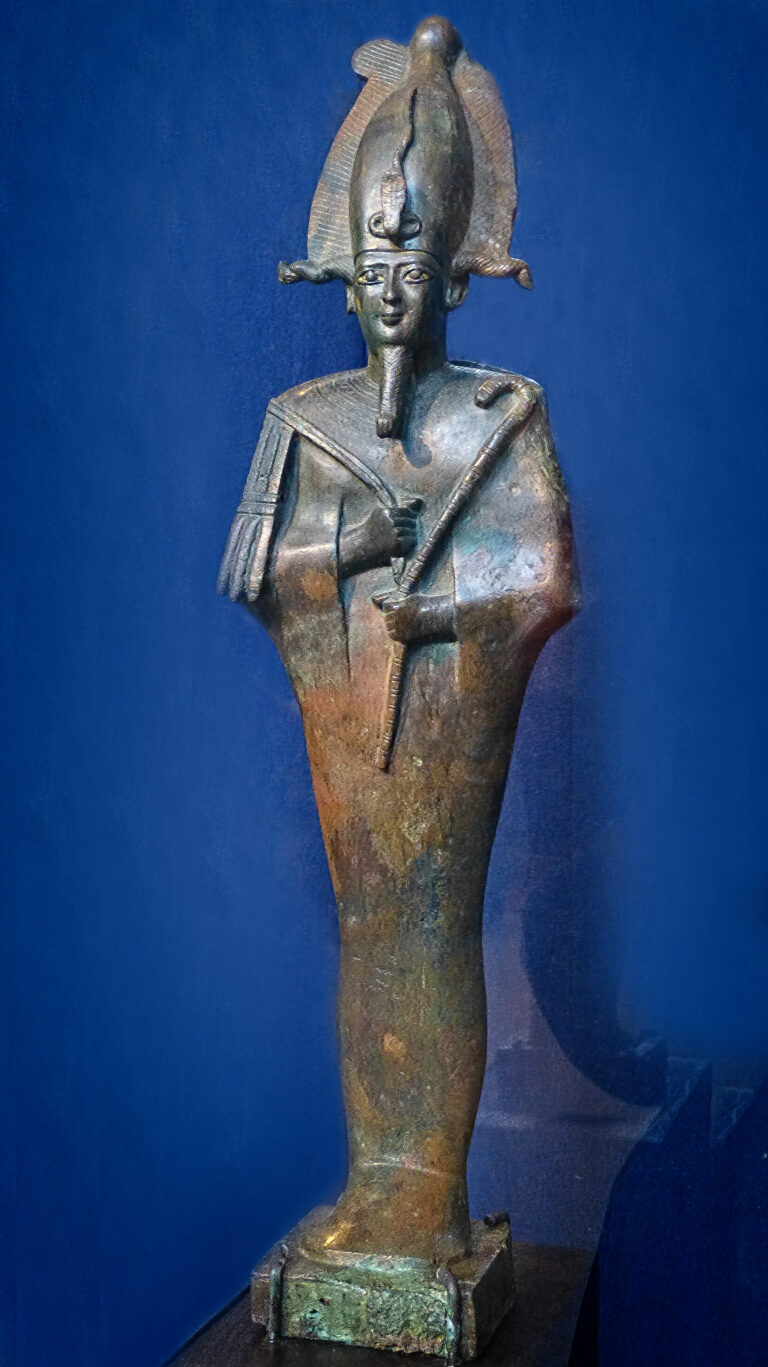
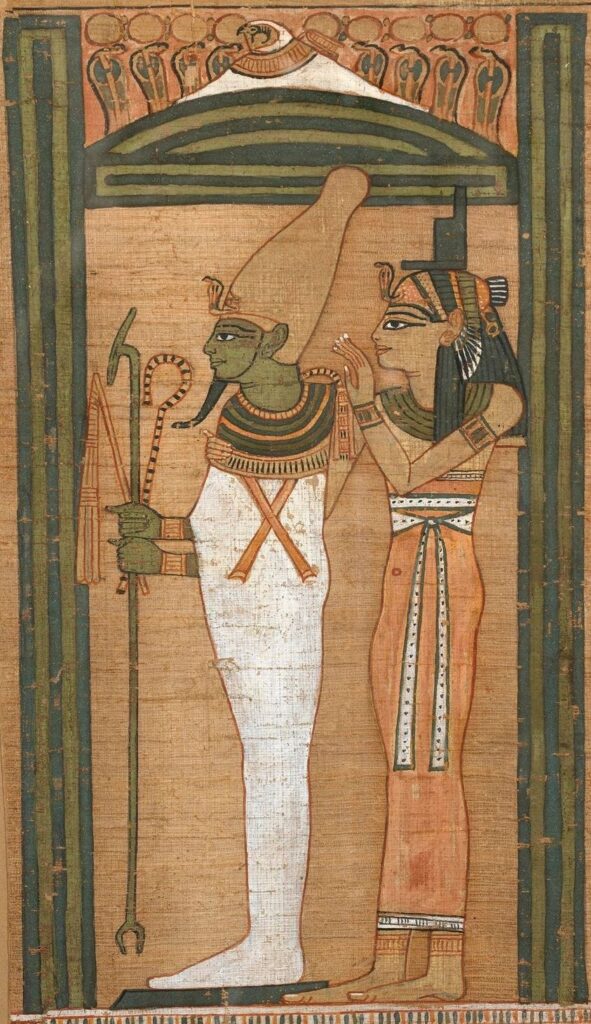
Modern readers often approach OsirisOsirisIn Geomytha, Osiris names reflected presence: Am — awareness reflected as living consciousness without yet becoming ownership.Read full entry → as a god of death, agriculture, resurrection, or kingship. All of thoseThose — ProjectionThose names projection: enemies, outsiders, competitors, threats, and disowned qualities placed beyond the identity boundary.Read full entry → descriptions are true, but they only describe part of the picture. Osiris repeatedly occupies a position between invisible source and visible identity. He is neither the hidden ground nor the hardened self. He stands between them.
He reflects.
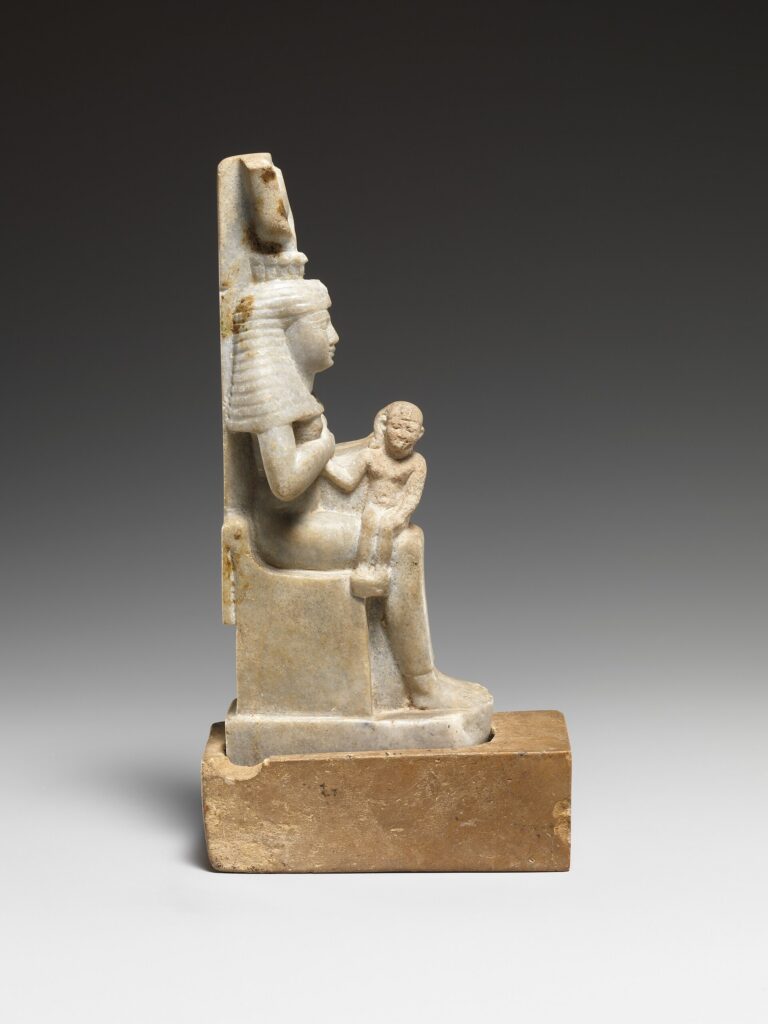
The relationship becomes easier to see when placed beside IsisIsisIn Geomytha, Isis names the unclaimed field: Is — pure being, awareness before possession, and the ground before the claimant appears.Read full entry →.
Isis is the hidden field.
Osiris is the field reflected.
The moon reflects sunlight.
Osiris reflects Isis.
Consciousness reflects awareness.
The pattern remains the same.
This distinction may explain why lunar symbolism follows Osiris almost everywhere he appears. The moon is not a second sun. It is a visible mirror suspended in the sky.
The myth is not teaching astronomy alone.
It is teaching relationship.
A source remains what it is.
A reflection reveals it.
This same structure appears far beyond EgyptEgyptAncient Egyptian cultural and mythic field referenced by the essay.Read full entry →.
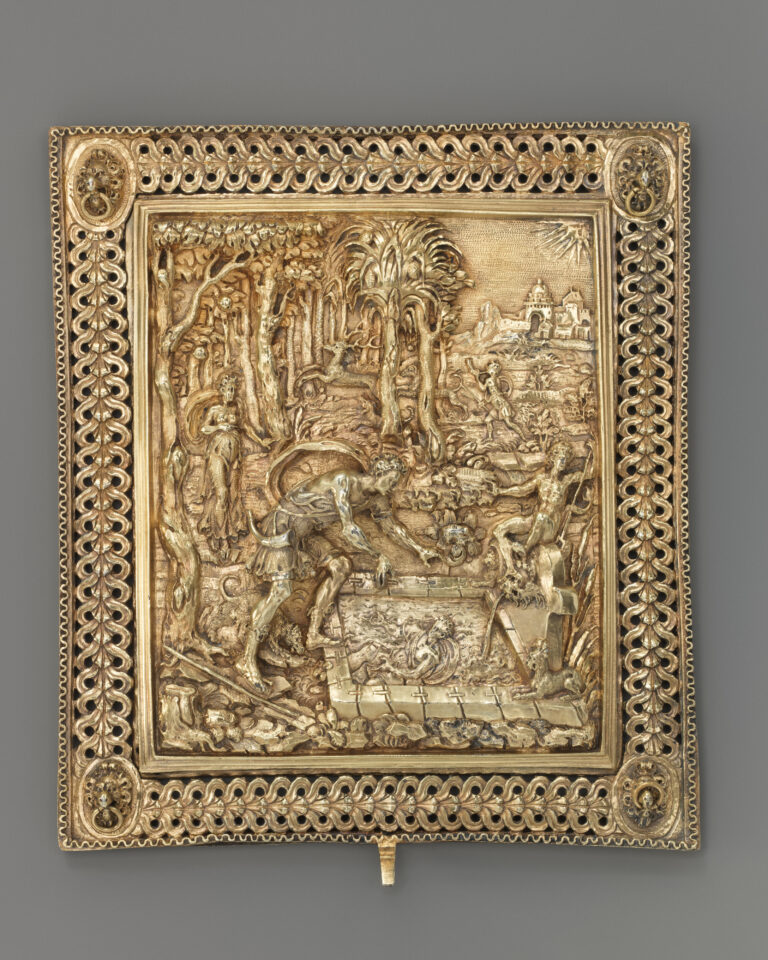
Consider the story of NarcissusNarcissusIn Ovid’s Metamorphoses Book III, Narcissus encounters his image in a pool, initially responds to it as though it were another beloved figure, and remains attached even after recognizing the image as…Read full entry →.
The tragedy is often described as vanity. A handsome youth falls in love with his own image and cannot look away.
Yet beneath the moral lesson sits a deeper symbolic pattern.
Narcissus mistakes a reflection for a source.
He becomes captivated by an appearance without understanding the relationship that produced it.
The reflection becomes reality.
The mirror becomes more important than what is being mirrored.
The same mistake appears in countless myths, fairy tales, and modern habits.
The magic mirror in Snow WhiteSnow White — Fairy Tale / Film TraditionThe Snow White tradition includes the Queen consulting a magic mirror that ranks beauty and identifies Snow White as her rival; the tale also includes the poisoned apple motif in later episodes.Read full entry → never creates beauty.
It reveals beauty.
A mirror has no beauty of its own.
Its power lies entirely in reflection.
The mirror functions perfectly until someone mistakes the reflection for an independent reality.
The same danger appears in spiritual language.
Many modern systems casually merge awareness, consciousness, self, mind, and identity into a single category. The distinctions blur together until the words lose precision.
Yet a mirror and a sun are not the same thing.
A reflection and a source are not the same thing.
If they were identical, reflection would be unnecessary.
The distinction becomes even more important when we examine identity.
The reflected moon appears fragmented across lakes, puddles, rivers, and broken glass. One moon becomes many reflections.
The same thing happens within consciousness.
One field of awareness appears as countless thoughts.
One living presence appears as memories, fears, plans, beliefs, stories, and roles.
The many seem to emerge from the one.
This is precisely why Osiris is dismembered in myth.
The image is not merely about death.
It is about fragmentationDismemberment / FragmentationDismemberment names the symbolic breaking of a previously integrated reflection into separate parts, roles, objects, or powers.Read full entry →.
Reflection naturally appears as many.
The scattered pieces point toward the nature of reflection itself.
This is also why Isis spends the myth gathering.
She remembers.
She restores relationship.
She reunites what appeared separate.
The movement is not conquest.
It is recognition.
The same movement occurs whenever attention returns from confusion to simple presence.
A thought is noticed.
A role is noticed.
A fear is noticed.
An identity is noticed.
The fragments begin to soften.
The relationship beneath them becomes visible again.
The moon never becomes the sun.
The mirror never becomes the face.
Reflection never becomes source.
Its beauty lies elsewhere.
The moon is beautiful precisely because it remembers its role.
The mirror functions perfectly when it does not pretend to generate its own light.
Perhaps consciousness is the same.
Perhaps consciousness is not diminished by being reflection.
Perhaps reflection is what allows awareness to become visible at all.
And perhaps many of humanity’s oldest myths have been trying to remind us of that simple fact from the beginning.