Full Moon · Gemini — ClaimI — ClaimI names claim: the interruption by which reflected presence is taken as mine.Read full entry → Through Noticing — Divided Inheritance: How the Dream of Restoration Becomes a Place We Can Possess
Something has been lost.
That is one of the oldest sentences human beings know.
A home.
A garden.
A city.
A kingdom.
A golden age.
A version of ourselves that existed before everything went wrong.
Then a second sentence appears:
we can get it back.
That sentence can build a life.
It can also build a city.

Zion Is Not a Generic Utopia
The original version of this essay began, “Every civilization eventually builds a Zion.”
That sentence is too broad.
Zion is not simply a universal name for “the perfect city.”
In the Hebrew Bible, Zion is bound to Jerusalem, the holy mountain, the city of God, worship, kingship, exile, memory, hope, and returnReturn — RemembranceReturn names remembrance and release: the loosening of possession so reflection can become transparent to source again.Read full entry →.
Psalm 48 calls Mount Zion the city of God and tells the listener to walk around it, count its towers, and notice its ramparts.
That is not an abstract psychological city.
It is sacred geography.
GEOMYTHA therefore does not use “Zion” as a synonym for every imagined paradise.
It begins with the historical and religious distinction intact.
Then it asks a second question:
what happens whenever restoration becomes something the claimantSetIn Geomytha, Set names the claimant: I — the interruption by which reflection is taken as mine and converted toward ownership.Read full entry → imagines it can finally possess?
The City After the Fall
The title does not describe one historical event.
“The fall” is the GEOMYTHA mechanism.
Presence becomes claim.
The claimant divides the field into:
me and not-me;
inside and outside;
mine and yours;
here and there;
what is and what should be.
Now wholeness can be imagined as somewhere else.
That is the city after the fall.
Not necessarily a literal city.
A destination onto which completion has been projected.
The New Jerusalem Comes Down
The Christian Book of RevelationRevelation — Book of RevelationThe final book of the Christian New Testament, also called the Apocalypse of John.Read full entry → gives us a different city-image from biblical Zion.
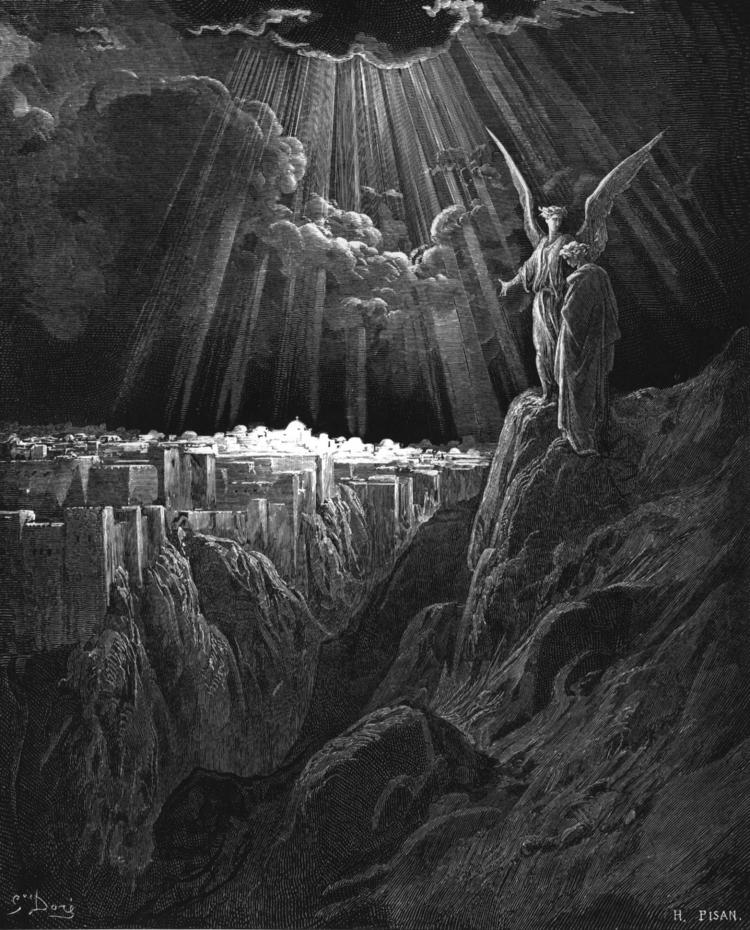
In Revelation 21, the New Jerusalem comes down from heaven.
That direction matters.
The vision is not simply humanity climbing toward a perfect city by effort.
The city descends as part of a transformed creation.
GEOMYTHA does not claim Revelation secretly teaches its system.
But the image gives us a useful contrast:
the claimant wants to build its way back to completion;
the vision imagines completion arriving on terms the claimant does not control.
One architecture is acquisition.
The other is reception.
Do Not Turn Luke 17 Into a Shortcut
The old essay said scripture keeps relocating the kingdom from geography into consciousness.
That was too simple.
Luke 17:21 is translated in different ways.
Some English Bibles render the phrase “the kingdom of God is within you.”
Others render it “among you” or “in your midst.”
That translation problem matters because GEOMYTHA should not use one English wording to erase the social, communal, political, or eschatological dimensions of kingdom language.
The safer symbolic question is not:
the kingdom is really only inside you.
It is:
how much of our hunger for a future kingdom is also a hunger for a relation we cannot manufacture by possession?
Atlantis Is Not a Lost Eden
AtlantisAtlantis — Plato’s Timaeus and CritiasPlato’s Timaeus and Critias are the classical literary sources for the Atlantis tradition. The dialogues present Atlantis as a lost polity in a narrative placed in the distant past; this record uses…Read full entry → is another place where modern retellings often outrun the sourceIs — SourceIs names unclaimed being: awareness before possession, distinction, or identity.Read full entry →.
In PlatoPlatoAncient Greek philosopher whose Republic contains the Allegory of the Cave.Read full entry →’s Critias, Atlantis is extraordinarily wealthy, powerful, engineered, and abundant.
But Plato does not simply present it as a lost perfect civilization waiting to be rediscovered.
The story turns on degeneration.
The Atlanteans become corrupted by wealth and power, and the unfinished dialogue moves toward divine punishment.
That makes Atlantis more interesting for this essay.
The city can begin as an image of abundance and still become the place where abundance hardens into domination.
The promised city does not automatically heal the claimant.
Sometimes it gives the claimant more to claim.
The Emerald City Makes the Mechanism Visible
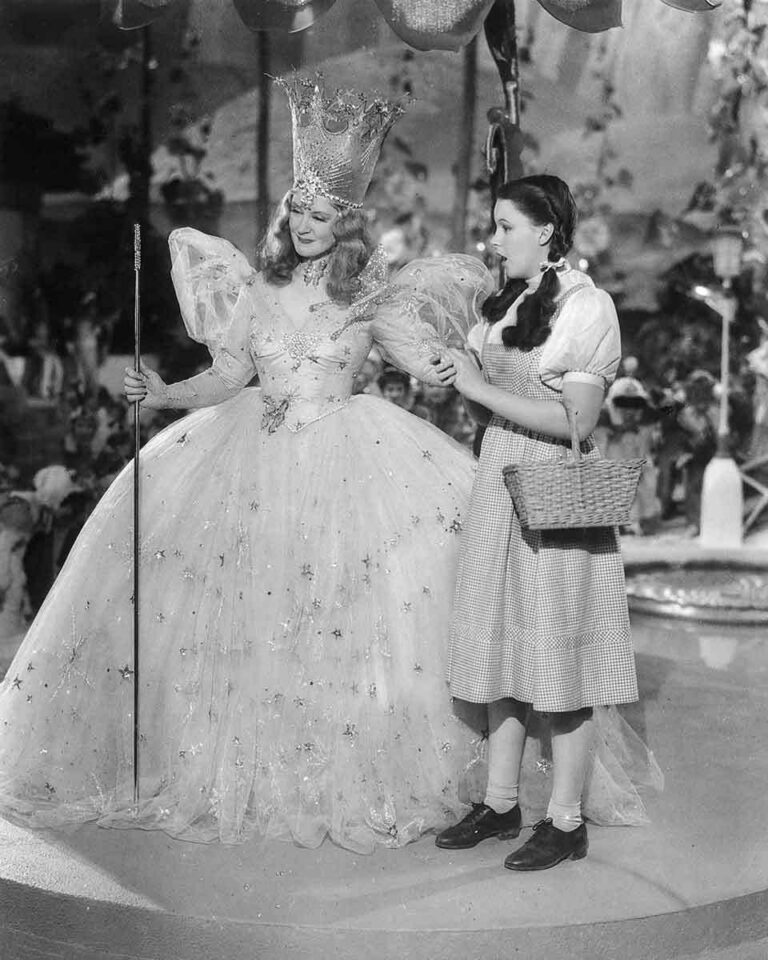
The Wonderful Wizard of OzThe Wizard of Oz — 1939 Film1939 MGM musical fantasy film adapted from L. Frank Baum’s Oz material.Read full entry → gives the same pressure a lighter form.
Dorothy and her companions travel toward the Emerald City because the Wizard is supposed to supply what each one lacks.
The Scarecrow wants brains.
The Tin Woodman wants a heart.
The Lion wants courage.
Dorothy wants home.
The city concentrates the promise.
Then the Wizard is exposed as an ordinary man behind an appearance of power.
The journey still mattered.
The destination still mattered.
But the authority the travelers projected onto the destination was larger than what was actually there.
That distinction is exactly what GEOMYTHA needs.
The Promised Land Is Not the Problem
This essay becomes dangerous if it spiritualizes real loss.
People can genuinely lose land.
Homes can be destroyed.
Communities can be exiled.
Refugees can need an actual safe place.
Indigenous peoples can have real territorial claims.
Religious communities can have real historical attachments to particular places.
A person who needs housing does not need to be told that “home is within.”
A displaced people does not need its history dissolved into a metaphor about ego.
That is the serious boundary of this article.
Real territory matters.
GEOMYTHA’s question concerns what identityThis — IdentityThis names the formed identity: the body, role, image, wound, belief, or story claimed as what the self is.Read full entry → asks territory to do beyond being territory.
Can a place become responsible for proving that we are whole?
Can possession become a substitute for relation?
Can restoration become impossible because no restored object can satisfy the claimant that keeps moving the definition of completion?
Full Moon: The City Becomes Claim
Full Moon is Claim.
Something has become visible enough to point at.
There.
That city.
That house.
That relationship.
That victory.
That restored nation.
That future version of me.
At the Full Moon, the form is bright enough to be mistaken for fulfillment itself.
That is the shadow.
The thing can be genuinely valuable and still be asked to carry a metaphysical weight it cannot hold.
The City Can Become “All This”
GEOMYTHA’s wider attention cycle can move beyond “I am thisThe False-Self Sentence — I Am ThisThe false-self sentence forms when claim joins reflection to a fixed object of identity: I am this.Read full entry →” into possession:
This.
TheseThese — AccumulationThese names accumulation: possessions, titles, achievements, beliefs, communities, and other extensions gathered around identity.Read full entry →.
ThoseThose — ProjectionThose names projection: enemies, outsiders, competitors, threats, and disowned qualities placed beyond the identity boundary.Read full entry →.
All thisAll This — World-SystemAll This names the total symbolic environment that has become so complete it is experienced as reality itself.Read full entry →.
A city is one way “All This” becomes visible.
Walls.
Streets.
Temples.
Names.
Memory.
Law.
Inheritance.
Boundary.
Belonging.
Again, none of these is inherently false.
The problem comes when the built world must continually prove the claimant’s identity.
Then the city stops being somewhere people live.
It becomes an answer to the question of what they are.
The City After the Fall Is Still a City
The answer is not to abandon cities, homes, sacred places, political projects, or hopes for restoration.
It is to stop asking them to solve a different problem.
Build the house.
Protect the place.
Remember the homeland.
RepairWorld-RepairWorld-Repair names the work of regathering relation, pattern, and presence inside a field that has been fractured rather than simply escaping the field.Read full entry → the institution.
Seek justice.
Return where return is real.
But keep one question alive:
what am I asking this place to prove about me?
That question does not erase territory.
It prevents territory from becoming the final container of identity.
Witness the city. Honor the inheritance. Build what must be built. But do not ask possession to perform the work of presence.
Sources
- Psalm 48, Sefaria — primary Hebrew Bible source for Zion as holy mountain, city of God, and built sacred place.
- Revelation 21 — primary Christian text for the New Jerusalem descending from heaven.
- Luke 17:21 across English translations — documents the important “within / among / in your midst” translation range.
- Plato, Critias — primary classical source for Atlantis as powerful and abundant but eventually corrupted, not simply a lost Eden.
- L. Frank Baum, The Wonderful Wizard of Oz — primary literary source for the Emerald City and the Wizard’s projected authority.
- Gustave Doré, The New Jerusalem — public-domain hero image.





.jpg)