Most people know Horus as the victorious son of Osiris.
He battles Set. He restores order. He inherits the throne of EgyptReferenceEgyptAncient Egyptian cultural and mythic field referenced by the essay.Read full entry →. He is king.
But Egypt remembered another Horus.
An older Horus.
And perhaps that difference matters.
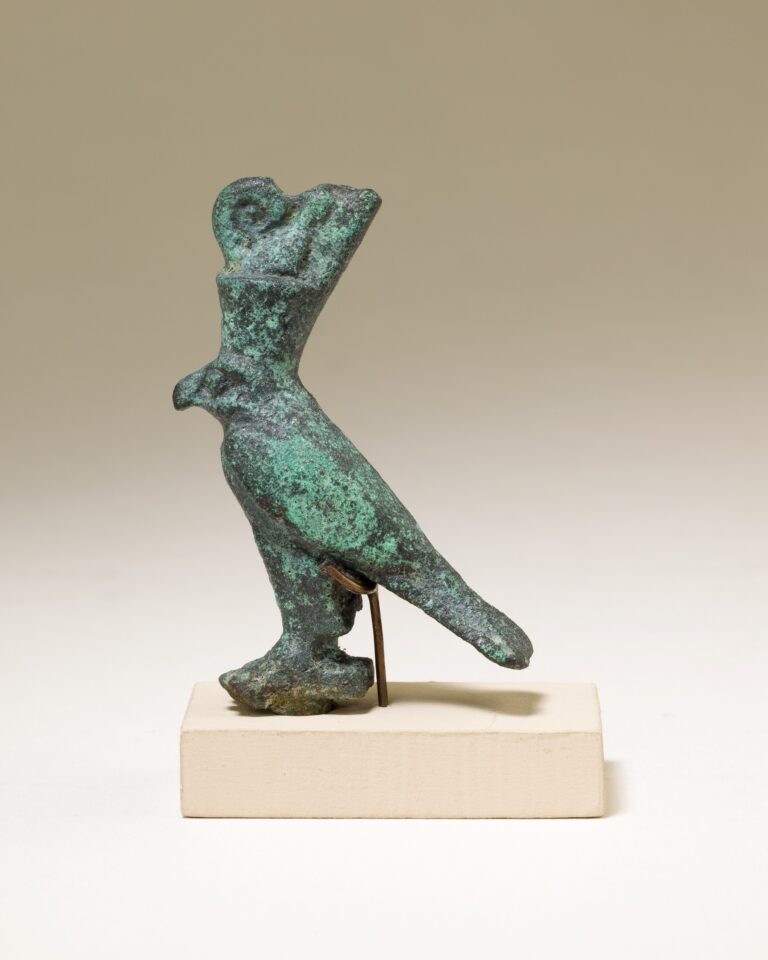
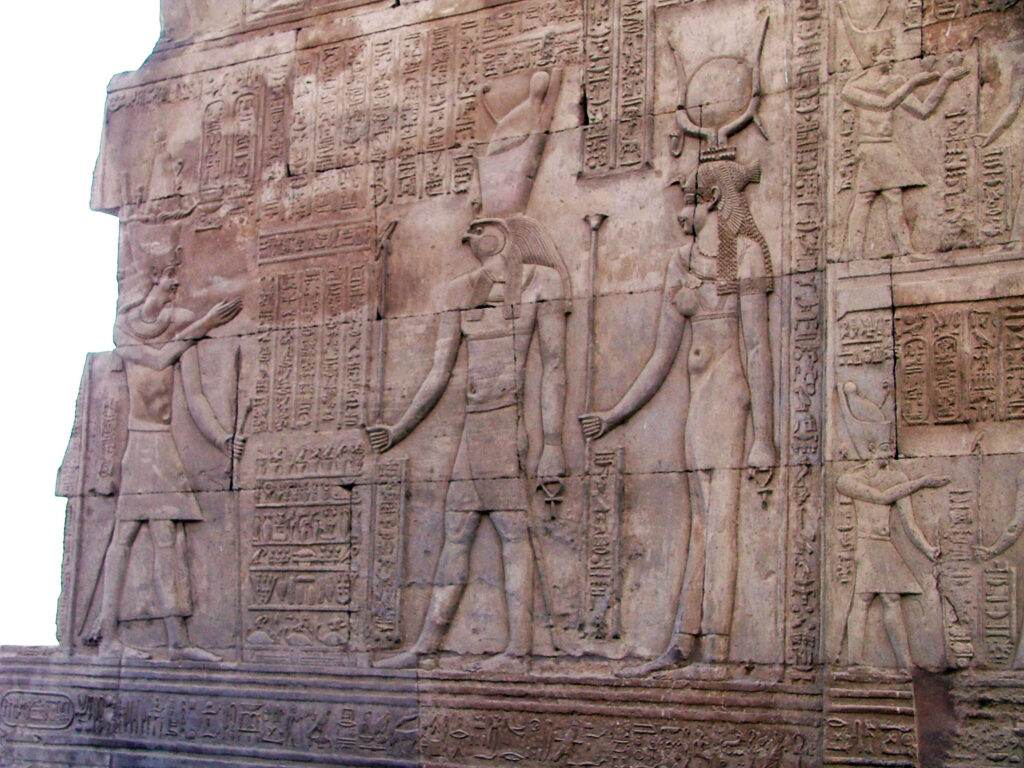
The younger Horus belongs to history. He struggles, conquers, and rules. His story unfolds inside the drama of kingship. Yet behind him stands a stranger figure: Horus the Elder, the falcon of the sky.
Modern readers often assume that every god must represent power. Every bird must symbolize dominion. Every heavenly figure must ultimately become king.
But what if the falcon means something else?
Falcons possess extraordinary vision. They see from above. They orient. They survey the whole landscape. Their gift is not possession but sight.
Perhaps Horus the Elder represents consciousness before identity narrows into rulership.
Perhaps the falcon comes before the throne.
This forgotten pattern appears everywhere.
Hermes guides heroes but never becomes king.
Merlin advises Arthur but never sits upon the throne.
John the Baptist points toward ChristReferenceChristJesus Christ as the central figure of Christianity.Read full entry → and then willingly disappears from the story.
Obi-Wan Kenobi guides Luke Skywalker but refuses the temptations of empire.
These figures share a peculiar quality.
They witness.
They orient.
They point.
But they do not possess.
Modern life encourages the opposite tendency. Thoughts arise and are immediately claimed.
Fear appears.
“I am afraid.”
Anger appears.
“I am angry.”
A role appears.
“I am thisGEOMYTHA readingThe False-Self Sentence — I Am ThisThe false-self sentence forms when claim joins reflection to a fixed object of identity: I am this.Read full entry →.”
The movement happens so quickly that we rarely notice it.
But something can notice.
A thought arises.
A feeling appears.
And before identity hardens around it, awareness briefly sees the process.
Perhaps that seeing itself is symbolized by the older Horus.
Not another king.
Not a superior ego.
Not a spiritual identity.
Simply the possibility of vision before possession.
This may explain why so many traditions preserve old guides, prophets, psychopomps, and witnesses who stand near kings but never become kings themselves.
They preserve a memory.
Before the throne, there was the falcon.
And before the falcon—
there was only being.
The goal, then, is not to destroy thought or abolish identity.
It is to recover the capacity to see.
Freedom begins not when we conquer the world.
Freedom begins when we notice the moment we are tempted to possess it.