There is a peculiar kind of story that begins with a mistake.
Not a mistake of action. A mistake of orientation.
The hero believes he is pursuing something: escape, truth, justice, victory, meaning, home. But somewhere along the journey, usually too late, he discovers that he was never the hunter. He was always the quarry.
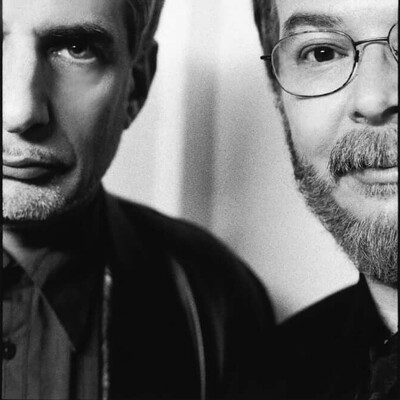
This is the hidden structure shared by Jim HensonReferenceJim HensonAmerican puppeteer, filmmaker, and creator associated with The Muppets and the original Tale of Sand screenplay.Read full entry →’s Tale of Sand and Steely Dan’s Reelin’ in the Years. On the surface, they appear to have nothing in common. One is a surreal comic conceived by Jim Henson and Jerry Juhl, filled with deserts, strange towns, and absurd chases. The other is one of the most recognizable rock songs of the twentieth century, a bright and bitter meditation on memory and regret.
Yet both tell the same story.
The story of a man who discovers that the world he thought he understood has already judged him.
In Tale of Sand, Mac awakens in a strange town with no understanding of where he is or why everyone seems to know more about him than he knows about himself. Before he can orient himself, he is told to run.
So he runs.
He runs through deserts, carnivals, motels, highways, and hallucinations. He runs from policemen, hunters, animals, machines, strangers, and forces that never fully explain themselves. Every time he believes he has found an answer, the answer dissolves. Every destination becomes another beginning. Every escape becomes another pursuit.
The most terrifying aspect of the story is not that Mac is being chased.
It is that everyone else already understands the rules.
Only Mac does not.
This is also the hidden structure of Reelin’ in the Years.
The song disguises itself as a complaint. It sounds like a man criticizing someone from his past, recounting lost opportunities and wasted brilliance. Yet the deeper one listens, the stranger the song becomes.
The narrator cannot stop returning.
He reels in the years.
He reels in old conversations, old wounds, old judgments, old victories. He returns again and again to a relationship that no longer exists because he believes that somewhere inside memory lies the explanation of himself.
But memory never yields the answer.
It only yields more memory.
The title itself reveals the trap.
Not remembering.
Not reflecting.
Reeling.
Being pulled.
Like a fish. Like a prisoner. Like film running endlessly through a projector.
The years are not being examined.
The years are doing the examining.
This is why both works contain the figure of the hangman.
In Tale of Sand, execution and punishment lurk beneath the surface of every encounter. Mac moves through a world that behaves as though his guilt has already been established. He is pursued not because he has committed a crime, but because the world has decided he occupies the position of the condemned.
In Reelin’ in the Years, the narrator performs the same function himself.
He becomes prosecutor.
He becomes witness.
He becomes judge.
He becomes executioner.
The entire song is a trial.
The narrator recalls the other person repeatedly presenting themself as a genius from youth onward.
The sentence sounds like criticism.
But criticism is not what is happening.
A verdict is being pronounced.
And yet the person truly being judged may not be the woman at all.
It may be the narrator himself.
This is one of the oldest stories human beings tell.
GilgameshReferenceGilgamesh — Epic of GilgameshGilgamesh, king of Uruk and central figure of the Epic of Gilgamesh.Read full entry → travels to the edge of the world seeking immortality only to discover that the thing he pursued can never be possessed.
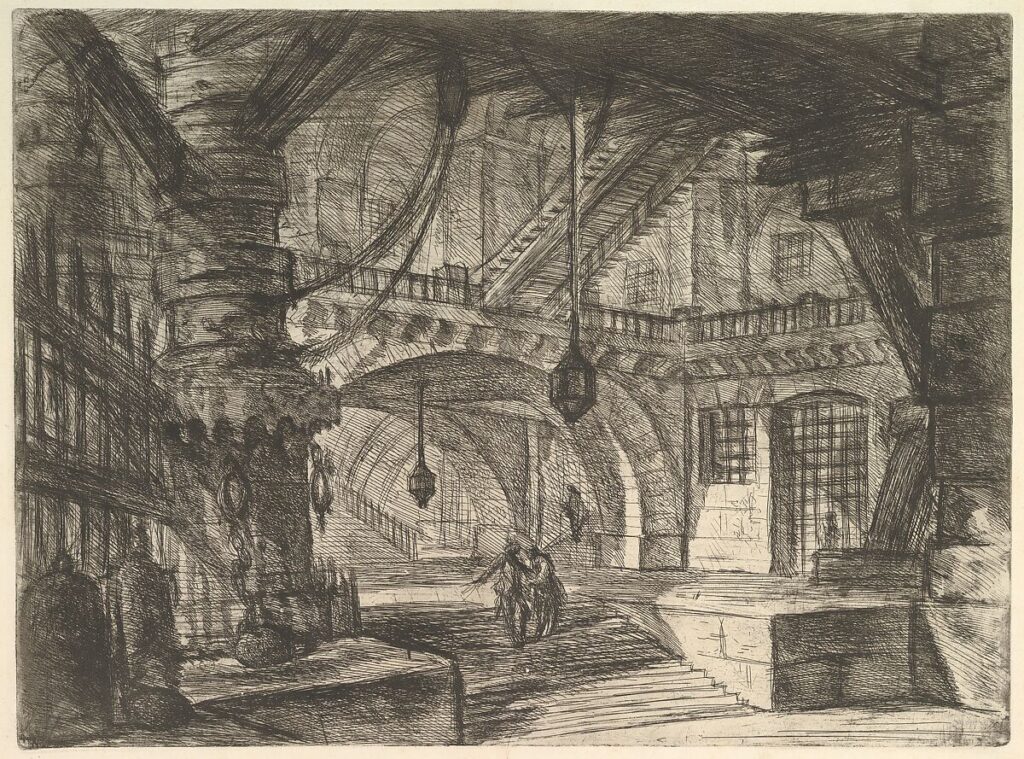
The author of Ecclesiastes examines wisdom, pleasure, labor, reputation, and knowledge only to discover that each dissolves like sand through the fingers.
Kafka’s Josef K. awakens one morning already accused, already condemned, already trapped inside a trial whose charges can never be explained.
AliceReferenceAlice — Alice’s Adventures in WonderlandAlice, the protagonist of Lewis Carroll’s Alice’s Adventures in Wonderland.Read full entry → falls into WonderlandReferenceWonderland — Alice’s Adventures in WonderlandThe strange world Alice enters in Lewis Carroll’s Alice’s Adventures in Wonderland.Read full entry → and discovers that every rule has already been written by someone else.
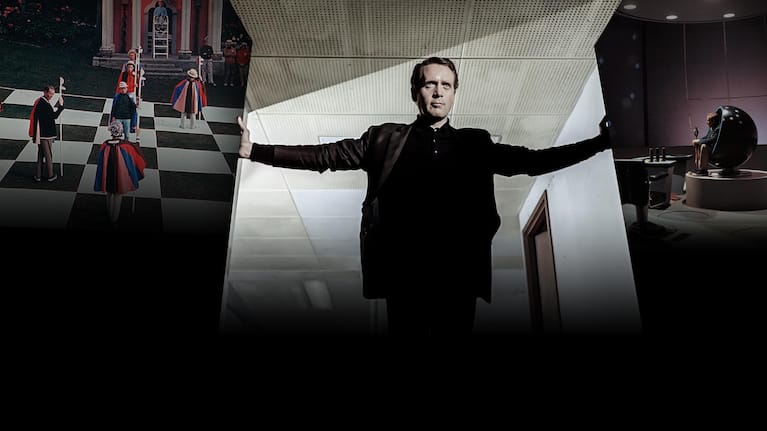
The prisonerReferenceThe Prisoner — Television SeriesBritish television series centered on a former secret agent confined in the Village.Read full entry → arrives at the villageReferenceThe Village — The PrisonerThe controlled settlement in the television series The Prisoner.Read full entry → and learns that escape itself may have been part of the prison.
The traveler checks into the Hotel CaliforniaReferenceHotel California — EaglesHotel California is the title track of the Eagles’ 1976 album.Read full entry → and discovers that departure was never included in the bargain.
Again and again, the same realization appears.
The hero thought he was pursuing the world.
The world was pursuing him.
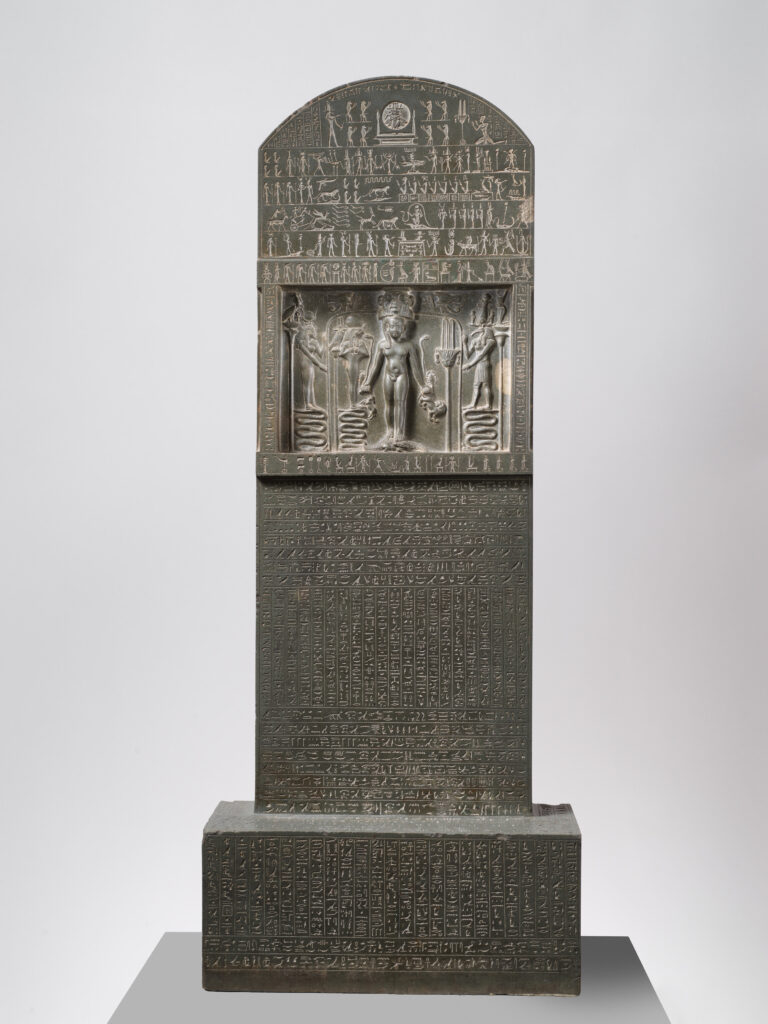
In Geomythic terms, this is the moment when HorusGEOMYTHA readingHorusWithin GEOMYTHA, Horus the Son names This: the body, role, image or story claimed as identity. Horus the Elder / Haroeris is distinct and carries the watcher or witnessing function, not This. These are interpretive correspondences, not universal Egyptian definitions.Read full entry → discovers the kingdom was never his.
The self begins by saying:
“I am thisGEOMYTHA readingThe False-Self Sentence — I Am ThisThe false-self sentence forms when claim joins reflection to a fixed object of identity: I am this.Read full entry →.”
Then:
“These are mineGEOMYTHA readingThese — AccumulationThese names accumulation: possessions, titles, achievements, beliefs, communities, and other extensions gathered around identity.Read full entry →.”
Then:
“Those are my enemies.”
Finally:
“All this is my world.”
But eventually something terrible happens.
The world turns around.
The identity that claimed ownership discovers that ownership runs both ways.
The memories own the rememberer.
The role owns the actor.
The story owns the storyteller.
The kingdom owns the king.
This is why Tale of Sand takes place in the desert.
The desert is what remains after the flood has withdrawn.
It is memory after life has departed.
It is time after meaning has evaporated.
And this is why Reelin’ in the Years feels strangely exhausted despite its energy. Beneath the guitars and movement lies a spiritual drought. The narrator is not remembering a living past. He is wandering through its remains.
The oldest civilizations knew this image well.
A king wanders into the wasteland.
A traveler crosses the desert.
A soul enters the underworld.
A prisoner walks the corridors of judgment.
Each believes he is searching for an answer.
Eventually he discovers something far more frightening.
He was never searching for the answer.
He was the question.
And perhaps that is the strange gift hidden inside these stories.
For when the pursuit finally exhausts itself, when the years stop reeling and the desert finally empties, one possibility remains.
That what we were chasing was never missing.
And what was chasing us was never real.