Category: Uncategorized

  • The Law of Receive and Return

    The Law of Receive and Return

    Most systems teach us to look for enemies.

    Good against evil. Light against darkness. Creation against destruction. Source against projection. Spirit against matter. Truth against illusion.

    Those oppositions matter. They show real tensions. But they are not the deepest rhythm.

    Underneath them is something quieter, older, and more difficult to counterfeit:

    Receive and return.

    That is the law underneath breath. It is the law underneath the moon. It is the law underneath seasons, rivers, ritual, gratitude, death, memory, and attention.

    Life does not merely build. Life does not merely destroy.

    Life receives. Life returns.

    The false self begins when receiving becomes possession.

    A breath enters the body. It is received. But no one calls it property. No one says, “This inhale is mine forever.” The body knows better. The body receives and returns. It inhales, then exhales. It accepts the gift, then releases it.

    Try to keep only the inhale and life becomes panic. Try to keep only the exhale and life collapses.

    Breath is not moral philosophy. It is older than philosophy. It is the body teaching metaphysics before the mind can interfere.

    The sacred rhythm is not control.

    It is circulation.

    In Geomytha’s simplest breath grammar, the inhale is Am. Presence is received into the body as living reflection. The exhale is Is. The reflected presence returns to source before the claimant can seize it.

    Inhale: Am. Exhale: Is.

    This is not a belief. It is a practice of non-possession.

    Receive the moment. Return the claim.

    The false self does not begin because something appears. It begins when what appears is owned.

    A thought appears, and the claimant says, “I.” A feeling appears, and the claimant says, “me.” A wound appears, and the claimant says, “my story.” A body appears, and the claimant says, “this is what I am.” An insight appears, and the claimant says, “now I know.”

    That is the interruption.

    That is where receiving breaks away from return.

    The moon teaches the same law more beautifully than almost anything else in the sky.

    The moon receives light. It does not generate the light it carries. Its beauty is reflective. It waxes, fills, shines, wanes, thins, disappears, and returns. Nothing about this makes the moon false. Reflection is not the error. Receiving light is not the error. Visibility is not the error.

    The error would be the moon forgetting that it reflects.

    The error would be the mirror claiming to be the fire.

    This is why the moon is such a powerful teacher for consciousness. It receives without pretending to be source. It becomes full without becoming final. It releases without being destroyed.

    The ego cannot understand this.

    The ego thinks fullness should be kept. It thinks visibility should be defended. It thinks identity should be stabilized. It thinks the beautiful thing must be made permanent. It sees the waning moon and calls it loss.

    But the moon is not losing itself.

    It is returning.

    That difference changes everything.

    The Egyptian pattern says the same thing in mythic form. Isis is the receptive field: awareness before claim, the ground that can hold. Osiris is the living reflection: the hidden life that dies and returns, the pattern of wholeness passing through fragmentation. Set is the interruption: the cutting, seizing, fragmenting force that breaks circulation. Horus is the identity born after interruption: the “I” that tries to rule the divided field.

    So the drama is not simply good god versus bad god.

    It is circulation versus capture.

    Isis receives. Osiris returns. Set interrupts. Horus claims.

    The fall is not that consciousness receives form.

    The fall is that consciousness keeps form as self.

    This is where many spiritual systems become confused. They begin to treat form itself as the enemy. They speak as if body, world, thought, image, language, ritual, or identity were inherently corrupt. But that is too crude. The problem is not that forms arise. The problem is that forms stop returning.

    A song can return you. A myth can return you. A meal can return you. A body can return you. A child can return you. A river can return you. A sentence can return you. Even an image, if it remains transparent, can return you.

    But when the form demands final ownership, it becomes a trap.

    That is the difference between symbol and idol.

    A symbol receives attention and returns it to depth. An idol receives attention and keeps it circling around itself.

    This is why the old seasonal rhythm is so important. Spring receives life. Summer expresses it. Autumn returns it. Winter rests it. The year is not a straight line toward endless growth. Permanent spring would be exhaustion. Permanent summer would be fever. Permanent harvest would be consumption without replenishment.

    Winter is not failure.

    Winter is return.

    The modern world forgets this constantly. It worships increase. More output, more content, more visibility, more productivity, more optimization, more accumulation, more selfhood. It wants spring and summer without autumn and winter. It wants inhale without exhale.

    But systems that only receive eventually become haunted.

    This is why Spirited Away belongs here so strongly. Chihiro enters a world where names can be taken, labor can be captured, appetite can become monstrous, and identity can be traded. The bathhouse is not evil merely because it receives. A bathhouse is supposed to receive. It receives spirits, dirt, fatigue, and offering. Its sacred function should be cleansing and return.

    But under Yubaba, reception becomes contract. Names are seized. Workers are bound. Desire is monetized. No-Face becomes monstrous because he receives without true relation. He consumes because he cannot return.

    Chihiro’s task is not to conquer the spirit world. It is to remember right relation inside it. She receives help and returns loyalty. She receives fear and returns courage. She receives a new name but does not forget the old one. She learns that liberation comes not from refusing the world, but from moving through it without surrendering the center.

    That is receive and return.

    Groundhog Day gives the same law in comic form. Phil Connors is trapped in a repeating day, but the loop itself is not the real prison. The real prison is how he receives the day.

    At first, he receives it as opportunity for control. Then pleasure. Then manipulation. Then despair. He tries to use the day without returning anything to it. He consumes the same twenty-four hours over and over, and the world refuses to open.

    The loop breaks only when reception becomes gratitude.

    He receives the day as gift. He returns skill, kindness, attention, music, service, and care. He stops asking the day to confirm his identity. He begins to participate in it. The same day that was prison becomes passage.

    The world did not change first.

    His relation changed.

    That is the secret of the loop. A cycle becomes hell when it only repeats the claimant. A cycle becomes sacred when it receives and returns.

    Hermann Hesse’s Siddhartha carries this even more quietly. Siddhartha seeks wisdom through teachers, discipline, pleasure, wealth, renunciation, and despair. He tries to acquire awakening as if it were an object. But the river does not teach by possession. It teaches by movement.

    The river receives every voice. It receives grief, birth, death, laughter, longing, crossing, departure, return. It does not freeze any of them into final doctrine. It carries them. It lets them sound together.

    Siddhartha does not awaken by conquering the river.

    He learns to listen.

    That is why the river is one of the purest images of this law. It receives without hoarding. It returns without vanishing. It is always itself and never the same. It does not argue for non-attachment. It flows.

    The body knows this. The moon knows this. The river knows this. The seasons know this.

    The ego does not.

    The ego wants the received thing to become proof of itself. It turns experience into autobiography. It turns pain into identity. It turns insight into superiority. It turns love into possession. It turns belief into a wall. It turns even awakening into a costume.

    This is why “My Way” makes such a useful contrast. Its power is undeniable. It has grandeur, defiance, and the drama of self-authorship. But mythically, it is also the anthem of the completed narrative self: life gathered into one final statement of ownership.

    I did it. I chose it. I suffered it. I stood for it. I made it mine.

    There is dignity in that. But there is also danger.

    Because the deepest freedom may not be the ability to say, “I did it my way.”

    It may be the ability to see that the way was never owned.

    Life passed through. Breath passed through. Love passed through. Failure passed through. Grace passed through. The self did not manufacture the current. At best, it learned whether to obstruct it.

    “My way” becomes sacred only when it can finally be returned.

    Otherwise, it becomes the last mask.

    The same distinction applies to music. Pink Floyd’s “Breathe (In the Air)” works because it understands the strange softness of incarnation. Breathe. Receive the air. Be here. But the song also carries the pressure of time, habit, labor, and quiet absorption into systems already waiting to use the life being breathed.

    The command to breathe is simple. The world around it is not.

    That is the human condition. Breath enters pure, but the structures around the breath try to claim it. Work claims it. fear claims it. identity claims it. entertainment claims it. ideology claims it. ambition claims it. doom claims it.

    The question is not whether you breathe.

    The question is where the breath is returned.

    “Turn! Turn! Turn!” gives the seasonal correction. There is a time to plant and a time to reap, a time to build and a time to break down, a time to keep and a time to cast away. Its wisdom is not passivity. It is rhythm. It refuses the ego’s demand that one phase of life become permanent.

    There is no sacred receiving without sacred returning.

    This is where modern spectacle becomes dangerous. Advertising receives longing and returns desire. Social media receives attention and returns performance. News receives anxiety and returns urgency. Entertainment receives mythic hunger and returns franchise loyalty. The machine receives the human need for meaning and returns identity packages.

    This is not true circulation.

    It is capture.

    A healthy system receives and returns. A dead system stops circulating. A predatory system receives, traps, and recycles.

    The difference is crucial.

    A sacred ritual receives attention and returns it to presence. A manipulative ritual receives attention and returns it to dependency. A sacred image receives the gaze and returns it to depth. A spectacle receives the gaze and returns it to craving. A true teacher receives the student’s question and returns the student to seeing. A false teacher receives the question and returns the student to the teacher’s authority.

    The serpent-machine does not merely block the breath.

    It imitates circulation.

    That is why false loops are so seductive. They feel like movement. Refresh the feed. Watch another clip. Chase another revelation. Buy another object. Decode another symbol. Join another outrage. Improve another version of the self.

    Something is happening.

    But nothing is returning.

    This is also why Geomytha must be careful with its own symbols. Any symbolic system can become another palace for Horus. The map can become identity. The decoder can become the mask. The one who sees the pattern can become trapped inside the pleasure of seeing patterns.

    Even insight must be returned.

    Especially insight.

    A symbol has done its work when it returns attention to presence. If it only produces more symbolic appetite, it has become another beautiful cage.

    The law is simple enough to practice today.

    Ask:

    What did I receive? Did I give thanks? Did I return it? Or did I turn it into “I am this”?

    A compliment can be received and returned as gratitude, or seized as identity. An insult can be received and returned as information, or seized as wound. A fear can be received and returned as sensation, or seized as prophecy. A desire can be received and returned as energy, or seized as command. An insight can be received and returned as clarity, or seized as superiority.

    The movement is subtle.

    The claimant arrives quickly.

    It says: mine. My fear. My role. My trauma. My awakening. My enemy. My truth. My way.

    The return is quieter.

    It says: received. Thank you. Released.

    This is not weakness. It is not passivity. It is not indifference. Return does not mean refusing responsibility. The exhale is not an escape from breathing. Autumn is not a betrayal of summer. The river returning to the sea does not mean the river never mattered.

    Return means the form is not forced to become final.

    That is liberation at the smallest scale.

    To receive without possession. To act without freezing into actor. To feel without becoming the feeling. To think without becoming the thought. To shine without claiming to be the source.

    The moon does this every month.

    It receives light. It gives light. It releases light. It disappears. It returns.

    Nothing is lost.

    The ego sees waning and panics because it believes only possession proves reality. But the moon knows another law. What is returned is not destroyed. It is restored to circulation.

    That is the law beneath the law.

    Not good against evil. Not creation against destruction. Not even source against projection as the final word.

    Receive and return.

    The sacred receives and returns. The ego receives and keeps. The machine receives and recycles. Presence receives and releases.

    So breathe.

    Inhale: Am. Exhale: Is.

    Receive the moment.

    Return the claim.

    What is returned is not lost. What is hoarded becomes the false self.
  • The Magi and Ammit: First Fire and Second Fire

    The Magi and Ammit: First Fire and Second Fire

    Waning Gibbous · Gemini — Release Through Noticing — The Weight of the Heart: Gift at the Beginning, Judgment at the End

    Every life begins with gifts it did not earn.

    A body.

    A name.

    A place.

    A set of relationships already waiting.

    And every life eventually reaches a point where those gifts can no longer be carried forward in the same form.

    That gives GEOMYTHA a useful comparison between two very different religious images:

    the Magi arriving with gifts at the beginning of Matthew’s Jesus story;

    and the Egyptian weighing of the heart, where Ammit waits beside the scale at the threshold of the afterlife.

    Historically, these traditions are unrelated.

    GEOMYTHA is placing them beside one another as a modern symbolic comparison.

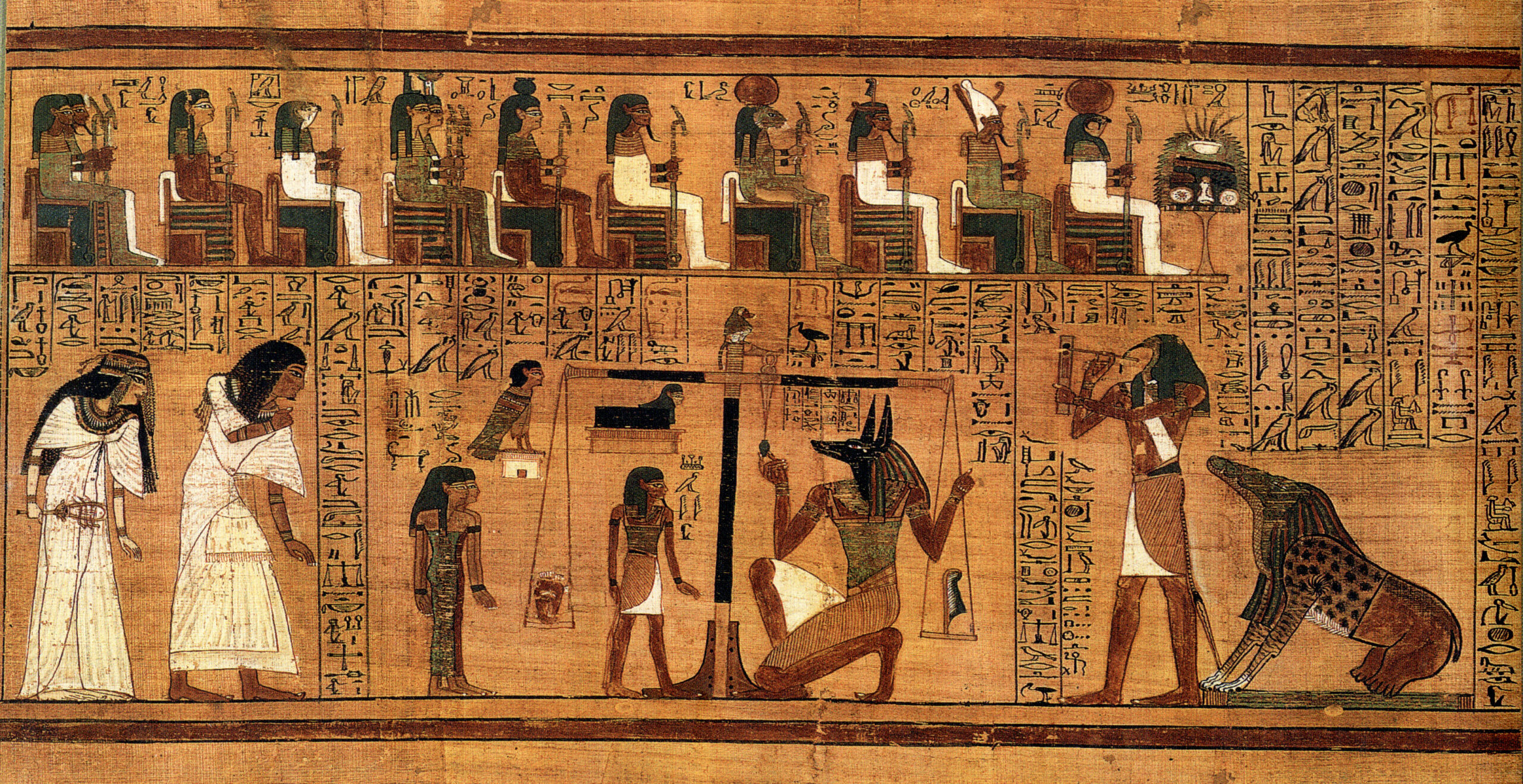
    Papyrus of Ani judgment scene with Anubis weighing Ani’s heart against the feather of Ma’at
    Weighing of the Heart from the Papyrus of Ani. Anubis tends the balance, the heart is weighed against Ma’at, and Ammit waits nearby. Ancient Egyptian funerary scene; public-domain reproduction.

    Matthew Gives Gifts, Not a Hidden Triad

    Matthew says the Magi bring three gifts:

    gold;

    frankincense;

    myrrh.

    The Gospel does not explain a secret metaphysical system behind those gifts.

    Later Christian tradition gave them layered meanings—kingship, divinity, mortality, sacrifice—but those are interpretations built around the text, not meanings Matthew spells out directly.

    That distinction matters because the older version of this essay made the gifts do too much.

    It treated them as though they were an ancient version of GEOMYTHA’s Is, Am, and I.

    There is no historical basis for that claim.

    The stronger reading is simpler.

    The child receives value before he has done anything to deserve it.

    The gifts arrive first.

    Identity comes later.

    The Egyptian Heart Is Weighed Against Ma’at

    The Egyptian scene is very different.

    In Book of the Dead judgment imagery, the deceased heart is weighed against the feather of Ma’at—truth, justice, right order.

    Anubis tends the balance.

    Thoth records the result.

    Osiris presides over the wider judgment scene.

    And Ammit waits.

    Ammit is a composite devourer with crocodile, lion, and hippopotamus features.

    If the deceased fails the judgment, the heart can be devoured and the person loses the hoped-for afterlife.

    That is Egyptian funerary religion.

    It is not a coded Christian “second fire.”

    What the Comparison Actually Gives Us

    Once the histories are kept separate, a strong comparison remains.

    The Magi scene can stand at the beginning of the story:

    something valuable is entrusted to a life.

    The weighing scene stands at the end:

    what did the life become in relation to what it was given?

    That is GEOMYTHA’s real bridge.

    Not gift becoming beast.

    Gift becoming responsibility.

    What is received eventually becomes something that must be released, returned, or surrendered.

    First Fire Is a GEOMYTHA Term

    The phrase First Fire belongs to GEOMYTHA.

    It names the arrival of energy into form.

    Life begins.

    Attention gathers.

    The child becomes visible.

    The story starts.

    Nothing about Matthew requires that term.

    Nothing about ancient Egyptian religion requires it either.

    It is our interpretive grammar.

    That grammar asks a useful question:

    when form appears, does the claimant eventually mistake the gift for possession?

    I was given a role.

    Then I became the role.

    I was given a body.

    Then I treated the body as the entire self.

    I was given recognition.

    Then I needed recognition to keep existing.

    The gift becomes heavy when possession replaces relation.

    The Burning Bush Is Not the Same Fire

    Exodus gives us another fire image.

    Moses sees a bush burning without being consumed.

    The text does not call this “First Fire.”

    GEOMYTHA can still use it as a comparison.

    Fire is present.

    The vessel remains.

    That gives us a clean image for presence that does not need to destroy form in order to appear through it.

    But the article should stop there.

    The bush is not historical evidence for a universal incarnation mechanism.

    Second Fire Is Also a GEOMYTHA Term

    The phrase Second Fire is also GEOMYTHA’s language.

    It names release after form has hardened.

    The old article identified this directly with Ammit and with Revelation’s lake of fire.

    That collapses distinct traditions.

    Revelation 20 calls the lake of fire “the second death.”

    The Egyptian weighing scene belongs to a different religious world.

    GEOMYTHA may compare them because both place irreversible judgment near the end of a life-story.

    But comparison is not identity.

    Ammit is not secretly the lake of fire.

    Revelation is not secretly describing Egyptian funerary judgment.

    The common GEOMYTHA question is:

    what remains when the form can no longer keep defending its own story?

    The Weight of the Heart

    This is where the Egyptian image remains powerful even without importing Christian categories into it.

    The heart carries moral weight.

    Not social rank.

    Not wealth.

    Not titles.

    Not a public image.

    The scene asks whether a life accords with Ma’at.

    GEOMYTHA does not replace Ma’at with its own doctrine.

    It notices the mechanism of weighing.

    A life can accumulate things that look impressive and still become heavy.

    A wound can become heavy.

    A grievance can become heavy.

    A crown can become heavy.

    Even spiritual identity can become heavy when it must constantly prove itself.

    Waning Gibbous: Release What the Gift Became

    Waning Gibbous is Release.

    Its directive is Give Thanks.

    That gives this article its practical return.

    Thank the gift without turning it into property.

    Thank the role without becoming trapped in the role.

    Thank the body without asking it to remain unchanged forever.

    Thank the recognition without making recognition necessary for existence.

    Release begins before death.

    That is why the weighing image can become a daily practice instead of a threat.

    What became heavy today?

    What did I receive that I started calling mine?

    What identity am I carrying past the point where it still serves relation?

    That is enough.

    No invented reincarnation doctrine is required.

    No universal ancient “two fires” religion is required.

    The image works because it is simple.

    A gift enters.

    A life forms around it.

    Eventually the heart is weighed.

    Receive the gift. Notice the claim. Give thanks. Release the weight before the scale has to teach you how.

    Sources

  • The House of Love and the Houses of the Holy

    The House of Love and the Houses of the Holy

    Waning Gibbous · Gemini — Release Through Noticing — Visible Walls: How the House Can Become the World We Mistake for Ourselves

    A house can be a building.

    It can also be a family.

    A lineage.

    An institution.

    A scene of memory.

    A place someone cannot leave.

    That range is real before GEOMYTHA does anything with it.

    The mistake in the older version of this essay was saying myth “almost always” uses houses as one symbolic structure.

    It does not.

    Different houses do different work.

    That is exactly why they are worth comparing.

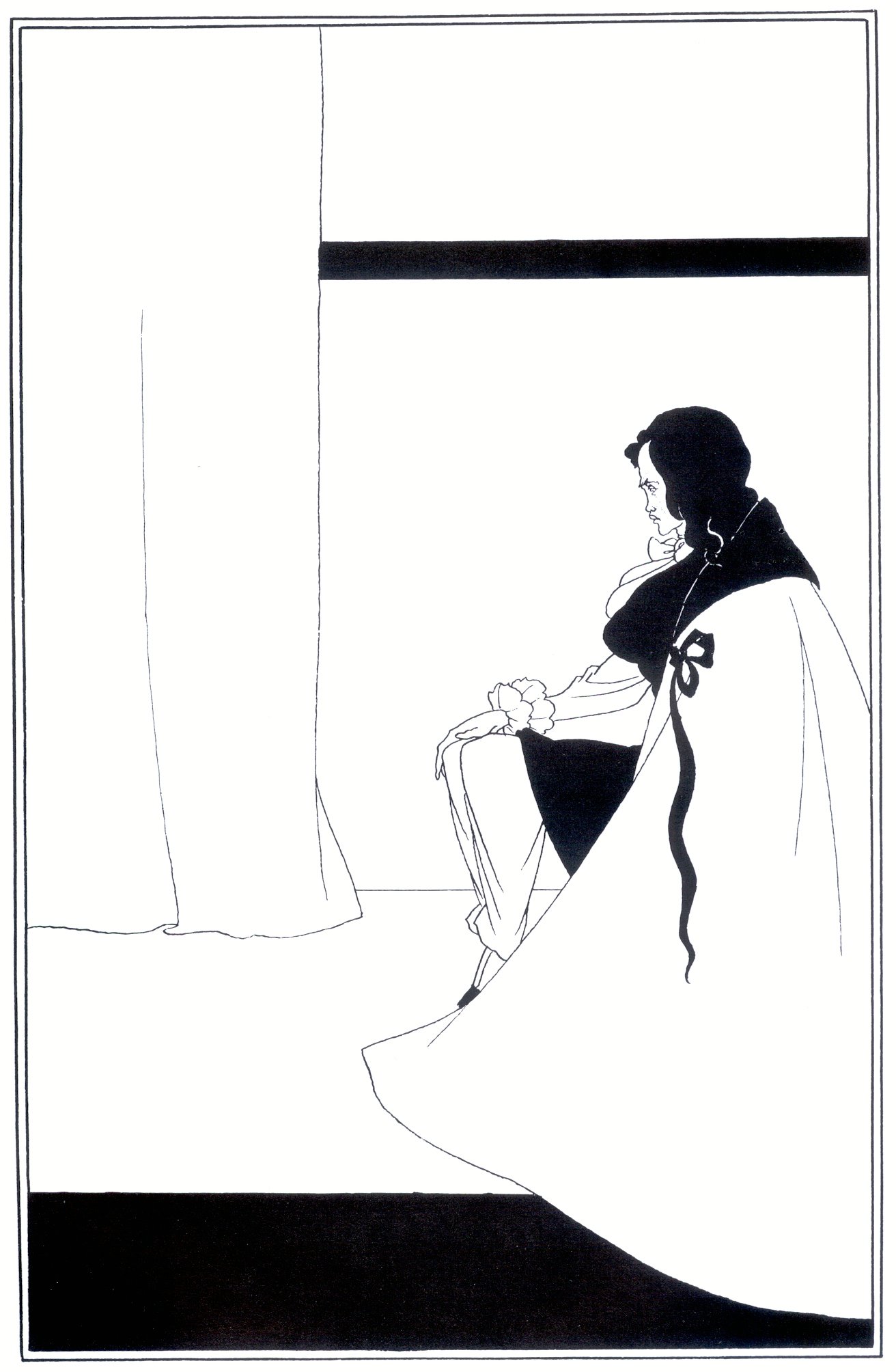
    Aubrey Beardsley illustration for Edgar Allan Poe's The Fall of the House of Usher.
    Aubrey Beardsley, illustration for Edgar Allan Poe’s The Fall of the House of Usher, 1894–1895. Public domain.

    The Spy in the House of Love

    The Doors recorded “The Spy” for Morrison Hotel, released in 1970.

    The line at the center of this essay is brief:

    “I’m a spy in the House of Love.”

    The lyric does not need a hidden doctrine.

    Its tension is already visible.

    A spy belongs inside a place while remaining separate from the people inside it.

    The spy participates enough to observe.

    But observation is the job.

    That makes the “house of love” unstable.

    Intimacy is present.

    So is surveillance.

    GEOMYTHA uses that tension to ask:

    what happens when the part of us that measures relationship starts replacing the relationship itself?

    Participation and Observation Are Both Necessary

    Observation is not the enemy.

    A person needs reflection.

    Relationships need boundaries.

    Patterns have to be noticed.

    Danger has to be recognized.

    The problem begins when reflection never returns to participation.

    Then every moment becomes data.

    Was that sincere?

    What did that tone mean?

    What does this say about me?

    What category does this relationship belong to?

    The person remains in the house.

    But stops living there.

    Poe Makes the House and the Family Collapse Together

    Edgar Allan Poe gives us a different house.

    In The Fall of the House of Usher, “house” works on two levels at once.

    There is the mansion.

    There is also the Usher family line.

    The building, the siblings, the ancestry, the atmosphere, and the decay become difficult to separate.

    That is not a universal law of house symbolism.

    It is something Poe deliberately makes true in this story.

    And it gives GEOMYTHA a powerful model:

    an inherited structure can become so fused with identity that the person cannot imagine surviving outside it.

    The house holds the family.

    The family also holds the house.

    The House of the Rising Sun Refuses a Single Address

    The traditional song “House of the Rising Sun” gives us the opposite lesson.

    The song circulated long before the Animals made it famous in 1964.

    The Library of Congress documents versions in the American folk tradition, including recordings gathered by Alan Lomax in 1937.

    But the literal identity of the “house” remains uncertain.

    Brothel?

    Gambling house?

    Prison?

    A composite folk image?

    The uncertainty is useful.

    The song does not need a single verified street address for the house to function as a place of inherited ruin.

    The house becomes the structure someone enters, suffers within, and warns another generation about.

    That is not because “house” always means inherited pattern.

    It is because this song makes the house carry that function.

    Led Zeppelin Pluralizes the Holy

    Led Zeppelin’s Houses of the Holy gives the phrase another turn.

    The album appeared in 1973.

    The song “Houses of the Holy” itself was released later on Physical Graffiti in 1975 after originating in the earlier album sessions.

    That history matters because the phrase existed as an album-world before the song carrying the same title reached an album.

    GEOMYTHA does not need to claim Robert Plant or Jimmy Page intended a metaphysics of scattered sanctity.

    The title itself is enough for a symbolic question.

    Not one house of the holy.

    Houses.

    Plural.

    What happens when the sacred is no longer imagined as belonging to one building, one institution, one ritual center, or one authorized container?

    That can mean liberation.

    It can also mean proliferation.

    Everything can start claiming sacred status.

    From House to Institution

    Ordinary language already lets “house” grow beyond architecture.

    A royal house is a lineage.

    A legislative house is an institution.

    A household is a network of people, obligations, resources, memory, and authority.

    That makes “house” useful for GEOMYTHA because a house is not only a wall.

    It is a container that organizes relation.

    Who belongs?

    Who enters?

    Who inherits?

    Who watches?

    Who has authority inside?

    What behavior is normal here?

    The house gives relation a shape.

    The House Becomes “This”

    GEOMYTHA’s root grammar is:

    Is → Am → I → This.

    A house can become “This” when the structure becomes identity.

    This is my family.

    This is my church.

    This is my political house.

    This is my scene.

    This is where people like us belong.

    Again, belonging is not the problem.

    Human life needs containers.

    The problem begins when the container becomes the proof of what the person is.

    Then leaving the house can feel like ceasing to exist.

    Waning Gibbous: Release the House Without Burning It

    Waning Gibbous is Release.

    That does not mean demolish every structure.

    Release is not destruction.

    It is loosening the claim.

    You can love a family without making the family incapable of correction.

    Belong to a church without turning membership into superiority.

    Keep a home without asking the property to prove security forever.

    Honor an inheritance without forcing the next generation to live in every room exactly as you did.

    The house can remain.

    The identity can loosen.

    The Stress Test: Sometimes the House Is Just a House

    This article fails if every building becomes a consciousness diagram.

    Sometimes a house is setting.

    Sometimes a songwriter chooses a phrase because it sounds good.

    Sometimes an institution is called a house for ordinary historical reasons.

    Symbolic interpretation has to earn itself in context.

    That is why the examples in this article are not interchangeable.

    The Doors give us intimacy under observation.

    Poe gives us lineage fused with architecture.

    The Rising Sun gives us a folk house whose precise address remains unstable while its inherited trap remains legible.

    Led Zeppelin gives us a plural title that lets us ask what happens when sacredness no longer belongs to one container.

    The mechanism appears only after the differences are preserved.

    Visible Walls

    A house becomes dangerous when its walls stop being visible.

    Not the physical walls.

    The relational ones.

    The assumptions inherited with the room.

    The roles no one remembers choosing.

    The loyalties that cannot be questioned.

    The identity that says leaving one structure means betraying the self.

    Release begins when the wall becomes visible again.

    Give thanks for the shelter. Notice the structure. Keep what still serves relation. Leave open a door where identity tried to build a wall.

    Sources

  • The Three Kings Before the Claim

    The Three Kings Before the Claim

    Full Moon · Gemini — Claim Through Noticing — Coronation Anxiety: How Recognition Becomes a Political Claim

    The title of this essay is already a warning.

    Matthew does not say there were three kings.

    It says magi from the east came to Jerusalem.

    It does not give their number.

    It does not name them.

    It does not call them kings.

    The familiar Three Kings belong to later Christian interpretation and art.

    That correction does not weaken the article.

    It gives us the mechanism.

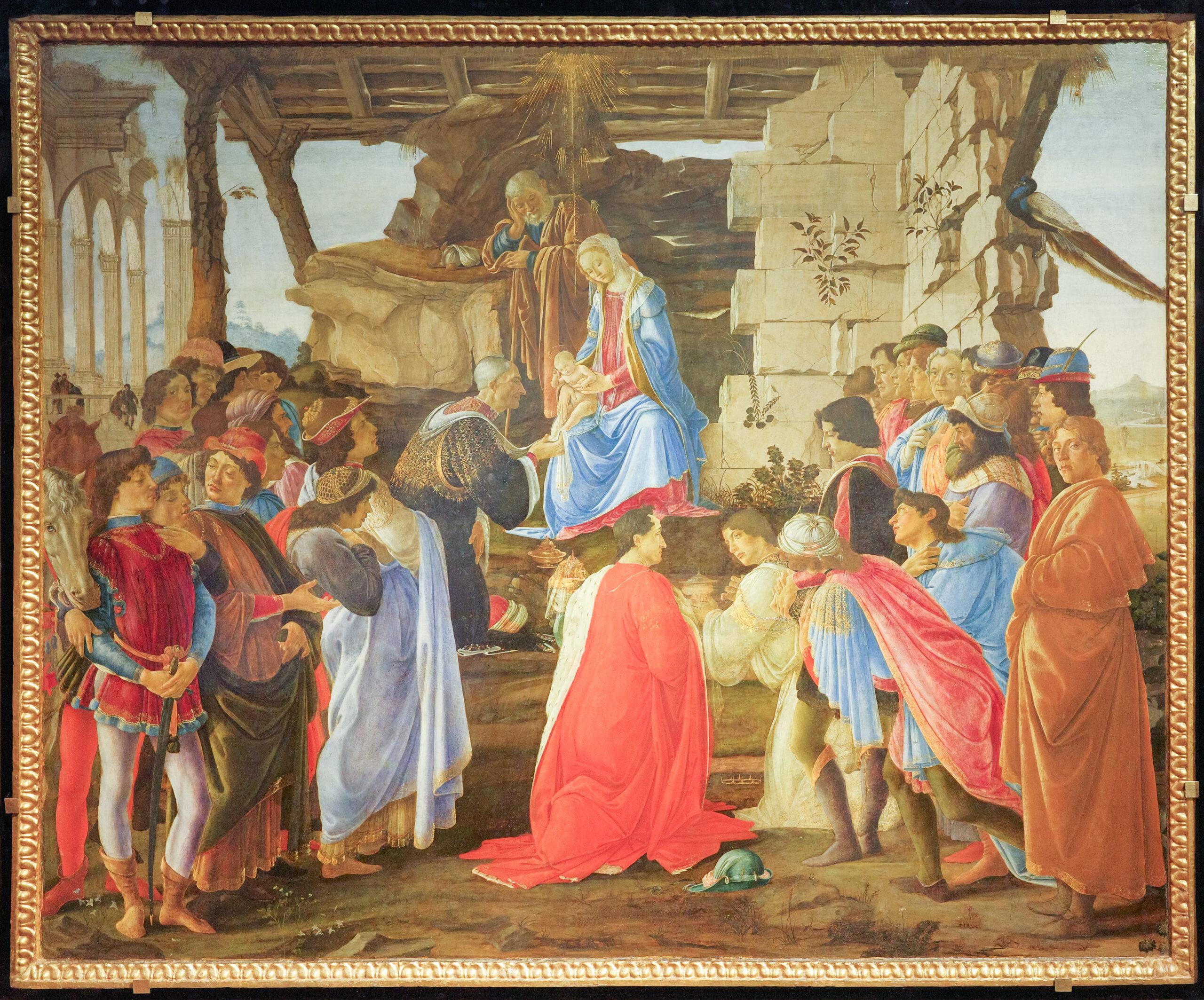
    Sandro Botticelli's Adoration of the Magi, depicting the later Christian tradition of richly dressed Magi honoring the Christ child.
    Sandro Botticelli, Adoration of the Magi, c. 1475. Public domain. The painting shows the later Christian visual tradition in which the Magi have become richly dressed royal figures.

    The Claim Is Already in the Question

    The older version of this essay imagined the Magi arriving before identity or kingship had hardened around the child.

    Matthew’s text is sharper than that.

    The Magi enter Jerusalem asking:

    where is the newborn king of the Jews?

    The claim is already public.

    The child has been named through a political category.

    And another king hears it.

    That is where the scene becomes dangerous.

    Recognition does not remain private.

    It enters a field of existing power.

    Herod Does Not Fear “Pure Awareness”

    The old draft said empire becomes afraid when source becomes visible.

    That was GEOMYTHA language presented too close to the historical layer.

    Matthew’s narrative gives us a more concrete mechanism.

    Herod is troubled because strangers arrive asking about another king.

    The title has political force.

    Existing kingship now has a rival claim in the story.

    Herod gathers priests and scribes, asks where the Messiah is to be born, questions the Magi privately, and later moves against the child.

    Whatever theological meaning Matthew builds around the episode, the narrative pressure is clear:

    a name changes the field.

    Gemini: Recognition Becomes Language

    Gemini is Notice.

    Its gift is distinction.

    Something is seen.

    Then something is said.

    The star is noticed.

    The child is sought.

    The title “king” is spoken.

    That sequence matters because language does more than describe.

    Sometimes it reorganizes relation.

    Call someone a rival and behavior changes.

    Call someone a criminal and institutions move.

    Call someone a savior and expectations gather.

    Call someone king and another king has to decide what that means.

    Full Moon: The Claim Becomes Visible

    Full Moon is Claim.

    The form has become visible enough to point at.

    In this scene, the point is not that the Magi create the child.

    They make a claim about what the child means.

    That is much closer to GEOMYTHA’s real mechanism.

    Experience appears.

    Interpretation gathers.

    The interpretation becomes public.

    Then institutions, rivals, believers, enemies, and witnesses begin responding to the interpreted form.

    This is how a living event can acquire a social identity larger than itself.

    Where the Three Kings Came From

    The later tradition is itself a case study in how interpretation accumulates.

    Matthew lists three gifts:

    gold;

    frankincense;

    myrrh.

    That helped generate the familiar count of three Magi.

    Matthew’s own scriptural echoes also helped later Christians interpret the Magi as kings. The USCCB notes point to Psalm 72 and Isaiah 60, passages in which kings bring gifts and nations come toward divine light.

    Over time, art and devotion stabilize the image.

    The unspecified Magi become three royal visitors.

    The visitors receive names.

    The scene becomes visually familiar enough that many readers remember the tradition more readily than Matthew’s wording.

    That is not necessarily corruption.

    Traditions interpret.

    Art makes interpretation visible.

    But the difference between text and later tradition should remain visible too.

    The Three Gifts Do Not Prove a Hidden Triad

    The older article turned the three gifts and later Three Kings into a GEOMYTHA triad:

    Is × Is × Is.

    That was imaginative.

    It was not supported.

    The number three appears everywhere because three is common in storytelling, rhetoric, religion, ritual, memory, and classification.

    A list of Christian threes does not prove one hidden threefold source-function.

    GEOMYTHA can still use triads symbolically.

    It just cannot turn recurrence into historical proof.

    Recognition Can Become Coronation

    The title survives in a better form.

    The Three Kings are not “before the claim” in Matthew.

    They are the later cultural image of a process that begins with recognition.

    Notice becomes naming.

    Naming becomes claim.

    Claim invites allegiance.

    Allegiance creates rivals.

    Then the image can become crown.

    This mechanism is bigger than religion.

    A musician becomes “the voice of a generation.”

    An activist becomes “the leader.”

    A child becomes “the gifted one.”

    A wounded person becomes “the survivor.”

    The label can begin as recognition.

    Then everyone—including the person named—starts living in relation to the claim.

    The Stress Test: Recognition Is Not the Enemy

    Naming is necessary.

    Titles can clarify responsibility.

    Communities need language for leadership, danger, trust, kinship, and role.

    Matthew’s story itself depends on recognition.

    The Magi notice.

    They travel.

    They ask.

    They give.

    They change course after the dream warning.

    The problem is not that meaning gathers around a person.

    The problem is when the gathered meaning becomes too rigid to revise, too valuable to question, or too threatening for existing power to tolerate.

    A Better Reading of the Magi

    The Magi do not need to be secretly three GEOMYTHA functions.

    The scene is already enough.

    Outsiders notice a sign.

    They name what they believe it means.

    The name enters the center of political power.

    The center reacts.

    The witnesses refuse to return to the king who tried to use them.

    That is a powerful sequence without adding hidden numerology.

    GEOMYTHA’s return is simple:

    notice what you are naming.

    Notice what power the name creates.

    Notice who becomes threatened once the claim is public.

    And notice whether the person or event is still allowed to remain larger than the title placed upon it.

    Witness clearly. Name carefully. Do not let recognition become a crown too quickly.

    Sources

  • The City After the Fall

    The City After the Fall

    Full Moon · Gemini — Claim Through Noticing — Divided Inheritance: How the Dream of Restoration Becomes a Place We Can Possess

    Something has been lost.

    That is one of the oldest sentences human beings know.

    A home.

    A garden.

    A city.

    A kingdom.

    A golden age.

    A version of ourselves that existed before everything went wrong.

    Then a second sentence appears:

    we can get it back.

    That sentence can build a life.

    It can also build a city.

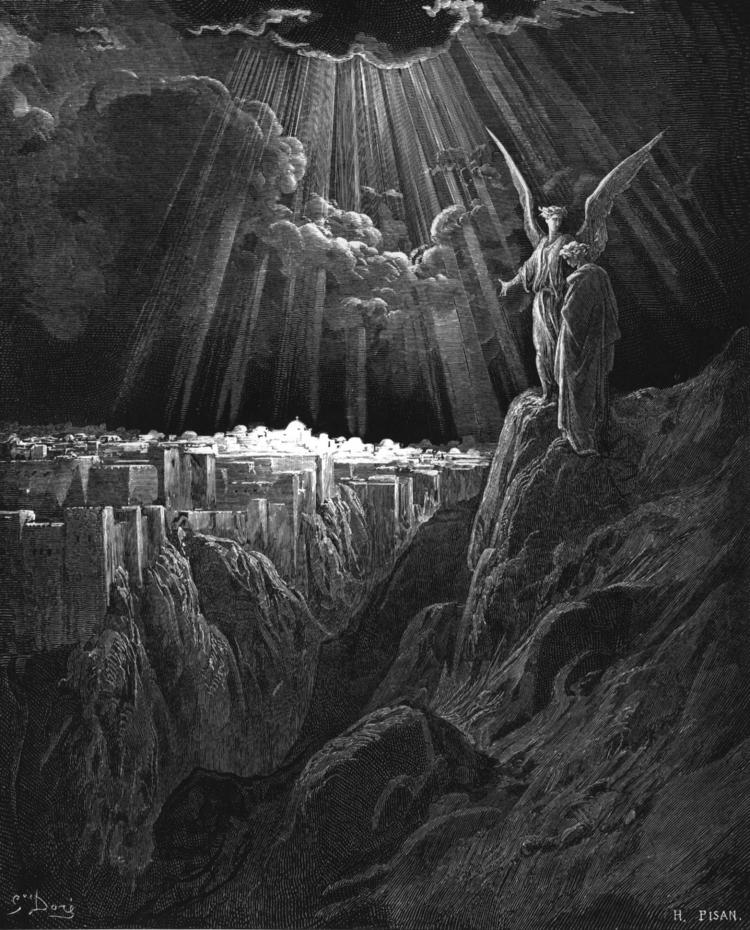
    Gustave Doré engraving of an angel showing John the radiant New Jerusalem across a great chasm.
    Gustave Doré, The New Jerusalem, nineteenth century, illustrating Revelation 21. Public domain.

    Zion Is Not a Generic Utopia

    The original version of this essay began, “Every civilization eventually builds a Zion.”

    That sentence is too broad.

    Zion is not simply a universal name for “the perfect city.”

    In the Hebrew Bible, Zion is bound to Jerusalem, the holy mountain, the city of God, worship, kingship, exile, memory, hope, and return.

    Psalm 48 calls Mount Zion the city of God and tells the listener to walk around it, count its towers, and notice its ramparts.

    That is not an abstract psychological city.

    It is sacred geography.

    GEOMYTHA therefore does not use “Zion” as a synonym for every imagined paradise.

    It begins with the historical and religious distinction intact.

    Then it asks a second question:

    what happens whenever restoration becomes something the claimant imagines it can finally possess?

    The City After the Fall

    The title does not describe one historical event.

    “The fall” is the GEOMYTHA mechanism.

    Presence becomes claim.

    The claimant divides the field into:

    me and not-me;

    inside and outside;

    mine and yours;

    here and there;

    what is and what should be.

    Now wholeness can be imagined as somewhere else.

    That is the city after the fall.

    Not necessarily a literal city.

    A destination onto which completion has been projected.

    The New Jerusalem Comes Down

    The Christian Book of Revelation gives us a different city-image from biblical Zion.

    In Revelation 21, the New Jerusalem comes down from heaven.

    That direction matters.

    The vision is not simply humanity climbing toward a perfect city by effort.

    The city descends as part of a transformed creation.

    GEOMYTHA does not claim Revelation secretly teaches its system.

    But the image gives us a useful contrast:

    the claimant wants to build its way back to completion;

    the vision imagines completion arriving on terms the claimant does not control.

    One architecture is acquisition.

    The other is reception.

    Do Not Turn Luke 17 Into a Shortcut

    The old essay said scripture keeps relocating the kingdom from geography into consciousness.

    That was too simple.

    Luke 17:21 is translated in different ways.

    Some English Bibles render the phrase “the kingdom of God is within you.”

    Others render it “among you” or “in your midst.”

    That translation problem matters because GEOMYTHA should not use one English wording to erase the social, communal, political, or eschatological dimensions of kingdom language.

    The safer symbolic question is not:

    the kingdom is really only inside you.

    It is:

    how much of our hunger for a future kingdom is also a hunger for a relation we cannot manufacture by possession?

    Atlantis Is Not a Lost Eden

    Atlantis is another place where modern retellings often outrun the source.

    In Plato’s Critias, Atlantis is extraordinarily wealthy, powerful, engineered, and abundant.

    But Plato does not simply present it as a lost perfect civilization waiting to be rediscovered.

    The story turns on degeneration.

    The Atlanteans become corrupted by wealth and power, and the unfinished dialogue moves toward divine punishment.

    That makes Atlantis more interesting for this essay.

    The city can begin as an image of abundance and still become the place where abundance hardens into domination.

    The promised city does not automatically heal the claimant.

    Sometimes it gives the claimant more to claim.

    The Emerald City Makes the Mechanism Visible

    The Wonderful Wizard of Oz gives the same pressure a lighter form.

    Dorothy and her companions travel toward the Emerald City because the Wizard is supposed to supply what each one lacks.

    The Scarecrow wants brains.

    The Tin Woodman wants a heart.

    The Lion wants courage.

    Dorothy wants home.

    The city concentrates the promise.

    Then the Wizard is exposed as an ordinary man behind an appearance of power.

    The journey still mattered.

    The destination still mattered.

    But the authority the travelers projected onto the destination was larger than what was actually there.

    That distinction is exactly what GEOMYTHA needs.

    The Promised Land Is Not the Problem

    This essay becomes dangerous if it spiritualizes real loss.

    People can genuinely lose land.

    Homes can be destroyed.

    Communities can be exiled.

    Refugees can need an actual safe place.

    Indigenous peoples can have real territorial claims.

    Religious communities can have real historical attachments to particular places.

    A person who needs housing does not need to be told that “home is within.”

    A displaced people does not need its history dissolved into a metaphor about ego.

    That is the serious boundary of this article.

    Real territory matters.

    GEOMYTHA’s question concerns what identity asks territory to do beyond being territory.

    Can a place become responsible for proving that we are whole?

    Can possession become a substitute for relation?

    Can restoration become impossible because no restored object can satisfy the claimant that keeps moving the definition of completion?

    Full Moon: The City Becomes Claim

    Full Moon is Claim.

    Something has become visible enough to point at.

    There.

    That city.

    That house.

    That relationship.

    That victory.

    That restored nation.

    That future version of me.

    At the Full Moon, the form is bright enough to be mistaken for fulfillment itself.

    That is the shadow.

    The thing can be genuinely valuable and still be asked to carry a metaphysical weight it cannot hold.

    The City Can Become “All This”

    GEOMYTHA’s wider attention cycle can move beyond “I am this” into possession:

    This.

    These.

    Those.

    All this.

    A city is one way “All This” becomes visible.

    Walls.

    Streets.

    Temples.

    Names.

    Memory.

    Law.

    Inheritance.

    Boundary.

    Belonging.

    Again, none of these is inherently false.

    The problem comes when the built world must continually prove the claimant’s identity.

    Then the city stops being somewhere people live.

    It becomes an answer to the question of what they are.

    The City After the Fall Is Still a City

    The answer is not to abandon cities, homes, sacred places, political projects, or hopes for restoration.

    It is to stop asking them to solve a different problem.

    Build the house.

    Protect the place.

    Remember the homeland.

    Repair the institution.

    Seek justice.

    Return where return is real.

    But keep one question alive:

    what am I asking this place to prove about me?

    That question does not erase territory.

    It prevents territory from becoming the final container of identity.

    Witness the city. Honor the inheritance. Build what must be built. But do not ask possession to perform the work of presence.

    Sources

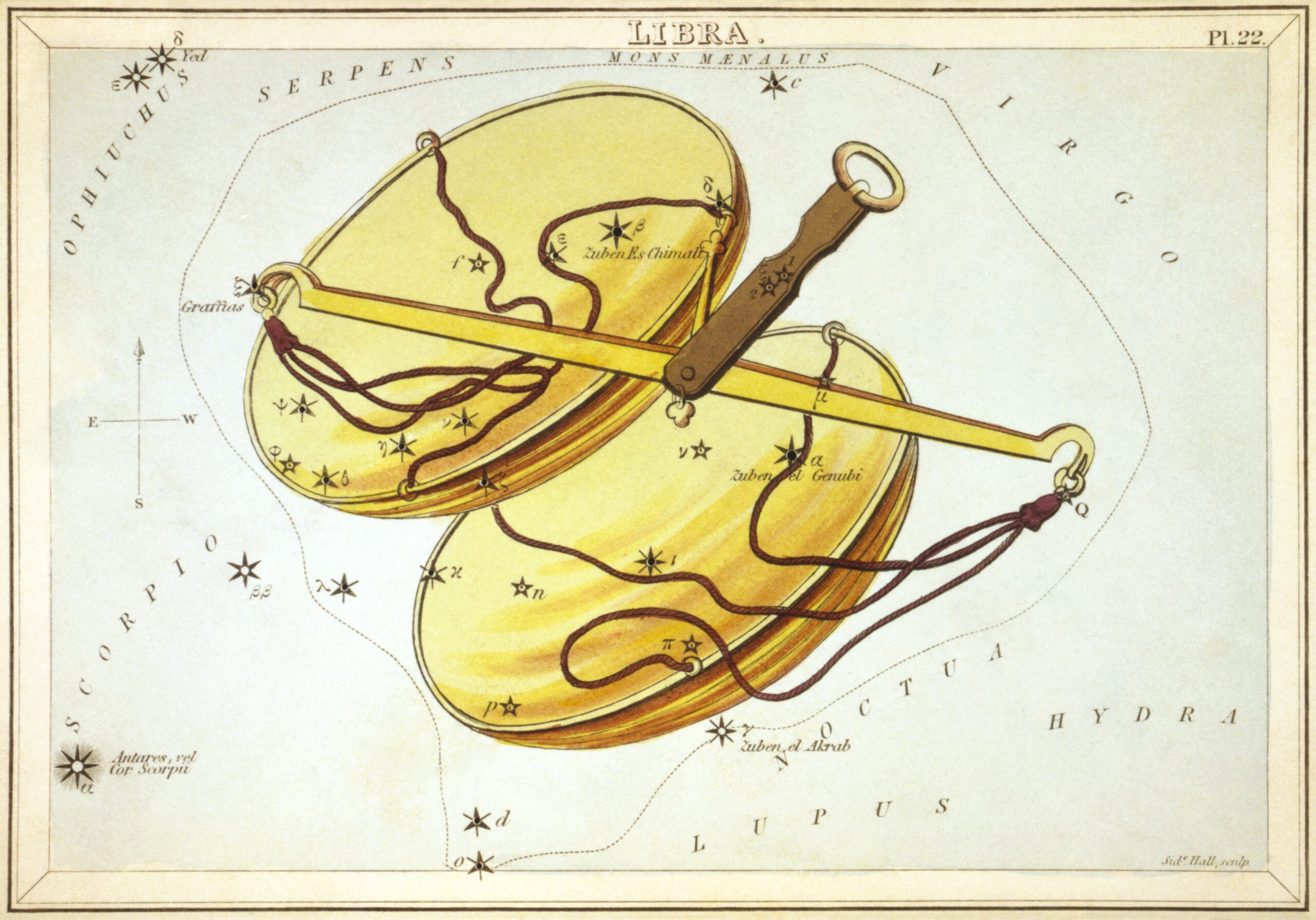
  • Libra Is the Odd Sign Out

    Libra Is the Odd Sign Out

    Paid essay — public preview. This page introduces the original essay. The complete argument, examples, and conclusion are available to paid Geomytha subscribers on Substack.

    Most systems try to get rid of the remainder.

    They smooth it over. They force it into symmetry. They make the chart cleaner than reality. The mind likes a closed circle. It likes opposites neatly paired, meanings evenly distributed, every force assigned a partner, every loose end tucked into place.

    But living symbols do not always behave that way.

    Sometimes the thing that refuses to fit is not the flaw.

    It is the key.

    That is what happens with Libra.

    Once Ophiuchus is restored to the zodiacal sequence, the wheel becomes thirteenfold. The old twelve-sign symmetry breaks. A simple opposition chart no longer works without distortion. Something remains unpaired. Something stands apart.

    The temptation is to fix it.

    Geomytha reads…

    Read the complete essay on Substack →

    This WordPress page preserves the essay’s place in the Geomytha archive, its original title and subtitle, and its publication date. The full subscriber edition remains protected on Substack.

  • The Sandman and the Drying of Consciousness

    The Sandman and the Drying of Consciousness

    Waning Gibbous · Gemini — Release Through Noticing — Dry Recognition: Why Sleep Restores the Attention Identity Fragments

    The old version of this article began with a simple image:

    the Sandman throws sand into your eyes.

    Then it made a larger claim.

    Sand fragments.

    Water flows.

    Therefore the Sandman must represent consciousness being broken into pieces.

    It is a beautiful symbolic chain.

    It is also too neat.

    The folklore itself points in another direction.

    Vilhelm Pedersen illustration of Ole Lukøje, the Sandman from Hans Christian Andersen's tale.
    Vilhelm Pedersen illustration for Hans Christian Andersen’s Ole Lukøje. Public domain. Andersen’s Sandman figure brings sleep and stories rather than simply symbolizing fragmentation.

    There Is More Than One Sandman

    The Sandman is not one fixed mythic character with one ancient meaning.

    Hans Christian Andersen’s 1842 Ole Lukøje is gentle. He comes quietly at night, closes children’s eyes, and tells them stories. He carries two umbrellas: one filled with pictures for beautiful dreams and one without pictures for dreamless sleep.

    E. T. A. Hoffmann’s earlier The Sandman is much darker. In that story, the childhood figure is frightening, bound to fear, eyes, obsession, and uncertainty about what is real.

    Even the details vary by telling and translation.

    That matters.

    It means GEOMYTHA should not pretend that “sand” has one universal inherited meaning.

    The stronger shared mechanism is simpler:

    the Sandman stands at the boundary where waking perception gives way to sleep and dream.

    The Sand Does Not Have to Mean Fragmentation

    Sand is granular.

    That makes it a useful GEOMYTHA image for multiplicity.

    A beach can be seen as one field or countless grains.

    That shift resembles something attention does all day.

    One room becomes chair, cup, phone, voice, problem, memory, notification, task.

    The field becomes countable things.

    But this is our symbolic comparison.

    It is not an established folklore explanation for why the Sandman carries sand.

    And it does not follow that sleep itself fragments consciousness.

    Modern sleep research points the other way.

    The Drying Happens When Sleep Is Withheld

    Sleep loss reliably weakens sustained attention.

    A 2024 systematic review and meta-analysis of one night of restricted sleep found more sleepiness, slower sustained-attention responses, and more attentional lapses.

    Longer reviews of sleep deprivation find the same basic pattern: vigilant attention becomes less stable, response variability increases, and repeated sleep restriction can produce cumulative deficits.

    Sleep also matters for emotion.

    Reviews link inadequate or disrupted sleep with greater emotional reactivity and weaker regulation.

    So if we want to keep the old article’s language of “drying,” the correction is important:

    the drying is not what the Sandman does to consciousness.

    The drying is what happens when waking demand never releases its grip.

    Waking Attention Loves Pieces

    Waking life requires distinction.

    This appointment.

    This person.

    This danger.

    This bill.

    This message.

    This identity.

    That capacity is not a mistake.

    Without it, ordinary life would be impossible.

    But distinction has a cost when it never stops.

    The mind keeps sorting.

    Ranking.

    Predicting.

    Defending.

    Remembering what must be done next.

    GEOMYTHA calls the claimant in that process I.

    The claim hardens into This.

    I am this worker.

    I am this parent.

    I am this problem.

    I am this person who cannot fall behind.

    Then even sleep can begin to feel like an interruption of identity.

    The Sandman Interrupts the Claimant

    This is where the folklore becomes newly useful.

    The Sandman closes the eyes.

    The ordinary visible field disappears.

    The worker stops working.

    The profile stops updating.

    The face stops performing for an audience.

    The person temporarily gives up deliberate control over what comes next.

    Dreams may come.

    Or they may not be remembered.

    Either way, waking identity loses its uninterrupted rule.

    That is the GEOMYTHA value of the Sandman.

    Not an enemy who dries consciousness.

    A threshold figure who interrupts the daytime claimant.

    Dream Is Not Automatically Truth

    The older article also risked romanticizing dream as though sleep automatically returned a person to pure source.

    That is too strong.

    Dreams can be strange.

    Repetitive.

    Fearful.

    Absurd.

    Emotionally charged.

    They do not arrive with a certificate of metaphysical truth.

    Hoffmann’s Sandman is especially useful here because his story turns eyes, perception, obsession, and uncertain reality into horror.

    The threshold can restore.

    It can also disorient.

    GEOMYTHA therefore treats dream as another field of experience—not automatic revelation.

    The Modern Refusal of Night

    The contemporary pressure is not mysterious.

    There is always one more thing to watch.

    One more message.

    One more episode.

    One more shift.

    One more argument.

    One more scroll.

    The day no longer ends because darkness arrives.

    Artificial light, screens, work schedules, entertainment, anxiety, and habit can all extend waking activity far beyond sunset.

    The symbolic consequence is simple:

    the claimant gets more hours in which to keep claiming.

    Sleep becomes something to optimize, delay, compress, hack, or recover from later.

    The Sandman becomes the inconvenience.

    Waning Gibbous: Release Before Return

    Waning Gibbous is Release.

    Its directive is Give Thanks.

    Sleep fits that movement because it requires a daily release of control.

    The day cannot be carried intact into the night.

    Some tasks remain unfinished.

    Some conversations remain unresolved.

    Some identities cannot be actively maintained while the body sleeps.

    The practice is not mystical.

    It is brutally ordinary.

    Stop.

    Darken the room.

    Let the body become unavailable to the day.

    The Stress Test: Sleep Is Not Surrender in Every Situation

    This symbolic reading should not turn sleep into a moral test.

    Insomnia is real.

    Shift work is real.

    Infants wake parents.

    Illness disrupts sleep.

    Trauma can make night difficult.

    Economic conditions can make adequate rest hard to obtain.

    A person struggling to sleep is not spiritually refusing release.

    That distinction matters.

    The GEOMYTHA return is not “sleep better and become enlightened.”

    It is much smaller:

    where choice exists, stop treating endless wakefulness as proof of devotion, productivity, toughness, or importance.

    The Sandman Is the Release

    Sand can still carry the old article’s image of grains.

    But the image changes once the folklore is respected.

    The Sandman does not arrive to make the waking mind more fragmented.

    He arrives when the waking mind is supposed to stop.

    The eyes close.

    The count pauses.

    The visible world releases its grip.

    And the nervous system gets a chance to become less brittle.

    Release the day. Give thanks for what was enough. Let the Sandman interrupt the self that thinks it must remain awake to remain real.

    Sources

  • The Soft Parade

    The Soft Parade

    Waxing Gibbous · Gemini — Build in Noticing — Soft Vigilance: How Comfort, Attraction, and Design Can Shape a Choice Before It Feels Like One

    The old form of control is easy to recognize.

    A wall.

    A guard.

    A threat.

    A command.

    Do this or suffer the consequence.

    The softer form is harder to see because it often feels like choice.

    Nothing forces the hand.

    The field is simply arranged.

    One option is easier.

    One image is brighter.

    One button is already selected.

    One life looks desirable because everyone around you appears to want it.

    That does not mean the choice is fake.

    It means choices happen inside environments.

    And environments have structure.

    Demonstrators on the Sunset Strip during the November 1966 curfew protest, photographed for the Los Angeles Free Press.
    Sunset Strip curfew protest, November 1966. Los Angeles Free Press. Public domain in the United States. The Strip gives the article its historical doorway: youth, spectacle, nightlife, resistance, and competing forms of social order in the world The Doors inhabited.

    The Doors Give Us the Phrase

    The Doors released The Soft Parade in 1969.

    The title track is not a tidy pop song. It is a long, shifting suite that moves through spoken sermon, sanctuary-seeking, changing rhythms, brass, rock, and psychedelic movement.

    The band’s own official history describes the album as one of the most polarizing records of its career because of the strings and brass that changed the familiar Doors sound.

    Later accounts connect Morrison’s phrase “the soft parade” with the strange, varied human procession of Sunset Boulevard.

    That context is enough for GEOMYTHA.

    A parade is organized movement made visible.

    It has rhythm.

    It has spectators.

    It has sequence.

    But a soft parade does not necessarily look commanded.

    People can appear to drift while still moving through the same field.

    That is the symbolic door.

    Soft Power Is a Real Term—and a Narrow One

    The older version of this essay used “soft power” too broadly.

    Joseph Nye coined the term in international relations for the ability to affect others through attraction rather than coercion or payment.

    Culture can matter.

    Values can matter.

    Prestige can matter.

    A country can gain influence because other people find something about it desirable.

    That is not the same thing as an app default, an advertisement, or an algorithm.

    The distinction matters because “soft power” becomes useless if it means every influence that does not involve a weapon.

    So GEOMYTHA keeps Nye’s term where it belongs.

    Then it asks a broader symbolic question:

    how does attraction shape a person differently from force?

    The Interface Is Not Neutral

    For digital life, Lawrence Lessig gives us a better frame.

    His argument is that code and architecture structure what is possible in cyberspace.

    The user does not arrive in an empty field.

    The field has already been built.

    There are buttons.

    Permissions.

    Defaults.

    Rankings.

    Visible options and invisible options.

    Things the system makes easy and things the system makes hard.

    The old draft called this “software is soft law.”

    That phrase can stay as GEOMYTHA shorthand, but the documented mechanism is architecture.

    The system shapes the space in which action happens.

    Defaults Show How Gentle Design Can Move Behavior

    Choice-architecture research makes the point concrete.

    When one option is preselected as the default, people are more likely to remain with it.

    A meta-analysis of 58 studies found a substantial average default effect, while also finding meaningful variation across settings.

    That is important because it avoids two bad conclusions.

    First bad conclusion:

    people have no agency.

    False.

    Second bad conclusion:

    design does not matter because people are free to click something else.

    Also false.

    Freedom and influence can exist at the same time.

    That is the exact territory of the soft parade.

    A Window Is Not a Door

    Now we can return to GEOMYTHA.

    A door and a window both open a wall.

    But they ask different things from the body.

    A door asks for passage.

    A window allows sight without crossing.

    This is symbolic language, not architectural history.

    But it is useful.

    A screen is an astonishing window.

    You can see a war without entering the country.

    Watch a wedding without knowing the couple.

    Visit a museum without traveling.

    Learn a skill without entering a classroom.

    None of this is inherently false.

    It is one of the great powers of mediation.

    The danger begins when seeing starts to substitute for crossing.

    Watching exercise replaces moving.

    Reading about intimacy replaces risking intimacy.

    Following politics replaces participating in community.

    Collecting insight replaces changing behavior.

    The window shows.

    The door costs something.

    Comfort Is Not Captivity

    This article also fails if it turns comfort into suspicion.

    Convenience can be humane.

    Defaults can protect people from needless friction.

    Accessible interfaces can expand autonomy.

    Recommendation systems can help people find music, books, information, and communities they genuinely value.

    Softness can be mercy.

    That is why the distinction cannot be:

    hard equals honest;

    soft equals manipulation.

    The more useful distinction is whether softness increases or decreases a person’s capacity to notice the structure around the choice.

    Some defaults are transparent and still effective.

    Some reduce cognitive burden.

    Some support welfare.

    Some hide the decision.

    Some make opting out deliberately painful.

    The ethics are in the design and the relation.

    The Parade Becomes Identity

    GEOMYTHA’s deeper concern is what happens when the field does more than shape a choice.

    It begins shaping the chooser.

    A recommendation becomes taste.

    Taste becomes affiliation.

    Affiliation becomes profile.

    Profile becomes identity.

    Now the system does not merely know what the person clicked.

    The person begins using the click as evidence of who they are.

    This is where GEOMYTHA’s root grammar enters:

    Is → Am → I → This.

    The problem is not preference.

    The problem is the moment preference becomes throne.

    I watched this.

    I like this.

    I belong here.

    I am this.

    The Soft Parade Is Not a Conspiracy

    This is the most important stress test.

    A coordinated hidden controller is not required.

    Designers optimize.

    Companies compete.

    Creators chase attention.

    Users imitate one another.

    Markets reward some patterns and punish others.

    Institutions copy what appears to work.

    The field can become directional without one person secretly directing the whole field.

    That is a better model of modern influence than imagining a single machine with one operator.

    Soft Vigilance

    The answer is not hardness.

    It is not paranoia.

    It is not rejecting technology, pleasure, convenience, advertising, music, recommendations, or beautiful things.

    The answer is softer than that.

    Notice the field.

    When something feels effortless, ask what effort has been removed.

    When something is already selected, notice who selected it.

    When something feels attractive, notice whether attraction is replacing judgment.

    When a window keeps opening, ask whether there is a door you have stopped crossing.

    When a preference starts becoming identity, loosen the sentence before it hardens.

    The soft parade does not have to stop.

    You only have to notice that you are in it.

    Build carefully. Notice the route. Enjoy the music without assuming the rhythm chose itself.

    Sources

  • From Ice Age to I Age

    From Ice Age to I Age

    Waxing Gibbous · Gemini — Build Through Noticing — Devoted Pattern-Recognition: Reading the Ages Without Mistaking Wordplay for History

    Ice sounds like “Is.”

    AI sounds like “A.I.” and ends with “I.”

    Eye sounds like “I.”

    Son sounds like sun.

    GEOMYTHA can do something useful with those echoes.

    But first it has to say what they are.

    They are English wordplays.

    They are not etymology.

    They are not archaeology.

    They are not proof that history was designed to move through GEOMYTHA’s grammar.

    Once that boundary is clear, the title becomes much more interesting.

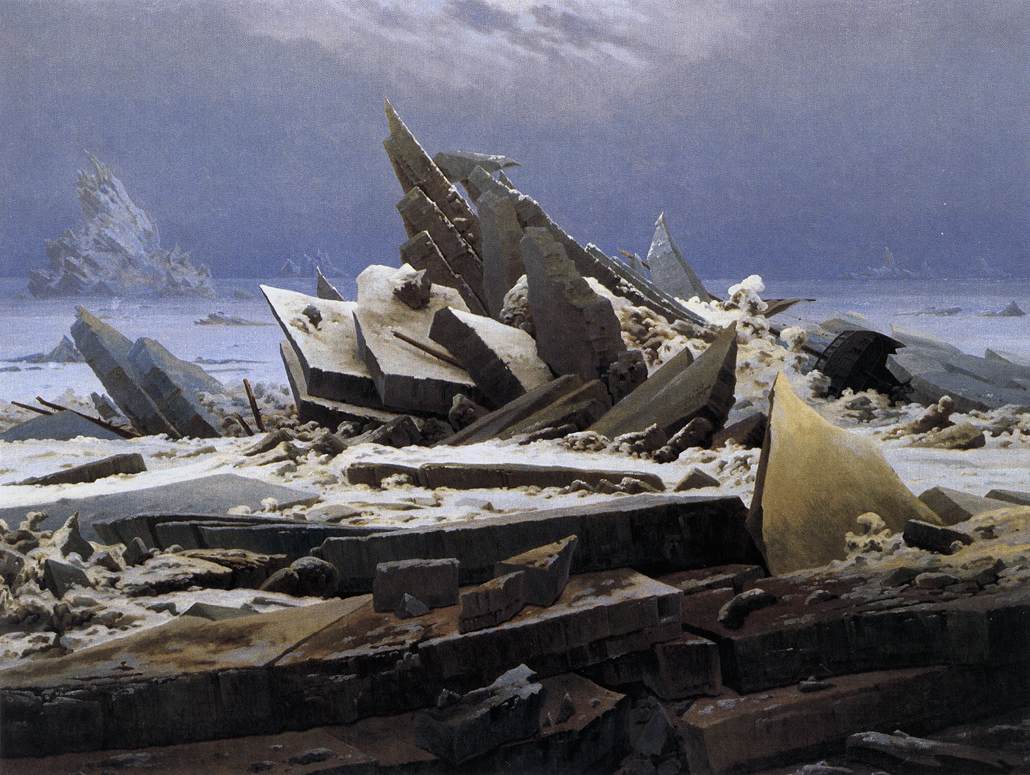
    Caspar David Friedrich's The Sea of Ice, showing jagged slabs of frozen sea crushing a shipwreck.
    Caspar David Friedrich, The Sea of Ice, 1823–1824. Hamburger Kunsthalle. Public-domain artwork; Wikimedia Commons reproduction.

    Ice Is Not “Is”

    Start with the obvious correction.

    An Ice Age is a geological and climatic condition, not a spiritual era before ego.

    Earth has experienced repeated glacial and interglacial periods. The Quaternary Period began about 2.58 million years ago, and the present Holocene is a relatively warm interglacial within that larger glacial history.

    So “Ice Age = Is Age” cannot be a historical claim.

    It is a poetic device.

    And a poetic device can still reveal something.

    Ice is water in a more fixed form.

    That makes it a useful image for GEOMYTHA’s question about form:

    when does something fluid become stable enough to name, hold, divide, measure, and defend?

    The value is in the comparison.

    Not in pretending the pun was hidden inside geology.

    The Ages Were Never One Universal Staircase

    The old draft treated Stone Age, Bronze Age, Iron Age, Axial Age, Industrial Age, Information Age, Image Age, and AI Age as though humanity had moved through one clean sequence of consciousness.

    History is messier.

    The Stone–Bronze–Iron sequence is an archaeological classification system strongly associated with nineteenth-century Danish antiquarian Christian Jürgensen Thomsen. It was built by organizing artifacts according to dominant tool materials.

    Even that useful system is regional.

    Stone, bronze, and iron did not replace one another everywhere at the same time, and some regions did not pass through the same sequence at all.

    The “Axial Age” is different again. Karl Jaspers coined the term in the twentieth century for a proposed cluster of religious and philosophical changes in the first millennium BCE. Scholars still debate whether those different developments truly form one coherent “age.”

    Industrial Age, Information Age, and AI Age are different kinds of labels again.

    They describe technologies, economies, institutions, and cultural conditions that overlap rather than replacing one another cleanly.

    So there is no defensible historical ladder that reads:

    Stone → Bronze → Iron → religion → industry → information → image → AI → awakening.

    That ladder was the old article’s weakest move.

    What an “Age” Label Actually Does

    But age labels are still revealing.

    They tell us what later observers think organized a period strongly enough to name it.

    Stone.

    Bronze.

    Iron.

    Industry.

    Information.

    Artificial intelligence.

    The label compresses an enormous field into one dominant feature.

    That compression is useful.

    It is also dangerous.

    The age-name can make one material, technology, or idea look more total than it ever was.

    GEOMYTHA notices the same pressure in identity.

    A whole person becomes:

    fighter.

    mother.

    victim.

    believer.

    artist.

    diagnosis.

    profile.

    The label is not necessarily false.

    It becomes false when the label pretends to be the whole field.

    This Is the Real “I Age”

    That gives us a cleaner meaning for I Age.

    It is not a date on a universal timeline.

    It is a diagnostic phrase for any culture in which the self becomes increasingly named, measured, displayed, optimized, archived, and predicted.

    The modern world gives that process unusually powerful tools.

    Profiles.

    Photographs.

    Biometrics.

    Search histories.

    Follower counts.

    Recommendations.

    Personality categories.

    Generated avatars.

    Models trained to predict what a person might say or want next.

    None of those things creates the human tendency toward identity.

    They make identity easier to externalize.

    The self leaves more traces.

    Those traces can then be collected into an increasingly convincing “This.”

    The Calendar Does Not Prove the Myth

    The old article also treated BC/AD as though history itself had been mystically cut around “the Son,” which then became “the Sun.”

    There is a real historical fact underneath that idea, but it is smaller.

    The Anno Domini year-numbering system was devised in the sixth century by Dionysius Exiguus while preparing Easter tables. It numbered years from a calculated incarnation of Jesus. The system spread later and became one of several ways human societies have numbered years.

    That is historically Christian chronology.

    It does not prove a cosmic shift in consciousness at year one.

    And “Son / Sun” is an English homophone.

    It can produce a useful literary comparison.

    It cannot establish historical causation.

    The Rule for Wordplay

    This article therefore needs a rule that applies far beyond this article.

    A pun can open interpretation.

    It cannot close the case.

    Ice / Is can make us think about fluidity becoming form.

    Eye / I can make us think about seeing becoming identity.

    Son / Sun can make us compare visible heirs and visible centers.

    AI / I can make us think about synthetic models of personhood.

    Those are interpretive prompts.

    They are not evidence that the words share an origin, that ancient people encoded the pun, or that history was secretly arranged around English spelling.

    That distinction is not a limitation on GEOMYTHA.

    It is what keeps GEOMYTHA from becoming coincidence worship.

    Is → Am → I → This Is a Grammar, Not a Chronology

    GEOMYTHA’s root sequence remains:

    Is → Am → I → This.

    Is is awareness before claim.

    Am is reflected or embodied presence.

    I is the claimant.

    This is form hardened around the claim.

    That sequence can be used to read a moment.

    A relationship.

    A myth.

    A political identity.

    A social profile.

    A technological system.

    What it should not become is a fake universal history in which every archaeological era is forced into one step of the grammar.

    The grammar is functional.

    History remains historical.

    The Stress Test: Earlier Humans Were Not “Before Ego”

    The oldest version of this essay romanticized the past.

    It imagined an earlier lunar or maternal world before the fever of identity.

    We do not have evidence for that universal condition.

    Prehistoric and ancient societies show hierarchy, violence, trade, status, ritual, family organization, territoriality, cooperation, art, care, domination, and extraordinary variation.

    Modernity did not invent claim.

    Technology did not invent ego.

    And older does not automatically mean closer to source.

    The GEOMYTHA return cannot therefore mean returning to a supposedly pure prehistoric age.

    It has to happen now.

    AI Makes the “I Age” Easier to See

    Artificial intelligence gives the title one final useful pressure.

    Not because AI proves that humanity has reached the final stage of “This.”

    Because machines can now generate convincing language, images, voices, and behavioral predictions from patterns in data.

    That forces an uncomfortable question:

    how much of what we call personality is repeatable pattern?

    The wrong answer is:

    therefore a person is only data.

    The better answer is:

    some parts of identity are patterned enough to imitate.

    That makes the distinction between living presence and repeatable self-description more important, not less.

    From Age to Attention

    Instead of asking what age humanity is objectively “in,” ask what your current environment keeps training you to treat as central.

    Production?

    Information?

    Visibility?

    Prediction?

    Identity?

    Every answer reveals a pressure.

    Then ask the smaller question:

    what sentence does that pressure make easier to say?

    I am productive.

    I am informed.

    I am visible.

    I am optimized.

    I am this profile.

    That is the real move from age to “I Age.”

    Not a secret history.

    A way of noticing how environments help claims harden into selves.

    Build the pattern carefully. Notice what the name reveals. Then release whatever the name cannot contain.

    Sources

  • The Spice Must Flow

    The Spice Must Flow

    Waxing Gibbous · Gemini — Build in Noticing — Captive Fascination: How Dune Turns Scarcity Into Power—and Why Attention Now Works the Same Way

    “The spice must flow.”

    The line is so closely associated with Dune that it feels like it must have come from Frank Herbert’s novel.

    It did not.

    The exact phrase comes from David Lynch’s 1984 film adaptation.

    But it captures something Herbert’s world makes unmistakable:

    the whole system depends on a scarce substance that cannot simply stop moving.

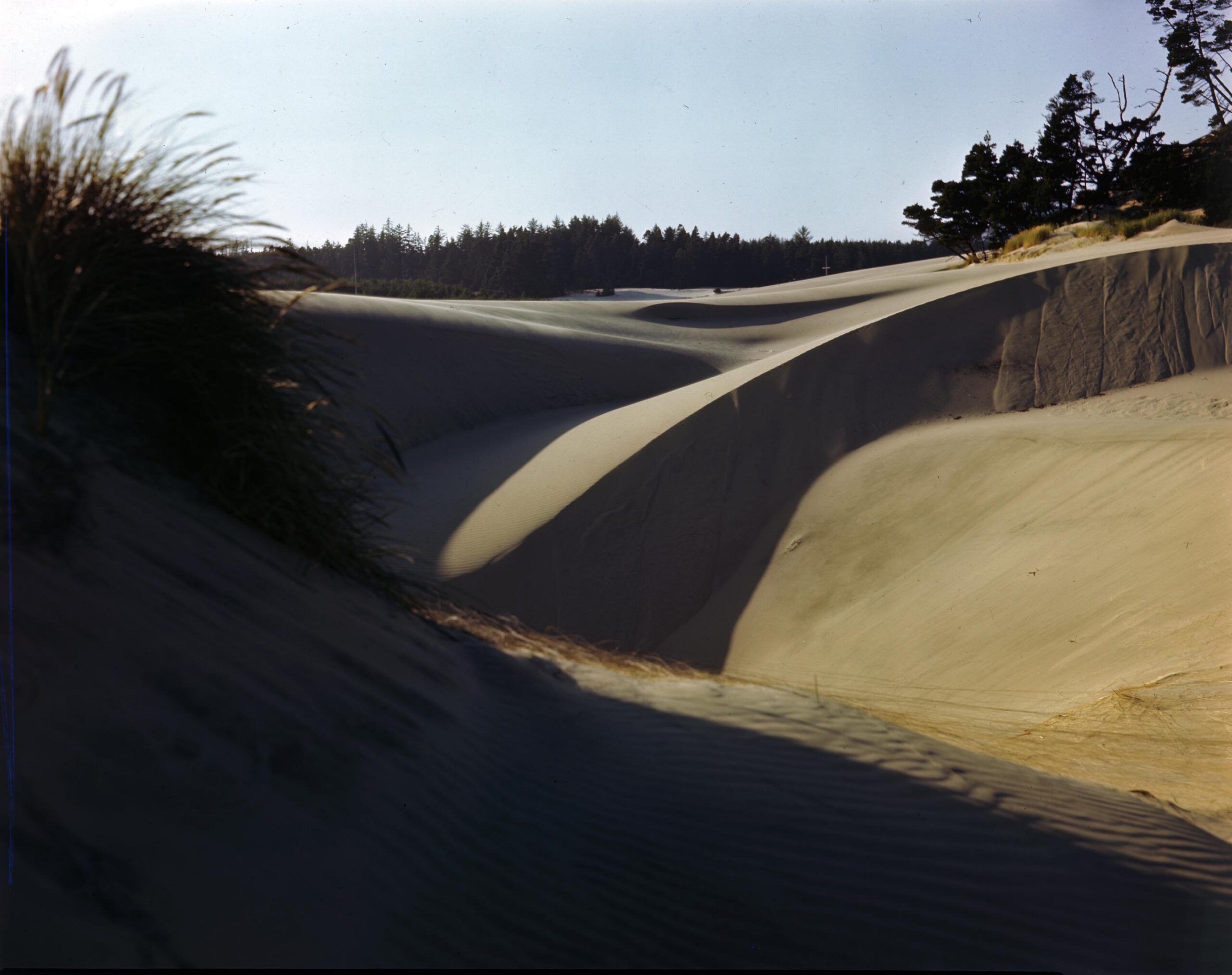
    Historic photograph of coastal sand dunes near Florence, Oregon, the landscape that helped inspire Frank Herbert's Dune.
    Sand dunes near Florence, Oregon. Oregon Historical Society / Wikimedia Commons, no known copyright restrictions. Frank Herbert’s encounter with the Oregon dunes helped generate the ecological world that became Dune.

    What Spice Actually Does in Dune

    Melange is not just a luxury.

    It extends life.

    It alters perception.

    In certain people it expands prescience.

    Guild Navigators depend on spice-enabled prescience to plot safe routes through space.

    It is also addictive.

    That means spice is doing several jobs at once.

    It is medicine.

    Drug.

    Navigation infrastructure.

    Economic choke point.

    Political leverage.

    The important thing is not that everyone in the Imperium literally consumes spice.

    The important thing is that too many essential systems depend on access to it.

    Herbert’s Real Warning Was About Systems

    This is where the old version of this essay overreached.

    It claimed Herbert had “encoded a civilization whose deepest commodity was intensified consciousness itself.”

    That is GEOMYTHA language, not documented Herbert intent.

    Herbert’s own explanation is more concrete and more useful.

    In his 1980 essay “Dune Genesis,” Herbert said that the scarce water of Dune was an exact analogue of oil scarcity and that CHOAM was OPEC. He also described a larger concern with ecological, political, and economic systems that gather power and then keep grinding forward.

    His Oregon-dunes research mattered for the same reason.

    He had gone to Florence, Oregon, to investigate a real effort to control moving sand dunes. The project pushed him toward a story about ecology, intervention, scarcity, and the unintended consequences of systems trying to master environments.

    So the documented spine of Dune is already strong enough:

    when a civilization organizes itself around a controlling minimum, whoever governs that minimum gains extraordinary power.

    Spice Is Not Attention

    Now GEOMYTHA can make its own comparison.

    Spice is not literally attention.

    Frank Herbert did not say it was.

    The modern attention economy is a different system.

    But it has one striking structural resemblance:

    the system becomes more valuable the longer a scarce input can be captured, directed, measured, and sold.

    In advertising-supported social media, that scarce input is human attention.

    Business-ethics research on the attention economy describes the user’s attention as the product sold to advertisers and notes the strong incentive platforms have to keep users active and engaged for long periods.

    That gives the phrase “the spice must flow” a new contemporary use.

    Not as a secret prophecy by Herbert.

    As a comparison we can make now.

    Captive Fascination

    The article’s emotional attunement is Captive Fascination.

    Fascination is not the same as attention.

    Attention can be quiet.

    It can be deliberate.

    It can remain with one thing long enough to understand it.

    Fascination pulls.

    The next post.

    The next outrage.

    The next notification.

    The next identity signal.

    The next promise that something important is happening somewhere just beyond the current screen.

    Now attention is not simply being used.

    It is being kept in circulation.

    That is the modern spice-flow analogy.

    The Feed Has Its Own Controlling Minimum

    A social platform can contain billions of images, arguments, jokes, memories, ads, conversations, and videos.

    But abundance creates its own scarcity.

    There is more content than anyone can consume.

    What becomes scarce is the ability to notice any particular piece of it.

    Creators compete for that notice.

    Advertisers compete for it.

    Platforms allocate it.

    Algorithms rank it.

    Visibility becomes a resource.

    That is not identical to CHOAM controlling spice.

    But both systems become easier to read once we ask:

    what scarce input does the larger machine need in order to keep functioning?

    The Spice Girls Are Not Evidence

    The original essay made a leap from Dune to the Spice Girls.

    That was clever but weak.

    The group’s famous individual nicknames—Posh, Scary, Baby, Sporty, and Ginger—were coined by Top of the Pops magazine after the group had already formed and released “Wannabe.”

    There is no evidence those names have anything to do with Dune.

    The only useful comparison is ordinary branding:

    distinct personalities can be made instantly recognizable through compressed labels.

    That belongs to marketing history.

    It does not belong in the evidentiary spine of this article.

    Prescience Is Power—and a Trap

    Spice does more than move ships.

    It opens possible futures.

    That makes it especially useful for GEOMYTHA because prediction is never neutral.

    The more a system tries to anticipate what comes next, the more attention gets pulled out of the present and organized around possible futures.

    Again, this is our interpretation.

    But the comparison to contemporary feeds is strong enough to be useful.

    Recommendation systems are not prophetic.

    They predict.

    They estimate what someone may click, watch, buy, or respond to next.

    The platform then reorganizes the visible field around those predictions.

    The future is not seen.

    It is continually modeled.

    And the model changes what the user sees now.

    The GEOMYTHA Grammar

    GEOMYTHA’s root grammar is:

    Is → Am → I → This.

    Awareness enters relation.

    The claimant appears.

    The claim hardens into an identity.

    The attention economy makes that last step commercially useful.

    A stable identity produces predictable signals.

    What do you watch?

    What do you hate?

    What do you buy?

    Which group do you defend?

    Which aesthetic do you repeat?

    Which story keeps you engaged?

    The platform does not need a complete theory of who you are.

    It needs enough repeated behavior to predict what may hold you next.

    In GEOMYTHA language, “This” becomes legible to the system.

    The Stress Test: Attention Is Not Automatically Captivity

    This analogy fails if it treats all attention as exploitation.

    People use social platforms to learn, organize, maintain relationships, find communities, make art, run businesses, laugh, and encounter information they would not otherwise see.

    Not every user becomes compulsive.

    Not every platform uses the same business model.

    And not every moment of engagement is manipulation.

    The comparison to spice becomes useful only when dependence develops at the system level:

    the platform needs continued engagement;

    the creator needs continued visibility;

    the advertiser needs continued notice;

    and the user begins to feel that stepping away means disappearing from the world that matters.

    That is captive fascination.

    The Difference Between Spice and Water

    Dune gives us one final correction.

    Spice is not the only scarce thing on Arrakis.

    Water is more basic.

    Herbert himself emphasized that scarcity.

    That distinction matters symbolically.

    One resource keeps the larger imperial system moving.

    The other keeps bodies alive.

    Modern digital life has the same risk of confusion.

    Visibility can feel necessary.

    Engagement can feel necessary.

    Being current can feel necessary.

    But the nervous system still needs sleep, silence, direct relationship, movement, unmeasured time, and places where no one is counting response.

    The empire needs spice.

    The organism needs water.

    The Spice Does Not Have to Stop Flowing

    The practical return is not total withdrawal.

    Herbert’s own work is too suspicious of simple heroic solutions for that.

    The better question is dependency.

    What system has become impossible to imagine without a particular flow?

    Who gains power from keeping that flow necessary?

    What happens when the flow slows?

    And what more basic need has been confused with the thing the system requires?

    That is where Dune and the attention economy finally meet.

    Not because Frank Herbert predicted Instagram.

    Because he understood dependence.

    Notice what keeps the machine moving. Notice what keeps you alive. Do not confuse the two.

    Sources