There are songs people do not merely hear. They move into them.
“Hotel CaliforniaHotel California — EaglesHotel California is the title track of the Eagles’ 1976 album. The Recording Academy records the song as Record of the Year and a GRAMMY Hall of Fame inductee. Don Henley has…Read full entry →” is one of thoseThose — ProjectionThose names projection: enemies, outsiders, competitors, threats, and disowned qualities placed beyond the identity boundary.Read full entry → songs. It arrives like a place already half-remembered: desert highway, warm smell, strange invitation, beautiful house, polite welcome, subtle dread. The whole thing glides. Nothing bangs the door shut. That is why it works. The trap comes dressed as atmosphere.
And that is always the more dangerous form of captivity.
A prison you can see still leaves part of you awake. A prison that flatters you, entertains you, reflects your desire back to you, and lets you decorate your own confinement can last much longer. That is why the line lands so hard: “You can check out any time you like, but you can never leave.” The wording matters. Check out is made to sound like agency. Leave is the word that names reality. The song quietly separates the two.
That split is the entire article.
A person can check out of presence without ever leaving the enclosure of the false self. In fact, that is one of the main ways the enclosure sustains itself. You do not need bars if exhaustion, stimulation, fantasy, status, memory, anxiety, and self-image keep doing the work for you. You only need enough décor to keep the captive calling the arrangement life.
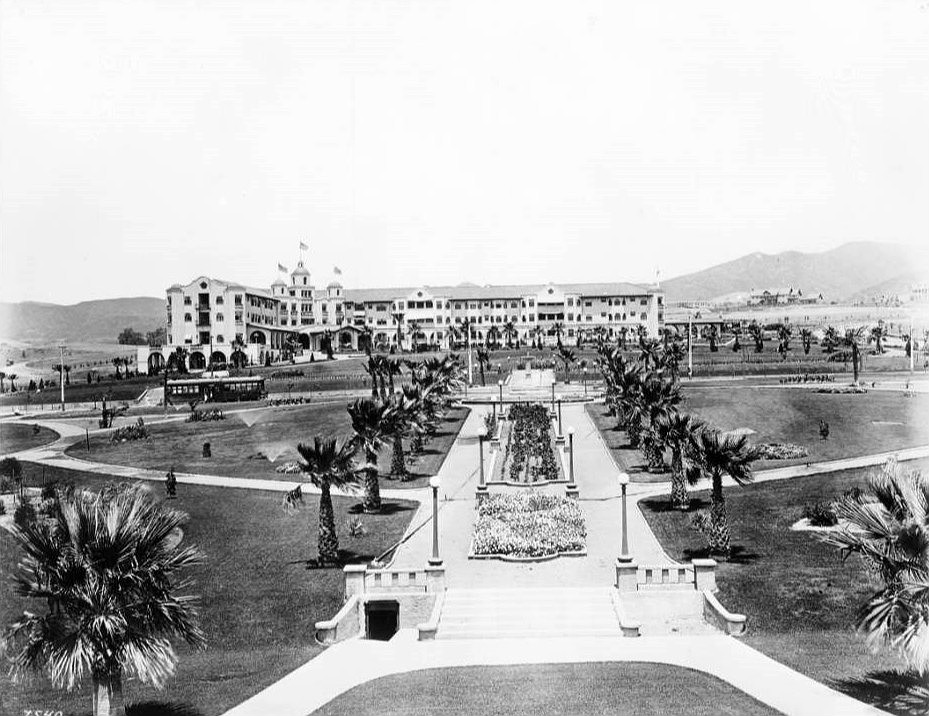
The hotel itself is a perfect image for mediated being. It is not home. It is not wilderness. It is a managed in-between: furnished, serviced, curated, detached from origin, designed for temporary occupancy that somehow keeps extending itself. A hotel is what happens when shelter loses rootedness and becomes an experience. Consciousness in illusion often works the same way. It stops inhabiting its own ground and begins cycling through rentable states.
The song’s luxury details matter because glamour is part of the mechanism. Mirrors on the ceiling. Pink champagne on ice. Captains, corridors, pretty boys, pretty alibis. Captivity here does not look like collapse. It looks like style. The false centerFalse CenterA false center forms when sovereignty is assigned to an object, role, institution, future state, identity, or projection that cannot actually serve as source.Read full entry → rarely introduces itself by saying, “Come suffer.” It says, “Come upgrade.”
That is why Waning Gibbous is the right phase for it. ReleaseReturn — RemembranceReturn names remembrance and release: the loosening of possession so reflection can become transparent to source again.Read full entry → does not begin when the trap becomes ugly. It begins when glamour starts to loosen. It begins when you can feel that the atmosphere has been doing more work on you than the argument ever did. Some prisons are persuasive because they are miserable. Others are persuasive because they are beautiful. The second kind often lasts longer.
The song also understands repetition. Guests come and go, but not really. The place keeps taking them in. Ritual dinner. Ritual music. Ritual beast. Ritual knives that somehow never kill the thing being fed. This is one of the eeriest details in the whole piece: the violence is there, but it does not free anyone. It simply sustains the loop. That is how a lot of modern life works too. People rebel inside the same emotional architecture that keeps them bound. Even their defiance feeds the house.
That is why the line about being “programmed to receive” feels so cold. Reception is not neutral. To be programmed to receive means one’s inner field has already been tuned for suggestion. Image, desire, fear, memory, status, invitation—none of them arrive on clean ground anymore. The room has been prepared in advance.
And yet the song does not end in pure despair. It ends in recognition. Recognition is not escape, but it is the first crack in enchantment. Once the arrangement has been named, its elegance loses some of its power. Once you realize the check-out was never the same thing as leaving, the house does not feel quite as sovereign.
That is the practical turn.
Many people spend years “checking out” of the pressure—through distraction, exhaustion, intoxication, fantasy, social posing, aesthetic identityThis — IdentityThis names the formed identity: the body, role, image, wound, belief, or story claimed as what the self is.Read full entry →, even spiritual language—while never leaving the machinery that made the pressure. They swap rooms and call it liberation. They change costumes and call it depth. They learn better vocabulary for the same captivity.
Release asks for something harder.
Not a prettier room. Not a more flattering mirror. Not a more luxurious version of the loop.
An actual leaving.
That leaving begins very quietly. Gratitude helps because gratitude breaks the glamour of grievance and appetite. The false self feeds on lack, comparison, unfinished hunger. Gratitude is one of the ways the room begins losing voltage. It restores enough simplicity for a person to feel the difference between being held and being managed.
Some places only own you because you keep admiring the wallpaper.
Stop admiring it.
That is where the door begins.