Most people assume they wake up as themselves.
The assumption feels obvious.
After all, the same name remains.
The same memories remain.
The same responsibilities remain.
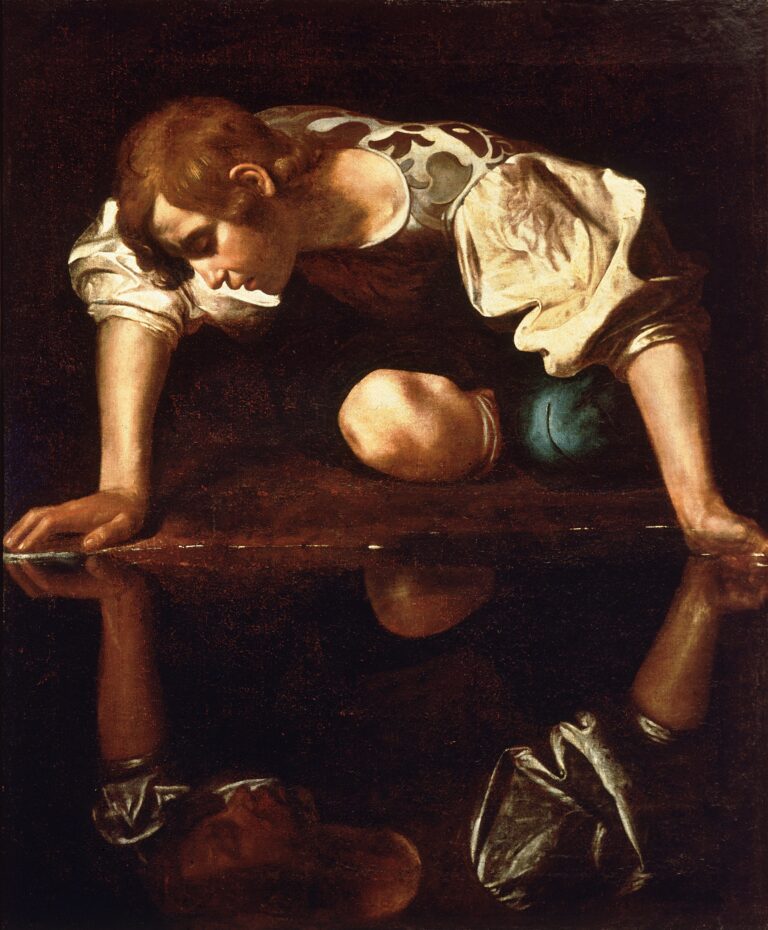
The same face looks back from the mirror.
Yet something strange happens every morning.
For a brief moment, before the day fully arrives, the story has not completely returned.
The obligations are not yet active.
The plans are not yet active.
The arguments are not yet active.
The identityThis — IdentityThis names the formed identity: the body, role, image, wound, belief, or story claimed as what the self is.Read full entry → is not yet fully assembled.
Then the kingdom begins rebuilding itself.
The process is so familiar that it usually goes unnoticed.
A phone lights up.
Messages appear.
Appointments appear.
Responsibilities appear.
The day begins calling the self back into existence.
A name returns.
A profession returns.
A family role returns.
A political identity returns.
A personal history returns.
One piece after another settles into place.
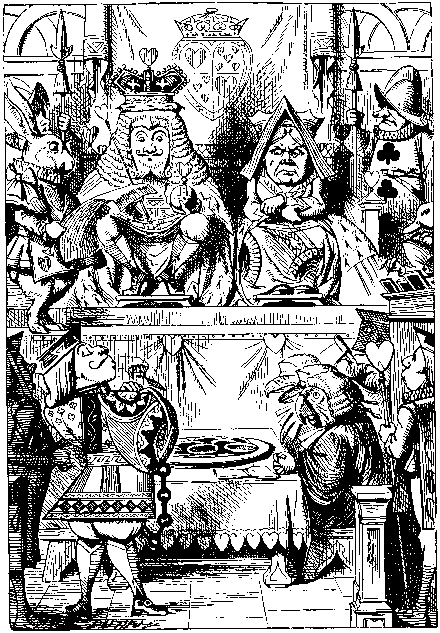
The crown descends.
The king returns.
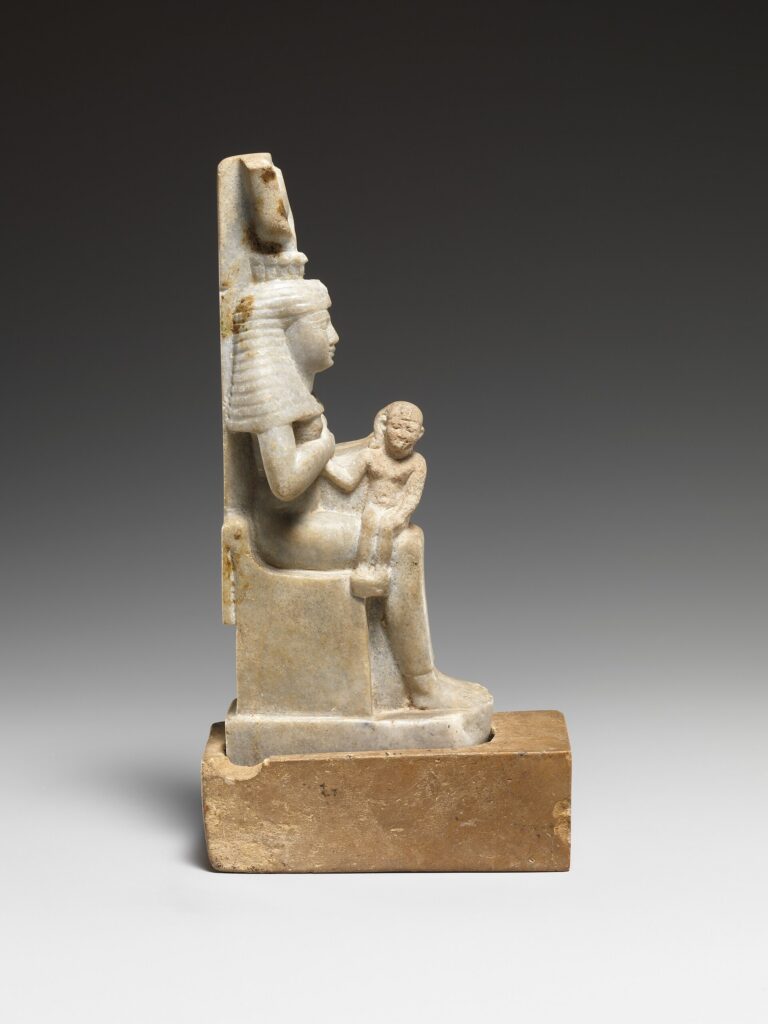
Ancient EgyptEgyptAncient Egyptian cultural and mythic field referenced by the essay.Read full entry → encoded this process through HorusHorusIn Geomytha, Horus names the identity that forms after claim: This — the body, role, image, wound, belief, or story taken as what the self is.Read full entry →.
Horus is often remembered as a god, a king, or a falcon-headed ruler. Yet symbolically he can also be understood as something more immediate.
A formed identity.
A visible self.
A story gathered into a center.
In this sense, Horus is not merely a figure from the distant past.
Horus is an event.
A process.
A recurring formation.
The king is crowned again and again.
Every morning the kingdom reassembles.
The process begins with recognition.
A person remembers their name.
Then comes memory.
Then comes preference.
Then comes obligation.
Then comes history.
Soon the sentence has returned.
I am thisThe False-Self Sentence — I Am ThisThe false-self sentence forms when claim joins reflection to a fixed object of identity: I am this.Read full entry →.
The identity takes shape.
The crown settles into place.
Yet identity rarely remains alone.
The next movement appears almost immediately.
These are mineThese — AccumulationThese names accumulation: possessions, titles, achievements, beliefs, communities, and other extensions gathered around identity.Read full entry →.
My home.
My family.
My work.
My goals.
My worries.
My achievements.
My unfinished projects.
The kingdom gathers its possessions.
The borders begin extending outward.
Then another movement appears.
Those are notThose — ProjectionThose names projection: enemies, outsiders, competitors, threats, and disowned qualities placed beyond the identity boundary.Read full entry →.
Traffic becomes an obstacle.
A rival appears.
A political opponent appears.
An opposing opinion appears.
The outsider returns.
The boundary reforms.
The kingdom now knows where it ends.
At least it believes it does.
Soon the entire structure is operating again.
The news returns.
The economy returns.
The nation returns.
The social world returns.
The complete system reappears.
All thisAll This — World-SystemAll This names the total symbolic environment that has become so complete it is experienced as reality itself.Read full entry →.
The individual no longer inhabits a simple day.
They inhabit a world.
A story large enough to live inside.
The remarkable thing is how quickly this reconstruction occurs.
Within minutes of waking, an entire kingdom has been restored.
Not because someone consciously planned it.
Because the process has become automatic.
The crown finds the head.
The kingdom finds the king.
The story finds the storyteller.
This is why identity often feels permanent.
The reconstruction happens so reliably that it becomes invisible.
A person assumes the self simply exists.
Yet daily experience suggests something more dynamic.
Identity appears to be maintained continuously.
Rebuilt continuously.
Reaffirmed continuously.
The king is crowned every day.
Modern stories repeatedly returnReturn — RemembranceReturn names remembrance and release: the loosening of possession so reflection can become transparent to source again.Read full entry → to this theme.
In Groundhog Day, the same day appears again and again, exposing the repetitive structures that normally remain hidden.
In The Truman ShowThe Truman ShowThe Truman Show presents Truman Burbank living unknowingly inside a constructed television environment whose town, relationships, routines, and physical conditions are organized by a production system around him. The film repeatedly exposes…Read full entry →, an entire world is reconstructed around a central identity.
In Memento, memory itself becomes part of the machinery required to maintain a coherent self.
Each story points toward the same mystery.
How much of identity is discovered?
How much is assembled?
Ancient myths explored the same question through different symbols.
Egypt used kings.
Religion used souls.
Literature used heroes.
Modern life uses routines.
The mechanism remains surprisingly similar.
This does not mean identity is false.
Nor does it mean identity must be destroyed.
The point is not to eliminate the king.
The point is to notice the coronation.
Recognition changes the relationship.
A person who notices the process is no longer completely absorbed by it.
The role can still be played.
The responsibilities can still be fulfilled.
The kingdom can still function.
Yet something subtle shifts.
The crown becomes visible.
The story becomes visible.
The reconstruction becomes visible.
The self is no longer mistaken for a permanent object.
It becomes recognizable as an ongoing event.
This is where the possibility of return begins.
Not by rejecting identity.
Not by abandoning responsibility.
Not by escaping the world.
By noticing.
Every morning a reflectionAm — ReflectionAm names reflected presence: awareness embodied or mirrored without yet becoming ownership.Read full entry → becomes a self.
A self gathers possessions.
Possessions create boundaries.
Boundaries create a world.
The entire kingdom returns.
The process is so ordinary that it disappears into daily life.
Yet perhaps that is why the ancient stories endure.
They were never only describing gods.
They were describing processes.
The same processes unfolding within ordinary experience.
The same coronation occurring every day.
The same kingdom rebuilding itself every morning.
And the same opportunity to notice it happening.