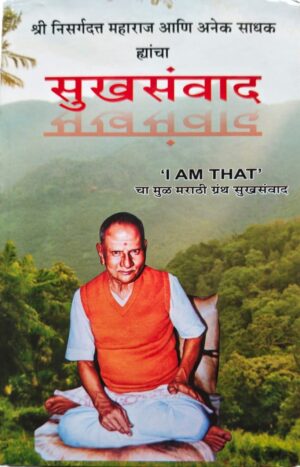
“I Am ThatReferenceI Am That — Nisargadatta MaharajI Am That is a published collection of talks by Sri Nisargadatta Maharaj, translated from Marathi by Maurice Frydman and first published by Chetana in 1973.Read full entry →” is a bridge.
It is not the shore.
That distinction matters because the false self loves to live on bridges. It loves in-between places where a phrase is strong enough to loosen ordinary identity, but not yet severe enough to dissolve the one who is using it.
“I Am That” can help break the spell of I am thisGEOMYTHA readingThe False-Self Sentence — I Am ThisThe false-self sentence forms when claim joins reflection to a fixed object of identity: I am this.Read full entry →.
That is its value.
But if the claimant keeps the phrase, the spell does not end. It enlarges.
The self stops saying, “I am this body, this job, this wound, this role, this fear, this story,” and begins saying, “I am That.”
The grammar has moved upward.
The claimant may not have moved at all.
That is the danger of nondual language.
It can point beyond identity, or it can become the most elegant identity the ego has ever worn.
The previous article handled the more dangerous phrase: I am that I am. That phrase comes from fire. It is dangerous because it places divine being-language in a sentence that still begins with I. If the I dissolves, the phrase opens. If the I remains, Set steals the name and crowns himself.
“I Am That” is slightly different.
It is not as closed. It is more like a hand pointing away from the local self.
Not this.
That.
Not this body-story.
That field.
Not this fear.
That being.
Not this biography.
That ground.
The phrase can be useful because it breaks the hypnotic closeness of this.
This is immediate.
This is graspable.
This is the body in the mirror.
This is the pressure in the chest.
This is the wound being defended.
This is the name on the form.
This is the role being performed.
This is the person everyone seems to be talking about.
I am this is the ordinary sentence of HorusGEOMYTHA readingHorusWithin GEOMYTHA, Horus the Son names This: the body, role, image or story claimed as identity. Horus the Elder / Haroeris is distinct and carries the watcher or witnessing function, not This. These are interpretive correspondences, not universal Egyptian definitions.Read full entry →.
Horus is the identity-body, the time-bound self, the apparent person formed when awareness identifies with image, memory, role, desire, fear, and narrative. Horus says:
I am this.
I am this face.
I am this history.
I am this injury.
I am this destiny.
I am this belief.
I am this self.
That is the contracted form.
“I Am That” creates distance from this contraction.
It says: do not stop at the local image. Do not mistake the body-story for the whole. Do not confuse the passing contents of awareness with awareness itself. There is something deeper than the visible self.
That is why the phrase can work.
It turns the head away from the mirror.
But it can also create a subtler mirror.
The ego looks into the beyond and admires itself there.
Now it says:
I am the absolute.
I am the source.
I am beyond ordinary people.
I am the one who sees through illusion.
I am not bound by what binds others.
That is not liberation.
That is Horus wearing infinity.
The phrase did not fail because it pointed badly. It failed because the claimant survived the pointing.
This is the difference between a pointer and a possession.
A pointer directs attention away from itself.
A possession makes the pointer mine.
“I Am That” must therefore be used lightly. It is a bridge from local identity toward wider being. But if it becomes a permanent self-description, it has been captured.
The bridge has become a house.
This is why the phrase must burn backward.
I Am That.
Am That.
Am.
Is.
The first step loosens the local self.
I Am That says: I am not merely this.
The second step weakens the claimant.
Am That lets being remain without so much personal ownership.
The third step releases the pointer.
Am is reflected being without predicate.
The fourth step returns to source.
Is.
No claimant.
No object.
No spiritual trophy.
Just the field before the sentence begins.
This is the Geomytha correction.
The goal is not to perfect the phrase I Am. The goal is to see whether the phrase can disappear into what it points toward.
If it cannot disappear, it has become identity.
The phrase wants to vanish.
The ego wants to keep it.
That is the conflict.
The mind loves refined language because refined language feels safer than direct seeingGEOMYTHA readingDirect SeeingDirect Seeing is contact with experience before immediate naming, interpretation, symbolic classification, or self-positioning takes over.Read full entry →. It can repeat I Am That and feel close to truth while still preserving the subtle one who repeats. It can build a self around the refusal of self. It can become “the nondual person,” “the awakened observer,” “the one beyond ordinary identity.”
This is why anti-ego language so often becomes ego food.
The false self can eat almost anything.
It can eat religion.
It can eat rebellion.
It can eat trauma work.
It can eat politics.
It can eat mystical experience.
It can eat Geomytha.
It can eat the phrase that was meant to starve it.
That is why the test is not whether the words sound high.
The test is whether the claimant becomes less believable.
Does the phrase make the body softer?
Does it make the breath easier?
Does it reduce urgency?
Does it loosen the need to be seen?
Does it make ordinary life more transparent?
Does it make the person less dramatic, less inflated, less hungry for certification?
Or does it make the self larger?
Does it make the speaker grandiose?
Does it turn humility into performance?
Does it turn silence into superiority?
Does it make other people seem asleep and small?
Does it make correction feel beneath you?
Does it make embodiment feel like a lower realm to escape?
If the second pattern appears, the phrase has been stolen.
Set has taken the mirror.
Horus is wearing the reflection.
This is why Gemini is the right field for this article. Gemini notices distinction. It hears the difference between this and that, between pointer and possession, between bridge and shore, between phrase and presence. Gemini can see the double movement: the same words can liberate or inflate depending on what happens to the one who speaks them.
That is the whole issue.
“I Am That” is not automatically false.
It is not automatically safe either.
It is a charged tool.
Like Ophiuchus holding the serpent, the phrase must be handled without swallowing it. It may carry medicine. It may carry poison. The difference is relation, measure, timing, and humility.
Hold the phrase.
Do not crown yourself with it.
Let it work.
At first, let it interrupt I am this.
When the body tightens around a role, let the phrase open the hand.
I am not merely this role.
When pain becomes biography, let the phrase create distance.
I am not merely this pain.
When fear becomes identity, let the phrase loosen the knot.
I am not merely this fear.
When memory becomes a prison, let the phrase widen the field.
I am not merely this story.
That is useful.
That is medicine.
But then stop before the medicine becomes intoxication.
Do not turn the next movement into:
I am That ultimate thing.
That is too much ownership.
Instead, let the phrase thin.
Not I Am That as declaration.
Am That as softening.
Am as bare reflection.
Is as silent ground.
Then breathe.
Inhale: Is-AmGEOMYTHA readingReflection Without OwnershipReflection without ownership is the condition in which experience can appear, relate, and move without being seized as mine.Read full entry →.
Exhale: Am-Is.
This is safer because it restores order without putting the claimant at the front.
In Is-Am, source becomes reflected presenceGEOMYTHA readingAm — ReflectionAm names reflected presence: awareness embodied or mirrored without yet becoming ownership.Read full entry →.
In Am-Is, reflected presence returns to source.
No one needs to own the movement.
No one needs to announce it.
No one needs to become special because it happened.
This also protects the body.
A common danger in nondual language is that the body becomes subtly dismissed. The self says, “I am That,” and then begins treating ordinary human conditions as beneath it. Hunger, grief, responsibility, fatigue, tenderness, repair, apology, and limitation become signs of lesser consciousness.
That is not freedom.
That is avoidance dressed as transcendence.
If the phrase is real, it should not make the body contemptible. It should make the body less imprisoning.
There is a difference.
The body is not the final identity. But the body is also not garbage. It is the field where the current is felt, where breath moves, where relation happens, where action becomes possible. The problem is not embodiment. The problem is ownership.
“I am this body” is too small.
“I am above the body” is often just another claim.
The better correction is:
There is body.
There is breath.
There is sensation.
There is awareness of all this.
Then the sentence quiets.
The body does not need to become me.
It also does not need to become not me as a badge of spiritual superiority.
It can simply be included in the field.
This is why That must not be used to flee This.
A real pointer beyond the local self should return more presence to the local field, not less. It should make the dish, the child, the conversation, the ache, the task, the room, the breath more immediate, not more dismissible.
Otherwise the phrase has become dissociation.
That is another Setian move.
Set loves escape that calls itself awakening.
The true movement is subtler.
Not trapped in this.
Not inflated into that.
But present as what allows both to appear.
That is why the phrase must vanish.
Once the local identity loosens, do not keep repeating the pointer as a crown. Let it fall away.
The moon does not keep announcing that it reflects the sun. It reflects.
The lungs do not say they are breathing the field. They breathe.
The belly does not declare itself the center. It steadies.
Presence does not need to shout metaphysics.
It is.
That is the final reduction.
Is.
Then Am.
Then return.
The phrase I Am That is strongest when it becomes unnecessary.
That sounds paradoxical, but it is exact.
A bridge fulfills itself when it is crossed. A pointer fulfills itself when attention moves beyond it. A mantra fulfills itself when it quiets the mind that was repeating it.
The ego wants to preserve the tool because the tool gives it shape.
Presence lets the tool disappear.
This is the practical rule:
Use I Am That only against I am this.
Do not use it to build a new I.
When the local self contracts, let the phrase widen the field.
Then let the phrase reduce.
I Am That.
Am.
Is.
Then breathe.
Is-Am.
Am-Is.
This rhythm keeps the phrase from becoming a palace.
It allows language to serve return instead of becoming another room for Horus.
The bridge is not the shore.
Do not decorate it.
Do not live there.
Do not invite the false self to build a shrine on it.
Cross.
Then let the crossing disappear behind you.
What remains is not the person who knows I Am That.
Not the person who has the highest phrase.
Not the person who sees through the world.
What remains is simpler and harder for the claimant to use.
There is Is.
There is Am.
There is breath moving without ownership.
There is life before the sentence becomes a self.
The phrase points.
The claimant loosens.
The bridge empties.
The shore was never elsewhere.