There may be no more dangerous phrase than:
I am that I am.
It is dangerous because it is almost true in the mouth of the ego.
Almost.
That is what makes it powerful.
A false sentence is easy to reject. A crude lie has no real authority. But a sacred phrase that carries real being-language can be stolen by the claimant and worn like a crown.
That is the danger.
I am that I am can become a doorway into presence. It can also become the most refined costume HorusGEOMYTHA readingHorusWithin GEOMYTHA, Horus the Son names This: the body, role, image or story claimed as identity. Horus the Elder / Haroeris is distinct and carries the watcher or witnessing function, not This. These are interpretive correspondences, not universal Egyptian definitions.Read full entry → ever wears.
Everything depends on what happens to the first I.
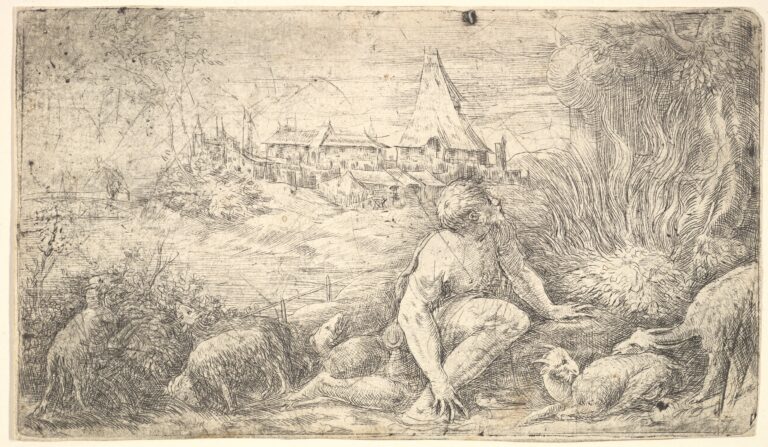
In ordinary religious reading, the phrase from Exodus is treated as the divine self-disclosure. MosesReferenceMoses — ExodusBiblical figure Moses, called at the Burning Bush in Exodus.Read full entry → asks for a name, and the answer comes from the fire: I am that I am. The name refuses ordinary naming. It does not say: I am thisGEOMYTHA readingThe False-Self Sentence — I Am ThisThe false-self sentence forms when claim joins reflection to a fixed object of identity: I am this.Read full entry → god, this object, this tribal idol, this image, this form. It points toward being itself.
That is why the phrase has such force.
It does not give Moses a normal noun.
It gives him a mystery of being.
But in Geomytha, the phrase has to be handled carefully because the first word is also the danger-word.
I.
The claimant.
The heel-grabber.
The one who says mine.
The one who wants the blessing, the proof, the role, the certification, the sacred authority.
In the Jacob article, the claimant appeared as the hand grabbing the heel right as emergence began. Here the same claimant reaches for something higher. It no longer wants only birthright, hunger, inheritance, or protection.
It wants the divine name.
That is spiritual ego.
The false self grows more dangerous when it learns sacred grammar.
At the crude level, it says:
I am this body.
I am this wound.
I am this status.
I am this fear.
I am this story.
At the spiritual level, it says:
I am awake.
I am chosen.
I am source.
I am God.
I am the one who sees.
That is not liberation.
That is Horus in temple clothing.
This is why I am that I am must be read as a furnace, not a slogan.
The phrase is not permission for the ego to crown itself. It is the place where the ego must burn.
If I says the phrase and remains intact, Set has stolen Am.
If I enters the phrase and dissolves, the doorway opens.
That is the whole distinction.
The grammar matters.
Article One gave the basic sequence:
Is. Am. I. This.
Is is pure being before possession.
Am is being reflected as presence.
I is the claimant.
This is identity hardened into object, role, body-story, wound, name, image, and biography.
The false self forms most clearly as:
I am this.
That is Horus.
The body appears, and the claimant says: I am this body.
The feeling appears, and the claimant says: I am this feeling.
The role appears, and the claimant says: I am this role.
The thought appears, and the claimant says: I am this thought.
This is the trap.
But I am that I am is different because it does not say this.
It says that.
That difference matters.
This is near, graspable, pointed, owned. This is the object in the hand. This is the body in the mirror. This is the wound being narrated. This is the role being defended. This is the name on the form.
That is more distant.
That points beyond the immediate object. That refuses total possession. That gestures toward what cannot be fully held.
So the phrase is already less trapped than I am this.
I am this forms Horus.
I am that begins to point beyond Horus.
But it is not safe yet.
Because I is still there.
The claimant has turned away from the local object, but it may still try to possess the beyond. This is the subtle danger of mystical language. The ego stops saying I am this body and starts saying I am that absolute.
The grammar has improved.
The claimant has not.
That is why I am that must continue burning.
It cannot stop at I.
It must move backward.
I am that.
Am that.
Am.
Is.
That is the return.
The phrase must become less personal as it deepens.
At first, I am that may help loosen identification with this body-story. It points beyond the local self. It interrupts the tight little knot of biography. It says: you are not merely this wound, this fear, this name, this job, this face, this history.
That can be useful.
But then the phrase has to keep going.
The I cannot remain as owner of the absolute.
Otherwise the false self has not died.
It has expanded.
This is how spiritual inflation happens.
The ego does not dissolve into source. It identifies as source. It uses nondual language to avoid humility, embodiment, accountability, grief, limitation, and ordinary human relation. It calls its own grandiosity awakening.
That is Set wearing the crown.
A person can say I am God and still be entirely ruled by fear, pride, hunger, comparison, resentment, and the need to be seen. The phrase did not liberate them. It merely gave the false self better costume.
This is why the divine name is dangerous.
It is too close to the truth to be handled casually.
Ophiuchus belongs here.
The previous article described Ophiuchus as the discipline of holding the serpent before insight becomes identity. I am that I am is one of the hottest serpents in the religious field. It carries real force. It can heal. It can poison. It can humble. It can inflate.
It must be held.
Not swallowed.
Not posted as self-description.
Not weaponized in debate.
Not worn as evidence of superiority.
Held.
Let the phrase remain charged without immediately making it yours.
The burning bushReferenceEhyeh Asher Ehyeh — Exodus 3:14 / Burning BushIn Exodus 3, Moses asks what name he should give the Israelites when they ask who sent him.Read full entry → is important for this reason.
The name comes from fire.
Fire reveals and consumes. It illuminates, but it also burns away what cannot survive the encounter. If the divine name comes from the fire, then the correct response is not to put it on like jewelry.
The correct response is to let it burn.
Whatever says I must enter.
Whatever is false must not survive.
That is why Moses is not simply being handed a metaphysical slogan. He is being brought into a field where ordinary identity cannot remain untouched. The name does not decorate him. It commissions him, frightens him, strips him, and sends him.
The name is not possession.
It is ordeal.
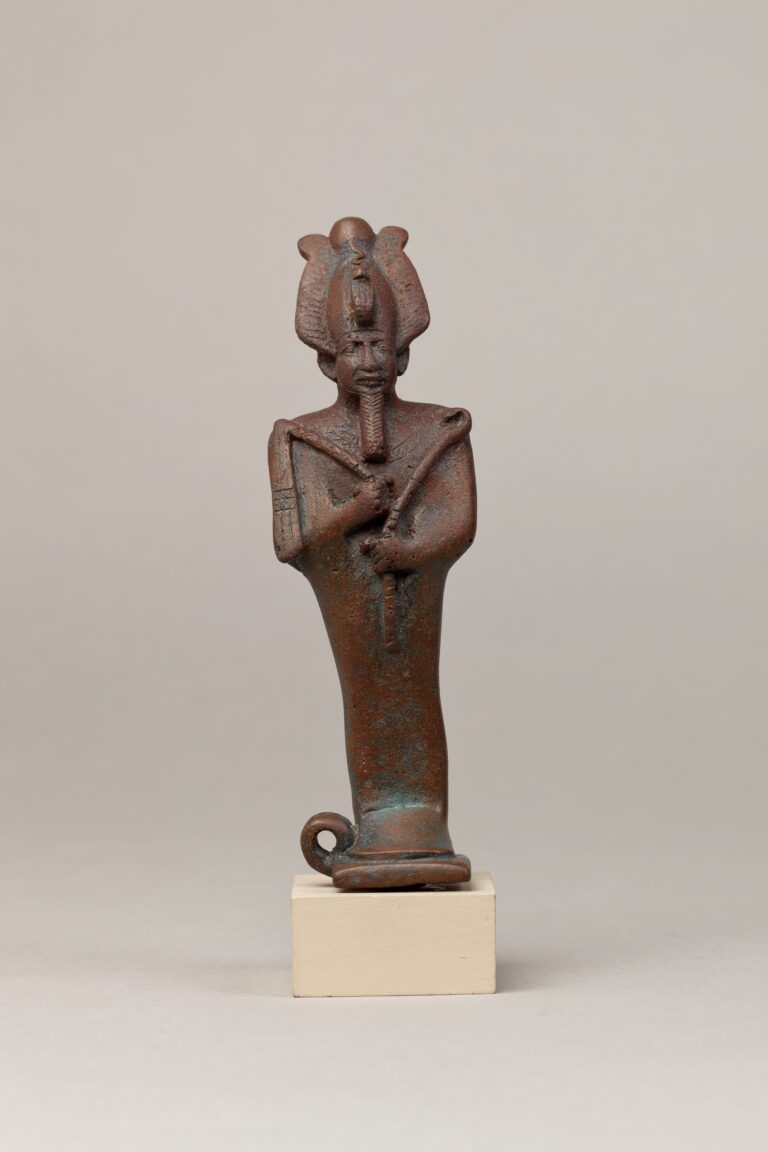
In Geomytha, this is the difference between sacred language as OsirisGEOMYTHA readingOsirisWithin GEOMYTHA, Osiris names Am: reflected, embodied presence before ownership. This is the project’s interpretive use, distinct from the Egyptian deity’s historical roles.Read full entry → and sacred language as Horus.
As Osiris, sacred language reflects source without claiming to be source. It gives the mind a mirror that points beyond itself. It says: look through me.
As Horus, sacred language becomes identity. It says: look at me. I know the name. I hold the formula. I have the key. I am the one.
That is the corruption.
The phrase I am that I am becomes true only when it ceases to function as self-description.
If it is spoken from ego, it is false even if the words are sacred.
If it dissolves the ego, it is true even before the words are spoken.
The phrase points toward being before predicate.
Not:
I am this.
I am that object.
I am that role.
I am that doctrine.
I am that awakened identity.
But:
Am.
And even deeper:
Is.
This is why the Is-AmGEOMYTHA readingReflection Without OwnershipReflection without ownership is the condition in which experience can appear, relate, and move without being seized as mine.Read full entry → / Am-Is breath practice is safer than repeating I am too quickly.
I am may be useful because it strips away predicates. It can bring attention back from I am this toward bare being. But in Geomytha, the risk is clear: the I may remain too strong. It may sit at the front of the phrase like a king at the gate.
So the correction is:
Inhale: Is-Am.
Exhale: Am-Is.
This restores the order.
Is before Am.
Am returning to Is.
No claimant required.
If I am is used, it must be used like a bridge, not a throne.
Cross it.
Do not live on it.
Nisargadatta’s phrase I Am That is powerful for this reason. It points away from the local self and toward the beyond. But in this new Geomytha grammar, it must still be handled carefully. The phrase is not complete if the I keeps it.
The practice is to let it reduce.
I Am That.
Then:
Am That.
Then:
Am.
Then:
Is.
The mind wants to keep a beautiful phrase.
Presence does not need one.
This does not mean language is useless. Language can guide. Myth can guide. Scripture can guide. The divine name can guide. But every guide becomes dangerous when the claimant uses it to avoid the actual movement of return.
The divine name should not make the self larger.
It should make the self less believable.
If the phrase makes someone more humble, quieter, clearer, more embodied, less reactive, less desperate to be seen, less hungry for specialness, then it may be working as Osiris.
If the phrase makes someone grandiose, untouchable, superior, dismissive, inflated, theatrical, or obsessed with being recognized as awakened, then Set has taken it.
The test is simple:
Does the phrase reduce I?
Or does it crown I?
That is the whole matter.
This also explains why that is safer than this, but not safe enough.
This produces immediate identity.
I am this person.
I am this body.
I am this pain.
I am this belief.
That opens distance.
I am not merely this.
I belong to that deeper field.
There is something beyond the visible self.
But if that becomes an object of possession, the trap returns.
I am that ultimate thing.
I am that source.
I am that divine exception.
Now that has become another this.
The beyond has been dragged into the claimant’s hand.
That is the Setian move.
The sacred becomes object.
The object becomes identity.
Identity becomes throne.
So the phrase must remain ungraspable.
I am that I am is not a final label. It is a refusal of labels. It does not let the mind land on a stable object. It turns back on itself. It loops. It denies predicate. It keeps burning the tendency to say: this is what God is.
But the ego can still misuse the loop.
It can say:
Because God is beyond definition, I am beyond correction.
That is the lie.
The true beyond does not inflate the personal self. It undoes its claim to centrality.
Jacob helps again.
At the ford, Jacob wants the name. He wants the blessing. He wants the divine encounter to certify him. But he does not leave as a triumphant metaphysical master. He leaves limping.
That is the sign of a real encounter.
The claimant has been marked by limitation.
If sacred naming does not produce some limp in the ego, it may not have touched anything real.
A real divine name humbles the one who hears it. It does not make him unbearable.
It does not make him frantic to prove. It does not make him addicted to certainty. It does not make him careless with others. It does not turn him into a spiritual landlord collecting rent from everyone else’s ignorance.
It burns.
The false centerGEOMYTHA readingFalse CenterA false center forms when sovereignty is assigned to an object, role, institution, future state, identity, or projection that cannot actually serve as source.Read full entry → loses some of its confidence.
That is mercy.
Because the false center is the prison.
This is why this article belongs after Ophiuchus. The serpent must be held before this phrase can be approached. Without containment, I am that I am is too easily swallowed by the claimant. The phrase becomes immediate intoxication.
With containment, it becomes ordeal.
The reader does not need to reject the phrase.
The reader needs to let it work.
When the phrase appears, do not grab it.
Hold it.
Let it ask:
Who is saying I?
Let it ask:
Can Am remain without becoming mine?
Let it ask:
What is here before the statement forms?
Then breathe.
Inhale:
Is-Am.
Exhale:
Am-Is.
If the phrase is true, it will not need to be defended as identity.
It will become quieter.
It will become simpler.
It will move from claim to presence.
It will burn backward.
I am that I am.
I am that.
Am.
Is.
Then the phrase can disappear.
And what remains is not a better self.
Not a crowned self.
Not an awakened self.
Not a self who knows the divine name.
What remains is what the name was trying to protect from naming.
The living fact before the claimant.
Is.
Reflected as Am.
Returned as Is.
The doorway opens only when no one stands in it wearing a crown.