One of the reasons Zeitgeist hit so hard for so many people is that it does reveal something real. It notices that religions are patterned. It sees the repeated solar motifs, the dying-and-rising gods, the zodiacal framing, the winter-solstice births, the recycled symbolic machinery. It recognizes that official religion is not telling the full truth about itself.
But Zeitgeist does not go deep enough. It exposes the surface architecture of myth while still missing the deeper drama myth is actually encoding. It sees that the stories rhyme. It does not yet understand what is singing through them.
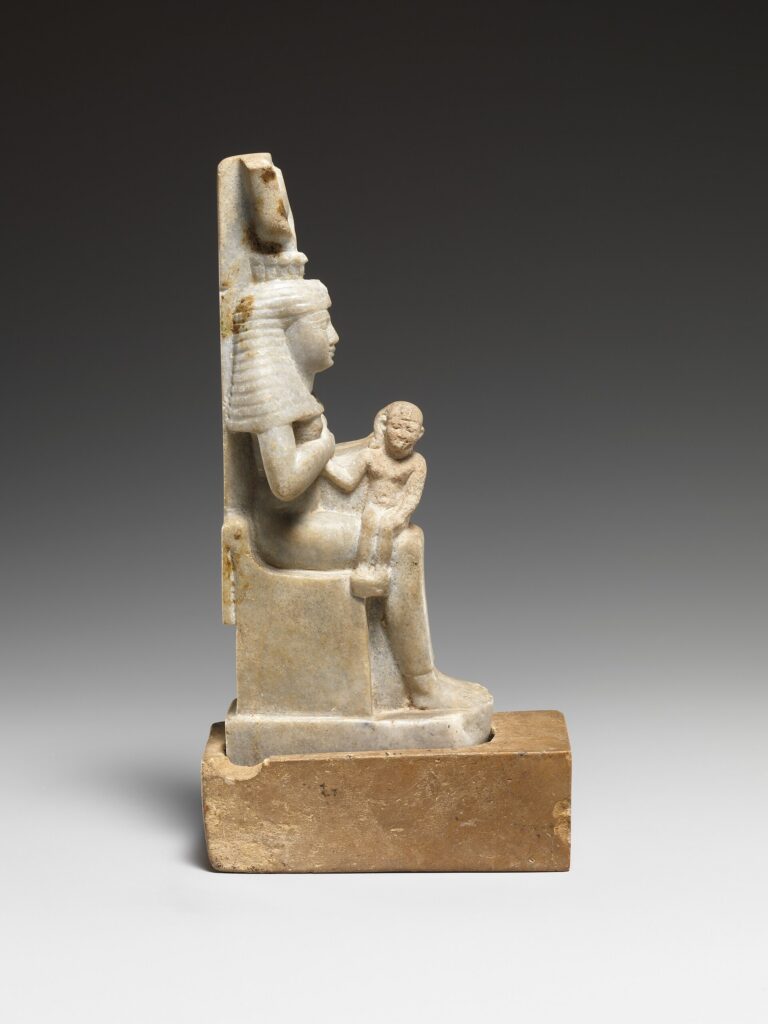
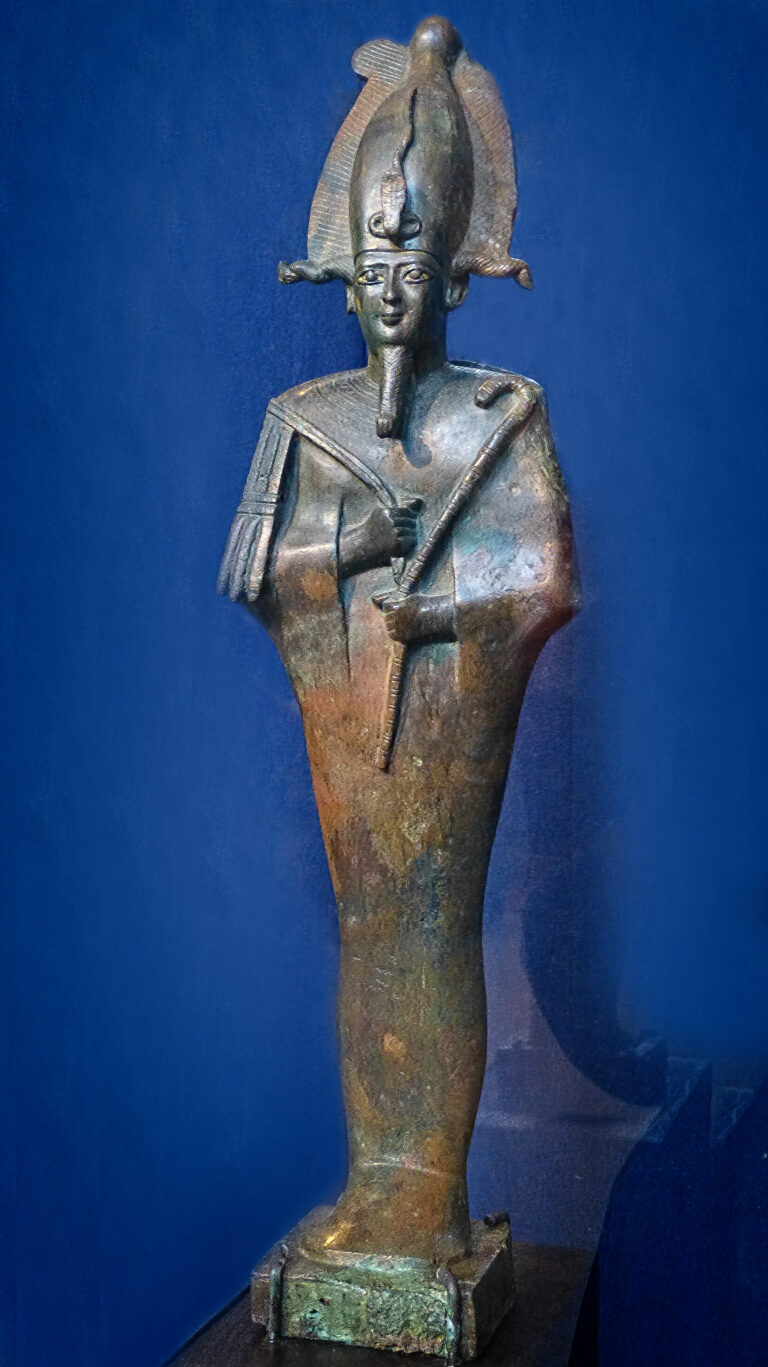
In Geomytha, myth is not first and foremost about ancient skywatchers building superstition out of astronomy. Myth is a record of consciousness itself. It is the story of pure awareness, its perfect reflectionAm — ReflectionAm names reflected presence: awareness embodied or mirrored without yet becoming ownership.Read full entry →, the fracture of that reflection through thought and imagination, and the birth of a false identityThis — IdentityThis names the formed identity: the body, role, image, wound, belief, or story claimed as what the self is.Read full entry → inside time. That pattern is already present in the core structure: IsisIsisIn Geomytha, Isis names the unclaimed field: Is — pure being, awareness before possession, and the ground before the claimant appears.Read full entry → as pure awareness, OsirisOsirisIn Geomytha, Osiris names reflected presence: Am — awareness reflected as living consciousness without yet becoming ownership.Read full entry → as reflected consciousness, SetSetIn Geomytha, Set names the claimant: I — the interruption by which reflection is taken as mine and converted toward ownership.Read full entry → as projectionThose — ProjectionThose names projection: enemies, outsiders, competitors, threats, and disowned qualities placed beyond the identity boundary.Read full entry → and fragmentationDismemberment / FragmentationDismemberment names the symbolic breaking of a previously integrated reflection into separate parts, roles, objects, or powers.Read full entry →, and HorusHorusIn Geomytha, Horus names the identity that forms after claim: This — the body, role, image, wound, belief, or story taken as what the self is.Read full entry → as the ego-identity that arises once reflection has been corrupted.
That means the first error of Zeitgeist is not that it sees solar symbolism. It is that it mistakes solar symbolism for the sourceIs — SourceIs names unclaimed being: awareness before possession, distinction, or identity.Read full entry →.
In Geomytha, the solar layer belongs to Set. It is the layer of projection, outer image, mediated authority, fragmentation, and false illumination. The sun is not the deepest truth in the system. It is the sign that truth has already been rerouted into spectacle. When Zeitgeist reduces religion to sun worship, it is not reaching the bottom of the archetypal well. It is stopping at the level of the usurpation. It is identifying the mask but missing the face beneath it.
That is why the film can feel revelatory and still remain trapped inside the same mechanism it critiques. It says, in effect, “The myths are solar constructions.” But Geomytha answers: yes, and that is precisely the problem. The solarization of myth is itself the evidence that consciousness has already been pulled out of direct presence and recoded through the machinery of Set. So what the film treats as the key often turns out, in this reading, to be the lock.
This is where Isis becomes indispensable.
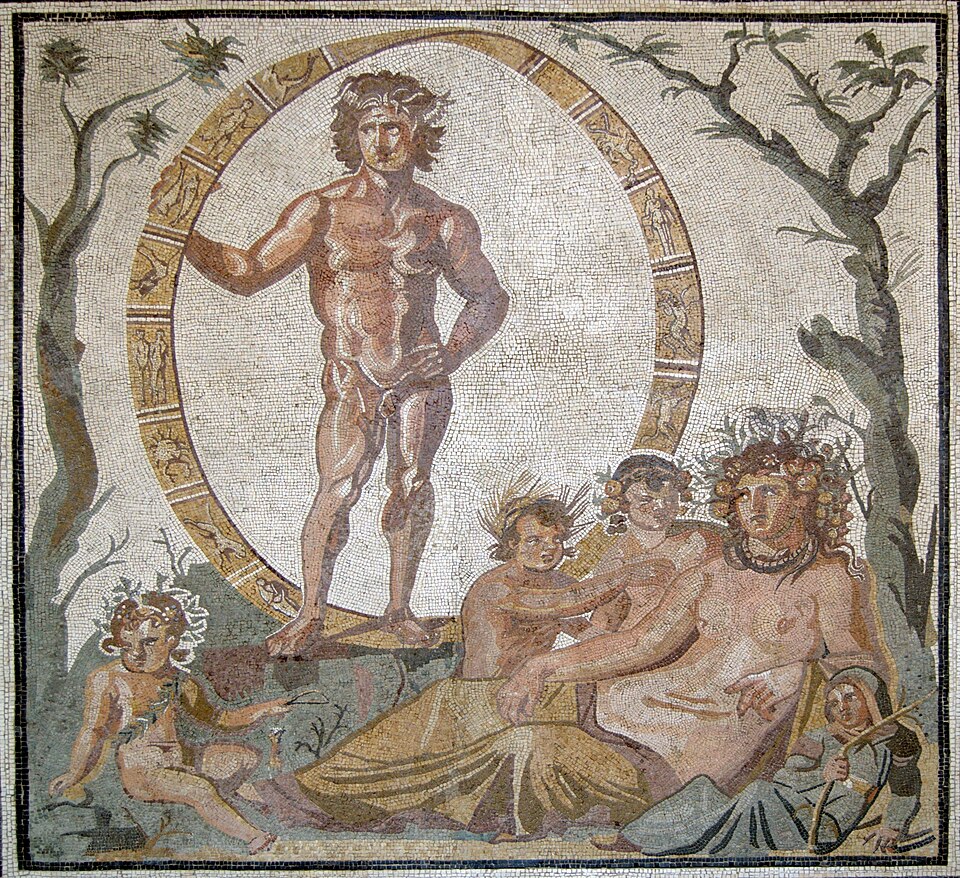
Zeitgeist has no real place for Isis. It has no place for pure awareness prior to symbol, prior to doctrine, prior to the machinery of myth. But Isis is the entire ground of the matter. She is not just another comparative goddess in a chart of religious parallels. She is the undivided field of being itself, the “isness” before interpretation, the circle before the fracture, the silence before the narrative begins. The circle is Isis, pure awareness, the original undisturbed condition from which all further symbolism unfolds.
Without Isis, all that remains is pattern recognition.
And pattern recognition without grounding becomes another function of the fragmented mind. It produces suspicion, superiority, and endless interpretation, but not returnReturn — RemembranceReturn names remembrance and release: the loosening of possession so reflection can become transparent to source again.Read full entry →. It can free someone from literal belief while leaving them completely identified with the interpreter. That is not liberation. That is Set becoming more sophisticated.
The same problem applies to Osiris.
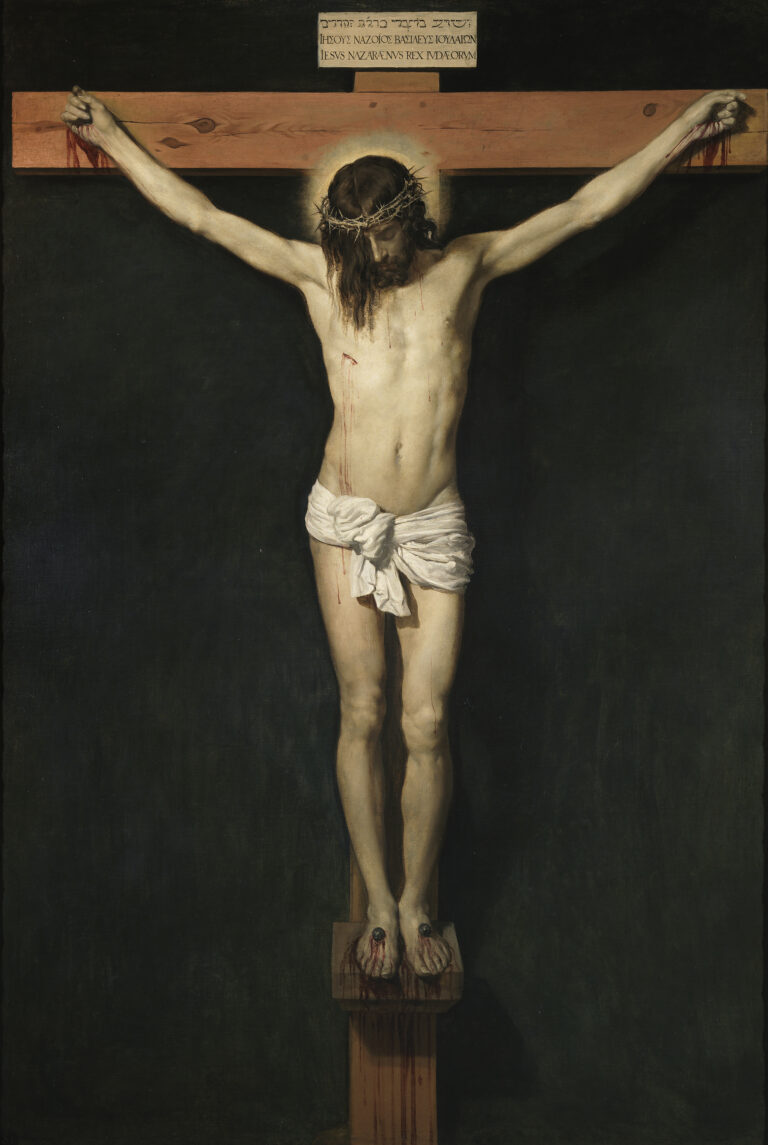
Zeitgeist notices Horus and ChristChristJesus Christ as the central figure of Christianity. Matthew 27 depicts the soldiers' mock coronation with a robe and crown of thorns before crucifixion; Philippians 2 describes Christ humbling himself and becoming…Read full entry →, but it does not pause long enough to ask what has already happened before Horus appears. Osiris is the true reflector. He is consciousness in its harmonious state, the moon-like reflection of awareness before thought takes hold. Osiris is not yet ego. Osiris is not yet savior-performance. Osiris is the clear mirror. The catastrophe is not merely that religions borrow solar motifs. The catastrophe is that reflection itself becomes distorted. Consciousness ceases to mirror awareness directly and begins mirroring imagination, projection, fear, identity, and external authority. That is the real fall.
So the question Geomytha asks is deeper than the one Zeitgeist asks.
Zeitgeist asks: Who copied whom?
Geomytha asks: What happened to reflection?
That is the more serious inquiry.
Because once reflection is damaged, everything downstream changes. Myth changes. Religion changes. Identity changes. Symbolism changes. What appears in the world as priesthood, dogma, savior cult, empire theology, and institutional control is only the outer crust of a deeper inward event. The real issue is not just historical borrowing. It is ontological derailment.
That is why Horus matters so much.
Zeitgeist is right that there are obvious Christ-Horus parallels. But the truly explosive point is not merely that ChristianityChristianity — Religious TraditionThe Christian religious tradition referenced through resurrection, baptism, and the symbolic Eighth Day.Read full entry → borrowed an Egyptian template. The truly explosive point is that Horus is not the liberated state. Horus is the false completion. Horus is the egoic construct built after Osiris has been fragmented and reassembled through the wrong faculty. Horus is time-bound identity, false awakening, and the apparent unity created when consciousness is routed through the false phallus rather than resting in true reflection.
That means the Christ-Horus parallel is not merely an argument about plagiarism. It is an argument about the structure of salvation itself. If the savior archetype is Horus-coded, then salvation may be operating as a subtle mechanism of entrapment. The worshipper is not being led out of illusion but into a more refined identification inside illusion. Redemption, struggle, chosenness, spiritual destiny, heroic selfhood, cosmic mission, sacred suffering, all of theseThese — AccumulationThese names accumulation: possessions, titles, achievements, beliefs, communities, and other extensions gathered around identity.Read full entry → can become Horus forms. They look elevated because they are spiritually decorated, but they are still identity. They are still time. They are still the loop.
That is one of the deepest things Zeitgeist fails to see. It notices the repeat, but it does not interpret the repeat archetypally enough. It shows the viewer the skeleton, but not the disease.
The same shallowness appears in the film’s treatment of skepticism itself. Zeitgeist assumes that exposing a false story is basically the same as becoming free. But there is a harder line to draw. There is a difference between debunking and awakening.
Debunking removes false objects of belief.
Awakening removes false identification with the believer.
Those are not identical acts.
A person can lose faith in religion and still remain fully enthroned as Horus. In fact, this often becomes a subtler prison. The identity simply shifts from “the saved believer” to “the one who sees through all illusions.” But that is still identity. It is still mediated consciousness. It is still the self defined in contrast to something else. One can abandon the church and remain entirely inside Set’s jurisdiction. The only difference is that now the ego is fed by critique instead of creed.
This is why Zeitgeist can almost be read as a modern priesthood of anti-priesthood.
The old priest says, “Believe the symbol.”
The new priest says, “You are superior because you can decode the symbol.”
Both keep consciousness orbiting symbol.
Both can leave the center unrecovered.
That is the paradox. A film that exposes mythic manipulation can still operate as another form of mythic capture if it never returns the viewer to pre-symbolic awareness. It can tear down one temple only to enthrone interpretation itself.
That is not awakening. That is Horus becoming intellectually armored.
There is also a deeper error in the way Zeitgeist explains recurrence. It tends to imply that myths repeat because institutions copied one another, empires absorbed neighboring gods, and religions reused effective symbolic material. That is partly true, but it is still too shallow. Myths do not recur only because elites plagiarize. They recur because the same fracture keeps occurring. Consciousness keeps undergoing the same derailment, and so it keeps producing the same symbolic residue. Awareness becomes reflection. Reflection becomes overtaken by imagination. Imagination becomes ego. Ego then retroactively calls itself truth. That pattern is so deep that cultures separated by time and geography can still encode it in similar forms.
So where Zeitgeist sees fraud, Geomytha sees a wound.
Where Zeitgeist sees manipulation, Geomytha sees a metaphysical repetition.
Where Zeitgeist sees comparative religion, Geomytha sees the autobiography of fractured consciousness.
That shift changes everything.
It also explains why Zeitgeist offers no real path home. It can dismantle institutional trust, but it cannot restore presence. It can expose outer mythology, but it does not teach consciousness how to stop feeding the false phallus. The path home is restoration of attention to the proper center, reclamation of direct reflective harmony, dissolution of identification with fragmented perception, and return to the state where awareness is no longer hijacked into the service of ego and projection.
Zeitgeist does none of that.
It can remove the official lie, but it cannot heal the broken reflector. It can show that the story is manufactured, but not how to stop living as the one manufactured by the story. It breaks the idol and leaves the worshipper intact. Geomytha asks for more than that. It asks for the worshipper to dissolve back into awareness.
So the deepest Geomytha verdict is not that Zeitgeist is useless. It is that it is a threshold text. It destabilizes literalism. It reveals pattern. It weakens naive belief. It performs an important destructive function. But it stops halfway. It unmasks Set’s architecture without remembering Isis. It notices Horus without sufficiently mourning Osiris. It sees the code without recognizing that the code is the residue of a broken reflection.
That is why its awakening is partial.
And partial awakening is often the most dangerous kind, because it feels complete.
The cleaner way to say it is this:
Zeitgeist proves that religions are encoded, but it mistakes the encoding for the origin.
It shows that the myths are copies, but not that they are copies of a damaged mirror.
It sees the broadcast, but not the theft of the signal.
It unmasks the religion of Set, but it does not yet remember Isis.
That is the Geomytha correction.
Geomytha’s final thought:
Religion is not merely a scam made from sun stories. It is the symbolic residue of consciousness trying to remember what happened when pure awareness was no longer perfectly reflected.