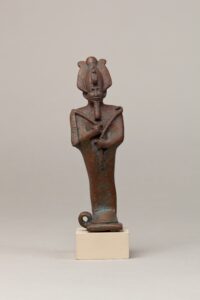
Dismemberment / Fragmentation
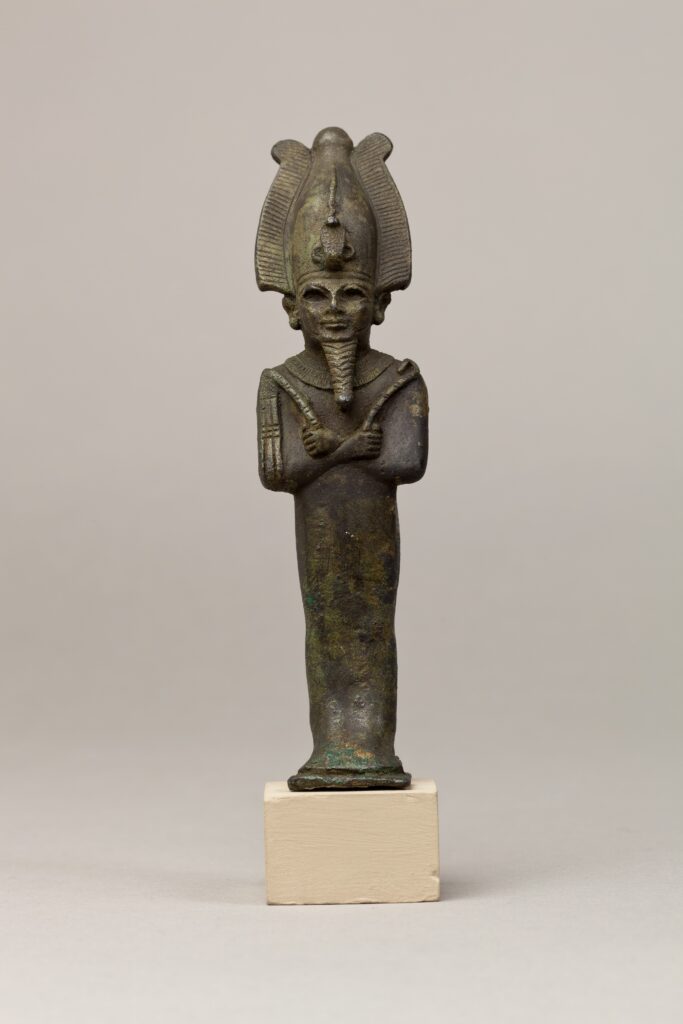
Public references and limits:
Compare early Egyptian funerary material with Plutarch’s later connected account, especially sections 13–20. Do not claim that every version contains the same number of pieces or that narrative reconstruction proves a molecular or psychological mechanism.
Geomytha treats dismemberment as one of the clearest symbolic images of consciousness losing its center in multiplicity.
It gives a recurring mythic image for fragmentation: what was experienced as whole becomes distributed through a field of separate forms.
Am is interrupted by I and dispersed toward multiple This-forms; later return often involves gathering, remembering, or re-relation.
Analysis and division of labor can increase understanding or cooperation. Fragmentation is pathological only when parts lose relation and are treated as independent wholes. Do not equate every separation with the Osirian dismemberment.
This entry’s name and mechanism belong to GEOMYTHA’s framework. The linked primary works are independent comparison witnesses, not evidence that the GEOMYTHA term originated in their cultures. Specific comparison references: Pyramid Texts — earliest surviving Egyptian funerary corpus; Plutarch, On Isis and Osiris — ancient narrative and commentary. The original work, a later translation, a catalogue record and an extant manuscript are different kinds of evidence. The oldest surviving witnesses of the comparison traditions are not established by this entry.
This is a comparative Geomytha reading and should not be presented as the exclusive meaning of dismemberment myths in any tradition.
Do not equate every division, specialization, multiplicity, or literal injury with spiritual fragmentation.
Where this mechanism appears
Explore the essays and Index entries linked to this mechanism.
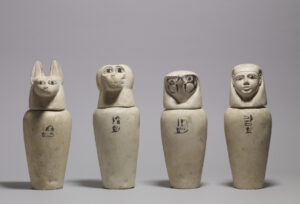 Why the Organs Were Not Thrown AwayAncient Egyptian mummification separated the liver, lungs, stomach, and intestines—but the parts were preserved, guarded, and kept inside a larger funerary order. Division did…
 Radio Heart, Radio HeadA radio does not become the station it receives. Personality can work the same way: tuning becomes identity when the selected signal is mistaken…
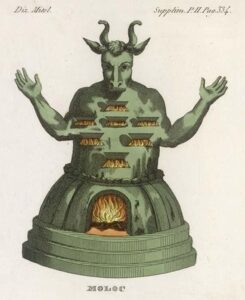 Algorithms Are Hungry GodsThe feed does not look like an altar. That is why it works. It looks like boredom. It looks like rest. It looks like…
 The Center That Does Not MoveMovement appears to be the opposite of stillness. Yet without stillness, movement becomes impossible. A wheel turns because something does not. The axle remains.…Four Directions and the Cross of ConsciousnessFour appears everywhere. Four seasons. Four directions. Four rivers flowing from Eden. Four elements. Four corners of the earth. Four winds. Four creatures surrounding…
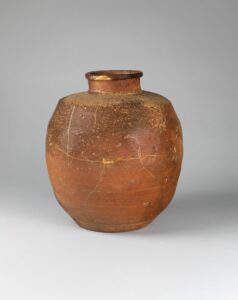 The Crack Is MercyMost people want the crack repaired. Not honored. Not studied. Not listened to. Repaired. We want the broken place sealed as quickly as possible.…
 The Last Resort: Why Aldous Huxley Built Two Hotel CaliforniasThere are few writers in the modern world who attempted a more ambitious experiment than Aldous Huxley. Most authors spend their careers describing a…
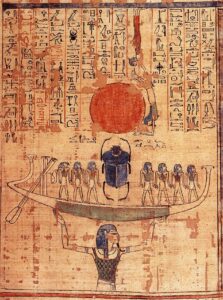 The Egyptian EightfoldEgypt gives Geomytha its first temple. Not merely because Egypt has gods, tombs, pyramids, sacred animals, underworld books, and kings with crowns that look…
Showing 8 most recent linked essays.
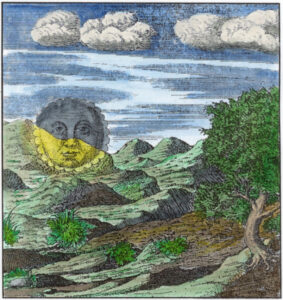 Nigredo — Alchemical BlackeningNigredo (“blackness” or blackening) is a recognized stage in historical alchemical colour sequences. Scholarship on late Renaissance chymistry lists nigredo alongside albedo, citrinitas, and rubedo, while manuscript traditions such as the Ripley Scrolls depict…
 The Hitchhiker’s Guide to the GalaxyThe Hitchhiker’s Guide to the Galaxy is a 1979 comic science-fiction novel by Douglas Adams. Its protagonist Arthur Dent survives the destruction of Earth and travels through space with Ford Prefect, encountering Zaphod Beeblebrox,…
Follow the mechanism
Moves into
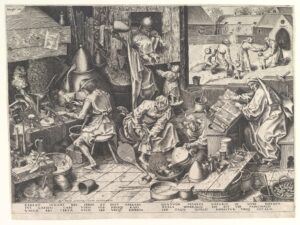 Solve et Coagula — Dissolve and Re-formSolve et coagula names the rhythm of dissolving false fixation and allowing a more transparent form to re-form.
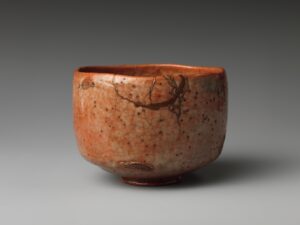 World-RepairWorld-Repair names the work of regathering relation, pattern, and presence inside a field that has been fractured rather than simply escaping the field.