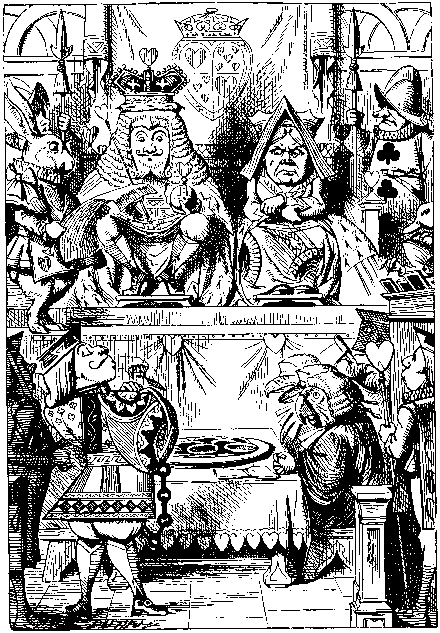
Every kingdom eventually discovers an enemy.
The enemy may appear as a rival.
A monster.
A foreign nation.
A political opponent.
A dangerous idea.
A traitor.
A brother.
The forms vary.
The pattern remains.
At first the enemy appears simple.
The enemy is the thing standing outside the wall.
The threat beyond the border.
The obstacle preventing peace.
The force opposing the kingdom.
Yet myths repeatedly suggest something more complicated.
The enemy often becomes strangely fascinating.
Obsessive.
Unavoidable.
The conflict grows larger than the original disagreement.
The enemy begins occupying the imagination.
The enemy becomes part of the identityThis — IdentityThis names the formed identity: the body, role, image, wound, belief, or story claimed as what the self is.Read full entry →.
At some point a strange question emerges.
Why does the enemy matter so much?
This series previously explored the movement from:
I am thisThe False-Self Sentence — I Am ThisThe false-self sentence forms when claim joins reflection to a fixed object of identity: I am this.Read full entry →.
To:
These are mineThese — AccumulationThese names accumulation: possessions, titles, achievements, beliefs, communities, and other extensions gathered around identity.Read full entry →.
To:
Those are notThose — ProjectionThose names projection: enemies, outsiders, competitors, threats, and disowned qualities placed beyond the identity boundary.Read full entry →.
The enemy is born at the border.
The moment an inside appears, an outside appears.
The moment a kingdom forms, something exists beyond the kingdom.
The enemy helps define where the kingdom ends.
Yet defining a boundary is only the beginning.
Soon the enemy becomes more than an outsider.
The enemy becomes a mirror.
The story of Cain and Abel may be the first example.
The conflict is not between strangers.
It is between brothers.
The rival is uncomfortably close.
The enemy resembles the self.
The boundary exists.
The similarity remains.
The same pattern appears throughout mythology and literature.
Captain Ahab hunts Moby Dick.
At first the whale appears to be an adversary.
A force of nature.
A creature responsible for injury and loss.
Yet as the story unfolds, something changes.
The whale grows larger than a whale.
It becomes obsession.
Purpose.
Identity.
Ahab’s life narrows until hunter and hunted seem bound together.
The whale becomes a mirror reflecting the fixation of the man pursuing it.
The enemy absorbs the energy of the self.
The same dynamic appears in modern mythology.
Batman and the Joker oppose one another completely.
Order and chaos.
Control and unpredictability.
Discipline and impulse.
Yet each becomes increasingly defined by the existence of the other.
Remove one and the other changes.
The conflict becomes a relationship.
The enemy helps stabilize the identity of the hero.
Peter Pan and Captain Hook reveal another variation.
One embodies youth.
The other age.
One embodies freedom.
The other structure.
One embodies possibility.
The other limitation.
Each carries qualities rejected by the other.
The opposition becomes meaningful because both sides contain elements of the same larger story.
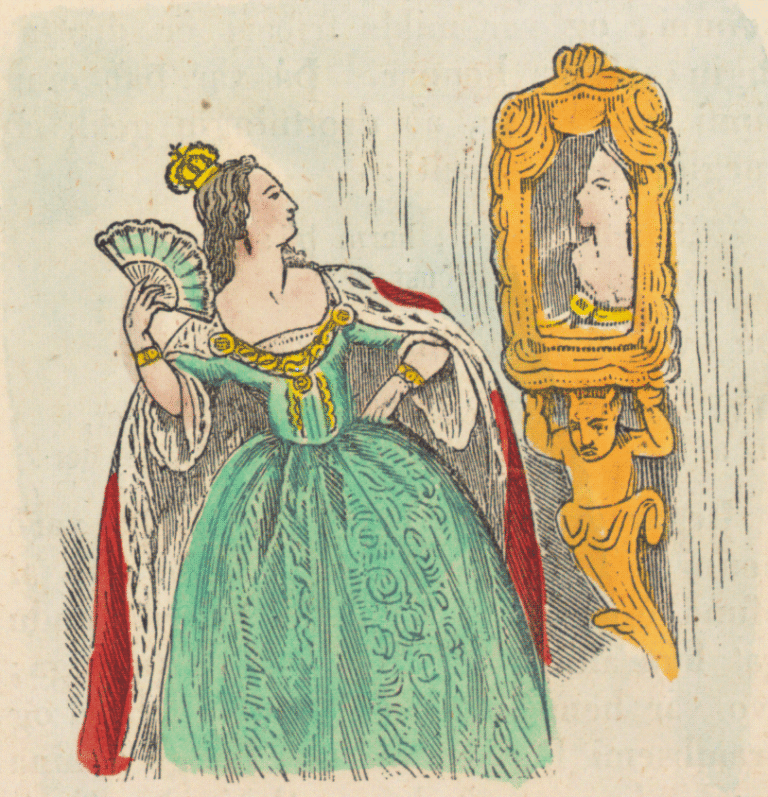
The same pattern appears in Snow WhiteSnow White — Fairy Tale / Film TraditionThe Snow White tradition includes the Queen consulting a magic mirror that ranks beauty and identifies Snow White as her rival; the tale also includes the poisoned apple motif in later episodes.Read full entry →.
The mirror is present from the beginning.
The Queen’s obsession is not truly Snow White.
It is comparison.
The young princess becomes the visible form of something the Queen cannot reconcile within herself.
The conflict appears external.
The sourceIs — SourceIs names unclaimed being: awareness before possession, distinction, or identity.Read full entry → runs deeper.
This does not mean enemies are imaginary.
It does not mean all conflict is projection.
Real disagreements exist.
Real threats exist.
Real dangers exist.
The point is subtler.
The emotional intensity surrounding an enemy often reveals more than the enemy alone.
Something within the kingdom has become attached to the conflict.
Something within the identity has become invested in the opposition.
This is why enemies so often survive defeat.
One rival disappears.
Another immediately appears.
One monster is slain.
Another emerges.
One ideology collapses.
A replacement is quickly found.
The structure persists even as the names change.
The enemy performs a function.
The enemy provides contrast.
The enemy provides focus.
The enemy provides certainty.
Without an enemy, the kingdom is often forced to confront itself.
This is where the idea of the shadow becomes useful.
Traits rejected within a person often reappear in exaggerated form outside the person.
Traits rejected within a group often reappear in exaggerated form outside the group.
The enemy becomes a carrier.
A messenger.
A delivery system.
The conflict reveals something the kingdom cannot easily examine on its own.
The enemy becomes a mirror.
Not because the enemy is identical to the self.
Not because all differences disappear.
Because the opposition reveals.
The mirror does not create the image.
The mirror makes the image visible.
The same principle operates here.
The enemy may be real.
The disagreement may be real.
The threat may be real.
Yet the intensity of the reaction often points toward something additional.
Something hidden.
Something unexamined.
Something waiting to be recognized.
This is why the enemy never remains merely an enemy.
The enemy becomes a symbol.
A vessel.
A reflectionAm — ReflectionAm names reflected presence: awareness embodied or mirrored without yet becoming ownership.Read full entry →.
A shadow.
A mirror.
The returnReturn — RemembranceReturn names remembrance and release: the loosening of possession so reflection can become transparent to source again.Read full entry → begins when this possibility becomes visible.
Not because all conflicts vanish.
Not because all enemies become friends.
Not because all differences dissolve.
The return begins because the kingdom no longer mistakes the entire conflict for something wholly external.
The mirror has appeared.
The image can be seen.
The enemy remains.
Yet something changes.
The opposition reveals.
The shadow speaks.
The kingdom learns something about itself.
And for the first time, the wall separating self and enemy becomes a place of recognition rather than merely a line of battle.