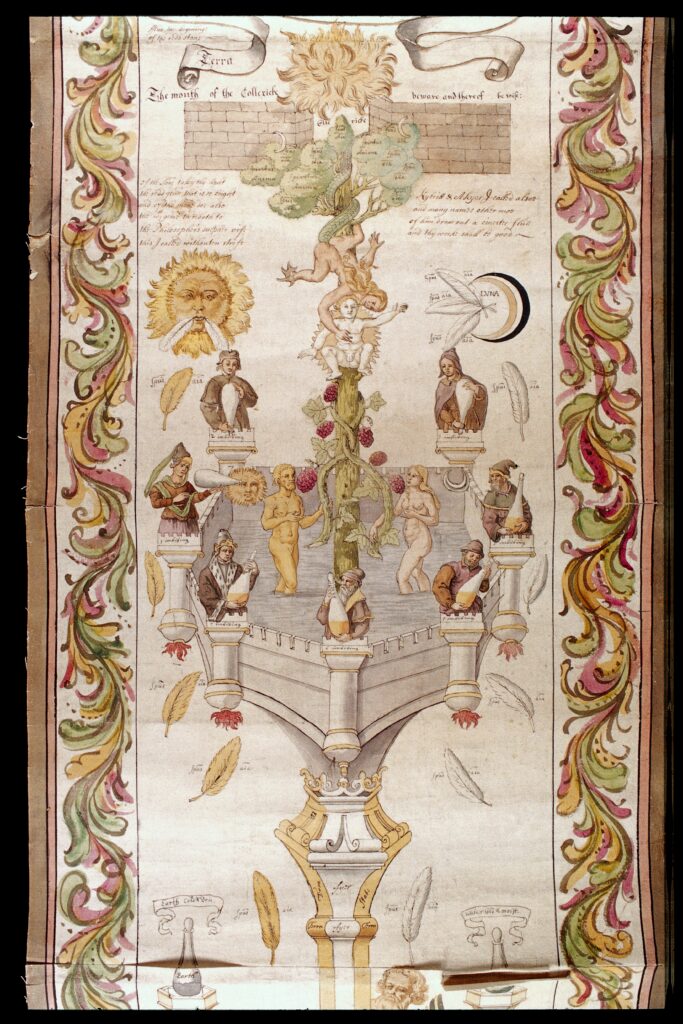
Water takes the shape of its container. Salt keeps its shape. What happens when we start treating ourselves the same way?
Be Water, My Friend
In a 1971 television interview, Bruce Lee explained his philosophy with water. Put water in a cup, and it takes the cup's shape. Put it in a teapot, and it takes that shape instead. Water can adapt. It can also crash.
Lee's point was simple: adapt without becoming rigid.
GEOMYTHA takes that idea one step further. What happens when the mind stops flowing and treats one shape as its permanent identity?
That is where salt enters the picture.
Water represents presence. Salt represents the identity we build around it. We need both. But nobody should have to remain a teapot for life.
The Vortex and the Triangle
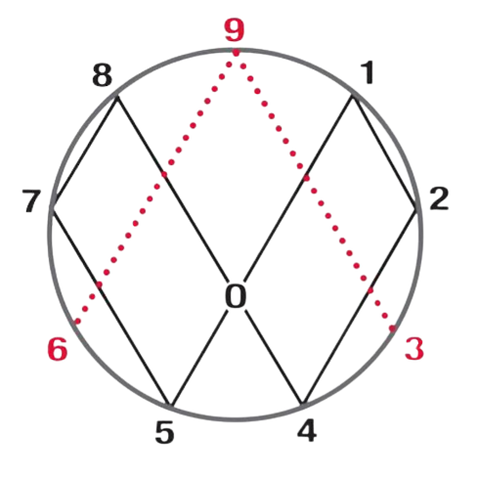
The Vortex Math Diagram contains two distinct patterns.
The vortex pattern: 1 → 2 → 4 → 8 → 7 → 5 → 1.
Follow the numbers around the circle. The path crosses between points and returns to its starting place. This repeating route is often drawn as a vortex-like pattern.
You can make the sequence by doubling a number and adding its digits until one digit remains. Double 8 to get 16. Add 1 and 6 to get 7.
The triangle: 3 → 6 → 9.
Connect these three points on the circle. They form a triangle.
GEOMYTHA reads the vortex as movement, reflection, and return. It reads the triangle as projection, prediction, and control.
The vortex moves. The triangle tries to organize that movement. If the triangle gets too ambitious, it may start issuing instructions to the water.
These are symbolic readings. The underlying numbers come from base-ten arithmetic. They do not prove free energy, hidden dimensions, or a physical law of consciousness.
Four Steps from Water to Salt
GEOMYTHA uses four figures from Egyptian mythology to describe the movement. These are symbolic comparisons, not claims about the gods' original meanings.
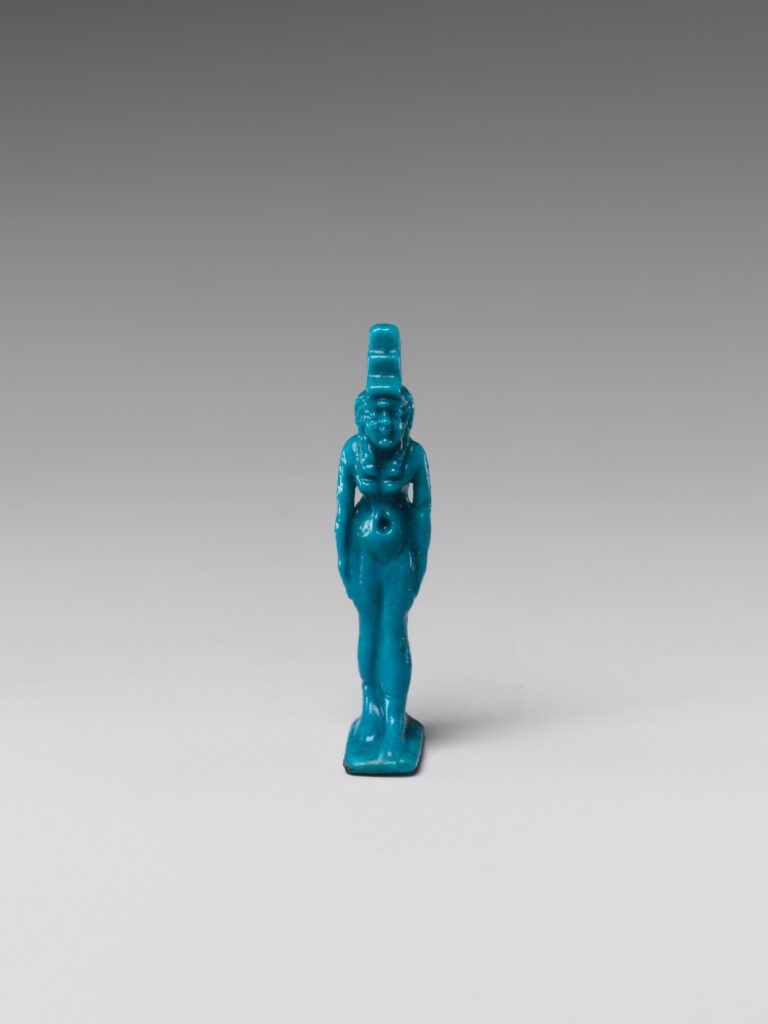
Isis — Is. Presence comes first. You experience the world before you explain it. This is water before it enters a container.
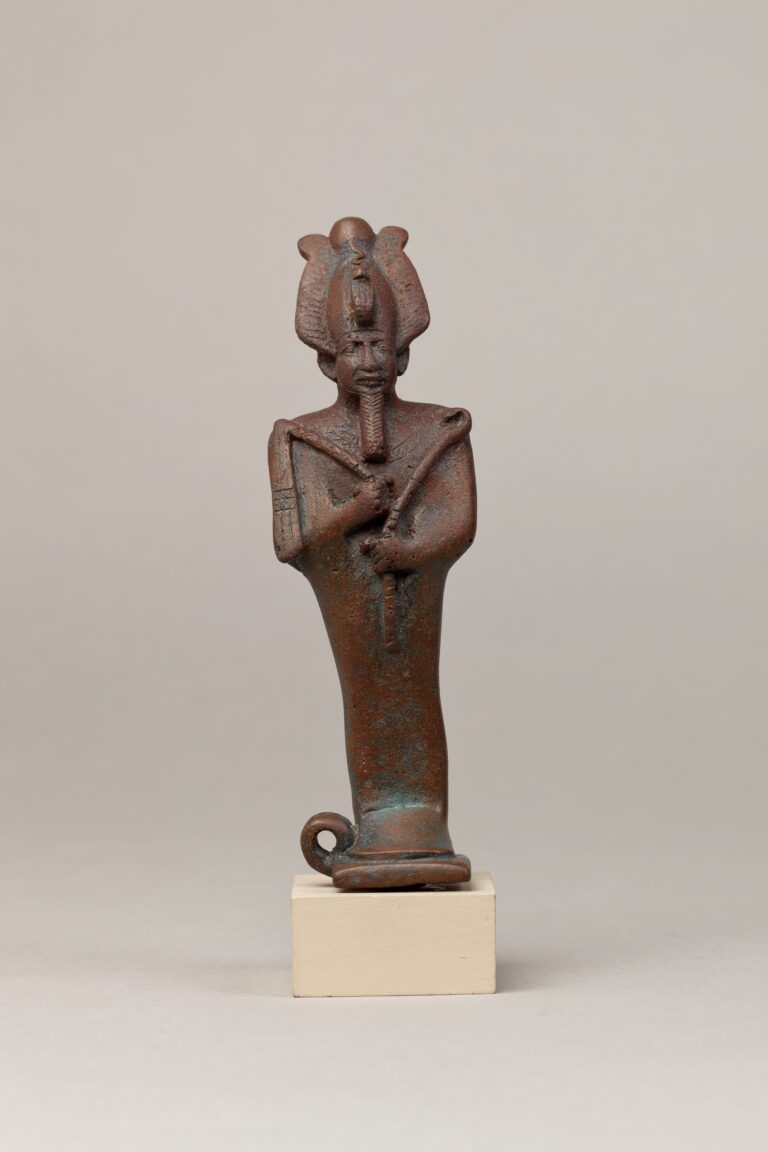
Osiris — Am. Presence reflects. You notice what happens. You feel its effect. An experience becomes available for thought.
Set — I. The claimant enters. A thought says, “This is mine.” Then it goes further: “This proves something about me.”
Horus the Son — This. The claim takes a stable form. You become the expert, the failure, the winner, or the one who always knows better. Now you have a role to defend.
That is salt. It has a shape. You can name it. Other people can recognize it.
Sometimes you become so attached to that shape that you forget you can change. Horus the Elder is a distinct figure in this framework, associated with the watcher rather than the claimed identity.
Why We Need Salt
Identity is useful. You need a name to make an appointment. You need records to get paid. You need a plan to finish a project.
Try telling the bank that you are pure, unclaimed awareness. They will still ask for identification.
The problem is not identity itself. The problem is treating one identity as everything you are.
Water Mode: Experience Before the Verdict
Imagine a quiet morning. You drink coffee. A bird calls outside. Light enters the room.
For a moment, nothing needs a score. You do not have to decide whether the morning proves you are successful.
You can simply experience it.
GEOMYTHA calls this water mode. Attention moves without turning every event into a statement about the self.
Salt Mode: Everything Becomes a Report
Now your phone lights up. Someone disagrees with you.
Your mind gets to work. Why did they say that? What should you say next?
Soon, you are rehearsing an argument that has not happened. You may even win it. Unfortunately, the other person missed the imaginary hearing.
The experience becomes a story. The story becomes a position. The position needs defending.
Planning helps. Reflection helps. But constant self-measurement can turn life into a performance review that never ends.
What the Double-Slit Experiment Does Not Prove
Physics offers an interesting comparison. Quantum systems can show interference under the right physical conditions. Apparatus that records path information can change that pattern.
This is a physical process. It does not show that a human mind creates reality by looking at it.
GEOMYTHA borrows a narrower question: what changes when we stop treating every experience as evidence about who we are?
The comparison is a metaphor, not a scientific explanation of awareness.
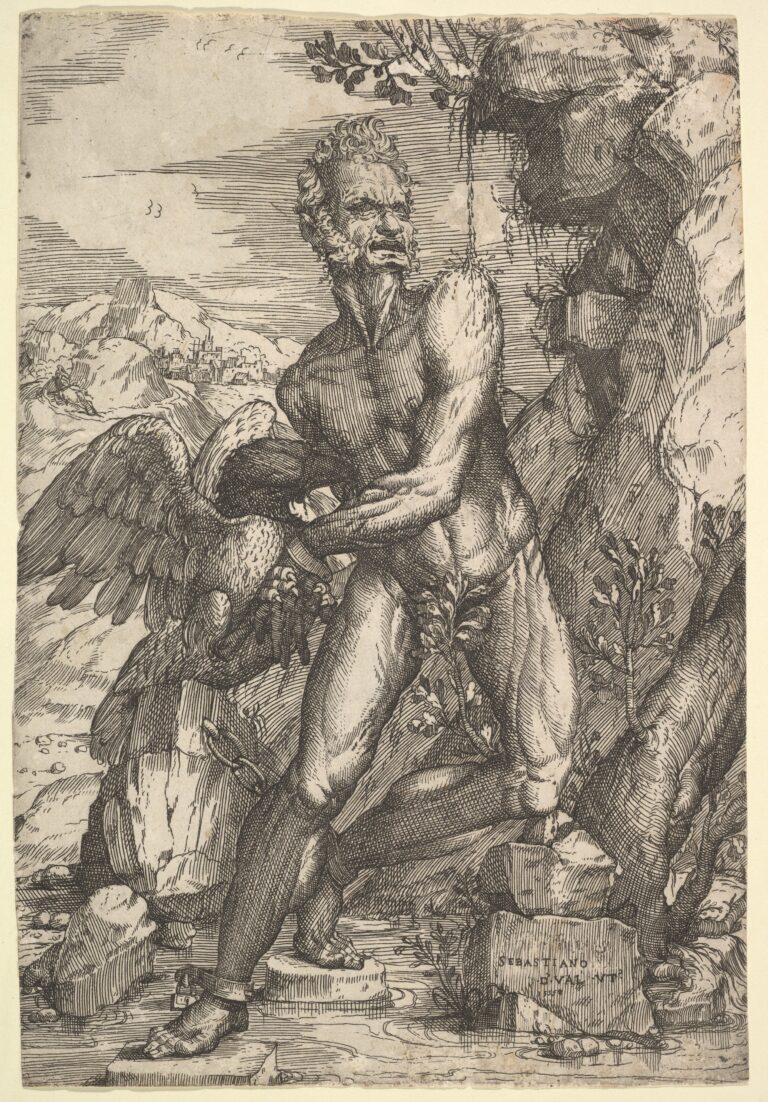
Prometheus Brings the Fire
Greek mythology associates Prometheus with bringing fire to humanity.
Fire helps people cook, build, and survive. GEOMYTHA also reads it as a symbol of forethought.
We imagine the future. We prepare for danger. We make plans. These abilities matter.
But planning can become a demanding master. You plan today, tomorrow, and the next five years. Soon, the calendar has a calendar.
The problem is not fire. It is forgetting when to let the fire cool.
Dune: When Prediction Becomes Power
Frank Herbert's Dune gives us another example. The spice melange is tied to prescience, navigation, power, and dependence.
An empire organizes itself around this valuable substance. GEOMYTHA reads spice as a symbol of concentrated forethought.
The more power people gain from prediction, the more they depend on it. The tool starts giving orders.
This is a literary comparison. It does not claim that Herbert intended GEOMYTHA's system.
Why the World Likes Salt
Stable identities are easy to organize. Employers need job titles. Governments need records. Websites need accounts.
Platforms can measure what you click, buy, and share. A fixed pattern is easier to predict.
That does not mean every institution is secretly trying to steal your awareness. It means systems work with categories.
Your job title describes your work. It does not describe everything you are. Your bank balance describes your money, not your worth.
Salt is useful. But you are not required to become the label on the container.
How to Let the Salt Dissolve
Notice before you name. Experience what is happening before deciding what it means about you.
Give planning a stopping point. Make the plan. Check what matters. Then return to the task in front of you.
Question the verdict. One mistake is an event. It does not have to become your biography.
Reduce unnecessary measurements. Not every moment needs a rating, comparison, or report.
Make room for rest. Your identity does not need constant maintenance.
These are attention practices, not medical treatments.
The Point of the Diagram
The Vortex Math Diagram does not need to prove a new law of physics to be useful.
It can remind us how presence becomes reflection, reflection becomes a claim, and the claim becomes an identity.
We can also move back. Question the identity. Release the claim. Notice the reflection. Return to the experience.
The role remains available when we need it. It simply stops running the whole show.
Use the salt. Remember the water.
Sources and Image Credits
Bruce Lee's water analogy comes from his 1971 interview with Pierre Berton. No interview still is reproduced here pending image-rights clearance.
Vortex Math Diagram — GEOMYTHA reference. Its psychological meaning here is interpretation, not established physics.
Prometheus — Fire Bringer — GEOMYTHA reference. The forethought comparison is symbolic.
Frank Herbert, Dune (1965). The spice discussion is a literary comparison.
The double-slit analogy does not establish that human attention causes quantum measurement outcomes.
Featured image: Ripley Scroll, Wellcome MS.692, Wellcome Collection, CC BY 4.0. Vortex diagram (media 1333): creator and reuse-rights documentation remain unverified.