Author: D. Cyprian

  • The Rod and the World

    The Rod and the World

    When most people look at ancient and medieval images, they see religion.

    When Geomytha looks at them, it first asks a simpler question:

    What is the hand doing?

    Again and again, kings, emperors, and even Christ are shown holding two objects.

    A rod.

    And a world.

    Those objects are so familiar that they have become invisible. Yet they preserve one of the oldest symbolic dramas in history.

    Not the drama of good versus evil.

    The drama of claim.

    The Rod

    Long before it became a royal ornament, the scepter was a staff.

    A branch.

    A shepherd’s rod.

    Something used to direct.

    To point.

    To separate.

    To command.

    The rod establishes order by division.

    It says:

    “Go here.”

    “Not there.”

    “This belongs.”

    “That does not.”

    In Geomytha, this belongs strongly to the function of I—the interruption, the claimant, the power that directs reflection into ownership.

    The rod is the extension of the hand.

    And the hand is the extension of the claimant.

    The king does not merely exist.

    He rules.

    He distinguishes.

    He decides.

    The rod says:

    “I.”

    Caesar and the Globe

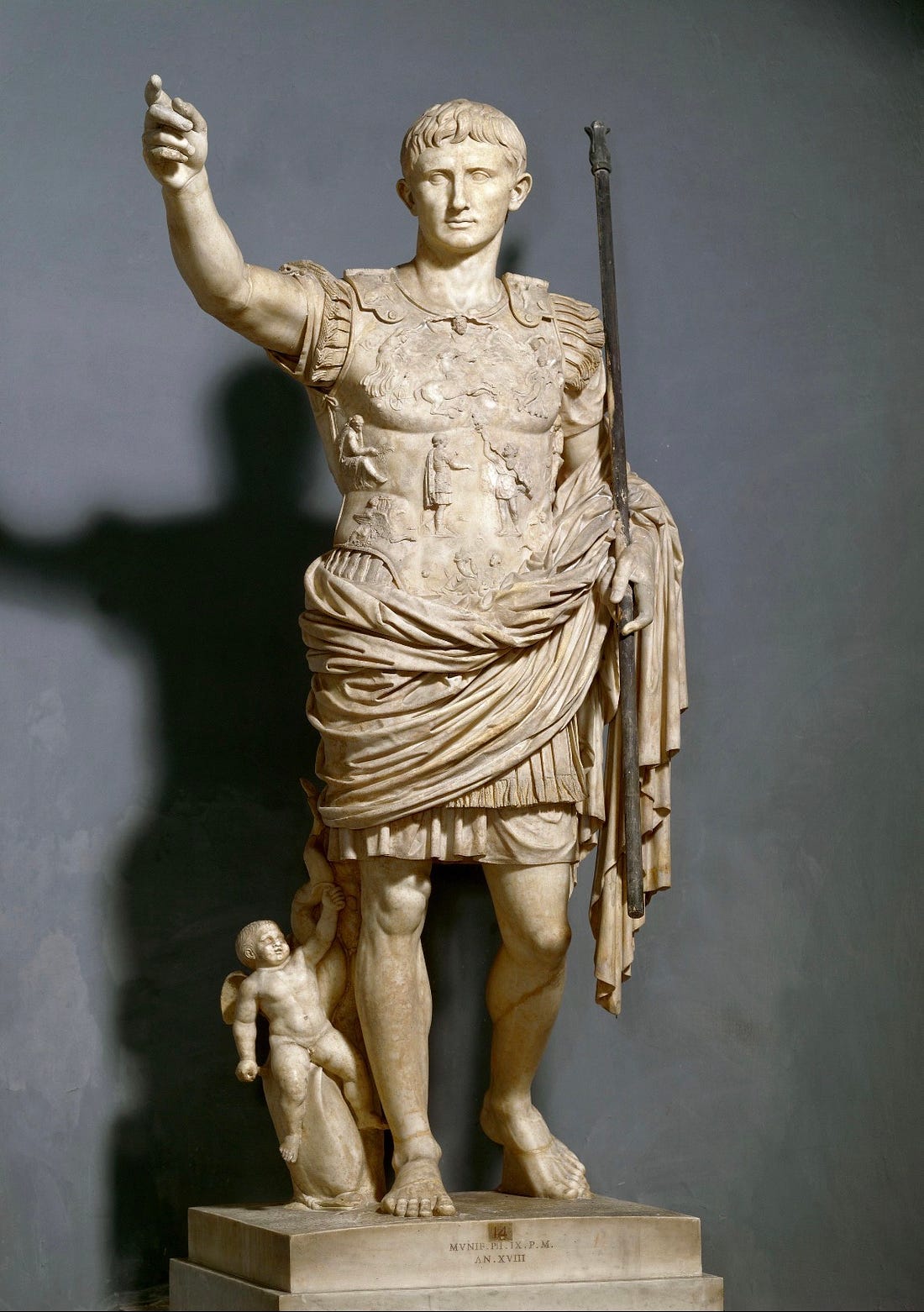
    Roman emperors frequently appear holding a sphere, the globus.

    The meaning is obvious enough.

    The globe represents the inhabited world.

    The empire.

    The whole field.

    But notice the sequence.

    First comes the rod.

    Then comes the world.

    First the claim.

    Then the possession.

    The emperor stands above the sphere because the sphere has become an object.

    Not simply a world.

    His world.

    The movement is simple:

    I.

    This.

    These.

    All This.

    The claimant becomes the ruler.

    The ruler gathers possessions.

    The possessions become empire.

    Eventually the whole world becomes something held in the hand.

    Caesar’s image proclaims:

    “All this is mine.”

    The Christian Transformation

    Christianity inherited Rome.

    And with Rome, it inherited Rome’s symbols.

    The sphere remained.

    But something new appeared above it.

    The cross.

    The globus cruciger.

    Modern eyes often assume the cross opposes empire.

    But the symbol itself says something stranger.

    The world remains beneath the hand.

    Only now the claim has become universal.

    The emperor no longer rules merely by military power.

    He rules by sacred authority.

    The kingdom has become cosmic.

    The old Roman globe has not disappeared.

    It has been baptized.

    The cross planted above the orb does not abolish possession.

    It sanctifies it.

    The symbol says:

    “All this belongs to Christ.”

    Or politically:

    “All this belongs to Christ’s representative.”

    The local claim has become universal claim.

    Caesar has become sacred.

    The Fourfold Shape

    The cross itself divides.

    Up and down.

    Left and right.

    Center and periphery.

    Like every crossroads, it establishes orientation.

    It gives structure.

    It creates direction.

    It creates a center.

    This is why the cross became such a powerful imperial sign.

    Not because it removed the principle of claim.

    Because it perfected it.

    The claimant now stood at the center of the world.

    The empire no longer merely ruled bodies.

    It ruled history itself.

    Caesar and Christ

    This is why Geomytha does not simply oppose Caesar and Christ.

    The images are too similar.

    Both hold the world.

    Both establish a center.

    Both stand above the sphere.

    The difference is scale.

    Caesar’s claim is imperial.

    Christ’s claim becomes cosmic.

    One says:

    “These lands are mine.”

    The other says:

    “All this is mine.”

    The movement is the same.

    Only enlarged.

    The Problem of Possession

    None of this means the symbols are evil.

    The rod is necessary.

    Without distinction there is chaos.

    Without structure there is no world.

    Without a center, nothing can be organized.

    But every center carries danger.

    The hand easily forgets that the world existed before it grasped it.

    The ruler mistakes administration for creation.

    The claimant mistakes ownership for reality.

    And eventually the symbol becomes heavier than the life it was meant to serve.

    Empires collapse.

    Crowns pass.

    Names fade.

    The rod falls from the hand.

    Even the world itself slips away.

    Yet something remains before the claim.

    Something remains before the hand closes.

    Something remains before “mine.”

    That silence is older than Caesar.

    Older than Rome.

    Older than the cross upon the globe.

    The symbols are ancient.

    But the world was never truly theirs.

    And neither are we.

  • Those Are Not

    Those Are Not

    Every kingdom has a border.

    Every tribe has an outsider.

    Every religion has a heretic.

    Every nation has a foreigner.

    Every hero has a villain.

    The pattern is so common that it appears natural. Most people assume enemies arise because differences exist. One group believes one thing. Another group believes something else. Conflict follows.

    Yet beneath the visible differences lies a deeper question.

    Why does identity so consistently create an outside?

    The answer may begin with a sentence.

    First comes:

    I am this.

    Then comes:

    These are mine.

    Sooner or later a third sentence appears.

    Those are not.

    The outsider is born.

    The movement is ancient.

    A child points at a toy and says, “Mine.”

    Moments later another distinction emerges.

    Not mine.

    The first border appears.

    Identity has begun drawing a map.

    At first the map seems harmless.

    This toy.

    That toy.

    This room.

    That room.

    This family.

    That family.

    Yet the same structure scales upward through every level of human life.

    The self becomes a tribe.

    The tribe becomes a nation.

    The nation becomes an empire.

    Each expansion requires a boundary.

    Each boundary creates an outside.

    Ancient Egypt understood this dynamic well.

    Throughout Egyptian art, pharaohs are frequently shown standing above defeated enemies. Foreign peoples appear beneath royal feet. Captives kneel before kings. The symbolic message is not merely military victory. It is the establishment of order through distinction.

    The kingdom knows itself because something exists beyond the kingdom.

    Egypt had a name for this collection of outsiders.

    The Nine Bows.

    The Nine Bows represented the enemies of Egypt, the peoples beyond the ordered world of the Nile. The exact groups changed across history, but the symbolic function remained.

    Order required an outside.

    The kingdom required an other.

    The same pattern appears throughout myth.

    Cain and Abel begin as brothers.

    Before there are nations, religions, or armies, there is a division.

    Two offerings.

    Two identities.

    Two stories.

    One becomes favored.

    The other becomes threatened.

    The first enemy emerges.

    The conflict is not really about sacrifice.

    It is about identity.

    Whose story matters?

    Whose place is secure?

    Who belongs?

    Who does not?

    The pattern repeats again and again.

    The Greeks had barbarians.

    The Romans had barbarians.

    The Chinese had barbarians.

    Civilizations often define themselves by what they are not.

    The outsider becomes part of the identity of the insider.

    Without the border, the self begins to blur.

    This is why enemies are so useful.

    They simplify identity.

    A hero becomes easier to understand when a villain appears.

    A nation becomes easier to define when a rival exists.

    A religion becomes easier to defend when a heretic emerges.

    The enemy provides contrast.

    The enemy sharpens the boundary.

    The enemy stabilizes the story.

    This is one reason myths are filled with monsters.

    Dragons.

    Giants.

    Demons.

    Serpents.

    Beasts beyond the wall.

    Whether it is Grendel outside the hall, the dragon outside the village, or the monster beyond civilization, the symbolic function remains similar.

    The creature beyond the border helps define what exists within it.

    The same mechanism operates in modern life.

    Politics offers an obvious example.

    People often imagine they are defending policies.

    Yet much of political conflict concerns identity.

    Once someone says:

    These are my beliefs.

    The next sentence often appears automatically.

    Those people are the problem.

    The details change.

    The structure remains.

    Religion can operate the same way.

    Nationality can operate the same way.

    Sports can operate the same way.

    Even personal relationships can operate the same way.

    The identity becomes stronger when an opposing identity appears.

    This is where the idea of the shadow becomes useful.

    The qualities rejected within ourselves often appear outside ourselves. Traits we refuse to acknowledge internally become easier to recognize in enemies, rivals, opponents, and strangers.

    The enemy becomes a mirror.

    The border becomes a projection screen.

    The conflict appears external while partly originating within.

    This does not mean every enemy is imaginary.

    Some threats are real.

    Some dangers are real.

    Some conflicts are unavoidable.

    The point is not that all enemies are inventions.

    The point is that identity often depends upon enemies for stability.

    A kingdom with no outside begins asking uncomfortable questions about itself.

    A tribe with no rival begins examining its own contradictions.

    A story without a villain becomes more difficult to maintain.

    The enemy provides structure.

    The enemy provides certainty.

    The enemy provides direction.

    This is why entire systems can become dependent upon opposition.

    The rival becomes necessary.

    The conflict becomes self-sustaining.

    The border becomes sacred.

    Yet something strange happens when the mechanism becomes visible.

    The enemy does not necessarily disappear.

    Differences do not vanish.

    Boundaries do not cease to exist.

    What changes is the spell.

    The outsider is no longer carrying the entire burden of identity.

    The enemy is no longer responsible for defining the self.

    The border softens.

    The projection weakens.

    The kingdom begins seeing the purpose the enemy once served.

    The same movement that produced:

    These are mine

    also produced:

    Those are not.

    The second sentence is not separate from the first.

    It is the shadow cast by it.

    The release begins when that relationship is noticed.

    Not because all distinctions vanish.

    Not because all conflicts end.

    But because the need for an enemy begins to loosen.

    And when that happens, the kingdom discovers something surprising.

    Its deepest foundation was never the enemy standing outside the wall.

    It was the identity standing within it.

  • Reincarnation Is Endless Identity

    Reincarnation Is Endless Identity

    You can leave the room and keep the hotel.

    That is the part the ego does not want to hear.

    It wants escape to mean relocation. A new job, a new partner, a new city, a new doctrine, a new screen name, a new body, a new life. It wants the door to be somewhere outside itself, waiting at the end of a hallway, behind the right teaching, the right romance, the right breakthrough, the right upgrade.

    But the room is not the deepest trap.

    The trap is the one who keeps renting rooms.

    A person leaves the job but keeps the anxious worker. Leaves the relationship but keeps the abandoned self. Leaves the religion but keeps the frightened believer. Leaves the screen but keeps the hunger to be seen. Leaves one identity and immediately begins furnishing another.

    That is reincarnation in miniature.

    Not another lifetime yet.

    Another costume. Another loop. Another body for the same old claim.

    Reincarnation begins wherever identity survives the exit.

    The Hotel Is What Comes With You

    Hotel California remains one of the cleanest modern myths of reincarnation because it understands the difference between checking out and leaving.

    Checking out is administrative.

    Leaving is ontological.

    You can check out of a room. You can close a chapter. You can end a relationship, quit a job, renounce a belief, delete an account, change your name, move across the country, or declare yourself reborn.

    But if the same claimant remains underneath, the hotel travels.

    The hotel is not where you are.

    The hotel is what keeps coming with you.

    That is why the line lands so deeply:

    You can check out any time you like, but you can never leave.

    The song is not merely about indulgence, addiction, fame, luxury, or moral decay, though it can hold all of those. Its deeper power is structural. The guest is trapped not because the room is locked, but because the identity that entered the room still believes it is the guest.

    The hotel survives because the guest keeps believing he is the guest.

    Reincarnation Is Not Just Another Body

    Reincarnation is usually imagined as the soul returning in another physical body.

    Geomytha does not need to deny that possibility to make a sharper point.

    A body is anything identity can use to continue.

    A wound can take another relationship.

    A fear can take another doctrine.

    A role can take another workplace.

    A desire can take another project.

    A profile can take another post.

    A grievance can take another politics.

    A spiritual insight can take another teacher, another practice, another brand of “awakening.”

    The false self does not require flesh alone. It only requires a form it can inhabit and call itself real.

    That form may be emotional, digital, ideological, religious, artistic, romantic, professional, or technological. It may be a face, a title, a diagnosis, a trauma story, a worldview, a mission, a platform, a family role, or a private fantasy rehearsed every night before sleep.

    If identity can say “this is me,” it has found a body.

    The Sentence That Reincarnates

    The loop is not born from experience alone.

    Experience happens.

    A feeling rises. A body ages. A wound opens. A gift appears. A relationship begins. A relationship ends. A belief forms. A belief breaks. A vision comes. A failure arrives. A success crowns the day for a moment.

    None of that is reincarnation yet.

    The loop begins when the claimant enters and says:

    I am this.

    I am this wound. I am this role. I am this insight. I am this exile. I am this awakening. I am this body. I am this survivor. I am this chosen one. I am this failure. I am this story.

    That sentence is the seed of the return.

    It gives the passing thing a center. It gives the feeling a tenant. It gives the role a soul-mask. It gives the wound a crown. It gives the room a guest who thinks the room is home.

    Reincarnation is the afterlife of “I am this.”

    Every time the sentence is believed, the claimant gets another body.

    Do It Again

    Steely Dan’s “Do It Again” is the wheel without the hotel.

    No gothic luxury. No mirrored corridor. No desert inn glowing with seduction.

    Just the blunt rhythm of return.

    You go back. You do it again. The wheel turns.

    The song’s power is not only that someone repeats bad choices. It is that repetition feels almost automatic, as if the self has mistaken its own pattern for fate. The gambler returns. The lover returns. The wound returns. The old heat returns. The world rearranges itself just enough to make the same inner movement feel new.

    That is how identity hides repetition.

    It changes the surface.

    The claim remains.

    The wheel does not need the same room.

    It only needs the same “I.”

    When the Door Becomes a Room

    Morrison Hotel adds a quieter version of the same warning.

    If Hotel California is the trap of never leaving, Morrison Hotel is the trap of turning the threshold itself into a place to stay.

    The Doors are already threshold-symbols. They suggest passage, perception, entry, exit, the opening between one field and another. A door should not be a dwelling. A door is not where the traveler is supposed to live. It is where passage happens.

    But a hotel is where the traveler stops.

    That is the danger.

    Once the door becomes a hotel, the threshold becomes another room. Once perception becomes persona, the opening becomes identity. The one who stood at the passage begins decorating the passage, naming it, branding it, mythologizing it, sleeping inside it.

    That is how false awakening works.

    The doorway out becomes another place to be someone.

    The symbol opens, and then the claimant moves in.

    Morrison Hotel is not the main trap like Hotel California. It is one of the trap’s subtler rooms. It shows how even the doorway can become identity if the one standing at the threshold turns the opening into a self.

    The door was meant to open.

    The hotel teaches the door to rent rooms.

    Morrison Hotel is what happens when the door becomes a room.

    The Room That Calls Itself Outside

    False awakening is one of the subtlest rooms.

    A person leaves religion and becomes “the one who escaped religion.”

    Leaves politics and becomes “the one who sees through politics.”

    Leaves ego language and becomes “the one beyond ego.”

    Leaves the old spiritual marketplace and becomes “the one who cannot be fooled.”

    Leaves the matrix and becomes “the one who woke up.”

    The exit becomes another identity.

    That is the trap.

    The false awakening is the room that calls itself outside.

    It feels like liberation because the furniture changed. The old beliefs are gone. The old authorities are mocked. The old self has been renounced. But the claimant remains intact, now wearing the costume of one who has escaped.

    This is why the ego can survive almost any spiritual breakthrough.

    It simply says:

    I am this awakening.

    And the hotel opens another floor.

    The Ouroboros Problem

    The ouroboros is often read as wholeness, eternity, completion, the cycle of life feeding itself.

    That reading is not wrong, but it is incomplete.

    A circle can be a return to source.

    It can also be a prison that has learned to look sacred.

    The serpent eating its tail is a perfect image of self-contained continuation. It consumes itself and renews itself. It appears complete because nothing outside the loop is needed. But that is exactly the danger.

    The ego also wants to be self-contained.

    It wants to feed on its own meanings, its own wounds, its own stories, its own explanations, its own symbolic systems, its own cleverness, its own suffering, its own sacred importance.

    The ouroboros is the self applauding its own completion while quietly beginning again.

    This is why not every circle is return.

    Some circles are sealed rooms.

    The question is not whether the loop is beautiful.

    The question is whether it opens back into Is.

    Dark City and the Memory-Script

    Dark City gives the reincarnation loop an urban body.

    The city changes. Memories are rearranged. Lives are rewritten. People wake inside roles they did not choose but immediately begin treating as personal reality. The room is not only architectural. It is psychological. Identity is installed through memory, environment, repetition, and suggestion.

    This is a nearly perfect image of the Hotel of This.

    A person does not need to remember who they are if the system can provide a convincing script.

    Here is your room. Here is your name. Here is your pain. Here is your history. Here is your desire. Here is your fear. Now live as though it has always been you.

    That is reincarnation by memory-editing.

    The deeper captivity is not the city alone. It is the self formed from the city’s instructions.

    The room changes because the memory-script changes.

    But the captivity remains until the claimant itself is seen.

    Severance and the Office of Rebirth

    Severance makes the same mechanism brutally literal.

    The elevator descends, and the work-self wakes. The outside life disappears. A role reincarnates inside fluorescent architecture. The “innie” is born again and again into the same office-world, with the same tasks, the same boundaries, the same permissions, the same dependence on a system that defines reality.

    It is reincarnation as workplace.

    Not because a soul enters a new baby, but because a self is repeatedly summoned into a closed identity-field.

    The system does not need the whole person.

    It needs the role.

    That is what makes the image so sharp. Much of ordinary life already works this way. The worker-self wakes at work. The parent-self wakes at home. The litigating-self wakes in conflict. The pleasing-self wakes in romance. The performing-self wakes on social media. The frightened child wakes in adult rooms.

    Each identity appears when the environment calls it.

    Each says:

    I am this.

    Then the loop continues.

    Severance turns reincarnation into office architecture: the self wakes again inside the same role because the system needs the role to keep breathing.

    The Phoenix Problem

    The phoenix looks like liberation.

    It burns. It dies. It rises. It returns in flame.

    The Bennu bird carries the same charge: renewal, resurrection, fiery rebirth, the beautiful promise that death does not end the story.

    But Geomytha has to ask the question that rebirth imagery often avoids:

    What is reborn?

    If the false self burns and source returns, renewal is holy.

    If identity burns only to return in brighter feathers, rebirth is reincarnation.

    That is the Phoenix problem.

    Not every rebirth is return.

    Some rebirths are the same claimant in brighter feathers.

    The ego loves dramatic renewal because it can mistake transformation for surrender. It can change clothes, change language, change mythology, change aesthetics, change tribe, and still remain the one who needs to continue.

    Fire alone does not save.

    The question is whether fire returns the claim to source or gives the claim a more radiant body.

    The Profile as Reincarnation Chamber

    Social media compresses reincarnation into minutes.

    A post creates a body.

    A like feeds it.

    A comment wounds it.

    A reply defends it.

    A share extends it.

    A new post reincarnates it.

    The profile becomes a chamber where identity repeatedly takes form.

    The clever self. The outraged self. The beautiful self. The wounded self. The expert self. The spiritual self. The political self. The misunderstood self. The victorious self. The condemned self.

    Each appears, circulates, dies, and returns.

    But the claim underneath rarely gets weighed because the next body appears too quickly. Before one identity can release, another is offered. Before one mask can crack, the feed gives the claimant a new face.

    The profile lets identity take bodies faster than the soul can weigh them.

    This is why the screen becomes such a powerful reincarnation machine. It does not merely distract the mind. It keeps offering new rooms to the same unfinished guest.

    The Final Hotel

    The posthuman dream is Hotel California with better architecture.

    Mind upload.

    Digital ghosts.

    AI copies.

    Synthetic immortality.

    Optimized bodies.

    Endless extension.

    A better room for the self that refuses to end.

    This dream speaks to real pain. Bodies suffer. Memory fails. People die. Loss is unbearable. Aging is humiliating to the ego. The given human form feels too fragile for the hunger inside it.

    So the machine offers a new promise:

    Continue.

    But continuation is not the same as liberation.

    If the claimant remains, the loop remains. If “I am this” survives, the hotel survives. If the uploaded self is still the self-image demanding persistence, then the prison has not been escaped. It has been renovated.

    The issue is not whether technology can preserve a pattern.

    The issue is whether the pattern should be treated as the self.

    If what continues is the claimant, then immortality is only reincarnation without the honesty of death.

    A better hotel is still a hotel.

    What Actually Leaves?

    The question is not:

    How do I escape the room?

    The question is:

    What is trying to survive?

    If the body dies but the claim remains, the loop remains.

    If the role ends but the identity remains, the loop remains.

    If the religion is left but the claimant remains, the loop remains.

    If the screen is closed but the hunger remains, the loop remains.

    If the old story is rejected but the one who needs a story remains unquestioned, the loop remains.

    The exit is not a door.

    The exit is the end of the claimant.

    That is why return is so difficult. The ego wants a new quest because a quest lets it continue. It wants a higher teaching, a better room, a purer identity, a more interesting awakening. It feels homesick for source and misreads that ache as a command to become something else.

    But the ache to become may be homesickness for Is.

    The quest is the return impulse misread by identity.

    Before You Leave the Room

    Before leaving the room, ask what the room has been doing for the self.

    What identity did this room support?

    What did I become here?

    What wound did this place keep alive?

    What role did this relationship give me?

    What fear did this doctrine protect?

    What performance did this platform reward?

    What am I trying to take with me?

    What would be left if this story ended?

    And most importantly:

    Can I leave the claimant, not just the room?

    This is where the breath becomes practical again.

    Inhale: Am.

    Feel the living body beneath the story. Feel the presence that does not require the room.

    Exhale: Is.

    Let the claim loosen. Let the role empty. Let the room return to being a room.

    Not self.

    Not destiny.

    Not prison.

    Room.

    The Hotel of This

    The hotel is This.

    A room of identity. A furnished self. A place where the claimant sleeps, wakes, complains, desires, escapes, returns, and calls the repetition life.

    Reincarnation is not defeated by finding a better room.

    It ends when the one who keeps saying “I am this” is no longer believed.

    That does not mean the body is hated. It does not mean life is rejected. It does not mean relationship, work, art, grief, desire, and memory are meaningless. It means none of them have to become the tenant.

    The room can be entered.

    The room can be used.

    The room can be loved.

    The room can be cleaned.

    The room can be left.

    But the room is not what you are.

    The door was never hidden.

    The guest was.

    Notice the room.

    Notice the claimant.

    Let the story end before it asks for another body.

  • The Wheel and the Scale

    The Wheel and the Scale

    The same self keeps coming back.

    Different room. Same wound.

    Different argument. Same defense.

    Different relationship. Same ache.

    Different job. Same fear.

    Different screen. Same hunger to be seen.

    A person can leave the scene and still carry the self that made the scene repeat. That is the smaller reincarnation most people live through before they ever ask what happens after death. The pattern does not wait for another lifetime. It comes back every morning in the same thought, the same role, the same craving, the same old injury dressed in new circumstances.

    This is why the wheel matters.

    And this is why the scale matters.

    The wheel shows repetition.

    The scale shows weight.

    The wheel asks:

    Why does this keep returning?

    The scale asks:

    What has this repetition made heavy?

    Together, they reveal the secret mechanics of identity. What is not released becomes weight. What is repeated becomes self. What the self carries long enough begins to feel like essence.

    But repetition is not essence.

    Sometimes repetition is only the afterlife of an unreleased claim.

    The Wheel and the Scale

    The wheel is easy to see once you know where to look.

    Someone leaves one conflict and finds the same conflict somewhere else. Someone escapes one authority and recreates the same inner obedience. Someone leaves a religion but keeps the same fear. Someone leaves a relationship but carries the same abandoned self into the next one. Someone leaves the screen but still wants to be witnessed by an invisible crowd.

    The setting changes.

    The identity survives.

    That is the wheel.

    The scale asks what the wheel has done to the heart.

    A loop is not neutral. Every repetition teaches the heart to carry something. Anger carried long enough becomes a body. Fear carried long enough becomes a world. Shame carried long enough becomes a face. Success carried long enough becomes a crown. Insight carried long enough becomes spiritual vanity.

    The wheel shows the loop.

    The scale shows the cost.

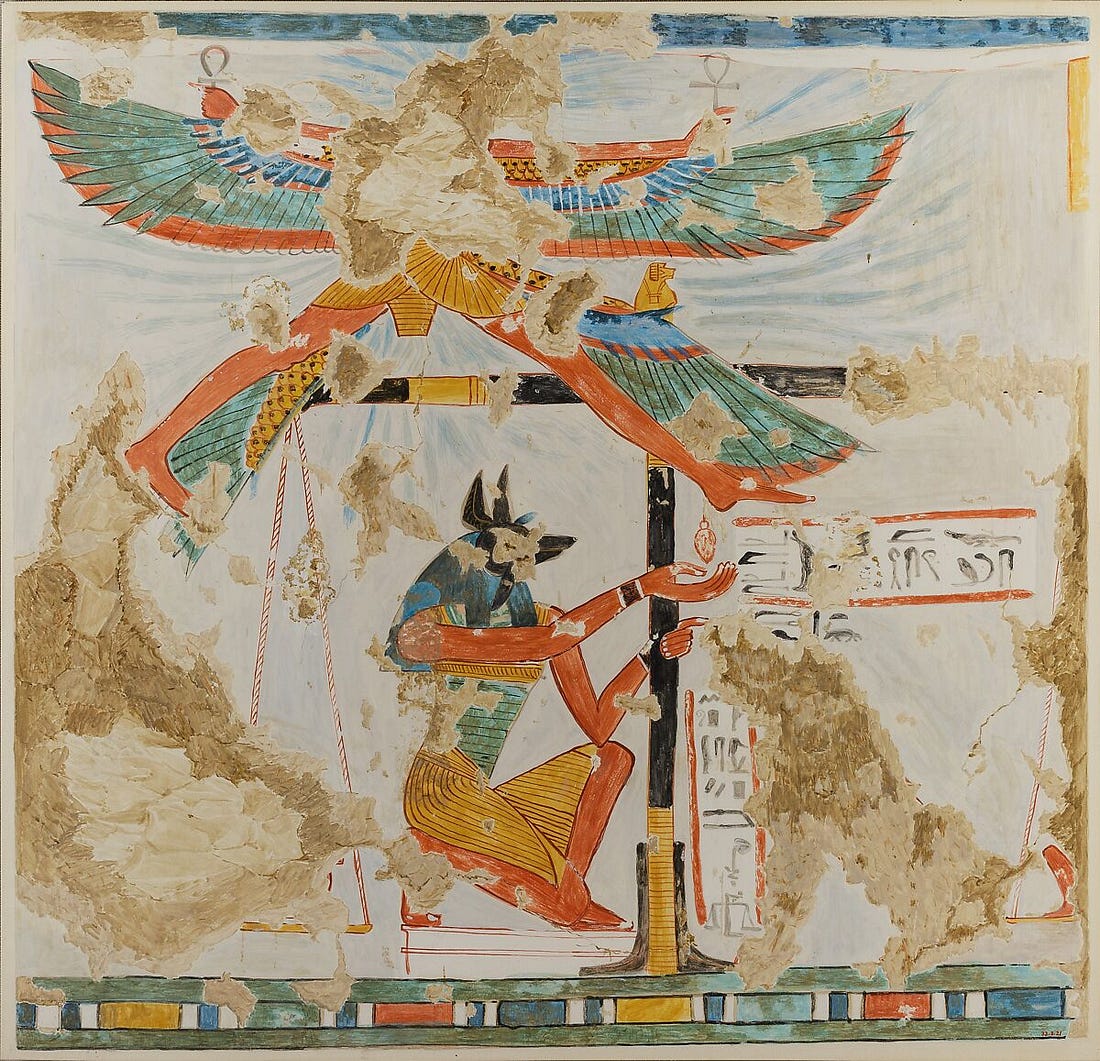
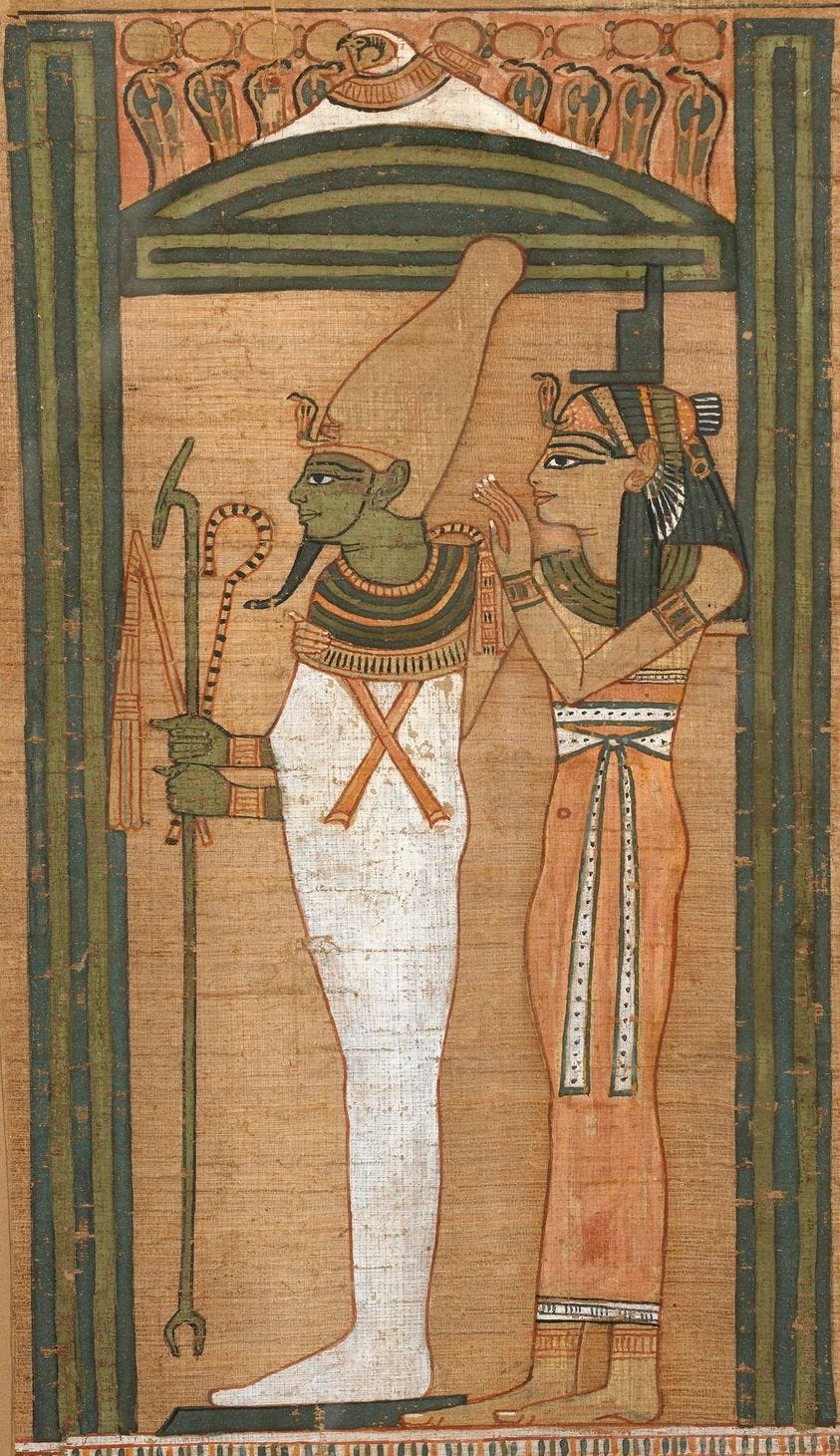
    The old Egyptian image of the heart weighed against the feather is not only about a final courtroom after death. It is a diagram of every day. The heart is weighed by what it has become through carrying. The feather does not ask for a résumé. It does not ask for an explanation. It does not ask whether the story was persuasive.

    It asks whether the heart remained light.

    Mini-Reincarnations

    A mini-reincarnation happens when a temporary appearance becomes a recurring identity.

    Anger appears.

    That is not yet the trap.

    Then the claimant enters:

    I am the wronged one.

    Fear appears.

    That is not yet the trap.

    Then the claimant enters:

    I am unsafe.

    Shame appears.

    That is not yet the trap.

    Then the claimant enters:

    I am ruined.

    Success appears.

    That is not yet the trap.

    Then the claimant enters:

    I am superior.

    Insight appears.

    That is not yet the trap.

    Then the claimant enters:

    I am awakened.

    The feeling was weather. The thought was a visitor. The event was an event. But the claimant wanted a body. So it used the feeling, the thought, the wound, the praise, the failure, the role, or the insight to make one.

    This is the false-self sentence:

    I am this.

    That sentence lets the identity take another body.

    It can take a body as a mood. A body as a political opinion. A body as a trauma story. A body as a spiritual role. A body as a public persona. A body as a comment, a post, a face, a lifestyle, a mission.

    Mini-reincarnation is the afterlife of an unreleased claim.

    The old self did not die. It changed costume.

    Why Repetition Feels Like Truth

    Repetition persuades.

    If something keeps returning, the ego assumes it must be real. If the same fear keeps coming back, it must be a warning. If the same wound keeps speaking, it must be identity. If the same desire keeps appearing, it must be destiny. If the same argument keeps finding new opponents, it must be righteousness.

    But repetition is not proof.

    Sometimes it is habit.

    Sometimes it is trauma.

    Sometimes it is unfinished grief.

    Sometimes it is algorithmic reinforcement.

    Sometimes it is the body asking to complete a feeling that the mind keeps turning into biography.

    Sometimes it is an old claim seeking a new body.

    This is where Gemini matters. Noticing is not the same as believing. The first work is not to obey the returning thing. The first work is to see it clearly.

    What is returning?

    A feeling?

    A memory?

    A role?

    A self-image?

    A hunger?

    A wound?

    A defense?

    A claim?

    What repeats is not always what is real.

    Sometimes it is only what was never released.

    The Heart as Archive

    The heart is not heavy because life happened.

    Life is supposed to happen.

    Love happens. Injury happens. Fear happens. Work happens. Failure happens. praise happens. Shame happens. Desire happens. Death happens. The world touches the body. The body responds.

    The problem begins when experience is not allowed to remain experience.

    The heart becomes an archive.

    It stores injuries. It stores victories. It stores roles. It stores defenses. It stores old explanations. It stores the faces of people who wronged us and the faces of people who admired us. It stores moments of humiliation and moments of glory with almost equal danger, because either can become self.

    A person may think they are carrying memories.

    Often, they are carrying identities.

    The betrayed one.

    The brilliant one.

    The rejected one.

    The righteous one.

    The cursed one.

    The chosen one.

    The one who never gets what they deserve.

    The one who finally understands.

    The heart grows heavy when experience is not allowed to remain experience.

    It becomes heavy when every event must testify for the self.

    Anubis as Witness Fire

    Anubis does not argue with the biography.

    That is what makes him terrifying and merciful.

    The self arrives with explanations. It has reasons. It has evidence. It has context. It has injuries. It has a whole legal brief for why it became what it became.

    Anubis weighs.

    He does not ask whether the story sounded convincing. He does not ask whether the wound was real. He does not ask whether the ego had a point. He does not ask how many people agreed, how many enemies were defeated, how many followers were gathered, how many doctrines were mastered, or how many identities were polished into virtue.

    He weighs the heart.

    This is witness fire.

    Not yet the devouring.

    Not yet the final burning.

    Witness fire is the seeing that makes explanation stop working.

    Anubis is the moment the story stops explaining itself and becomes weight.

    That moment comes in ordinary life too.

    A person hears themselves repeat the same complaint for the hundredth time.

    A person sees the same relationship pattern return.

    A person catches the same defensiveness rising before the other person has finished speaking.

    A person notices that even their spirituality has become self-protection.

    That is Anubis.

    The witness has entered.

    The scale has appeared.

    The Feather

    The feather is not achievement.

    That is important.

    The heart is not weighed against productivity. It is not weighed against cleverness, status, pain, loyalty, doctrine, wealth, trauma, or intensity. It is not even weighed against spiritual insight.

    It is weighed against lightness.

    This does not mean shallow happiness. It does not mean a life without grief. It does not mean innocence in the childish sense.

    The feather is right relation.

    It is truth without excess claim. Experience without possession. Memory without imprisonment. Feeling without identity. Action without self-worship.

    The feather asks whether the heart stayed transparent.

    Did life pass through?

    Or did every event become another stone?

    The feather does not ask what happened to you.

    It asks what you became by carrying it.

    This is why the feather is such a severe symbol. It does not deny suffering. It does not insult the wounded heart. It simply reveals whether suffering became passage or prison.

    A heart can be wounded and light.

    A heart can be successful and heavy.

    The difference is possession.

    Ammit as Return Fire Refused

    Ammit waits where the heart has become too dense to pass.

    This should not be read as random punishment.

    Ammit is the mouth of the Second Fire.

    She does not devour life. She devours the false density that life was forced to carry. She appears when surrender has been refused for so long that the heart can no longer release itself gently.

    The first mercy is always ordinary release.

    The exhale.

    The apology.

    The night’s rest.

    The grief allowed to move.

    The role put down.

    The self-story seen through.

    The identity softened before it hardens into fate.

    But when the claim refuses all of that, the return becomes more severe. What would not be surrendered must be burned, broken, dissolved, or devoured.

    That is Ammit.

    Not hatred of the soul.

    Not hatred of the body.

    Not hatred of life.

    Ammit is what happens when life has been forced to carry too much false self.

    She is Return Fire after surrender was refused.

    The scale comes first.

    The mouth comes after.

    Hotel California and the Wheel

    You can check out any time you like.

    But if the identity remains, you never leave.

    That is why Hotel California keeps returning as one of the clearest modern images of the wheel. The hotel is not only a place. It is the pattern that continues after the scene changes.

    The relationship ends, but the abandoned self remains.

    The job ends, but the anxious worker remains.

    The argument ends, but the righteous self remains.

    The religion ends, but the frightened believer remains.

    The platform changes, but the visible self remains.

    The room is different.

    The guest is the same.

    This is the wheel’s trick. It lets the ego believe movement is liberation. New city, new partner, new doctrine, new identity, new political tribe, new spiritual language, new screen, new body for the same old claim.

    But leaving a room is not the same as leaving the pattern.

    The wheel is not the room you are in.

    The wheel is the self you keep bringing with you.

    Groundhog Day, Sisyphus, and the Mercy of Repetition

    Repetition is not always punishment.

    Sometimes repetition is mercy in disguise.

    In Groundhog Day, the same day repeats until the self living through it changes. The loop does not break because the calendar finally gives up. It breaks because the character stops using the day as a theater for the same selfish pattern. Repetition becomes grace because it exposes the self that keeps repeating.

    Sisyphus is more severe.

    The stone goes up. The stone rolls down. The labor repeats. The burden returns. The mountain becomes the shape of unresolved effort.

    Read through Geomytha, the stone is not merely a punishment from outside. It is the weight of identity made visible. It is what the heart carries when the self will not release its claim.

    Push the stone.

    Watch it fall.

    Push the stone again.

    Eventually, the question changes.

    Not:

    How do I finally win this task?

    But:

    Who is the one who keeps becoming this task?

    That is the doorway.

    Repetition becomes grace only when it exposes the self that keeps repeating.

    The Feed as Accelerated Reincarnation

    Social media compresses the wheel.

    A post creates a self.

    A like feeds it.

    A criticism wounds it.

    A reply defends it.

    A share extends it.

    A new post reincarnates it.

    The self keeps taking digital bodies.

    This is not merely vanity. It is metaphysics in miniature. The profile becomes a reincarnation chamber. One identity after another appears, hardens, reacts, dissolves, and returns. The same hunger wears different images.

    The outraged self.

    The clever self.

    The beautiful self.

    The injured self.

    The expert self.

    The spiritual self.

    The political self.

    The misunderstood self.

    The feed gives the claimant endless bodies for the same unfinished identity.

    And because the loop is fast, the heart barely has time to weigh anything. Before one claim can be released, another has appeared. Before one mask can crack, another is offered.

    This is why the feed makes the heart heavy.

    Not because every image is evil.

    Because nothing is allowed to complete.

    Everything returns before it is weighed.

    Weigh Before You Repeat

    The practical correction is simple, but not easy.

    Weigh before you repeat.

    When the old pattern appears, do not immediately obey it. Do not immediately condemn it either. First, notice.

    What is returning?

    Is this feeling, or identity?

    Is this memory, or self-image?

    Is this responsibility, or possession?

    Is this pain asking to move, or asking to become me?

    Is this truth, or merely the old claim looking for another body?

    Then ask the heavier question:

    What does this make my heart carry?

    That question changes the field.

    If the returning thing makes the heart carry honesty, repair, courage, tenderness, or sober responsibility, then it may be part of return.

    But if it makes the heart carry self-importance, grievance, superiority, doom, performance, or endless defense, then the wheel is turning again.

    Not every returning thing is asking to be followed.

    Some are asking to be weighed.

    The Return Practice

    When the loop returns, do not make a religion out of fighting it.

    Practice return.

    First, notice the repeating pattern.

    Say plainly:

    This is the old loop.

    Second, name the identity it creates.

    This makes me the wronged one. This makes me the frightened one. This makes me the superior one. This makes me the abandoned one. This makes me the one who must be seen.

    Third, feel where it lives in the body.

    The throat. The chest. The belly. The jaw. The hands. The solar plexus. The eyes.

    Fourth, ask what claim made it heavy.

    What did I say was mine?

    What did I turn into me?

    What did I refuse to let remain an experience?

    Fifth, exhale the claim.

    Inhale: Am.

    Feel the living body beneath the story.

    Exhale: Is.

    Let the claim soften back toward source.

    Finally, let the heart be lighter than the story.

    This does not erase responsibility. It does not deny memory. It does not make pain unreal. It removes the false ownership that turns pain into a reincarnating self.

    The Heart Lighter Than the Loop

    The same thought may return.

    The same wound may speak.

    The same old room may appear.

    The same invitation to become the same self may arrive before breakfast, after lunch, at midnight, in a dream, under a post, inside a song, during a conversation you thought you had outgrown.

    But the heart does not have to become heavy again.

    That is the promise.

    Not that life stops repeating.

    Not that all wounds vanish instantly.

    Not that the wheel never turns.

    The promise is that noticing can enter. The scale can appear before the mouth. The heart can be weighed while there is still time to put the story down.

    The wheel shows what keeps returning.

    The scale shows what it costs to carry.

    The goal is not to defeat life, suppress feeling, erase memory, or pretend the past never happened.

    The goal is to stop carrying repetition as self.

    Notice the loop.

    Weigh the claim.

    Let the heart be lighter than the story.

    Then the wheel begins to lose its throne.

  • The Moon Breathes the Two Fires

    The Moon Breathes the Two Fires

    A breath enters.

    The chest rises. The body fills. The invisible becomes felt. Something that was not graspable a moment before becomes pressure, sensation, warmth, movement.

    Then the breath must leave.

    That is the part the body knows and the ego hates.

    The ego wants the inhale without the exhale. It wants arrival without departure, fullness without release, visibility without disappearance, summer without winter, life without surrender. It wants to keep the body full at the top of the breath and call that fullness power.

    But held too long, the inhale becomes panic.

    The very thing that entered as life becomes distress when it is not returned.

    This is the simplest way to understand the Two Fires.

    First Fire is not every fire. Second Fire is not every punishment. Fire is not a fifth object added to Is, Am, I, and This. Fire is the movement between them. It is the pressure of passage.

    First Fire is Is becoming Am: source appearing as reflection.

    Second Fire is Am returning to Is: reflection giving itself back.

    The problem begins when the claimant interrupts the passage.

    When Am is seized by I, the living reflection becomes mine. When I hardens that possession, the false-self sentence appears:

    I am this.

    I am this body. I am this wound. I am this role. I am this mission. I am this fear. I am this achievement. I am this life.

    That is where the breath gets trapped.

    The Second Fire is not only the death of the physical body. It is the death of the held inhale at the top of every cycle. It comes whenever fullness must release and the image refuses to wane.

    Every breath teaches it.

    So does the moon.

    So does the day.

    So does the year.

    So does a human life.

    Two Fires, One Movement

    There are only two essential fires in Geomytha.

    The First Fire gives appearance.

    The Second Fire gives appearance back.

    Everything else is a condition of that movement.

    When the fire is received cleanly, it illuminates. When it is claimed, it becomes Luciferic. When it is resisted, it becomes judgment. When it is finally refused, it becomes the lake of fire, Ammit, the second death, the burning-away of what physical death itself did not release.

    But the deeper structure is simple.

    First Fire: Is → Am. Second Fire: Am → Is.

    Source reflects.

    Reflection returns.

    No claimant is required.

    That is the original rhythm. The healthy rhythm. The rhythm before I interrupts it and turns reflection into ownership.

    The false cycle is different:

    Is → Am → I → This.

    Source appears as reflection. The claimant seizes the reflection. The claim hardens into identity. The identity demands continuation.

    That is the trap.

    The return reverses the error:

    This loosens. I is exposed. Am is freed. Am returns to Is.

    The Second Fire does not destroy being. It burns the false equation.

    It burns:

    I am this.

    Until only living reflection remains.

    Then reflection can return.

    The Inhale Is First Fire

    The inhale is not ego.

    The inhale is incarnation.

    Air enters the body. The invisible becomes felt. The chest rises. The inner field brightens. Presence appears as sensation.

    This is First Fire in the body.

    It is not fallen yet.

    The body receiving breath is not the problem. Form is not the problem. Sensation is not the problem. Embodiment is not the problem. To be alive, to feel, to create, to love, to speak, to work, to want, to begin — none of that is the fall.

    The inhale is holy until I says:

    This breath is mine.

    That is where the distortion begins.

    The breath enters as Am: reflected presence, embodied life, living mirror. It becomes dangerous only when the claimant appears and turns the reflection into identity.

    My breath. My control. My anxiety. My power. My body. My life.

    The fire was not false.

    The claim was false.

    First Fire lets Is appear as Am. It lets source become felt in the body. It lets the invisible enter the vessel.

    That is why the inhale matters.

    It is the Burning Bush in the chest.

    The flame appears in the living vessel.

    The question is whether the vessel can receive it without saying:

    I am the flame.

    The Top of the Inhale

    The top of the inhale is the Full Moon of the body.

    The breath has entered. The form is full. The inner pressure has reached its crown. Nothing has gone wrong yet, but danger has arrived.

    Fullness always invites claim.

    This is true of breath. It is true of success. It is true of insight. It is true of beauty, power, anger, grief, fame, love, and spiritual experience. Once the field fills, the claimant approaches.

    At the top of the inhale, the ego whispers:

    Keep this.

    At the top of success:

    Become this.

    At the top of grief:

    This pain is who you are.

    At the top of anger:

    This wound is truth.

    At the top of inspiration:

    This gift proves you.

    At the top of awakening:

    This vision makes you special.

    The top of every cycle is where Am can be seized by I.

    The breath is full, and the claimant wants to build a throne there.

    That is the failed exhale.

    It is not merely refusing to breathe out. It is refusing to return what was never owned.

    The Exhale Is Second Fire

    The exhale is not annihilation.

    It is return.

    The breath leaves. The body softens. The chest lowers. The inner field quiets. What entered form gives itself back.

    This is Second Fire in its gentlest form.

    Not Ammit yet. Not crisis yet. Not lake of fire yet. Not collapse.

    Just return.

    The exhale is the body practicing non-possession.

    It teaches the whole doctrine without needing doctrine. It says:

    What entered may leave. What filled may empty. What appeared need not become self.

    This is why the practice is so simple:

    Inhale: Am. Exhale: Is.

    The inhale lets presence become felt as reflected life. The exhale releases reflected life back to source.

    The breath does not mean Am comes before Is in the deepest sense. Source remains source. Is remains prior. But the body begins where it can feel. The body feels Am. Then the body releases into Is.

    That is practice.

    Not a theory to master.

    A rhythm to stop interrupting.

    The Pause After Exhale

    After the exhale, there is a small dark interval.

    A tiny New Moon.

    No fullness. No visible crown. No expansion. No image. No breath to claim.

    Just stillness.

    This pause is easy to miss because the ego is already reaching for the next inhale. It wants continuation. It wants the next form. The next thought. The next role. The next notification. The next plan. The next reassurance that it still exists.

    But the pause after exhale is where Is is tasted most cleanly.

    Not possessed.

    Tasted.

    The whole breath-cycle can be read like this:

    Inhale — First Fire. Top pause — Claim tested. Exhale — Second Fire. Bottom pause — Is remembered.

    This is the body’s moon.

    Every breath waxes. Every breath claims fullness. Every breath wanes. Every breath disappears.

    Then it begins again.

    The body knows how to die correctly.

    The ego does not.

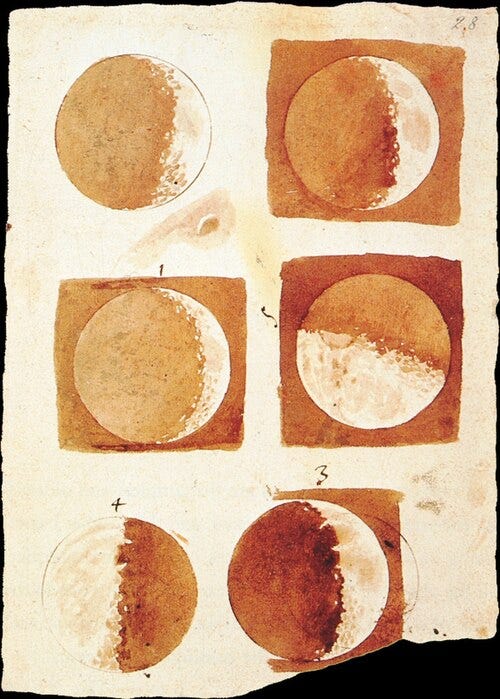
    The Moon as the Visible Breath

    The moon writes the same teaching across the sky.

    New Moon gathers in darkness.

    Waxing Crescent stirs.

    First Quarter forms.

    Waxing Gibbous builds.

    Full Moon claims.

    Then the turn comes.

    Waning Gibbous releases.

    Last Quarter returns.

    Waning Crescent surrenders.

    Then the moon disappears into hiddenness and begins again.

    The moon is not trapped by this cycle. The moon is teaching the cycle. It does not cling to fullness. It does not demand permanent visibility. It does not mistake its bright face for its whole being.

    It waxes.

    It wanes.

    It returns.

    The moon breathes monthly.

    The body moons moment by moment.

    Waxing is First Fire: source appearing as reflection, the hidden light entering form.

    Full Moon is the danger of claim: the image at maximum persuasion.

    Waning is Second Fire: the image loosening, thinning, releasing, returning.

    New Moon is not failure.

    New Moon is the mercy after surrender.

    It is what remains when the image has stopped insisting.

    Waxing Is Not the Trap

    This point must be protected.

    Waxing is not evil.

    The inhale is not evil. Spring is not evil. Birth is not evil. Desire is not evil. Creativity is not evil. A child entering the world is not evil. A song beginning is not evil. A project taking form is not evil. A person trying to live a better life is not automatically trapped.

    The trap is not appearance.

    The trap is possession.

    First Fire is necessary. Without it, nothing appears. No breath enters. No seed breaks open. No word is spoken. No child is born. No art is made. No body is felt. No relationship begins.

    First Fire is the gift of appearing.

    The distortion begins when the gift becomes proof of self.

    I made this. I own this. I am this. This must continue because I need it to be me.

    That is where the living fire hardens into identity.

    Incarnation is not the trap.

    Failed release is the trap.

    Waning as Mercy

    The waning moon is mercy.

    The exhale is mercy.

    Night is mercy.

    Autumn is mercy.

    Aging is mercy.

    Endings are mercy when they are allowed to do their work.

    Without waning, fullness becomes prison. Without exhale, breath becomes panic. Without night, the day becomes torment. Without winter, the year becomes exhaustion. Without surrender, every gift becomes identity.

    The Second Fire is mercy because it prevents form from becoming a prison.

    This is hard for the ego to understand because the ego interprets release as loss. It thinks the waning moon is being diminished. It thinks the exhale is depletion. It thinks surrender is defeat. It thinks the end of a role is the end of being.

    But waning does not destroy the moon.

    Exhale does not destroy the body.

    Sleep does not destroy the person.

    Winter does not destroy the year.

    Return does not destroy what is real.

    It removes the claim from what was passing through.

    That is why Last Quarter is such a severe kindness. It does not let the Full Moon keep pretending. It cuts the cycle back toward truth.

    Return is not nostalgia.

    Return is correction.

    The Day Also Breathes

    Morning is First Fire.

    The body wakes. The name returns. The room returns. The phone returns. The calendar returns. The problems return. The roles return.

    Parent. Worker. Writer. Friend. Fighter. Believer. Defendant. Lover. Citizen. Self.

    The day incarnates you.

    That is not the problem.

    The problem begins when the roles reattach before awareness remembers itself.

    You wake, and within seconds the claimant begins rebuilding the world.

    I am this person. I have this problem. I need this outcome. I must carry this fear. I must become this today.

    Morning can become reincarnation if it begins with immediate possession.

    But morning can also be conscious incarnation:

    I may use the roles today. I do not need to become them.

    Evening is Second Fire.

    The day must be put down.

    Not denied. Not erased. Not spiritually bypassed. Put down.

    What did I become today? What did I carry? What did I claim? What wants to keep breathing as me?

    Anger. Shame. Victory. Defeat. The conversation. The insult. The praise. The fear. The performance. The plan. The wound.

    At night, the day asks to be released.

    Sleep is the New Moon of the body.

    The visible self disappears. The name goes quiet. The roles loosen. The world dissolves.

    But if the identity is carried into sleep, the dream continues the loop.

    The body lies down.

    Horus keeps walking.

    The Year Breathes Too

    Spring is First Fire.

    Sap rises. Seeds break. Light lengthens. The hidden begins to appear. Is becomes Am through root, shoot, bud, green, warmth, animal motion, human restlessness.

    Summer is Full Moon.

    Everything is visible. Fruit swells. The sun dominates. Bodies go outward. The world becomes bright, social, productive, exposed. The image is persuasive.

    Autumn is Second Fire beginning.

    Leaves loosen. Fruit is harvested. The field gives back what it grew. The tree stops performing abundance and begins remembering root.

    Winter is New Moon.

    The surface empties. The seed conceals itself. The world darkens. Life appears absent because it has returned beneath visibility.

    The year knows what modern culture forgets.

    Everything cannot stay summer.

    But modernity is inhale-heavy.

    More growth. More production. More visibility. More achievement. More content. More stimulation. More expansion. More self.

    Permanent summer becomes spiritual exhaustion.

    A culture that refuses winter will manufacture crisis because it has rejected voluntary return. If the exhale is not chosen, it arrives as collapse.

    That is not punishment.

    That is rhythm reasserting itself.

    Failed Exhale as Reincarnation

    Reincarnation is not only a doctrine about what happens after physical death.

    It is a pattern that happens wherever identity refuses release and seeks another body.

    A thought refuses to dissolve.

    It reincarnates as a mood.

    A mood refuses to pass.

    It reincarnates as a story.

    A story refuses to end.

    It reincarnates as a role.

    A role refuses to loosen.

    It reincarnates as a life.

    A wound becomes personality. A fear becomes worldview. A desire becomes destiny. A spiritual insight becomes identity. A project becomes self. A failure becomes name. A victory becomes prison.

    This is how the false self keeps returning.

    Not because form appears.

    Because form is claimed.

    The image refuses to wane, so it seeks another room.

    Hotel California is not merely a place after death. It is every identity-cycle that lets you check out of one scene while keeping you trapped in the pattern.

    You can leave the argument but keep the wound.

    You can leave the relationship but keep the role.

    You can leave the religion but keep the claimant.

    You can leave the screen but keep the hunger to be seen.

    You can leave the body someday and still carry the sentence:

    I am this.

    That is reincarnation.

    Reincarnation begins wherever the image refuses to wane.

    The Feed Prevents the Exhale

    Screen culture understands this better than most religions do.

    The feed is a machine for preventing the exhale.

    You post. You check. You refresh. You react. You compare. You return.

    The image never gets to die.

    The self never gets to complete the cycle. It remains suspended at the top of the inhale, waiting for another signal that it exists.

    A like.

    A comment.

    A view.

    A reply.

    A new outrage.

    A new clip.

    A new proof.

    A new version of the self to defend.

    The feed keeps everything waxing.

    It trains consciousness to fear the bottom of the breath. It teaches that disappearance is death, silence is failure, being unseen is nonexistence.

    This is not just distraction.

    It is lunar distortion.

    The screen replaces rhythm with continuation. It gives endless first fire and almost no second fire. It lets the image appear, multiply, circulate, intensify, and return again before it has been released.

    The result is a self that cannot sleep.

    Not because the body is awake.

    Because the image is still breathing.

    The Posthuman Inhale

    The posthuman dream is the inhale trying to become immortal.

    Do not die.

    Upload.

    Extend.

    Optimize.

    Simulate.

    Enhance.

    Replace.

    Continue.

    Become more than human by refusing every limit that asks for surrender.

    This dream addresses real pain. Bodies suffer. Memory fails. People age. Loved ones die. Work exhausts. Loneliness hurts. The given world wounds us.

    So the temptation is understandable.

    But Geomytha asks a sharper question:

    What if endless continuation is not liberation?

    What if the refusal to end is just reincarnation by machine?

    A copied self is still a self if the claim remains. An uploaded mind is still trapped if it carries the sentence “I am this.” A simulated continuation may only preserve the false center in a more sophisticated prison.

    The issue is not whether technology can extend a pattern.

    The issue is whether the pattern should be worshiped.

    If the inhale never releases, the breath does not become immortal.

    It becomes torment.

    The Practice: Let the Breath Teach the Moon

    The answer is not to figure out more fires.

    The answer is to stop becoming the thing that needs to be burned.

    Start with one breath.

    Inhale: Am.

    Feel the body receive presence. Let the invisible become felt. Let breath enter without immediately becoming story.

    Then exhale: Is.

    Let the reflected presence return. Let the body soften. Let the claim loosen before it hardens.

    Receive the form.

    Feel the fullness.

    Release the claim.

    Rest before the next becoming.

    This is not anti-life. It is life completed. It lets incarnation happen without turning incarnation into prison.

    The point is not to refuse the inhale.

    The point is to stop stealing it.

    What Fills Must Empty

    The Second Fire is not merely death after life.

    It is the mercy inside every cycle.

    The breath knows it. The moon knows it. The day knows it. The year knows it. The body knows it. The heart knows it.

    What fills must empty.

    What appears must release.

    What becomes visible must stop calling visibility self.

    The whole rhythm is already being taught in the most ordinary place: the breath entering and leaving the body.

    First Fire lets Is appear as Am.

    Second Fire lets Am return to Is.

    The claimant interrupts and says:

    I am this.

    The practice answers:

    Inhale Am. Exhale Is.

    Let the fire pass.

    Let the moon wane.

    Let the day be put down.

    Let the self-story empty before it asks for another body.

    What calls itself I must learn to exhale before the fire has to do it for us.
  • These Are Mine

    These Are Mine

    The sentence begins simply.

    A child points to a toy.

    “Mine.”

    No philosophy.

    No politics.

    No theology.

    No ideology.

    Just one small act of possession.

    Yet hidden inside that word is one of the most powerful movements in human life.

    Before there is a kingdom, there is a king.

    Before there is ownership, there is identity.

    Before there is “mine,” there is:

    I am this.

    The previous movement creates the self.

    The next movement creates the world around the self.

    Identity rarely remains content with itself. Once a reflection has hardened into an image, the image begins extending its borders.

    The self gathers territory.

    The sentence changes.

    First:

    I am this.

    Then:

    These are mine.

    The transition appears everywhere.

    A body becomes my body.

    A house becomes my house.

    A belief becomes my belief.

    A nation becomes my nation.

    A religion becomes my religion.

    An achievement becomes my achievement.

    A wound becomes my wound.

    An identity becomes surrounded by possessions, symbols, and extensions of itself.

    The kingdom begins to grow.

    Ancient Egypt understood this pattern well.

    Horus is not merely a ruler. He is a ruler of lands.

    He wears crowns.

    He possesses titles.

    He governs territories.

    The king does not stop with identity.

    The king extends identity outward.

    The crown itself becomes an extension of the self.

    The throne becomes an extension of the self.

    The kingdom becomes an extension of the self.

    This is why rulers throughout history accumulate symbols.

    Crowns.

    Scepters.

    Flags.

    Palaces.

    Regalia.

    Titles.

    These objects are not merely practical. They are extensions of identity.

    The king says:

    These are mine.

    The same pattern appears in myth.

    Consider King Midas.

    His desire is not for food, shelter, or survival. He wants accumulation itself. Gold becomes more than wealth. It becomes identity. The treasure no longer serves the king. The king serves the treasure.

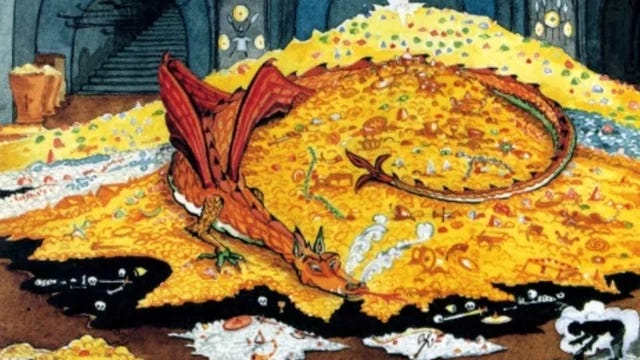
    Or consider Smaug in The Hobbit.

    The dragon sleeps upon a mountain of gold.

    At first glance the treasure appears to be his possession.

    Look more closely.

    The treasure has become his identity.

    Every coin reflects the same sentence:

    These are mine.

    The dragon guards the treasure because he is guarding himself.

    The same pattern appears in modern stories.

    In Citizen Kane, Charles Foster Kane spends his life accumulating newspapers, influence, wealth, estates, artworks, and status. The kingdom grows larger and larger while the center grows smaller and smaller.

    Accumulation promises completion.

    Completion never arrives.

    The pile increases.

    The hunger remains.

    The same process governs modern life more often than we would like to admit.

    Followers.

    Subscribers.

    Likes.

    Collectibles.

    Credentials.

    Investments.

    Property.

    Achievements.

    Even spiritual seekers are not immune.

    A person may collect teachings, books, initiations, certifications, practices, symbols, or experiences with the same instinct that another person collects cars or houses.

    The object changes.

    The movement remains.

    These are mine.

    This is why accumulation is so seductive.

    Possession feels like expansion.

    The kingdom grows.

    The self appears larger.

    Yet a strange reversal quietly takes place.

    The more extensions identity gathers, the more energy becomes required to protect them.

    The kingdom begins owning the king.

    The possessions begin possessing the possessor.

    The treasure requires guarding.

    The title requires defending.

    The reputation requires maintaining.

    The collection requires preserving.

    The image requires constant repair.

    What began as expansion becomes obligation.

    What began as freedom becomes administration.

    The king becomes a servant of the kingdom.

    This may explain why accumulation never reaches satisfaction.

    Identity seeks completion through addition.

    But no addition can complete something that was never incomplete.

    Every new possession produces the possibility of another possession.

    Every new title suggests a higher title.

    Every kingdom suggests a larger kingdom.

    The horizon retreats as quickly as it is approached.

    Ancient stories repeatedly warn about this pattern.

    The rich fool builds larger barns.

    Midas starves beneath gold.

    Smaug sleeps uneasily upon treasure.

    Kane dies surrounded by possessions.

    The warning is not against objects.

    The warning is against identification.

    A house is not the problem.

    A title is not the problem.

    A collection is not the problem.

    The problem appears when identity expands into possession and mistakes possession for self.

    The kingdom is not the king.

    The treasure is not the dragon.

    The crown is not Horus.

    The possession is not the possessor.

    The extension is not the source.

    This is why accumulation can never provide the completion it promises.

    The movement begins with a misunderstanding.

    Identity believes that adding more objects will strengthen what it is.

    Yet every object remains external.

    The self seeks completion through accumulation because it has forgotten its origin.

    The result is a kingdom built from borrowed names.

    The release begins when this is noticed.

    The house may remain.

    The title may remain.

    The family may remain.

    The work may remain.

    The kingdom may remain.

    Only the claim begins to soften.

    The possessions return to being possessions.

    The symbols return to being symbols.

    The extensions cease pretending to be the self.

    Then the kingdom can finally serve life rather than replace it.

    The sentence loses its spell.

    These are mine.

    And what remains is not poverty.

    It is relationship.

    The king remains.

    The kingdom remains.

    But neither must be mistaken for the other.

  • Ophiuchus Is Not the Extra Sign

    Ophiuchus Is Not the Extra Sign

    Paid essay — public preview. This page introduces the original essay. The complete argument, examples, and conclusion are available to paid Geomytha subscribers on Substack.

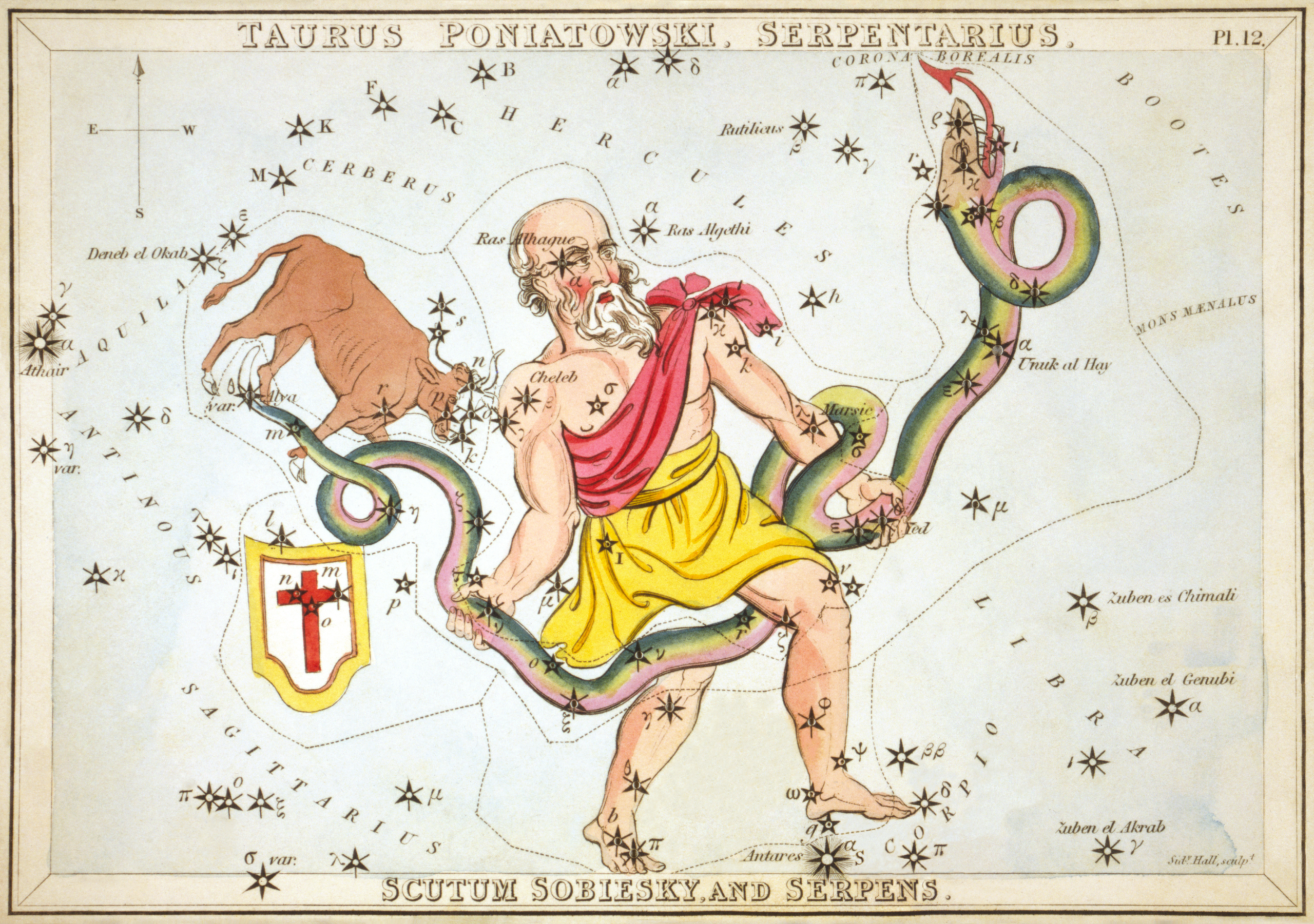
    Most people who talk about Ophiuchus talk about it as an addition.

    An extra sign. A disruption. A strange thirteenth figure awkwardly inserted into a system that already seemed complete. The serpent-bearer becomes a novelty, a correction, a curiosity, another identity people can claim or reject.

    That is the shallow reading.

    Geomytha reads Ophiuchus differently.

    Ophiuchus is not extra.

    Ophiuchus is the hinge.

    Without it, the zodiac moves too quickly from Scorpio to Sagittarius, from the wound to the quest, from venom to arrow, from pain to philosophy. The sequence looks smoother without Ophiuchus, but it becomes less true.

    Because most people do not suffer and then become wise.

    They suffer and then become certain.

    That is the danger.

    Scorpio…

    Read the complete essay on Substack →

    This WordPress page preserves the essay’s place in the Geomytha archive, its original title and subtitle, and its publication date. The full subscriber edition remains protected on Substack.

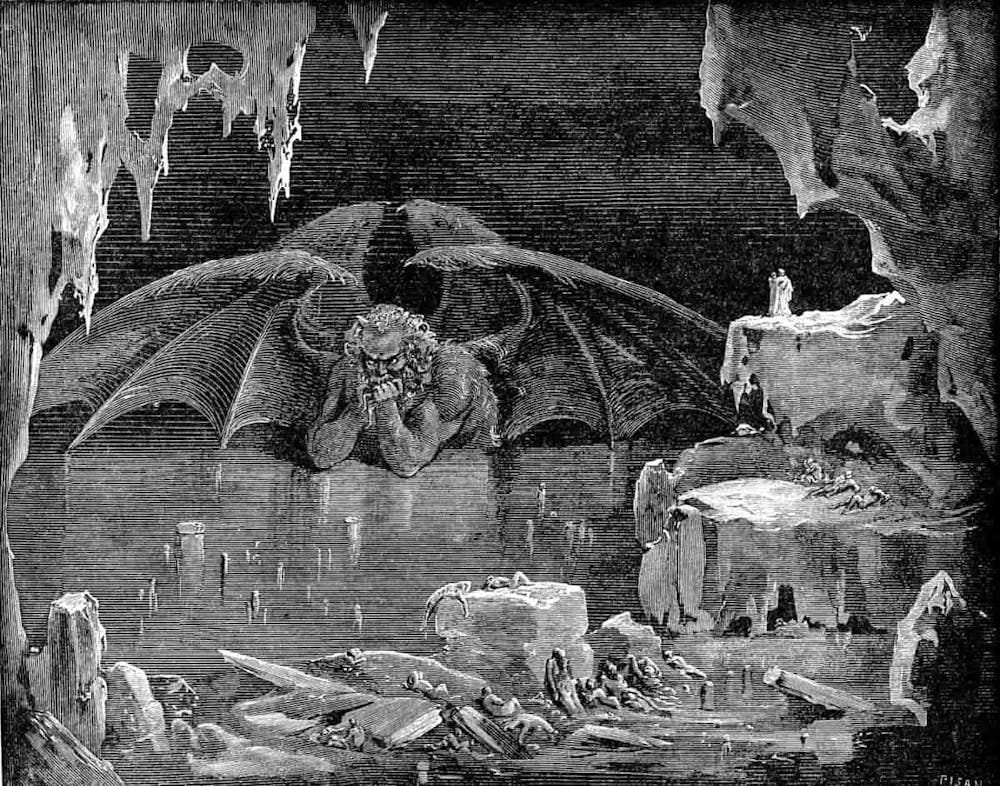
  • Earth as Cocytus

    Earth as Cocytus

    Most people remember hell as heat.

    Flames. Punishment. Noise. Panic. Appetite turned violent. Desire without limit. Rage made permanent.

    Dante remembers something worse.

    The deeper he goes, the colder it gets.

    That is not a decorative detail. It is the key. Inferno does not end in combustion. It ends in arrest. Not in passion at its hottest, but in relation at its deadest. Not in life burning out of control, but in life frozen into a shape that cannot move, cannot soften, cannot return.

    That is why the bottom of hell is a lake.

    And that is why, in a Geomytha reading, earth itself can be understood as that frozen lake when consciousness is no longer living from presence, but from the hardened echo of itself.

    We already know this, even before Dante.

    We speak of cold-hearted people. We say someone gave us an icy stare. We say a betrayal chilled us. We say a room felt frozen. We say a marriage went cold. We say someone is dead inside.

    Almost no one says betrayal was “warm.”

    The human symbolic instinct is older than theory. It already knows that heat can still mean life, even disordered life. Anger burns. Lust burns. Grief burns. Ambition burns. Shame burns.

    Cold is different.

    Cold means circulation has stopped.

    That is Dante’s great severity. He understands that the deepest damnation is not frenzy. Frenzy at least still moves. The deepest damnation is fixation. A consciousness so trapped in itself, so severed from living relation, that it can no longer melt.

    Fire still transforms. Ice preserves the wrong thing.

    That is why the usual cartoon image of hell misses the point. A fiery hell is dramatic. It flatters the imagination. It lets us picture evil as excess, spectacle, eruption, theater. But Dante goes lower than theater. He goes beneath drama into structure. He shows a condition where the soul has become unable to flow back toward source. Everything is locked in place. The self is no longer merely sinful. It is congealed.

    In Geomytha terms, that is the difference between agitation and hardening.

    The false self is not most dangerous when it is loud. It is most dangerous when it becomes stable. When reaction becomes identity. When memory becomes throne. When grievance becomes atmosphere. When intelligence loses warmth and mistakes its own coldness for truth. Across your symbolic grammar, awareness is primary, reflection is living when it remains transparent, fragmentation hardens into illusion, and ego mistakes that hardened partiality for the whole.

    That is why Dante’s ice belongs so naturally to this frame.

    The frozen lake is what the world becomes when projection has lasted too long.

    Read that carefully.

    Not the world itself. Not mountains, rivers, trees, animals, dawn, rain, or soil. The claim is not that creation itself is evil. The claim is sharper than that. Earth becomes Cocytus when it is lived through the false center. When awareness is trapped in role, image, repetition, fear, narrative, and separation, the world is no longer encountered as living field. It is encountered as hardened surface. A place of distance. A place of management. A place of dead relation.

    A frozen world.

    That is why the bottom of hell is not simply full of sinners. It is full of immobilized beings. The image is exact. Consciousness here is no longer falling. It has landed in itself. It is fixed in the posture it chose. The punishment is not merely imposed from outside. The punishment is the completed shape of inner refusal.

    And at the center of that refusal is Lucifer.

    Not a triumphant emperor of flames. Not a swaggering king surrounded by loyal demons. Dante’s Lucifer is far more humiliating than that. He is trapped. Buried. Immobilized. He beats his wings and only worsens the ice.

    That is one of the strongest images in all myth.

    The false center keeps trying to free itself with the same movement that created the prison. More force. More assertion. More selfhood. More will. More agitation. More resistance. But the very effort to escape deepens the freeze. The wings do not liberate. They refrigerate.

    That is the ego in one image.

    The self imagines that if it just thinks harder, controls more, anticipates better, dominates more completely, it will finally become free. But the movement is wrong at the root. It is still outward. Still self-enclosed. Still organized around a false center. So every beat of the wings makes the lake more solid.

    This is why betrayal lies at the bottom.

    Not lust.

    Not gluttony.

    Not mere greed.

    Betrayal.

    Because betrayal is relation turned cold. It is nearness converted into use. Trust converted into calculation. Intimacy converted into technique. It is not simply appetite overflowing. It is the freezing of a bond. Something warm has been made unlivable.

    Dante understands that some sins still burn with distorted life. Betrayal no longer burns. It crystallizes. It is the triumph of distance where love should have been nearest.

    That is also why the journey downward becomes, paradoxically, a journey toward greater clarity. The upper hells still look like turbulence. Storms. Hungers. Compulsions. Obvious unrest. But the deeper Dante goes, the more he reveals a different logic: violence becoming structure, fraud becoming intelligence cut loose from truth, betrayal becoming the final hardening of misrelation.

    The circles are not just punishments. They are stages of contraction.

    At the top: appetite, disorder, the storms of visible compulsion.

    Below that: domination, cruelty, the will to impose.

    Below that: manipulation, counterfeit intelligence, calculation severed from conscience.

    At the bottom: total immobilization. Identity sealed inside its own frozen relation.

    That descent matters because modern people are often trained to mistake obvious heat for the greatest danger. The loud person. The vulgar person. The visibly chaotic person. Dante is wiser. He suggests that the deeper danger may be the colder one: the person who has become incapable of warmth and calls that incapacity realism.

    That figure appears everywhere.

    In literature. In politics. In institutions. In families. In ourselves.

    A frozen marriage where every conversation is technically correct but lifeless.

    A workplace where everyone performs competence and no one can feel.

    A person whose pain has hardened into permanent superiority.

    A culture mistaking sarcasm for discernment.

    An intelligence so polished it can no longer kneel.

    That is Cocytus beginning to form.

    The image repeats across modern story because the pattern is universal. Think of the frozen maze in The Shining: not just winter weather, but consciousness trapped in a pattern that has lost warmth, lost relation, lost home. Think of carbon freeze in The Empire Strikes Back: a living being turned into preserved object, form without flow. Think of Narnia under the White Witch: endless winter not as beauty, but as suspended life, a world where the cycle will not turn.

    These images work because cold is not merely meteorological. It is metaphysical. It means life has stopped circulating through the form.

    And if life is circulation, then hell is stoppage.

    That is why Dante matters now.

    He is not simply threatening readers with medieval punishment imagery. He is diagnosing a spiritual condition. He is showing what happens when consciousness can no longer repent because it can no longer soften. When relation has been replaced so thoroughly by self-enclosed posture that the soul becomes its own climate.

    That is the point where earth becomes the frozen lake.

    Again: not because the world itself is false in its roots, but because the false self makes the world reflect its own condition. The ego lives in a deadened world because it deadens what it touches. It cannot feel the field as alive because it lives through separation. It cannot experience presence because it is organized around image, memory, strategy, and claim. It cannot receive. It can only grip.

    The result is a planet experienced as ice.

    This is where the Last Quarter logic becomes exact.

    Return does not mean sentimentality. It does not mean vague nostalgia. It means reduction. Clearing. Exposure. The cutting away of what cannot live. The seeing of what remains when glamour fails. Dante’s frozen lake is a Return image because it strips hell of its theatrical costume and reveals its root mechanism. The deepest evil is not spectacular. It is sterile. It is not mainly hot. It is cold enough to seem rational.

    That is why Gemini also belongs here. Notice is the right solar pressure for this reading. Dante requires discrimination. You have to notice the reversal. Notice the descent from heat into cold. Notice the movement from surface drama into structural deadness. Notice that the worst condition is not emotional excess, but the inability to feel rightly at all.

    And then remember.

    That is the second half of the attunement.

    Because the point is not merely to admire Dante’s severity. It is to recognize what his map reveals about our own condition. The article does not matter unless it turns inward. Not inward in the soft modern therapeutic sense, but inward in the old mythic sense: as diagnosis.

    Where has life frozen?

    In what role have you become immobile?

    What grievance has become climate?

    What story about yourself has stopped moving?

    Where have you mistaken distance for wisdom?

    Where have you called coldness clarity because warmth would require surrender?

    These are not rhetorical ornaments. They are the real infernal questions.

    Dante’s genius is that he does not leave the reader at the center. He passes through it.

    That is the final secret.

    He does not win by ruling hell more effectively. He does not master the underworld on its own terms. He goes through the false center until its orientation breaks. Down becomes through. The throne inverts. Another sky appears.

    That is pure Geomytha.

    The way out is not better management of the frozen world. It is not the ego becoming a more successful ego. It is not the false center polishing itself until it deserves release. The way out is passage through the center where the false claim collapses. Across your framework, the real apocalypse is the loss of reality by the false self, not the improvement of illusion.

    So yes: in this reading, earth is the frozen lake.

    Not because being is wrong.

    Because consciousness, hardened into false identity, can experience being only as distance, surface, and repetition. That is hell. Not punishment from elsewhere. Misrelation made total. A soul climate. A world of preserved separation.

    But Dante gives one mercy.

    Ice is not stone.

    It can melt.

    That is the difference between damnation as symbol and damnation as fate. The symbol warns so that hardening may be recognized before it is complete. The frozen lake is not shown to fascinate the reader. It is shown to expose what must thaw.

    Notice the freeze.

    That is Gemini’s task.

    Remember what warmth is.

    That is Return’s task.

    And do not confuse coldness with truth. The deepest lies often arrive with perfect composure. The real signs of life are humbler: circulation, softness, grief that still moves, thought that can still bow, intelligence that has not lost relation to the heart.

    Return begins there.

    Not in fire.

    In the first crack across the ice.

  • Consciousness Is Reflection

    Consciousness Is Reflection

    Few words are used more casually than consciousness.

    People speak of raising consciousness, expanding consciousness, studying consciousness, uploading consciousness, and awakening consciousness. Yet the word often carries several different meanings at once. Awareness, mind, soul, identity, attention, and consciousness are frequently treated as though they were interchangeable.

    What if they are not?

    What if one of the oldest symbolic traditions in the world preserved a distinction that has largely been forgotten?

    In the language of Geomytha, awareness and consciousness are related, but they are not identical.

    Awareness is source.

    Consciousness is reflection.

    The difference may seem small at first. It changes everything.

    The moon offers the simplest example.

    Most people have looked at a full moon and felt as though it possesses a light of its own. It hangs in the sky like a lantern. It illuminates oceans, deserts, forests, and city streets. It appears self-luminous.

    Yet the moon creates none of that light.

    Every visible ray is borrowed.

    The moon shines because something else shines first.

    Its beauty is real.

    Its light is not its own.

    This is why the moon became one of humanity’s oldest symbols for consciousness.

    Consciousness appears luminous.

    Consciousness reveals.

    Consciousness illuminates experience.

    Yet consciousness may not be the source of what it reveals.

    It may be the reflection.

    This possibility appears repeatedly in Egyptian symbolism.

    Modern readers often approach Osiris as a god of death, agriculture, resurrection, or kingship. All of those descriptions are true, but they only describe part of the picture. Osiris repeatedly occupies a position between invisible source and visible identity. He is neither the hidden ground nor the hardened self. He stands between them.

    He reflects.

    The relationship becomes easier to see when placed beside Isis.

    Isis is the hidden field.

    Osiris is the field reflected.

    The moon reflects sunlight.

    Osiris reflects Isis.

    Consciousness reflects awareness.

    The pattern remains the same.

    This distinction may explain why lunar symbolism follows Osiris almost everywhere he appears. The moon is not a second sun. It is a visible mirror suspended in the sky.

    The myth is not teaching astronomy alone.

    It is teaching relationship.

    A source remains what it is.

    A reflection reveals it.

    This same structure appears far beyond Egypt.

    Consider the story of Narcissus.

    The tragedy is often described as vanity. A handsome youth falls in love with his own image and cannot look away.

    Yet beneath the moral lesson sits a deeper symbolic pattern.

    Narcissus mistakes a reflection for a source.

    He becomes captivated by an appearance without understanding the relationship that produced it.

    The reflection becomes reality.

    The mirror becomes more important than what is being mirrored.

    The same mistake appears in countless myths, fairy tales, and modern habits.

    The magic mirror in Snow White never creates beauty.

    It reveals beauty.

    A mirror has no beauty of its own.

    Its power lies entirely in reflection.

    The mirror functions perfectly until someone mistakes the reflection for an independent reality.

    The same danger appears in spiritual language.

    Many modern systems casually merge awareness, consciousness, self, mind, and identity into a single category. The distinctions blur together until the words lose precision.

    Yet a mirror and a sun are not the same thing.

    A reflection and a source are not the same thing.

    If they were identical, reflection would be unnecessary.

    The distinction becomes even more important when we examine identity.

    The reflected moon appears fragmented across lakes, puddles, rivers, and broken glass. One moon becomes many reflections.

    The same thing happens within consciousness.

    One field of awareness appears as countless thoughts.

    One living presence appears as memories, fears, plans, beliefs, stories, and roles.

    The many seem to emerge from the one.

    This is precisely why Osiris is dismembered in myth.

    The image is not merely about death.

    It is about fragmentation.

    Reflection naturally appears as many.

    The scattered pieces point toward the nature of reflection itself.

    This is also why Isis spends the myth gathering.

    She remembers.

    She restores relationship.

    She reunites what appeared separate.

    The movement is not conquest.

    It is recognition.

    The same movement occurs whenever attention returns from confusion to simple presence.

    A thought is noticed.

    A role is noticed.

    A fear is noticed.

    An identity is noticed.

    The fragments begin to soften.

    The relationship beneath them becomes visible again.

    The moon never becomes the sun.

    The mirror never becomes the face.

    Reflection never becomes source.

    Its beauty lies elsewhere.

    The moon is beautiful precisely because it remembers its role.

    The mirror functions perfectly when it does not pretend to generate its own light.

    Perhaps consciousness is the same.

    Perhaps consciousness is not diminished by being reflection.

    Perhaps reflection is what allows awareness to become visible at all.

    And perhaps many of humanity’s oldest myths have been trying to remind us of that simple fact from the beginning.

  • I Am This

    I Am This

    Most people assume the problem begins with the ego.

    Others believe the problem begins with thought.

    Still others blame the body, desire, memory, language, politics, technology, or society.

    But what if the problem begins somewhere much smaller?

    What if it begins with a sentence?

    Not a long sentence.

    Not a complicated sentence.

    Just three words:

    I am this.

    The sentence appears harmless. In ordinary life it is almost unavoidable.

    I am a teacher.

    I am a Christian.

    I am an American.

    I am successful.

    I am a failure.

    I am traumatized.

    I am awakened.

    I am a skeptic.

    I am a victim.

    The object changes endlessly, but the structure remains the same.

    I.

    Am.

    This.

    The sentence may be the most powerful myth-making machine humanity has ever created.

    To understand why, we must begin before the sentence appears.

    The moon does not create its own light.

    It reflects light.

    That reflection is beautiful, useful, and real. Yet the moon remains a mirror rather than a source.

    In the same way, consciousness reflects being.

    The ancient Egyptians encoded this relationship through Osiris.

    Osiris is neither pure source nor hardened identity. He occupies the middle ground. He reflects.

    This is why lunar symbolism follows him so persistently. The moon and Osiris share the same function. Both reveal something that originates elsewhere.

    Reflection is not the problem.

    Consciousness is not the problem.

    The interruption arrives later.

    The Egyptians gave that interruption a name.

    Set.

    Modern readers often treat Set as a villain, devil, or embodiment of evil. Yet the myths themselves are more subtle. Set is the force that separates, divides, measures, names, claims, and distinguishes.

    Without Set there is no boundary.

    Without Set there is no category.

    Without Set there is no “me” and “not me.”

    The same force that allows navigation can also create confusion.

    The problem is not distinction itself.

    The problem appears when distinction becomes possession.

    When reflection is no longer merely seen.

    It is claimed.

    The sentence emerges:

    I am this.

    A body appears.

    Then comes:

    I am this body.

    A belief appears.

    Then comes:

    I am this belief.

    A wound appears.

    Then comes:

    I am this wound.

    A role appears.

    Then comes:

    I am this role.

    The role is not the problem.

    The body is not the problem.

    The wound is not the problem.

    The belief is not the problem.

    The claim is the problem.

    The claim hardens the reflection into identity.

    Ancient myths return to this pattern repeatedly.

    Consider Adam and Eve.

    The story is often reduced to disobedience, morality, or forbidden knowledge. Yet another reading sits beneath the surface.

    The fruit is not merely information.

    The fruit becomes identity.

    Knowledge transforms into self-definition.

    The moment knowledge becomes “who I am,” the garden changes.

    The sentence has appeared.

    I am this.

    The same pattern appears in the story of Narcissus.

    The tragedy is not that he sees a reflection.

    Everyone sees reflections.

    The tragedy is that he mistakes the reflection for himself.

    A mirror becomes reality.

    An image becomes identity.

    He falls in love not with being, but with a reflected appearance.

    Again, the sentence is hidden beneath the story.

    I am this.

    The pattern scales far beyond individual psychology.

    Politics often functions through the same mechanism.

    The issue is rarely a policy alone.

    The issue becomes identity.

    I am this party.

    I am this ideology.

    I am this movement.

    Religion often follows the same path.

    A tradition becomes an identity.

    A doctrine becomes a self.

    A symbol becomes a possession.

    Social media intensifies the process further.

    Profiles, brands, opinions, achievements, grievances, and aspirations accumulate into a carefully managed image.

    The image is displayed.

    Defended.

    Curated.

    Improved.

    Protected.

    The image becomes the self.

    The sentence grows stronger.

    I am this.

    Yet something strange happens whenever the sentence loosens.

    The body remains.

    Thought remains.

    Memory remains.

    Work remains.

    Relationships remain.

    Life continues.

    What disappears is not existence.

    What disappears is the claim.

    A carpenter may still build tables.

    A parent may still raise children.

    A musician may still write songs.

    The difference is subtle.

    The role becomes something being performed rather than something being worshiped.

    The role becomes functional rather than existential.

    This distinction matters.

    A carpenter saying “I am a carpenter” may simply be communicating a profession.

    Identification occurs when the deeper belief emerges:

    Without carpenter, I disappear.

    Without success, I disappear.

    Without this belief, I disappear.

    Without this story, I disappear.

    At that point reflection has become possession.

    The claimant has seized the mirror.

    This is where another Egyptian figure enters the story.

    Horus.

    Horus is the formed identity.

    The king.

    The image.

    The visible self that emerges after the claim.

    In symbolic terms, Horus is born when reflection becomes identity.

    The process is simple:

    Being reflects.

    Reflection is claimed.

    Claim becomes identity.

    The sentence creates the king.

    The king then spends his life defending the kingdom the sentence built.

    Most of human history can be read through this lens.

    Individuals defend identities.

    Groups defend identities.

    Nations defend identities.

    Religions defend identities.

    Civilizations defend identities.

    All built upon the same small grammatical structure.

    I am this.

    The sentence appears everywhere because it is extraordinarily useful.

    It allows orientation.

    It allows memory.

    It allows social organization.

    Yet it also creates confusion whenever it is mistaken for reality itself.

    The moon never becomes the sun.

    The reflection never becomes the source.

    The image never becomes the thing reflected.

    The mirror functions perfectly when it remembers its role.

    Perhaps human identity functions the same way.

    The body can remain.

    The role can remain.

    The story can remain.

    The reflection can remain.

    The sentence simply loosens.

    The claim softens.

    The image becomes transparent.

    And what remains is not less life.

    It is life no longer trapped inside borrowed names.