The mirror is covered.
The phone is face-down.
The costume is off.
The crown is on the table.
The room is quiet.
And the body is still there.
Hungry.
Tired.
Breathing.
A little embarrassed.
Still real.
This is the part the image never knows what to do with. The image can be polished, framed, edited, crowned, uploaded, defended, and admired. It can be made solemn. It can be made camp. It can be made beautiful enough to fool the room for a while.
But eventually the performance stops.
The face relaxes.
The shoulders drop.
The stomach growls.
The jaw unclenches.
The breath returns with no audience.
After the mirror crown falls, something plain remains.
The body.
Not the body as brand.
Not the body as proof.
Not the body as desirability.
Not the body as identityThis — IdentityThis names the formed identity: the body, role, image, wound, belief, or story claimed as what the self is.Read full entry →.
Not the body as “this is me.”
The body as ground.
The body as weight.
The body as the place where reflectionAm — ReflectionAm names reflected presence: awareness embodied or mirrored without yet becoming ownership.Read full entry → can returnReturn — RemembranceReturn names remembrance and release: the loosening of possession so reflection can become transparent to source again.Read full entry → before the claimantSetIn Geomytha, Set names the claimant: I — the interruption by which reflection is taken as mine and converted toward ownership.Read full entry → takes possession.
In Geomytha, the false self forms through a simple grammar: Is, Am, I, This. Is is awareness before claimI — ClaimI names claim: the interruption by which reflected presence is taken as mine.Read full entry →. Am is reflected presenceOsirisIn Geomytha, Osiris names reflected presence: Am — awareness reflected as living consciousness without yet becoming ownership.Read full entry →. I is the claimant that interrupts the current. This is the identity that hardens after the claim. The trap is the sentence I am thisThe False-Self Sentence — I Am ThisThe false-self sentence forms when claim joins reflection to a fixed object of identity: I am this.Read full entry →. The correction is just as simple: inhale Am, exhale Is, and let reflection return before the claimant takes possession.
That matters here because the body is easily misunderstood.
The body is not automatically freedom.
The body can become another costume. Another mirror. Another crown. Another place where the claimant says:
I am this body.
I am this beauty.
I am this wound.
I am this discipline.
I am this illness.
I am this desirability.
I am this failure.
I am this optimized self.
That is still the old sentence.
The body is not HorusHorusIn Geomytha, Horus names the identity that forms after claim: This — the body, role, image, wound, belief, or story taken as what the self is.Read full entry → by itself. Horus is the body claimed as identity. The body becomes a field of return only when it no longer has to prove the self.
That distinction is everything.
The body-image wants a crown.
The body wants to breathe.
The body-image is how the body appears. How it is judged. How it is photographed. How it is compared. How it is posted. How it is desired, rejected, improved, displayed, hidden, punished, and sold back to the person who lives inside it.
The body itself is simpler.
Breath.
Weight.
Warmth.
Pain.
Hunger.
Touch.
Fatigue.
Pulse.
Trembling.
Sleep.
Limit.
Ordinary presence.
The body-image asks, “How do I look?”
The body asks, “Can I finally stop bracing?”
That is why the body becomes so important after the image collapses. Once the mirror loses authority, the self has to return somewhere. If it does not return to presence, it will build a new mirror. It will make a new costume. It will crown a new version of itself and call the costume liberation.
This is why the return must be quiet.
No new throne.
No new brand.
No new mystical persona.
Just the body sitting down after the costume comes off.
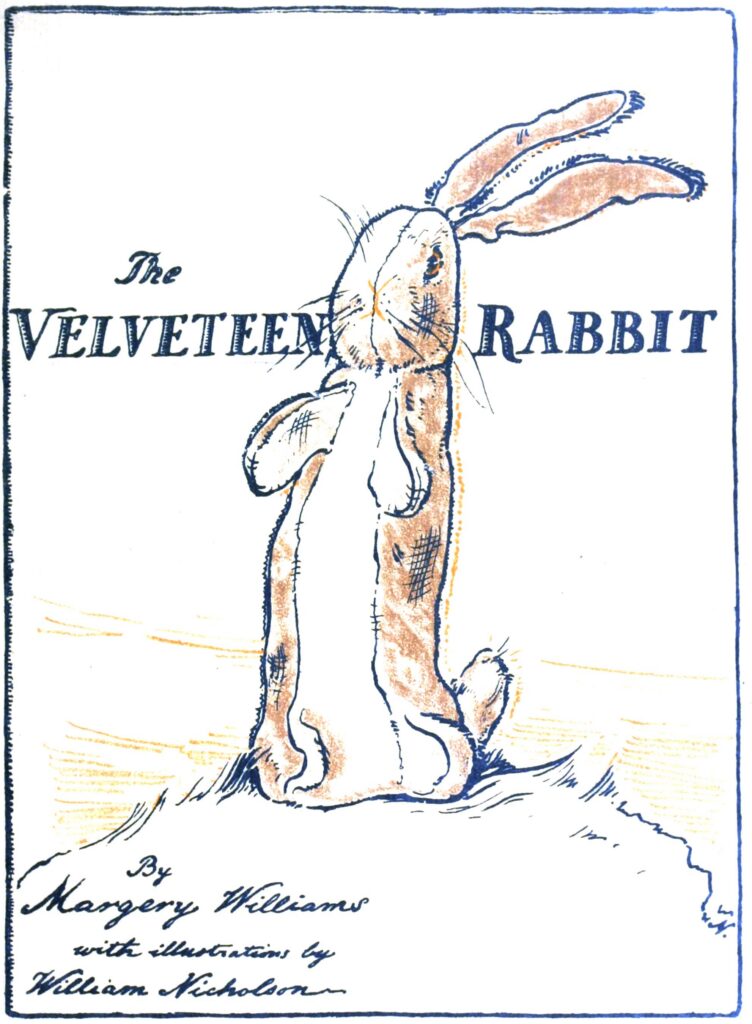
The Velveteen RabbitThe Velveteen RabbitMargery Williams’s story follows a toy rabbit that becomes Real through love, wear, and lived relationship rather than through pristine appearance.Read full entry → is one of the gentlest stories ever written about this.
The rabbit does not become real by becoming shinier. He does not become real by being admired as the most beautiful toy in the nursery. He does not become real by preserving his original surface. He becomes real by being loved until the surface wears down.
That is almost unbearable to the image-self.
The image-self wants to remain pristine. It wants to remain photographable. It wants to stay smooth enough to be desired, impressive enough to be displayed, and intact enough to be mistaken for worth.
But realness often moves the other way.
The fur wears thin.
The seams loosen.
The bright surface dulls.
The object stops looking new.
The beloved thing becomes marked by contact.
That is the secret.
The real does not always become brighter. Sometimes it becomes worn enough to stop lying.
The Velveteen Rabbit is not a story about self-improvement. It is a story about being softened out of image. The toy becomes real because love has passed through it so deeply that the pristine surface no longer matters. It is no longer merely an object arranged to be seen. It has been touched into being.
This is a Taurus teaching.
Taurus is not interested in spiritual performance that never lands in the body. Taurus asks what has weight. What can be touched. What can be trusted after the speech ends. What remains when the image fades and the nervous system has to live with the cost of the role it has been playing.
The rabbit becomes real through contact, use, warmth, loss, and affection. Not through spectacle.
That is the correction to the mirror crown.
The image-self wants to be crowned.
The real body wants to be held without having to shine.
PinocchioPinocchio — The Adventures of PinocchioCollodi’s Pinocchio is an animated wooden puppet whose story culminates in becoming a real boy after a long series of consequences, relationships, and moral trials.Read full entry → gives the sharper version.
Pinocchio moves before he is real. He speaks before he is real. He performs before he is real. He can entertain, lie, panic, run, dance, and imitate life. He has motion. He has a voice. He has personality.
But animation is not the same as presence.
That distinction is very modern.
A profile can move.
An avatar can speak.
A brand can react.
A persona can post.
A feed can simulate continuity.
A public self can appear alive every day.
But motion is not realness.
The puppet becomes real only when performance gives way to embodied consequence. He cannot remain a clever animated surface forever. He has to enter honesty, relation, risk, pain, responsibility, and love. He has to become answerable.
That is what the image-self avoids.
The image wants movement without consequence.
It wants expression without exposure.
It wants reaction without relation.
It wants visibility without vulnerability.
It wants to appear alive without becoming real.
Pinocchio exposes the trick. To move is not yet to be real. To speak is not yet to be true. To perform is not yet to be present.
The body knows the difference.
The body cannot be endlessly fooled by animation. It eventually reveals the cost. It tightens, exhausts, numbs, collapses, aches, shakes, burns out, or refuses to keep funding the performance.
That refusal is not failure.
Often, it is the first truth.
The Emperor’s New ClothesThe Emperor’s New ClothesAndersen’s tale centers on an emperor, imaginary clothes, collective social compliance, and a child who publicly names the obvious absence of the costume.Read full entry → makes the body humiliating again, and that is useful.
The emperor is all public agreement. All image. All costume. All projected authority. Everyone around him participates in the illusion because the illusion protects the social order. Nobody wants to be the one who names what is obvious.
Then the child speaks.
The costume vanishes.
The emperor is exposed.
That moment is usually read as embarrassment, and it is. But it is also a return to reality. The body appears where the image had been ruling. Not glorious. Not symbolic. Not majestic. Just undeniable.
The body is what public illusion was trying to dress.
This is why exposure can be merciful. Not because humiliation is good by itself, but because the collapse of false image can return the person to what was being covered. The emperor is not freed yet. Exposure alone does not make him wise. But the first crack has opened.
The costume no longer has total authority.
That is how surrender often begins.
Not with peace.
With the awful relief of no longer being able to maintain the image.
This is where modern life becomes exhausting.
The profile wants continuity.
The body wants rest.
The profile wants output.
The body wants food.
The profile wants legibility.
The body wants silence.
The profile wants to be seen.
The body wants to stop bracing.
Volume Seven frames the screen age as the point where identity becomes image-dependent: the self becomes profile, performance, avatar, aesthetic signal, and reaction-loop. In that world, modern Horus no longer only believes; he curates.
That curation has a cost.
The self must remain visible.
The self must remain interesting.
The self must remain coherent.
The self must remain attractive, wounded, funny, insightful, moral, angry, awakened, desirable, productive, or distinct.
The self must keep proving that it exists.
The body gets tired.
Social media burnout is often described as information overload or platform fatigue. That is true, but it does not go deep enough. Burnout is often the body refusing to keep funding the image.
The nervous system finally says:
I cannot keep making myself available for reflection.
I cannot keep turning every experience into proof.
I cannot keep converting pain into content.
I cannot keep arranging my face for strangers.
I cannot keep treating reaction as oxygen.
I cannot keep being a mirror object.
The body revolts against the profile.
That revolt may appear as exhaustion, numbness, resentment, anxiety, depression, irritability, dissociation, compulsive checking, or the simple inability to care about the image for one more second.
Underneath, something honest may be trying to happen.
The body wants to return from performance to presence.
It does not know the perfect language for that. It may not sound spiritual. It may sound like:
I need to sleep.
I need to eat.
I need to go outside.
I need to be touched without being evaluated.
I need to cry without explaining why.
I need to stop being watched.
I need to be ordinary.
That is not regression.
That may be the first sane request.
But here the stress test matters, because “return to the body” can become another trap almost immediately.
Modern culture is very good at turning every correction into a market.
The body can be reclaimed badly.
Fitness culture can turn the body into a mirror crown. Wellness culture can turn the body into a moral résumé. Biohacking can turn the body into a machine for superiority. Beauty culture can turn the body into a permanent audition. Spiritual embodiment language can turn the body into an aesthetic of groundedness. Diet identity can turn the body into purity theater. Even healing can become a brand of being the one who is healing correctly.
Then the body is not returned to presence.
It is converted into a better costume.
The body is not liberation if it only becomes a more convincing image.
A person can be extremely disciplined and still trapped.
A person can be healthy-looking and still image-possessed.
A person can speak beautifully about embodiment while secretly using the body as proof of spiritual authority.
A person can turn trauma, illness, nervous-system language, fitness, fasting, yoga, posture, sensuality, masculinity, femininity, and “grounding” into another sentence:
I am this.
That is the danger.
The body becomes sacred only when it stops serving the claimant.
That does not mean neglect the body. It means stop making the body carry the burden of identity. Feed it. Move it. Rest it. Strengthen it. Wash it. Touch it kindly. Let it enjoy. Let it grieve. Let it age. Let it be repaired where repairWorld-RepairWorld-Repair names the work of regathering relation, pattern, and presence inside a field that has been fractured rather than simply escaping the field.Read full entry → is possible. Let it be limited where limitation is real.
But do not crown it.
Do not make it the final self.
Do not turn flesh into another throne for Horus.
Taurus gives the clean correction.
Taurus does not ask the body to become impressive. It asks the body to become trustworthy again.
Eat without turning it into content.
Walk without making it symbolic.
Rest without earning it.
Breathe without explaining it.
Feel without branding it.
Let the body be ordinary.
That ordinariness is not small. It is a radical return in a world that keeps demanding performance. To sit and eat a meal without photographing it is now a tiny revolt. To take a walk without tracking it is a tiny revolt. To cry without converting the grief into a post is a tiny revolt. To feel tired without making tiredness into identity is a tiny revolt.
The body does not need every moment to become evidence.
It can simply live.
Waning Crescent deepens this because Waning Crescent is not trying to build another face. It is not trying to announce a new self. It is not trying to polish the remains of the image into a softer brand.
Waning Crescent wants the fading.
It asks the self to trust what remains when there is less to show. The Geomytha calendar assigns Waning Crescent to Surrender, and its hidden arc moves through fading, yielding, bowing, dissolving, vanishing, preparing, unmaking, hollowing, resting, and returning. The supporting notes name the lunar directive of Surrender as Trust: yielding, quieting, resting, and letting go of control.
That is exactly the movement here.
Surrender is not disappearing from life.
It is letting the false image disappear from the center.
It is no longer asking the body to perform proof of existence.
It is no longer asking every feeling to become identity.
It is no longer asking every experience to become content.
It is no longer asking every wound to become explanation.
It is no longer asking every breath to certify a spiritual self.
The body can become simple again.
A place where Am is felt.
A place where Am returns to Is.
Inhale:
Am.
Exhale:
Is.
Not as performance.
Not as doctrine.
Not as a new identity.
As a way to let reflection return before the claimant takes possession.
Before posting, feel the body.
Before explaining, feel the body.
Before decoding, feel the body.
Before checking the reaction, feel the body.
Before turning pain into identity, feel the body.
Before turning beauty into currency, feel the body.
Before turning exhaustion into a story about who you are, feel the body.
The body will not always give a grand revelationRevelation — Book of RevelationThe final book of the Christian New Testament, also called the Apocalypse of John.Read full entry →.
Sometimes it will only say:
Drink water.
Sleep.
Stop clenching.
Eat.
Go outside.
Tell the truth.
Be quiet.
Leave the phone.
Let the feeling move.
That is enough.
The image needs glamour.
Presence does not.
What remains after the performance may not be impressive. It may not make a good post. It may not be especially mystical. It may not look like awakening. It may not look like success. It may not even look healed.
A tired body.
A quiet room.
A real breath.
A meal.
A hand.
A walk.
A bed.
A pulse.
A moment not converted into proof.
This is the embodied remainderClosed System / Hidden TermA closed system achieves the appearance of completeness by excluding or minimizing something it cannot integrate; the excluded term remains active and returns as strain, contradiction, anomaly, backlash, or breakdown.Read full entry →.
Not the final identity.
The remainder.
The place where the image cannot rule because there is no audience left to convince.
The place where the self does not need to be crowned because it is no longer trying to reign.
The body does not need to become another “this.”
It only needs to be allowed to return.
Inhale:
Am.
Exhale:
Is.
Let the performance end.
Let the image fade.
Let the body sit down.
The body does not need to be crowned.
It only needs to be allowed to return.