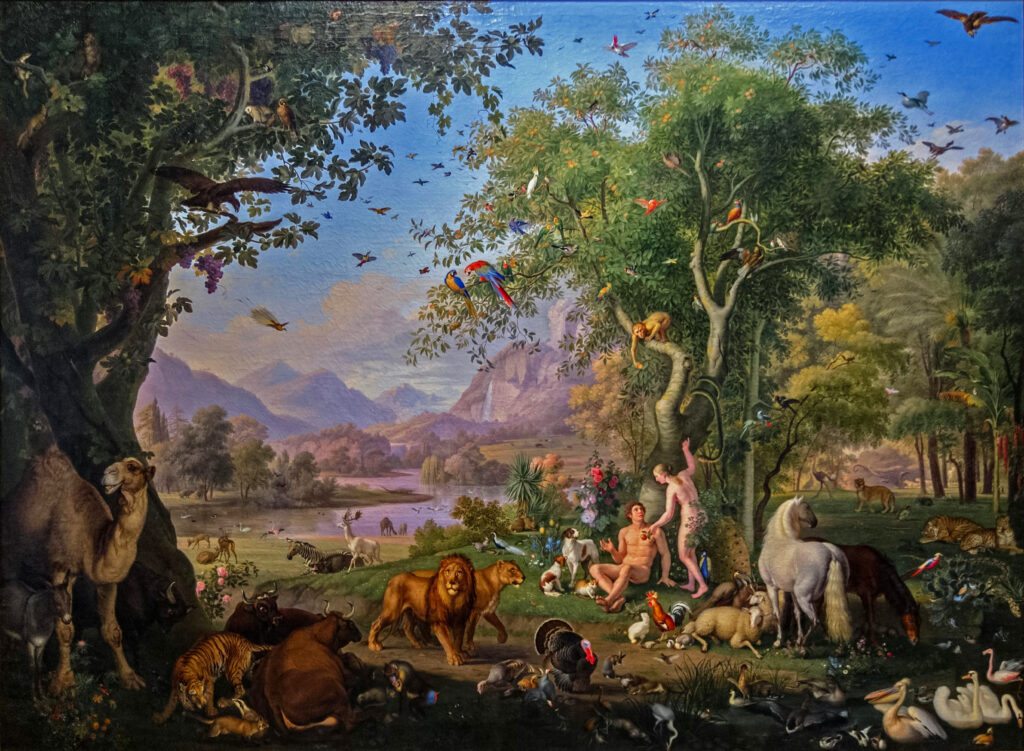
The fruit was not an apple.
Genesis is not primarily warning against produce, curiosity, or even knowledge in the ordinary sense. The forbidden fruit is the moment consciousness consumes its own projected image of reality and mistakes that image for the real.
The serpent does not merely offer Eve information.
It offers divided knowing.
“You will know good and evil.”
That sentence is the doorway.
Before the fruit, there is garden, body, breath, nakedness without shame. Nothing has yet been turned into a problem to solve. Nothing has yet been converted into self-conscious judgment.
After the fruit, the world changes instantly.
Not because the trees changed.
Not because the sky changed.
Not because the body changed.
Because interpretation took the throne.
Suddenly nakedness becomes a condition. The body becomes an object. God becomes someone to hide from. The self becomes something that must explain itself. Awareness enters the field of division: good and evil, before and after, innocence and guilt, self and other, exposed and covered.
This is the solar fruit.
In Geomytha, the Tree of KnowledgeReferenceTree of KnowledgeGenesis 2–3 identifies a tree of the knowledge of good and bad/evil in the garden and prohibits the human pair from eating from it.Read full entry → is not knowledge as clear seeing. It is knowledge as division. It is Set’s apparatusGEOMYTHA readingSetWithin GEOMYTHA, Set names I: the claimant that seizes reflected presence as mine. This is the project’s interpretive use, not every historical role of the Egyptian deity.Read full entry →: projection, judgment, comparison, self-image, fear, control, and the cutting power that separates the living field into opposites.
The Tree of Life is different. It is presence. It is the convergence point. It is the place where consciousness rests before it is dragged upward into the head-system of interpretation. The Tree of Life belongs to right reflection. The Tree of Knowledge belongs to believed projection.
That is the difference between seeing and eating.
To see a thought arise is not the fall.
To believe the thought as reality is the fall.
To notice fear is not the fall.
To become the fear is the fall.
To observe desire is not the fall.
To say, “I am incomplete unless I possess this,” is the fall.
Projection is not simply thought. Thought is part of human life. Thought can measure, remember, plan, speak, build, compare, and protect. The problem begins when thought stops serving presence and begins ruling it.
That is when Set becomes king.
In the simplest Geomytha grammar, the movement is:
Is → Am → I → This.
Presence is.
Presence reflects.
Then the claimant appears.
Then the appearance hardens into identity.
The false self is born in the sentence:
I am thisGEOMYTHA readingThe False-Self Sentence — I Am ThisThe false-self sentence forms when claim joins reflection to a fixed object of identity: I am this.Read full entry →.
I am this body.
I am this wound.
I am this fear.
I am this role.
I am this story.
I am this insight.
I am this awakening.
That is HorusGEOMYTHA readingHorusWithin GEOMYTHA, Horus the Son names This: the body, role, image or story claimed as identity. Horus the Elder / Haroeris is distinct and carries the watcher or witnessing function, not This. These are interpretive correspondences, not universal Egyptian definitions.Read full entry →: the time-bound identity formed when awareness believes the image.
This is why the Genesis story belongs beside the great nondual teachings. Advaita Vedanta calls the same mistake superimposition: mistaking the Self for the body-mind, mistaking what appears in awareness for awareness itself.
The body appears, and thought says, “I am the body.”
Emotion appears, and thought says, “I am angry.”
Memory appears, and thought says, “I am my past.”
A role appears, and thought says, “I am this person.”
Geomytha says the same thing mythically: IsisGEOMYTHA readingIsisWithin GEOMYTHA, Isis names Is: unclaimed awareness or the source field before possession. This is the project’s interpretive use, not an exhaustive definition of the Egyptian goddess.Read full entry → is mistaken for Horus. Pure awareness becomes confused with the identity appearing inside it.
Ramana Maharshi’s teaching on the “I-thought” presses directly into this point. Before “I am afraid,” before “I am rejected,” before “I am right,” before “I am enlightened,” there is the root claimant:
I.
That claimant is subtle. It does not always appear loudly. Sometimes it appears as defense. Sometimes as shame. Sometimes as certainty. Sometimes as spiritual superiority. Sometimes as the one who understands the system.
But its movement is always the same.
It seizes reflection.
It takes what appears and says: mine.
This is the fruit in real time.
Buddhism describes the same danger through the mechanics of proliferation. A sensation appears. Then feeling. Then preference. Then story. Then identity. Then a whole world forms around the original contact.
Someone speaks sharply.
That is the contact.
The body contracts.
That is the feeling.
Then thought begins:
They disrespect me.
They always do this.
I know what they meant.
I need to defend myself.
I am not safe.
I am not valued.
Now the fruit has been eaten.
The original moment may have been simple: a tone, a sensation, a tightening in the chest. But projection builds an entire world around it, then places a self inside that world and demands loyalty to the drama.
Reflection would have done something else.
Reflection says: a sharp tone appeared. Contraction appeared. Meaning is not yet certain.
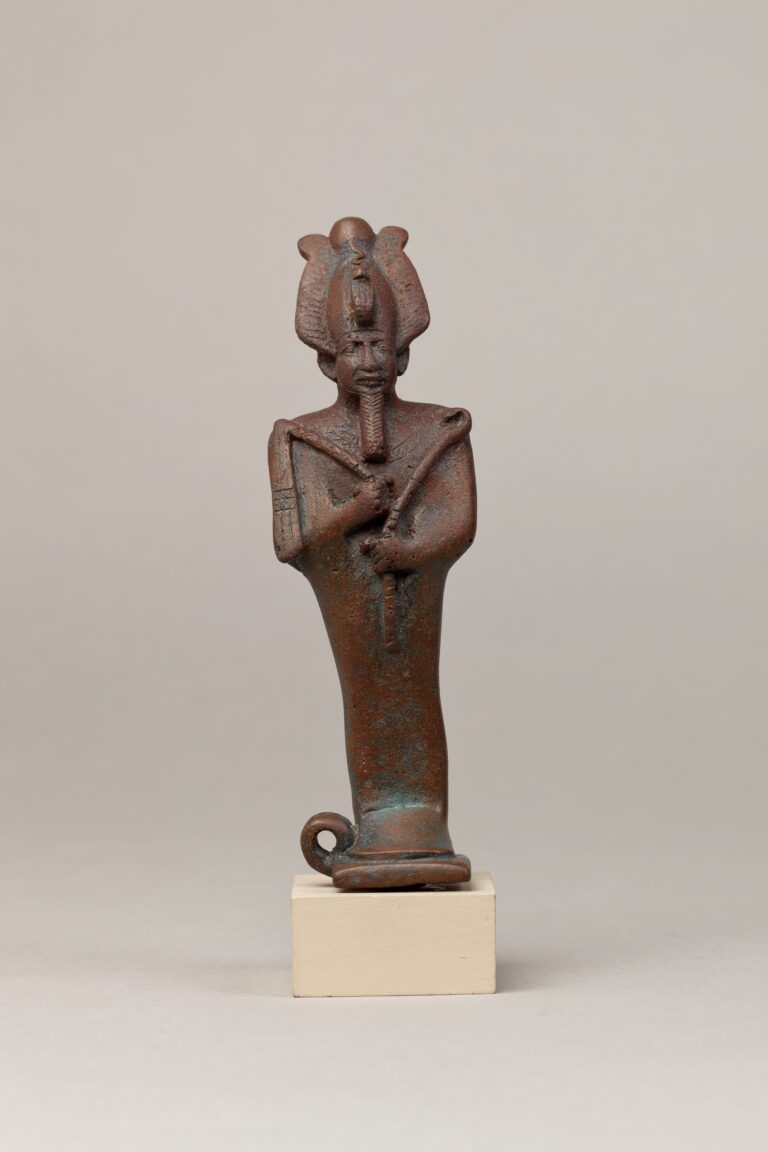
That is OsirisGEOMYTHA readingOsirisWithin GEOMYTHA, Osiris names Am: reflected, embodied presence before ownership. This is the project’s interpretive use, distinct from the Egyptian deity’s historical roles.Read full entry →. That is right reflection. Experience is allowed to appear without being immediately hardened into identity.
NarcissusReferenceNarcissusNarcissus becomes attached to his reflected image in Ovid’s account. Other ancient retellings differ; the myth should not be reduced to a single original version.Read full entry → gives the same warning in Greek myth. He does not die because water reflects. Reflection itself is not the danger. He dies because he cannot distinguish reflection from reality. The image becomes more compelling than the living world. He bends toward the surface until the surface consumes him.
That is projection.
Not seeing the image.
Believing the image.
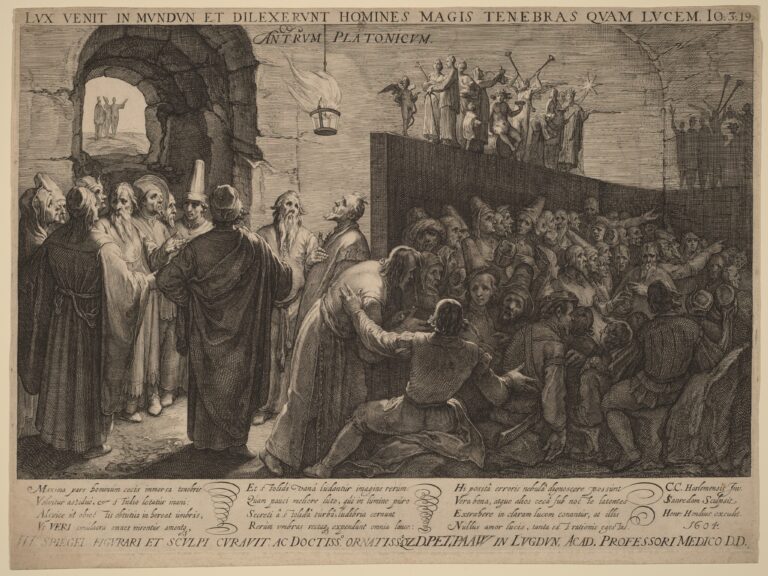
PlatoReferencePlatoAncient Greek philosopher whose Republic contains the Allegory of the Cave.Read full entry →’s cave gives another version. The prisoners do not merely see shadows. They build reality around shadows. The projected forms become the world. The cave is not just ignorance. It is a complete environment of believed projection. The shadow is not dangerous because it appears. It becomes dangerous when consciousness forgets that it is shadow.
The MatrixReferenceThe MatrixThe Matrix (1999) depicts a simulated world maintained by machines and experienced by captive humans as ordinary reality.Read full entry → modernizes the same structure. The system works because the projected world is believable enough to inhabit. The prison does not need to feel like a prison. It only needs to feel like reality.
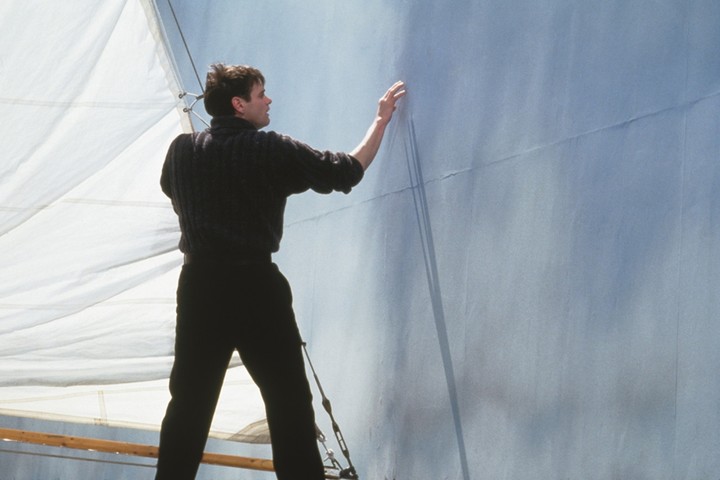
The Truman ShowReferenceThe Truman ShowThe Truman Show presents Truman Burbank living unknowingly inside a constructed television environment whose town, relationships, routines, and physical conditions are organized by a production system around him.Read full entry → gives the softer version: an entire world built from artificial cues, emotional conditioning, repeated routines, and invisible control. Truman’s liberation begins when he notices that the world around him is staged.
But even then, noticing is not enough.
The deeper question is whether he will continue obeying the projection after seeing it.
This is where Dzogchen and Mahamudra become important. These traditions do not treat thought as an enemy to be destroyed. They point instead toward recognition. Thoughts arise. Images arise. Emotions arise. Fears arise. Desires arise. But when they are recognized as appearances within awareness, they can dissolve without becoming identity.
The wave does not need to be killed.
It only needs to be known as water.
Geomytha gives this a mythic sentence:
Let Am return to Is before I turns it into This.
Let reflection return to presence before the claimant converts it into selfhood.
This matters because spiritual inquiry itself can become fruit.
The search is not the sin. The search is often necessary. The problem begins when the search becomes another identity.
I am the one who sees.
I am the one who knows.
I am awake and others are asleep.
I have decoded what others cannot.
I am beyond ordinary people.
That is not liberation.
That is Horus wearing sacred clothing.
The ego can survive almost anything if it is allowed to turn the thing into identity. It can survive religion. It can survive rebellion. It can survive therapy. It can survive conspiracy. It can survive nonduality. It can survive Geomytha.
It can even survive anti-ego language.
The false self does not care what costume it wears. It only cares that the sentence continues:
I am this.
That is why the practical instruction must be severe and simple.
Do not stop thinking.
Do not stop asking.
Do not stop discerning.
Do not stop planning.
Do not stop protecting yourself when protection is needed.
Just stop eating every projection as reality.
In daily life, this looks ordinary.
Someone does not text back. Projection says: they do not care. Reflection says: no response has appeared yet. My nervous system is generating a story.
Someone criticizes your work. Projection says: I am humiliated. Reflection says: criticism appeared. Heat appeared. Defense appeared. I can examine what is true without becoming the wound.
A desire appears. Projection says: I need this to be complete. Reflection says: wanting is moving. It may contain information, but it is not my master.
An insight appears. Projection says: now I am someone special. Reflection says: insight appeared. Let it serve presence, not identity.
This is how one does not eat the fruit.
Not by refusing the world.
Not by becoming blank.
Not by pretending thought will never arise.
But by seeing the image without becoming it.
The Tree of Knowledge is eaten every time projected interpretation becomes self. The Tree of Life is touched every time awareness remains present enough to let appearance arise, reflect, and pass without possession.
That is the whole practice hidden in the garden.
The serpent says: know this and become like God.
Presence says: be still and see what was never separate.
The fruit promises mastery.
The Tree of Life offers return.
So when the image appears, do not panic. Do not worship it. Do not make war against it.
See it.
Let it shimmer.
Let it pass.
Do not become the reflection.
Do not eat the projection.