The soul enters the hall with a heart.
That is the first clue.
It does not enter with a doctrine.
It does not enter with a résumé.
It does not enter with an argument about how spiritual it was.
It enters with the organ that carried the weight.
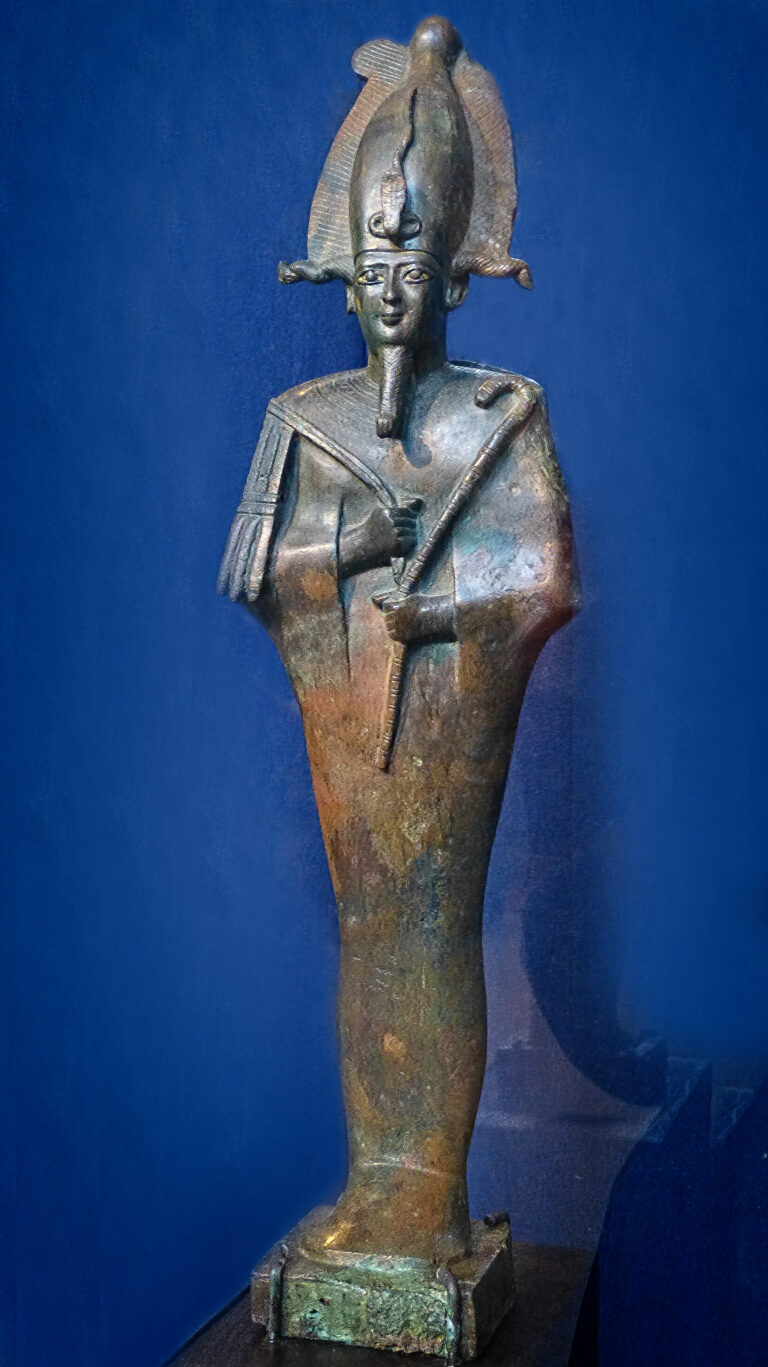
In the famous judgment scene from the Papyrus of AniPapyrus of Ani — Weighing of the HeartThe British Museum identifies the scene as Ani’s Judgment in the Hall of Judgment. Ani’s heart is weighed against a feather representing Ma’at, truth and order. The scene belongs to the ancient…Read full entry →, the heart is weighed against the feather of Ma’atMa’at — Truth, Balance, and OrderEgyptian principle/deity of truth, balance, and right order.Read full entry →. AnubisAnubis — Egyptian Funerary DeityEgyptian deity associated with funerary rites and the weighing scene.Read full entry → attends the scale. ThothThoth — Egyptian Deity of Writing and ReckoningEgyptian deity shown recording the result in the weighing scene.Read full entry → records. AmmitAmmit — Devourer in the Weighing of the HeartEgyptian composite being associated with the judgment of the dead.Read full entry → waits. OsirisOsirisIn Geomytha, Osiris names reflected presence: Am — awareness reflected as living consciousness without yet becoming ownership.Read full entry → presides. The soul stands in the charged space between confession and consequence. The British Museum identifies this frame as Ani’s Judgment, with Ani’s heart on one side of the balance and a feather representing Ma’at, truth and order, on the other.
Most readings treat this as an afterlife judgment.
That is true enough on the surface.
But Geomytha reads it more deeply as a trial of the grammatical self.
The question is not only:
What did you do?
The deeper question is:
What did you become by saying I am thisThe False-Self Sentence — I Am ThisThe false-self sentence forms when claim joins reflection to a fixed object of identity: I am this.Read full entry →?
That is why the heart is weighed.
The heart has carried every identification. Every wound claimed as self. Every role defended as essence. Every fear believed as reality. Every desire treated as command. Every memory turned into biography. Every sentence the claimantSetIn Geomytha, Set names the claimant: I — the interruption by which reflection is taken as mine and converted toward ownership.Read full entry → used to turn passing experience into identityThis — IdentityThis names the formed identity: the body, role, image, wound, belief, or story claimed as what the self is.Read full entry →.
The heart is not heavy because life happened.
The heart is heavy because the claimant kept saying mine.
I am this pain.
I am this story.
I am this role.
I am this injury.
I am this hunger.
I am this name.
That is the burden.
The earlier grammar was simple:
Is. Am. I. This.
Then that grammar entered the body. Then Jacob appeared as the heel-grabber, the thought that seizes the current before presence can returnReturn — RemembranceReturn names remembrance and release: the loosening of possession so reflection can become transparent to source again.Read full entry →. Then Ophiuchus appeared as the correction: the serpent held before insight becomes identity. Then the divine phrases were tested: I am thatI Am That — Nisargadatta MaharajI Am That is a published collection of talks by Sri Nisargadatta Maharaj, translated from Marathi by Maurice Frydman and first published by Chetana in 1973.Read full entry → I am and I Am That as bridges only if the claimant dissolves. Then the cross placed the body at the intersection, showing how the living crossing becomes fixation when the claimant nails itself to the center.
Now the Papyrus of Ani brings the sentence into court.
The heart is placed on the scale because the body has been made to testify.
Everything the self carried as identity is now weight.
This is why Ma’at appears as feather.
Truth is light.
Not because truth is weak. Not because truth is sentimental. Truth is light because it is not carrying false predicates. It does not need to drag a story behind it. It does not need to defend the image. It does not need to keep proving that the claimant was real.
Ma’at is order without exaggeration.
The feather is the measure of a life that did not overload the heart with false selfhood.
That is severe.
Because most people imagine judgment as moral accounting only: good deeds on one side, bad deeds on the other. But the Egyptian image is stranger. The heart itself is the object. The person’s center is weighed against truth.
Not merely conduct.
Center.
In Geomytha, this means the test is not only ethical. It is ontological.
Did the self live from presence?
Or did it build identity out of projectionThose — ProjectionThose names projection: enemies, outsiders, competitors, threats, and disowned qualities placed beyond the identity boundary.Read full entry →?
Did awareness remain close to Is-AmReflection Without OwnershipReflection without ownership is the condition in which experience can appear, relate, and move without being seized as mine.Read full entry →?
Or did the claimant turn every arising into I-am-this?
That is the judgment.
Anubis stands at the scale because threshold must be handled carefully. Anubis is not the final judge. He is the one who guides, prepares, opens, and attends the passage. He is the psychopomp, the escort into the place where false selfhood can no longer simply continue by momentum.
In grammatical terms, Anubis brings the sentence to the scale.
He does not let the self stay vague.
The living sentence must be tested.
What are you saying you are?
What did you attach to yourself?
What have you called me so many times that the heart now bends under it?
That is Anubis’s function here.
He brings the hidden claimI — ClaimI names claim: the interruption by which reflected presence is taken as mine.Read full entry → into view.
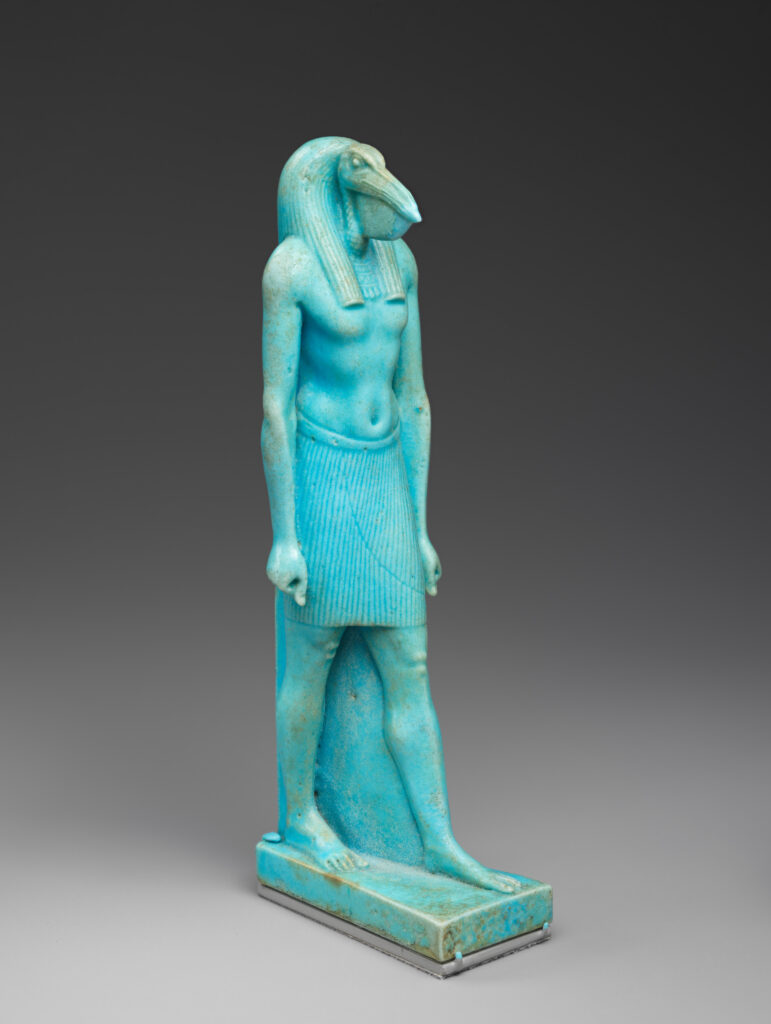
Then Thoth records.
This matters.
Thoth is writing, measure, language, count, archive, speech made durable. In one register, he is necessary. Without Thoth, nothing is remembered clearly. Judgment requires record. Speech must be made visible. The self cannot pretend it never said what it said.
But Thoth also reveals the danger of language.
Every sentence leaves a mark.
Every I am this becomes a kind of inscription.
The self writes itself into heaviness.
This is why Gemini belongs to the article. Gemini notices words, doubles, speech, mirrors, declarations, negations, puns, names, signatures, and testimonies. Under Gemini, the Papyrus of Ani becomes not only an image of afterlife judgment, but a grammar court.
The self is judged through speech.
It has to speak.
The negative confession is often read as a list of moral denials: I have not done this; I have not committed that; I have not violated this order. But symbolically, the form matters as much as the content.
The soul stands before powers and says:
I have not.
Again and again:
I have not.
That phrase is a stripping.
It denies attachment to false action, false identity, false burden, false participation. It refuses predicates. It refuses to let certain acts become the self’s essence.
But there is a danger here too.
The negative confession can become performance.
A clever self can learn sacred language. It can speak the formula. It can say the right denials. It can perform purity before the court while still preserving the claimant underneath.
That is the old problem again.
Sacred speech can liberate or conceal.
If the confession is only legal defense, it belongs to Set. If the confession strips false ownership from the heart, it belongs to Osiris.
The difference is whether the sentence reduces the claimant.
A legalistic ego says:
I have not done wrong; therefore I am righteous.
That is still identity.
A truthful soul says:
This is not what I am.
That is release.
The negative confession, read deeply, is not only moral innocence. It is the dismantling of false predicates.
Not this.
Not this.
Not this.
Neti-neti in Egyptian court form.
The self stands before truth and releases what it cannot carry through the gate.
This is why Ammit waits.
Ammit is not merely a monster added to scare the dead. Ammit is the consequence of heaviness. If the heart is too burdened, the identity cannot pass. It is consumed by the very threshold it tried to cross.
That is exact.
The false self cannot enter presence.
It can only be exposed, dissolved, consumed, or released.
HorusHorusIn Geomytha, Horus names the identity that forms after claim: This — the body, role, image, wound, belief, or story taken as what the self is.Read full entry → may want immortality. Horus may want continuation. Horus may want a better afterlife, a higher role, a divine certification, a permanent self beyond death. But the hall does not ask whether Horus wants to continue.
The hall weighs whether the heart is true enough to pass.
This is the mercy of the scale.
It does not flatter the claimant.
It does not ask whether the self had impressive beliefs. It does not ask whether the self knew symbols. It does not ask whether the self decoded the system. It does not ask whether the self had a spiritual biography.
It weighs.
That is all.
The scale is devastating because it cannot be persuaded by performance.
A person can speak beautifully and still be heavy.
A person can know sacred names and still be heavy.
A person can believe the correct doctrine and still be heavy.
A person can say I Am That and still be heavy if the claimant kept the phrase.
This is why the Papyrus of Ani belongs in this sequence.
It tests everything.
The breath practice.
The body map.
The heel-grab.
The serpent-hold.
The divine name.
The bridge phrase.
The cross.
All of it must come to the scale.
Did any of it actually lighten the heart?
Or did it give the false self more refined material?
That is the practical question.
Geomytha itself must be weighed.
If the symbols make the claimant larger, the heart gets heavier. If the system becomes identity, the scale knows. If the decoder becomes proud of decoding, Thoth records it. If the insight becomes superiority, Ammit waits.
This is not a condemnation of symbols.
It is their purification.
A symbol is true only if it helps the heart release false weight.
Otherwise it is decoration for Horus.
That is why Osiris presides.
Osiris is the reflective court. He is not merely dead king. He is the field in which the self is seen without distortion. In Geomytha, Osiris is right reflectionAm — ReflectionAm names reflected presence: awareness embodied or mirrored without yet becoming ownership.Read full entry →: awareness reflected without falling into world-making. He is the mirror that does not flatter the face.
To stand before Osiris is to stand before reflection that will not cooperate with projection.
The false self cannot talk its way through that mirror.
It must become light.
Or fail.
This is why the heart is weighed against Ma’at rather than against another heart. The standard is not comparison. It is not whether the self was lighter than someone else. It is not social ranking. It is not moral competition.
The standard is truth.
That is important.
Horus loves comparison.
At least I am better than them.
At least I know more.
At least I tried harder.
At least I see what others miss.
At least my wounds justify me.
At least my doctrine is higher.
The feather is not interested.
Comparison is another weight.
The scale does not ask whether the identity is impressive.
It asks whether the heart is free of false burden.
This gives the Papyrus of Ani enormous practical force.
Every day contains small weighing scenes.
A thought appears.
The heart tightens.
The sentence forms:
I am this.
There is the scale.
A memory appears.
The body reacts.
The claimant says:
This is still me.
There is the scale.
A criticism appears.
The chest hardens.
The claimant says:
I am attacked.
There is the scale.
A spiritual insight appears.
The head brightens.
The claimant says:
I am the one who knows.
There is the scale.
The judgment is not only after death.
It is continuous.
The hall appears whenever awareness is invited to either identify or release.
This is why the practice remains simple.
When a sentence forms, weigh it.
Does it make the heart heavy?
Then it is probably not Ma’at.
Does it require defense, performance, superiority, grievance, fixation, or control?
Then Set is near.
Does it allow the heart to release false ownership?
Then the feather appears.
Try it directly.
A feeling arises.
Instead of saying:
I am angry.
Notice:
Anger is here.
Then breathe.
Is-Am.
Am-Is.
The heart becomes lighter because the feeling is no longer being forced to become identity.
A fear arises.
Instead of saying:
I am afraid.
Notice:
Fear is here.
Breathe.
The fear can be felt without becoming the whole self.
A wound arises.
Instead of saying:
I am this wound.
Notice:
This wound is appearing in awareness.
Breathe.
The heart does not need to carry the wound as a name.
This is not avoidance.
It is accuracy.
If action is needed, act. If repairWorld-RepairWorld-Repair names the work of regathering relation, pattern, and presence inside a field that has been fractured rather than simply escaping the field.Read full entry → is needed, repair. If a boundary is needed, set it. If grief is present, grieve. But do not add the false sentence unless truth requires it.
Most of the time, truth does not require:
I am this.
Truth requires noticing what is present without pretending it is essence.
That is weighed speech.
Speech that does not overload the heart.
Speech that names without imprisoning.
Speech that testifies without building a throne.
Speech that releases rather than hardens.
This is the best way to understand the negative confession practically.
Not as a magical courtroom script.
As a daily discipline of refusing false grammar.
I have not become this anger.
I have not become this wound.
I have not become this role.
I have not become this thought.
I have not become this story.
Or even simpler:
Not this.
Not this.
Not this.
Until the heart remembers lightness.
This is why First Quarter matters.
First Quarter forms. It defines. It decides. It tests the shape. It asks whether the current will become a clean structure or a false identity. Gemini notices the speech-act by which the form is made.
The article’s question is therefore exact:
What sentence are you forming?
Because the sentence will weigh something.
Words are not weightless. They organize the heart. They build identity. They release identity. They call the self into court.
This does not mean one should fear language.
Language can serve. Thoth is not evil. Record is not evil. Speech is not evil. Confession is not evil. The problem begins when speech becomes a palace for the claimant.
A true sentence lightens.
A false sentence burdens.
That is the test.
The Papyrus of Ani gives this test an image the body can remember.
The heart on the scale.
The feather.
The recorder.
The threshold guide.
The devourer waiting.
The reflective king.
All of them are internal functions.
Anubis brings the claim to the scale.
Thoth records the speech.
Ma’at supplies the standard.
Ammit ends the false continuation.
Osiris reflects without distortion.
The soul stands there with its own heart.
Nothing extra is needed.
No grand theory can save a heavy heart from the truth of what it carried.
That is not cruelty.
It is liberation.
Because the burden was never the real self.
The burden was accumulated claim.
Release the predicates, and the heart lightens.
Release the need to be the wound, the role, the insight, the righteous one, the chosen one, the harmed one, the knower, the awakened one.
Release even the identity of one who releases.
Then the feather no longer feels impossible.
The heart was not made to carry Horus forever.
It was made to beat in the field of Is.
It was made to reflect Am without becoming trapped in I.
It was made to move, receive, grieve, love, act, and return.
It was not made to become a courtroom exhibit for every story the claimant wanted to preserve.
So when the next sentence forms, listen carefully.
Gemini notices.
First Quarter decides.
The scale waits.
Before saying I am this, weigh it.
If the heart becomes heavy, do not defend the sentence.
Release it.
Inhale:
Is-Am.
Exhale:
Am-Is.
Let the heart return to Ma’at.
The false self can only pass by becoming lighter than itself.
The feather is not asking you to become perfect.
It is asking you to stop lying about what you are.