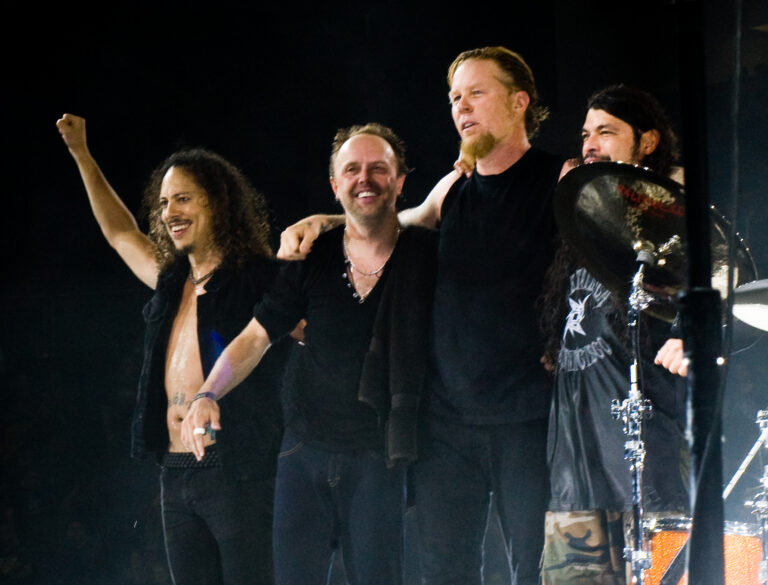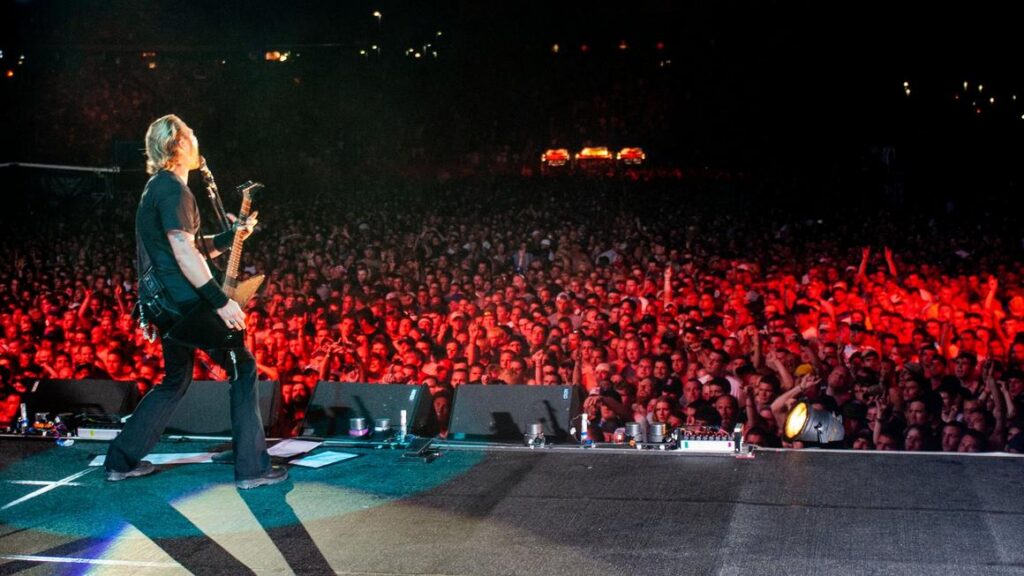
There are few songs in popular music more misunderstood than MetallicaReferenceMetallica — Band / ArtistMetallica is the band that recorded “Enter Sandman.”Read full entry →’s Enter SandmanReferenceEnter Sandman — Metallica“Enter Sandman” is a Metallica song from the 1991 album Metallica, built around imagery of bedtime, sleep, fear, dreams, and the Sandman.Read full entry →.
It is usually heard as a song about nightmares. About monsters under the bed. About childhood fears. About the strange terrors that emerge after the lights go out.
But nightmares are never just about monsters.
They are about the thing the monster represents.
And the strange truth hidden inside Enter Sandman is that the SandmanReferenceSandman — Sleep / Surrender FigureThe Sandman is a sleep-associated figure reused across European folklore and literature. Here the word refers to the figure invoked by Metallica, not America’s song of the same name.Read full entry → himself is not really the enemy.
He is the inevitability.
He comes every night.
He cannot be defeated.
He cannot be escaped.
He waits patiently for the moment when the self finally grows tired enough to surrender.
This is why Enter Sandman, Jim HensonReferenceJim HensonAmerican puppeteer, filmmaker, and creator associated with The Muppets and the original Tale of Sand screenplay.Read full entry →’s Tale of Sand, and AmericaReferenceAmerica — Band / ArtistAmerica is the band whose debut album includes the song “Sandman.”Read full entry →’s Sandman all belong to the same ancient symbolic family: the story of the self running from the thing that would allow it to stop running.
The Man Running from Sleep
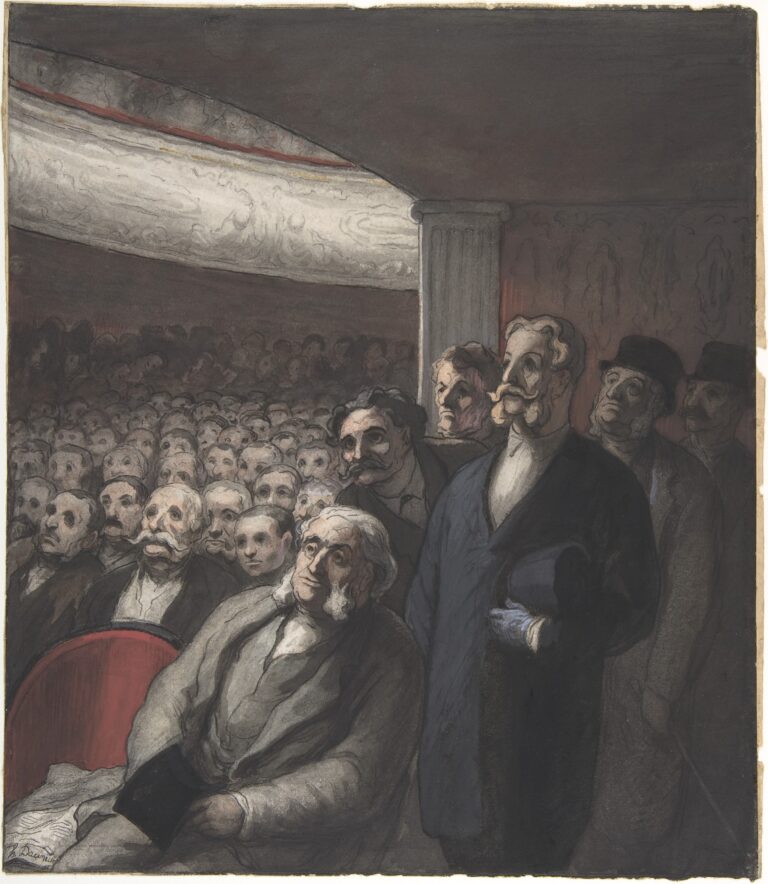
Human beings have always feared sleep.
Not merely because dreams can be frightening, but because sleep performs an act that the waking self cannot fully comprehend: every night, the person we believe ourselves to be disappears.
The planner disappears.
The warrior disappears.
The lover disappears.
The citizen disappears.
The story disappears.
And yet something remains.
This is why children fear the dark.
The darkness is not frightening because monsters might emerge from it. The darkness is frightening because the child intuits, however dimly, that the world they spent the entire day constructing is about to dissolve.
The ego experiences surrender as death.
And so it fights.
Exit Light
The song begins with one of the strangest commands in popular music:
Exit light.
Enter night.
Most listeners hear this as sinister.
But what exactly is the light?
In myth, light is rarely mere illumination. Light is consciousness reflected back upon itself. It is the visible world. It is the realm of names, distinctions, and identities. It is the place where the self says:
I am thisGEOMYTHA readingThe False-Self Sentence — I Am ThisThe false-self sentence forms when claim joins reflection to a fixed object of identity: I am this.Read full entry →.
To exit the light is therefore not merely to turn off a lamp.
It is to leave the world of waking identity.
To enter the night is to enter what every civilization before modernity understood instinctively: the underworld, the dream world, the hidden country beneath appearances.
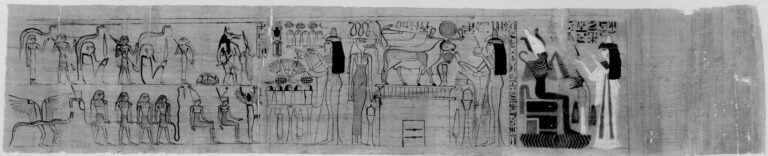
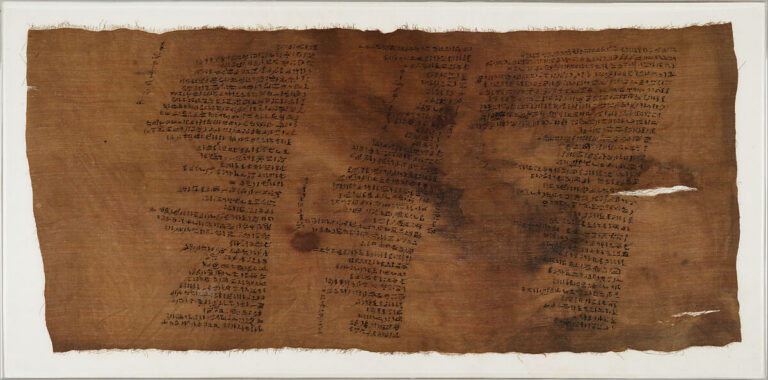
The Egyptians called it the Duat.
The Greeks called it HadesReferenceHades — Greek UnderworldThe underworld realm of ancient Greek myth, conventionally called Hades.Read full entry →.
The medieval Christians called it the night sea of the soul.
Children call it bedtime.
The Sandman and the Desert
This is why the Sandman appears so often in modern symbolic culture.
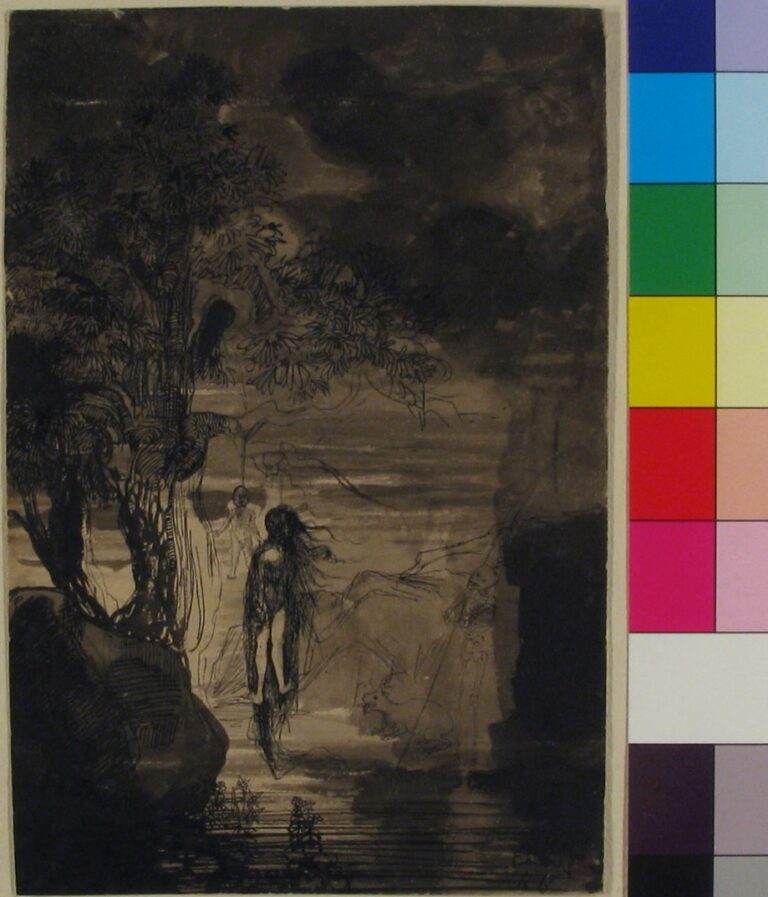
In America’s Sandman, the narrator is running from an unnamed pursuer. He never fully identifies what chases him. He only knows that it follows him everywhere.
In Jim Henson’s Tale of Sand, Mac runs through deserts, carnivals, highways, and dreamscapes. He never understands the rules of the pursuit because the pursuit itself is the rule.
And in Enter Sandman, the chase has already ended.
The Sandman has arrived.
This progression reveals something profound.
First we run from the dream.
Then we discover we are trapped inside the dream.
Finally, we discover that the dream was never chasing us at all.
We were chasing ourselves.
The Child’s Prayer
The song then invokes one of the oldest bedtime prayers in the English language:
Now I lay me down to sleep,
I pray the Lord my soul to keep.
This prayer has always frightened adults more than children.
Because hidden inside it is an admission:
I am about to disappear.
The prayer continues:
If I die before I wake...
Modern listeners often treat this as historical curiosity. Earlier generations did not.
They understood that sleep resembles death because both involve surrendering control over the story we tell about ourselves.
Every night, the self entrusts itself to something it cannot command.
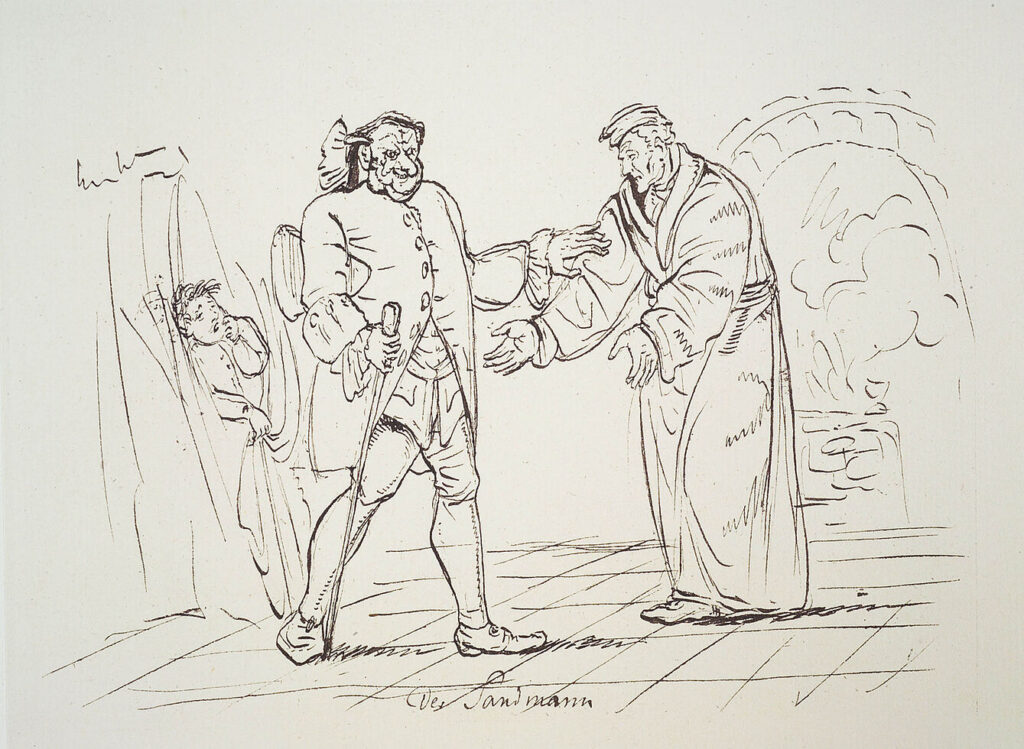
Every night, HorusGEOMYTHA readingHorusWithin GEOMYTHA, Horus the Son names This: the body, role, image or story claimed as identity. Horus the Elder / Haroeris is distinct and carries the watcher or witnessing function, not This. These are interpretive correspondences, not universal Egyptian definitions.Read full entry → returns unwillingly to the kingdom from which he emerged.
And every morning, he wakes and mistakes the gift of return for proof of his own permanence.
Dreams of War
The song’s famous inventory of dreams follows:
Dreams of war.
Dreams of liars.
Dreams of dragon’s fire.
This sequence is not random.
War.
Deception.
Monsters.
These are the eternal products of the frightened self.
The ego enters the darkness and immediately begins rebuilding the world it just lost.
It reconstructs enemies.
It reconstructs danger.
It reconstructs pursuit.
It reconstructs itself.
This is why nightmares feel so real.
They are not interruptions of identity.
They are identity continuing its work after the lights go out.
Tale of Sand
This helps explain why Jim Henson’s Tale of Sand feels less like a story than a dream that has forgotten itself.
Mac wakes already running.
He runs through the desert.
He runs through the city.
He runs through absurdity itself.
The pursuers constantly change.
But perhaps the pursuers are not changing at all.
Perhaps there was only ever one pursuer.
The self cannot stop running because it cannot stop imagining what would happen if it stopped.
The tragedy of Tale of Sand is not that Mac is trapped.
The tragedy is that he believes the trap is external.
The Oldest Story
This pattern appears everywhere.
JonahReferenceJonah — Book of JonahBiblical prophet who flees the divine commission in the Book of Jonah.Read full entry → runs from God.
GilgameshReferenceGilgamesh — Epic of GilgameshGilgamesh, king of Uruk and central figure of the Epic of Gilgamesh.Read full entry → runs from death.
The BuddhaReferenceThe Buddha — Siddhartha GautamaSiddhartha Gautama, the historical/religious figure known as the Buddha.Read full entry → runs from suffering.
AliceReferenceAlice — Alice’s Adventures in WonderlandAlice, the protagonist of Lewis Carroll’s Alice’s Adventures in Wonderland.Read full entry → runs through WonderlandReferenceWonderland — Alice’s Adventures in WonderlandThe strange world Alice enters in Lewis Carroll’s Alice’s Adventures in Wonderland.Read full entry →.
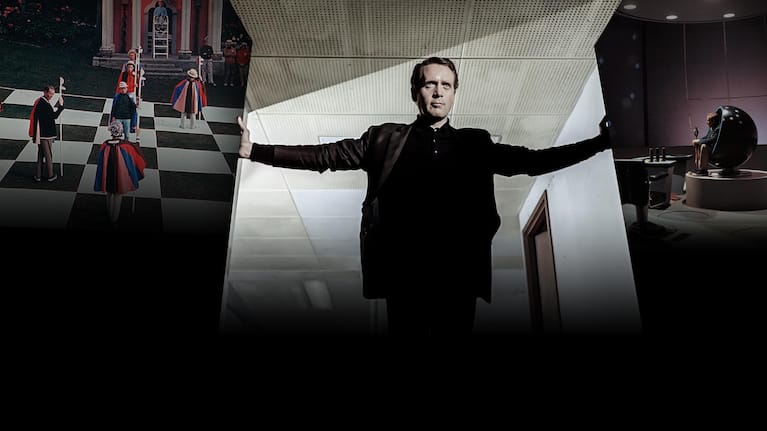
The PrisonerReferenceThe Prisoner — Television SeriesBritish television series centered on a former secret agent confined in the Village.Read full entry → runs from the VillageReferenceThe Village — The PrisonerThe controlled settlement in the television series The Prisoner.Read full entry →.
The traveler in Hotel CaliforniaReferenceHotel California — EaglesHotel California is the title track of the Eagles’ 1976 album.Read full entry → runs from the realization that there was never an exit.
Again and again, the same discovery emerges:
The thing being pursued was never stolen.
The thing being feared was never outside.
The thing being fled was never the enemy.
The journey itself was the prison.
Take My Hand
Perhaps the most misunderstood line in the song is also its gentlest:
Take my hand.
We’re off to never-never land.
Most hear a threat.
But what if it is an invitation?
What if the Sandman is not the monster beneath the bed?
What if he is the figure that appears every night to remind us that we were never the thing we spent all day defending?
This possibility is terrifying.
Not because it means we die.
But because it suggests that every night, for a few hours, we already do.
And perhaps that is why the ego fears sleep so deeply.
Because somewhere beneath the dreams, beneath the monsters, beneath the deserts and the sand and the endless pursuit, it suspects a truth it cannot survive:
No one is chasing us.
We are simply being asked to stop running.