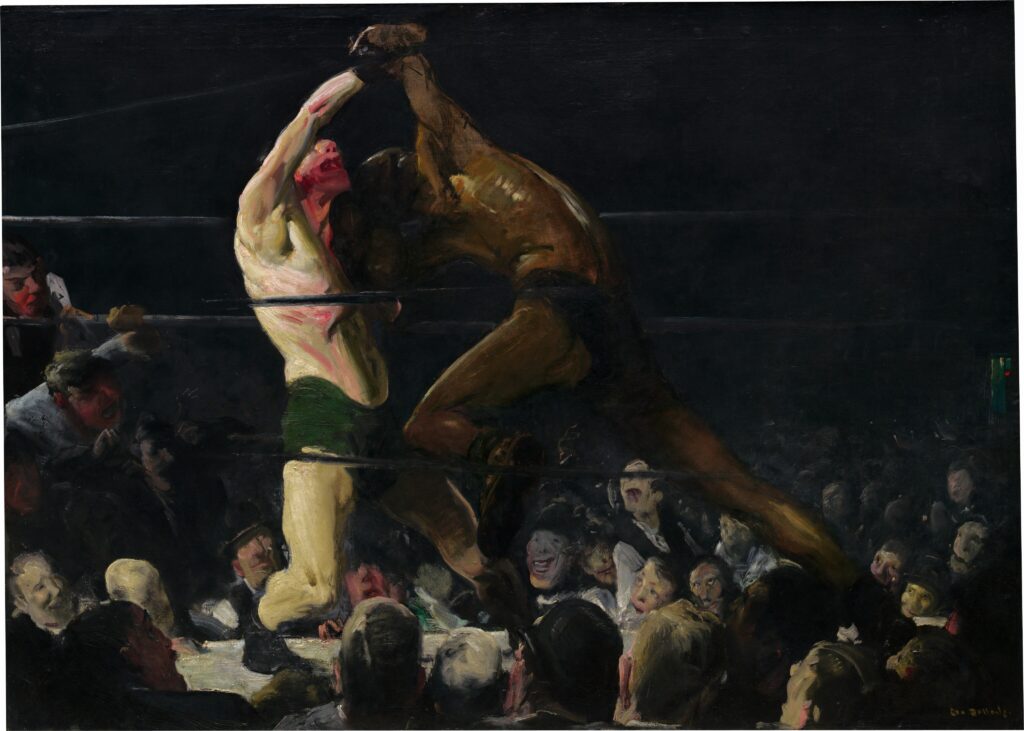
The boxer walks through an open crowd toward a brightly lit square.
By the time he reaches the ropes, he has already stopped being an ordinary man.
He is now his record. His hometown. His weight class. His nickname. His ranking. His rival. His future. Thousands of strangers chant his name as though the person approaching the ring has become identical with the story being told about him.
Then comes the first symbolic surprise.
It is called a ring, yet it has four corners.
That contradiction is more than architecture. It is a map of consciousness.
The circle remembers wholeness. The square establishes territory. One evokes an unbroken field. The other creates boundaries, ownership, sides, and opposition. The boxer enters something named after a circle but immediately discovers himself inside a box.
That movement—not the opening punch—is where the fight truly begins.
Most people think boxing starts when one fighter throws the first jab.
Symbolically, it begins much earlier.
It begins the moment two people agree to enter a bounded world where each must become a separate self.
Outside the ropes there are simply two human beings sharing the same air, standing on the same ground, participating in the same field of awareness.
Inside the ropes everything changes.
This corner.
That corner.
My victory.
Your defeat.
My body.
Your body.
The enclosure creates a new grammar.
In Geomytha, reflected presenceGEOMYTHA readingAm — ReflectionAm names reflected presence: awareness embodied or mirrored without yet becoming ownership.Read full entry → becomes claim, and claim hardens into identity. The body is no longer simply lived. It becomes something that must be defended, justified, and proven.
The ring does not create consciousness.
It creates the conditions under which consciousness begins mistaking itself for a combatant.
That is what every box does.
A box separates what is inside from what is outside.
It protects.
It stores.
It conceals.
It transports.
It allows possession.
Something fluid becomes something contained.
Something living becomes this particular thing.
That is why we instinctively understand expressions like “boxed in.” We recognize that boxes do not merely contain bodies. They define movement. They establish limits. They quietly determine where we believe we belong.
The boxing ring performs exactly this function.
It establishes the world within which the fighter exists.
Yet this is where the symbolism becomes more subtle.
Not every box is a prison.
Some are vessels.
A seed requires a shell.
A womb encloses life before birth.
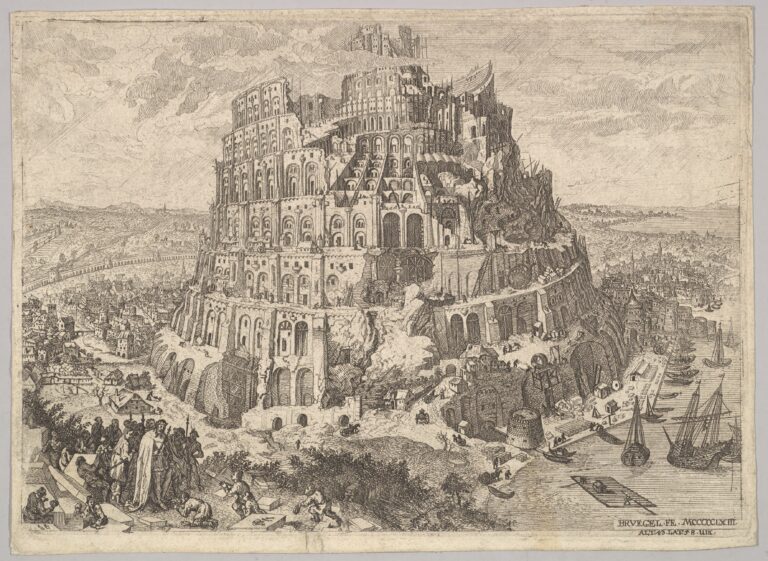
Noah’s Ark preserves life through the flood before opening again to the renewed world.
Containment becomes dangerous only when the container forgets it exists to serve life rather than replace it.
That distinction governs everything that follows.
Consider the four corners.
Every round ends with the fighter returning to one of them.
His breathing is heavy.
His face may be swelling.
His thoughts have largely disappeared beneath exhaustion.
For a brief moment he is simply a breathing body.
Then the corner begins rebuilding him.
“You’re winning.”
“He’s slowing down.”
“Double the jab.”
“Take the center.”
Water is poured.
Cuts are treated.
Strategies are repeated.
The fighter who had almost dissolved into pure sensation is reconstructed into an identity once again.
The corner does not merely repair the body.
It restores the story.
Every sixty seconds, the champion is rebuilt.
Even the hand tells the same story.
An open hand receives.
It touches.
It blesses.
It gives.
It releases.
To make a fist, the hand must first abandon all of those possibilities.
The fingers curl inward.
The palm disappears.
Flexibility becomes density.
The hand closes around an empty center and transforms itself into an instrument of force.
A fist is simply an open hand that has boxed itself.
That image reaches far beyond combat.
How often does consciousness do exactly the same thing?
We contract around an invisible center called “me.”
Thought closes.
Identity hardens.
Attention narrows.
Then we project that contraction into the world.
The fist becomes one of the clearest bodily symbols of the false self—not because strength is wrong, but because contraction begins mistaking itself for our nature.
The guard continues the same movement.
Every boxing coach repeats the instruction:
Protect yourself at all times.
Within the ring, this is wisdom.
Outside the ring, it becomes tragedy.
Many people never leave the psychological boxing match.
Every disagreement becomes a threat.
Every criticism feels like a punch.
Every relationship becomes strategic.
Every conversation becomes scoring points.
The shoulders remain raised.
The jaw stays clenched.
The guard never comes down.
Eventually the person forgets the contest ended long ago.
The body continues defending itself against opponents who no longer exist.
The opponent deserves even closer attention.
Each boxer appears to confront another man.
Symbolically, something stranger is happening.
Each fighter faces another breathing body.
Another frightened nervous system.
Another collection of hopes and fears.
Another person desperately trying to preserve an identity under pressure.
Each fighter is confronting the same structure that exists within himself.
Without an opponent there can be no boxer.
The rival does not merely threaten the fighter.
He confirms him.
The harder one identity insists upon itself, the harder the other must do the same.
Conflict manufactures both combatants.
Every rivalry secretly depends upon cooperation.
The enemy becomes the mirror through which the self continually rediscovers itself.
The bell reinforces this temporary world.
Three-minute rounds.
One-minute rest.
Ten-second warning.
Final round.
Continuous life becomes measurable time.
Violence becomes legal.
Then illegal.
Then legal again.
The bell does not simply measure the fight.
It creates the universe within which the fight exists.
Even the knockout count resembles ritual.
The fighter falls.
The identity disappears before the body does.
The referee asks the only question that matters.
Can the fighter return?
Not merely can the body move.
Can the combat-self re-enter the body before the count reaches ten?
Every standing count becomes a tiny resurrection.
Every knockout reveals how fragile the constructed identity really was.
Victory appears to resolve the struggle.
It actually deepens it.
The champion receives the belt.
At first glance, the belt appears to reward the fighter.
In reality it creates a new enclosure.
Now the champion must remain champion.
He acquires obligations.
Expectations.
Public reputation.
Legacy.
The object worn around his waist slowly begins wearing him.
He no longer enters the ring as a man who boxes.
He enters as the champion.
The identity has thickened.
What began as a contest has become a kingdom.
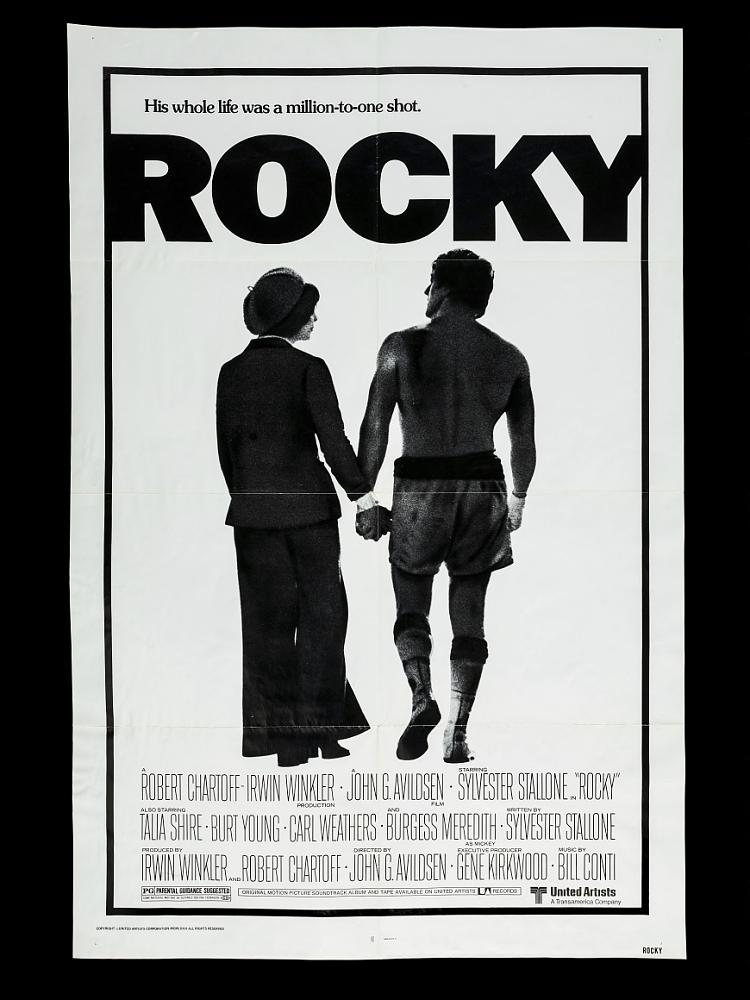
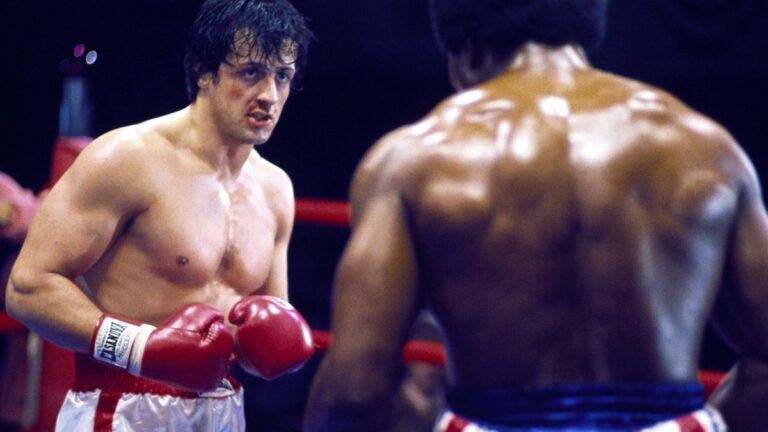
The original Rocky quietly exposes the same tension. Rocky presents two very different ways of inhabiting the ring. Apollo Creed—named after the Greek sun god—arrives surrounded by spectacle, costumes, lights, and applause. He is public radiance embodied, a champion whose identity has become inseparable from the crown. Rocky Balboa begins almost as his opposite: anonymous, reflective, training before dawn in empty streets. His goal is not to become champion but simply “to go the distance.”
Yet once the bell rings, something unexpected happens.
The public identities begin falling away.
Apollo is no longer fighting as a celebrity.
Rocky is no longer fighting as an underdog.
There is only breath.
Pain.
Timing.
Endurance.
Presence.
The ring that first constructed their identities begins stripping them away. The film’s deepest victory is not that Rocky wins the championship—he does not. It is that he leaves the ring having found himself without needing the crown. The belt remains with Apollo. Rocky walks away with something greater: he has not allowed the box to become his identity.
This is also why boxing became one of television’s greatest spectacles.
The fighter stands inside the ring.
The ring appears inside the television.
The television enters the living room.
Millions project themselves into one corner or the other.
“Our fighter.”
“Their fighter.”
The audience experiences courage without danger.
Triumph without sacrifice.
Defeat without injury.
The myth is consumed while someone else’s body absorbs the blows.
The box multiplies itself.
At this point the symbolism appears almost entirely negative.
But that would be incomplete.
The greatest fighters consistently describe moments when thinking disappears.
They stop calculating.
Stop narrating.
Stop performing.
There is only breath.
Distance.
Timing.
Movement.
Presence.
Ironically, the same enclosure that builds the combat identity can also dissolve it.
A distracted fighter loses.
An anxious fighter freezes.
An arrogant fighter becomes predictable.
To survive, consciousness must abandon its own story.
For a few moments there is no reputation.
No audience.
No future.
No past.
Only direct participation in what is unfolding.
The box becomes something different.
Not a prison.
A discipline.
Like a monastery.
Like an ark.
Like any sacred enclosure that exists only so life may later return to the open field.
The question is never whether boundaries exist.
The question is whether they still remember they are temporary.
This is where Boxing Day quietly completes the symbolism.
Historically, Boxing Day takes its name from the giving of Christmas boxes and the distribution of gifts and alms after Christmas, not from prizefighting.
Symbolically, however, it provides the perfect correction.
Christmas gathers.
The household fills.
Gifts accumulate beneath the tree.
Boxes remain closed.
Then Boxing Day arrives.
The box opens.
What has been gathered begins circulating again.
The gift leaves private ownership.
Accumulation becomes relationship.
That is precisely what healthy consciousness must do.
Every insight eventually has to leave the container.
Every blessing must circulate.
Every revelation must become generosity rather than possession.
Otherwise the box becomes an idol.
A gift permanently sealed ceases to be a gift.
A revelation permanently possessed becomes ideology.
An identity permanently defended becomes a prison.
Perhaps that is the deepest lesson hidden inside boxing.
Every one of us enters boxes.
Families.
Careers.
Religions.
Political parties.
Nations.
Stories.
Even spiritual traditions.
The question is not whether we inhabit forms.
Life itself requires vessels.
The question is whether we remember that the vessel exists to serve the living current.
An ark opens.
A coffin does not.
One preserves life for return.
The other mistakes enclosure for destiny.
The same distinction exists within us.
Notice where your jaw remains clenched.
Notice where your shoulders still carry an invisible guard.
Notice where you continue preparing for blows that are no longer coming.
Then look at your hand.
Open it.
The fist remembers conflict.
The hand remembers relationship.
Perhaps that is why the ring is still called a ring.
Somewhere beneath the square, consciousness has never forgotten the circle.